
MicroLED displays are revolutionizing screen technology by offering unparalleled brightness, energy efficiency, and the ability to create flexible designs. This innovative technology is changing how we interact with screens, from televisions to smartphones, and even in commercial settings like digital signage. In this article, you’ll learn how MicroLED technology works, its advantages over traditional displays, and the potential applications that make it a game-changer in the industry.
Understanding MicroLED Technology

MicroLEDs consist of tiny, self-emitting LEDs that form individual pixels, providing vibrant colors and deep blacks. Each pixel is an independent light source, which means that when a pixel is turned off, it emits no light, resulting in true blacks that enhance contrast. This self-emissive nature allows MicroLED displays to achieve stunning color accuracy and dynamic range, making images appear more lifelike.
The technology allows for higher pixel density, resulting in sharper images even at larger screen sizes. Unlike traditional displays that rely on liquid crystal or organic compounds to produce images, MicroLEDs bypass these layers, leading to faster response times and improved refresh rates. This characteristic is particularly beneficial for gamers and professionals who demand high-performance displays for an immersive experience.
Advantages Over Traditional Displays
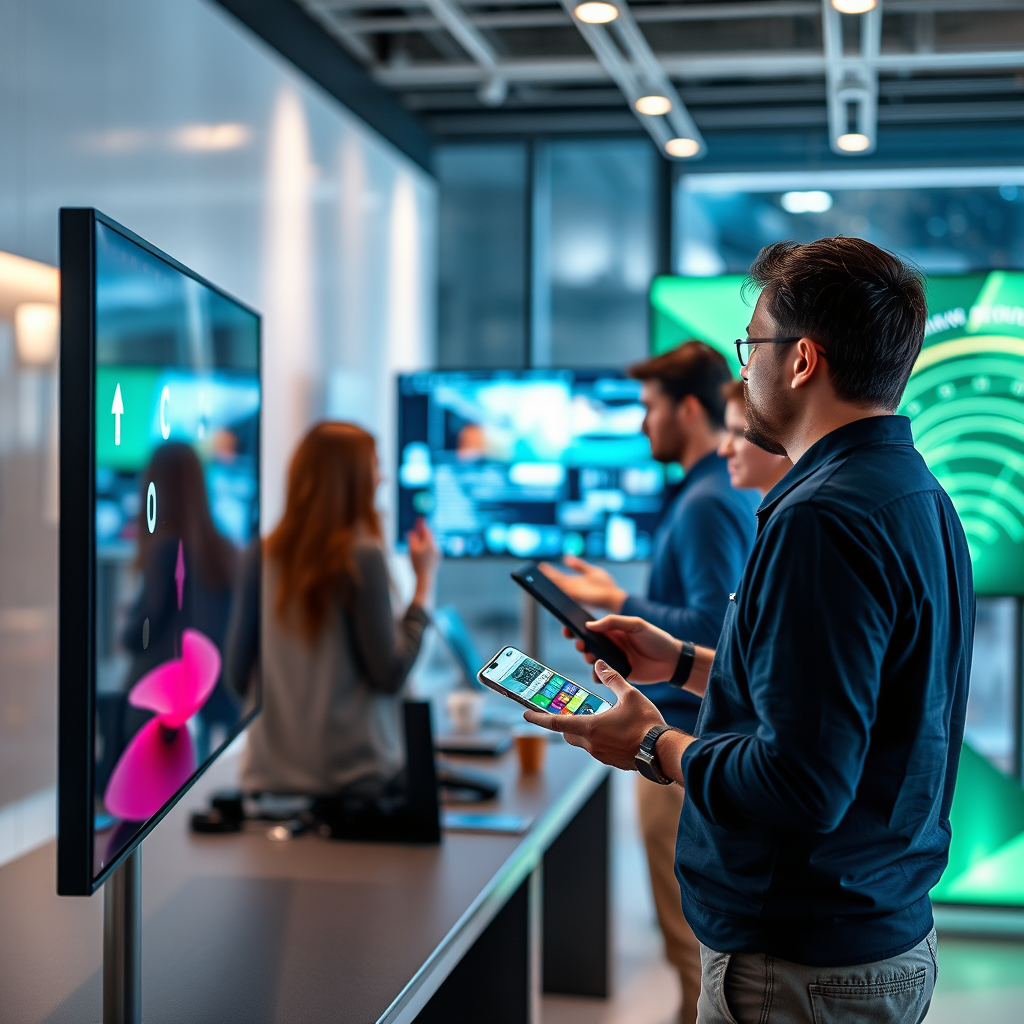
One of the major selling points of MicroLED technology is its superior energy efficiency. MicroLEDs consume less power compared to OLED and LCD screens, which can lead to significant cost savings on energy bills over time. This efficiency is especially attractive for large installations or in settings where screens are on for long periods, like in retail or media environments.
Enhanced durability and longer lifespan are also vital advantages, as MicroLEDs are less prone to burn-in and degradation over time. Unlike OLEDs, which can suffer from image retention, MicroLEDs maintain their brightness and color quality for longer periods, making them ideal for varied applications. This durability means less frequent replacements, contributing to lower total cost of ownership.
Additionally, MicroLED displays can operate in a wider range of temperatures and conditions, making them suitable for both indoor and outdoor applications. Their robust nature opens up possibilities for use in environments where traditional displays might struggle, such as stadiums or outdoor events.
Applications in Various Industries
In home entertainment, MicroLEDs are being integrated into TVs and projectors, creating a premium viewing experience with stunning visual quality. High-end brands are already releasing MicroLED TVs that promise unparalleled clarity and color depth, allowing viewers to enjoy their favorite movies and shows like never before. For example, Samsung’s The Wall is a modular MicroLED display that can be customized to fit any space, offering an immersive cinematic experience at home.
The technology is also finding applications in automotive displays, offering clearer visuals in varying lighting conditions. Car manufacturers are beginning to incorporate MicroLEDs into dashboard displays and infotainment systems, enhancing driver experience with sharp graphics and easy readability. With the rise of electric and autonomous vehicles, having advanced display technology is crucial for providing information in an easily digestible format.
Moreover, MicroLEDs are making waves in sectors like retail and advertising. Imagine walking through a shopping mall and seeing vibrant, eye-catching advertisements that change shape and size according to the product being showcased. This type of flexibility and customization is something MicroLED technology uniquely enables.
Flexibility and Customization
MicroLED technology allows for flexible screen designs, enabling curved and innovatively shaped displays. This flexibility is a game-changer for industries that thrive on creativity and innovation. For example, museums and art galleries can use MicroLED displays to create unique installations that fit the contours of the exhibition space, enhancing the visitor experience.
Customizable sizes and shapes cater to specific needs in advertising, gaming, and digital signage. Brands can create eye-catching displays that stand out in a crowded marketplace, delivering their messages more effectively. For instance, a company might opt for a circular MicroLED display that draws attention from all angles, making it an engaging focal point in a busy retail store.
The modular nature of MicroLEDs also means that screens can be assembled in various configurations to suit different applications. This adaptability allows businesses to invest in a display solution that can grow and evolve with their needs, ensuring a longer-lasting investment.
Future of MicroLED Displays
Ongoing advancements are expected to drive down costs and improve manufacturing processes, making MicroLEDs more accessible. As technology matures, we can anticipate more affordable options entering the consumer market, which will likely accelerate adoption across various sectors. Companies are investing heavily in research and development to refine the production methods, which will pave the way for even more innovative applications.
Potential integration with augmented reality (AR) and virtual reality (VR) technologies is another exciting avenue for MicroLED displays. These technologies can enhance immersive experiences, making everything from gaming to training simulations more engaging. Imagine wearing a headset that uses MicroLED technology to create incredibly realistic environments that respond seamlessly to your movements—this is not just a dream but a future possibility.
Market Trends and Consumer Adoption
Growing interest from consumers and manufacturers is accelerating the adoption of MicroLED technology in various sectors. Major tech companies are investing in MicroLED research, and early adopters are already seeing the benefits of this advanced technology. As more products hit the market, consumers will become increasingly aware of the advantages MicroLEDs offer over traditional display technologies.
Industry predictions indicate significant market expansion as companies invest in research and development. Analysts forecast that the MicroLED market will grow substantially in the coming years, driven by rising demand for high-quality displays in home entertainment, automotive applications, and commercial use. As awareness spreads and prices decrease, more consumers will likely make the switch to MicroLED technology.
The emergence of MicroLED displays is set to redefine visual technology, offering significant improvements over existing display options and opening doors to new applications. From home entertainment systems to cutting-edge automotive displays, MicroLEDs are paving the way for the future of screen technology. To stay updated on this evolving technology, consider exploring the latest MicroLED products and innovations in the market. Embracing this change now means being at the forefront of a visual revolution that is just beginning to unfold.
Frequently Asked Questions
What are MicroLED displays and how do they differ from traditional LED and OLED screens?
MicroLED displays are a cutting-edge screen technology that uses microscopic light-emitting diodes to create images, offering individual pixel control similar to OLED but with the brightness and efficiency of traditional LED displays. Unlike conventional LED screens that utilize backlighting, MicroLEDs emit their own light, resulting in superior contrast ratios, vibrant colors, and energy efficiency, all while avoiding the burn-in issues associated with OLED technology.
How are MicroLED displays revolutionizing the gaming experience?
MicroLED displays are transforming the gaming landscape by delivering ultra-fast refresh rates, stunning color accuracy, and exceptional contrast, which enhances immersion in gameplay. With pixel-level control, these screens ensure minimal lag and a wider viewing angle, making them ideal for competitive gaming and cinematic experiences. Additionally, their scalability allows for flexible screen sizes, from small devices to massive gaming setups.
Why should consumers consider investing in MicroLED technology for home entertainment?
Consumers should consider MicroLED technology for home entertainment due to its impressive picture quality, energy efficiency, and longevity compared to other display types. The vibrant colors and deeper blacks enhance viewing experiences for movies, sports, and gaming, while the durability of MicroLED screens means they are less likely to suffer from screen burn-in, making them a wise long-term investment for premium home theaters.
What are the best applications for MicroLED displays beyond televisions and smartphones?
Beyond televisions and smartphones, MicroLED displays are making waves in various applications, including digital signage, augmented reality (AR), and virtual reality (VR) systems. Their flexibility and modularity allow for creative installations in retail environments, galleries, or even large-scale events, while their high resolution and color fidelity elevate experiences in AR and VR, where precision is crucial for user engagement.
Which brands are leading the market in MicroLED technology development?
Major tech brands leading the charge in MicroLED technology development include Samsung, Sony, and LG, each investing heavily in research and innovation to refine this emerging display technology. Samsung’s “The Wall” and LG’s MicroLED offerings showcase their commitment to high-quality, customizable display solutions. These companies are at the forefront of bringing MicroLED technology to consumers, making it a promising option for future electronics.
References
- MicroLED
- https://www.sciencedirect.com/science/article/pii/S0167779919310806
- https://www.nytimes.com/2021/01/13/technology/microled-displays.html
- https://www.bbc.com/news/technology-55983540
- https://www.wired.com/story/microled-displays/
- https://www.researchgate.net/publication/339732190_MicroLED_technology_and_applications
- https://www.nature.com/articles/s41598-021-88211-y
- https://www.theguardian.com/technology/2021/jan/15/how-microled-technology-is-revolutionising-displays