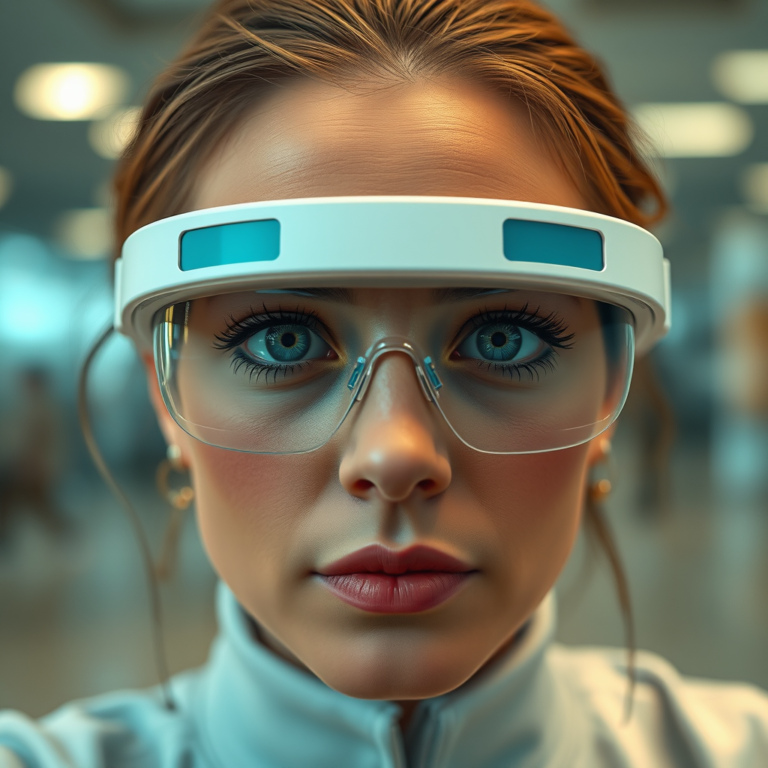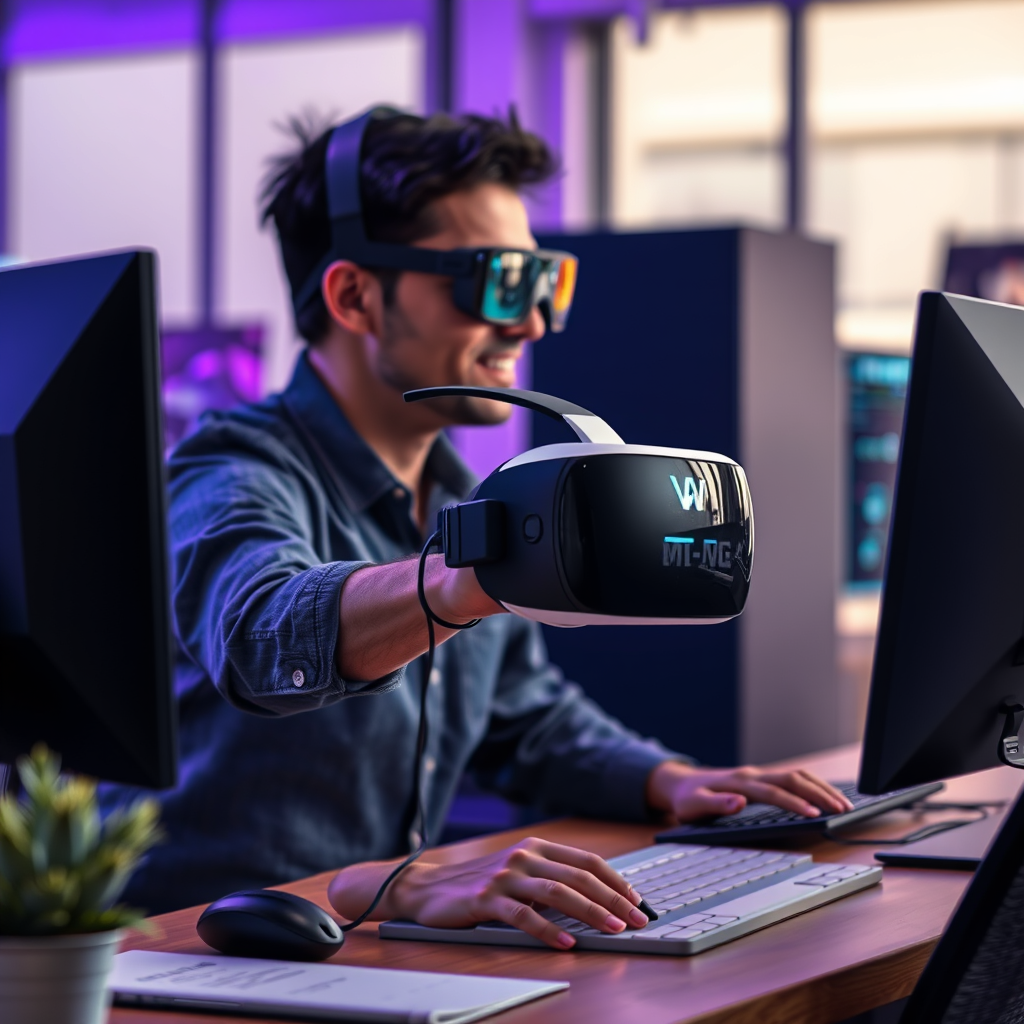

Augmented Reality (AR), Virtual Reality (VR), and Mixed Reality (MR) are three immersive technologies that transform how we interact with both digital and physical worlds. While they share similarities, each offers unique experiences and serves distinct purposes. In this article, we’ll delve into how each technology operates, their applications across various industries, and how they differ from one another, helping you grasp their unique roles in today’s digital landscape.
Understanding Augmented Reality (AR)
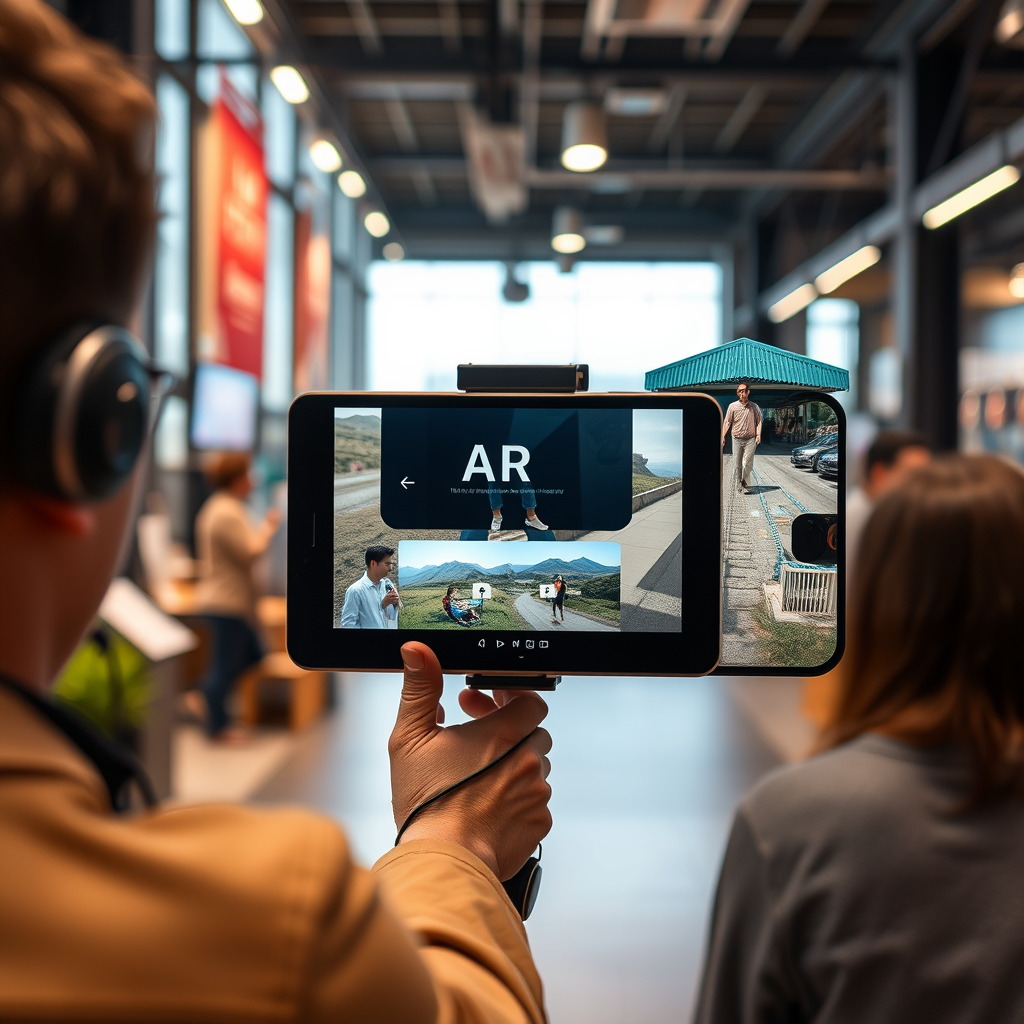
Augmented Reality (AR) overlays digital content onto the real world, enhancing your perception of your surroundings. Imagine walking through a park and seeing digital information about the plants around you, or trying on clothes virtually before making a purchase. This blending of digital elements with the real world allows users to interact with their environment in innovative ways.
Common applications of AR vary widely. One of the most popular examples is the mobile game Pokémon GO, which encourages players to explore their neighborhoods to catch virtual Pokémon in real-world locations. Beyond gaming, AR has practical uses in navigation, where apps like Google Maps use AR to guide users through city streets with directional arrows superimposed on the real world. In retail, companies like IKEA offer AR apps that let customers visualize how furniture would look in their homes, enhancing the shopping experience. The potential of AR is vast, making it a powerful tool for education, marketing, and beyond.
Exploring Virtual Reality (VR)
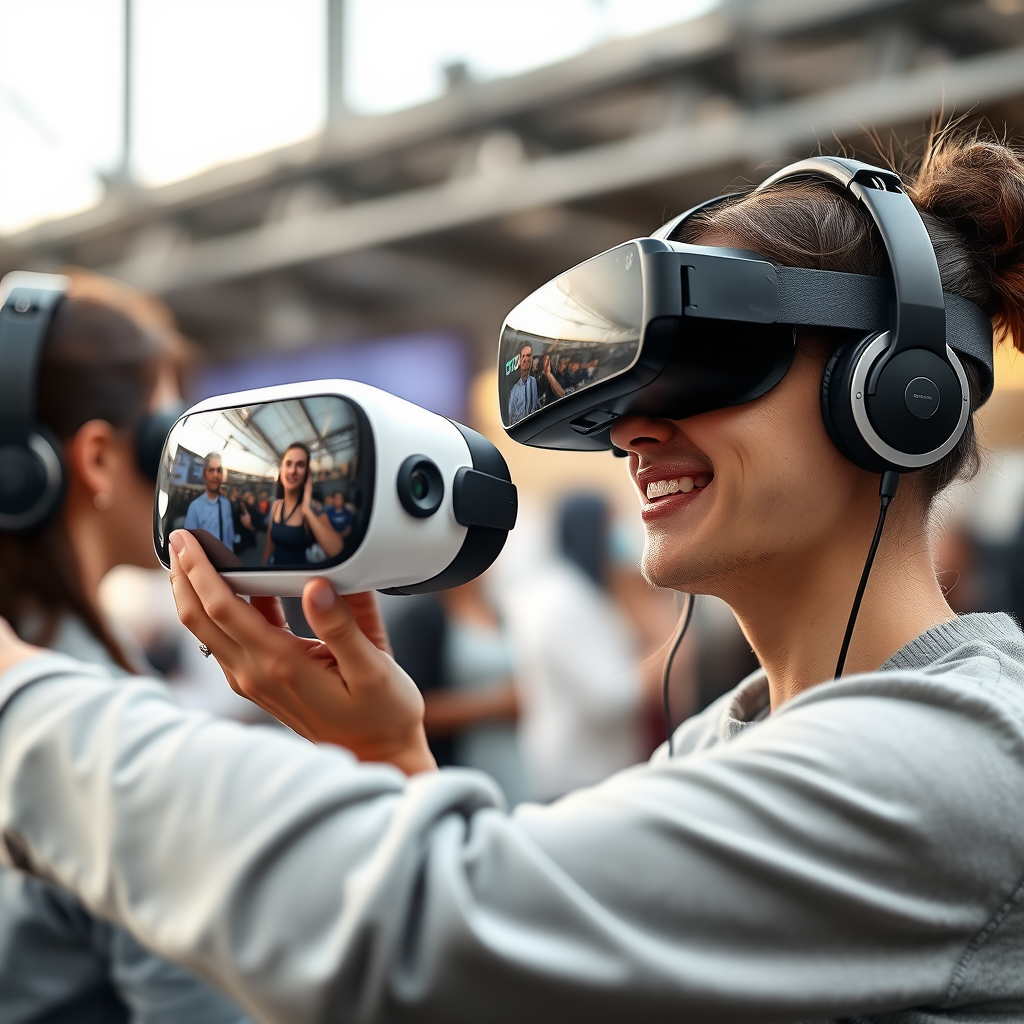
Virtual Reality (VR), on the other hand, immerses users in a fully simulated environment, isolating them from the real world. This technology typically requires a VR headset, which creates a 360-degree digital experience that can transport users to fantastical realms or realistic environments. With VR, users can engage with content in a way that feels incredibly lifelike.
VR is widely used in gaming, where titles like Beat Saber and Half-Life: Alyx provide exhilarating experiences that are hard to replicate outside of a virtual setting. However, its applications extend far beyond entertainment. In fields like training simulations, VR is used to prepare professionals for real-life scenarios—think of pilots using VR to practice flying in various conditions without leaving the ground. In healthcare, VR is making strides in therapeutic applications, such as helping patients manage pain or anxiety through immersive environments designed to distract and soothe them. The complete sensory experience offered by VR opens up countless possibilities for interaction, learning, and exploration.
Defining Mixed Reality (MR)
Mixed Reality (MR) combines elements of both Augmented Reality (AR) and Virtual Reality (VR), allowing real and virtual objects to interact in real-time. This means that you can see and manipulate digital content as if it were part of your physical environment. MR is often facilitated by advanced hardware, such as Microsoft’s HoloLens, which uses sensors and cameras to understand the user’s surroundings and project digital imagery accordingly.
In practical terms, MR has exciting applications in various sectors. For instance, in design visualization, architects can use MR to overlay digital blueprints on a physical site, allowing for more intuitive planning and adjustments. Collaborative work environments also benefit from MR; teams can meet in a shared virtual space, regardless of their physical locations, enhancing remote collaboration. As MR technology continues to evolve, the boundary between the digital and physical worlds becomes increasingly blurred, leading to innovative solutions in problem-solving and creativity.
Key Differences in Technology
One of the primary distinctions between these technologies lies in the hardware used to experience them. Augmented Reality typically utilizes smartphones and tablets, making it accessible to anyone with a compatible device. This ease of access has contributed to AR’s rapid adoption across various industries.
In contrast, Virtual Reality usually requires specialized headsets that can create immersive environments, such as the Oculus Quest or HTC Vive. These devices are designed to isolate the user from their physical surroundings, providing a fully immersive experience that is often more intense than AR.
Mixed Reality, while somewhat similar to AR in its use of the real world as a backdrop, often involves more advanced hardware that integrates sensors, cameras, and sometimes hand-tracking technology. This allows for real-time interaction between real and virtual objects, setting MR apart as a more sophisticated blend of AR and VR capabilities.
Applications in Various Industries
The applications of AR, VR, and MR extend across multiple industries, each technology enhancing user engagement and efficiency in its own way. In marketing and retail, AR provides interactive experiences that captivate consumers, transforming how brands connect with their audience. For example, beauty brands like Sephora use AR to enable customers to virtually try on makeup, making the shopping experience more engaging.
In education, VR is becoming a game-changer, allowing students to experience historical events or complex scientific concepts in immersive ways that textbooks cannot replicate. Medical training is particularly enhanced through VR, where students can practice surgeries in a risk-free environment, honing their skills before entering the operating room.
Mixed Reality is making waves in architecture and engineering, enabling professionals to conduct interactive design reviews. Teams can visualize a project in real-time, making it easier to identify potential issues before construction begins, saving time and resources.
Future Trends and Developments
As technology continues to advance, the convergence of AR, VR, and MR is leading to more innovative applications and experiences. Improved hardware is on the horizon, with lighter, more comfortable devices that enhance user experience. Additionally, the integration of artificial intelligence (AI) is set to revolutionize how users interact with these technologies, enabling more personalized and intuitive experiences.
Emerging trends also point towards enhanced user interaction capabilities. Imagine using hand gestures to manipulate virtual objects or voice commands to control your immersive experience. These developments are not just futuristic dreams; they are rapidly becoming reality as companies invest in research and development.
By staying informed about these evolving technologies, you can better understand how they may impact your life and work, whether you’re a consumer, a professional in a specific industry, or simply a tech enthusiast.
Summarizing the differences between AR, VR, and MR, it’s clear that each has unique strengths and applications across various industries. Understanding these differences can help you choose the right technology for your needs. As AR, VR, and MR continue to evolve and intertwine, their potential to enhance our interaction with both digital and physical realms grows exponentially. To stay updated on these evolving technologies, explore further resources or consider how they can be applied to your own projects.
Frequently Asked Questions
What is the main difference between AR, VR, and Mixed Reality?
Augmented Reality (AR) overlays digital information onto the real world, enhancing your perception of your environment through devices like smartphones or AR glasses. Virtual Reality (VR), on the other hand, immerses users in a completely virtual environment, typically using VR headsets that block out the real world. Mixed Reality (MR) combines elements of both AR and VR, allowing real and virtual objects to interact in real-time, providing a more interactive and immersive experience. Understanding these differences can help users choose the right technology for their needs.
How is Augmented Reality used in everyday applications?
Augmented Reality is widely used in various everyday applications, such as mobile games like Pokémon GO, where users can see and interact with virtual characters in their real-world environment. Additionally, AR technology is utilized in retail through apps that allow customers to visualize how furniture might look in their home before purchasing. By integrating AR into daily life, users can enhance their shopping experiences, navigation, and even learning through interactive educational tools.
Why is Virtual Reality gaining popularity in gaming and training?
Virtual Reality is gaining popularity in gaming and training due to its ability to create fully immersive experiences that engage users on a deeper emotional and cognitive level. In gaming, VR allows players to step into a virtual world, providing a sense of presence and interactivity that traditional gaming cannot offer. In professional training, VR simulations enable learners to practice skills in a safe environment, such as medical or military training, which enhances retention and prepares them for real-life situations.
Which industries are most likely to benefit from Mixed Reality technology?
Mixed Reality technology has the potential to benefit various industries, including healthcare, manufacturing, and education. In healthcare, MR can provide surgeons with real-time data and visualizations during operations, improving precision and outcomes. In manufacturing, workers can use MR to visualize complex assembly processes, enhancing productivity and reducing errors. Educational institutions can leverage MR to create engaging learning environments that blend theoretical knowledge with practical applications.
What are the best devices available for experiencing AR, VR, and Mixed Reality?
For Augmented Reality, devices like Microsoft HoloLens and mobile applications on smartphones or tablets (such as Apple’s ARKit or Google’s ARCore) are popular choices. For Virtual Reality, headsets like the Oculus Quest 2 and Valve Index provide high-quality immersive experiences. In Mixed Reality, the Microsoft HoloLens 2 stands out as a leading device, offering sophisticated spatial mapping and interaction capabilities. Choosing the right device depends on the specific use case and the level of immersion desired.
References
- Virtual reality
- https://www.bbc.com/future/article/20200129-the-difference-between-ar-vr-and-mr
- https://www.nationalgeographic.com/science/article/what-is-virtual-reality
- https://www.technologyreview.com/2021/09/24/1035922/ar-vr-mixed-reality-explained/
- https://www.microsoft.com/en-us/mixed-reality/what-is-mixed-reality
- https://www.ncbi.nlm.nih.gov/pmc/articles/PMC6784995/
- https://www.educationcorner.com/augmented-reality.html