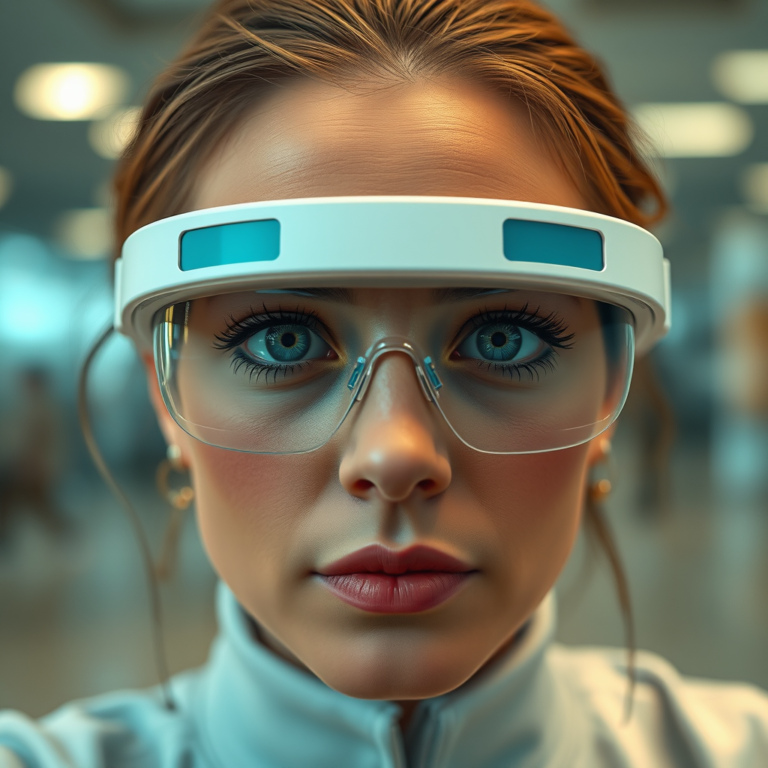

LIDAR technology significantly enhances augmented reality (AR) and video recording by providing precise depth perception and spatial awareness. With LIDAR, devices can create detailed 3D maps of the environment, allowing for more immersive and interactive experiences. In this article, you will discover how LIDAR transforms AR applications and improves video quality, making content creation more dynamic and engaging.
Understanding LIDAR Technology

LIDAR stands for Light Detection and Ranging, a sophisticated technology that uses laser pulses to measure distances. At its core, LIDAR emits thousands of laser beams per second, which bounce off objects and return to the sensor. By calculating the time it takes for each pulse to return, LIDAR creates a highly accurate representation of the environment, capturing millions of data points in real-time. This results in high-resolution 3D maps that are invaluable for various applications, including AR and video recording.
The precision of LIDAR is what sets it apart from traditional camera systems. While cameras can provide flat images, LIDAR can provide depth information, allowing devices to understand and interpret spatial relationships. This capability is particularly useful in environments where accurate measurements and positioning are crucial, such as in construction, urban planning, and, of course, immersive digital experiences.
Enhancing Augmented Reality Experiences

One of the most exciting applications of LIDAR is in augmented reality. LIDAR enables the accurate placement of virtual objects in real-world environments, significantly improving realism and user experience. For instance, imagine using your smartphone to visualize how a new piece of furniture would look in your living room. With LIDAR, the app can accurately assess the dimensions of your space and place the virtual object in a way that adheres to the laws of physics, making it appear as though it truly exists in your room.
Moreover, LIDAR allows for better tracking of user movements and interactions within AR applications. This means that as you move around a space, the virtual elements adjust seamlessly. For example, in AR gaming, this capability can create more immersive experiences, where players can physically interact with the game environment. Applications like Apple’s ARKit leverage LIDAR to create stunning augmented reality experiences that feel more integrated into our daily lives.
Improving Video Recording Quality
LIDAR technology is also making waves in the realm of video recording. With its advanced depth-sensing capabilities, LIDAR enhances focus and clarity in videos. This means that when you record a video, the system can intelligently determine what should be in focus and what can be blurred out, resulting in a more professional-looking final product.
For instance, think of the popular “Portrait Mode” in smartphones. With LIDAR, this feature is taken to the next level, allowing for more precise background blur effects that give videos a cinematic quality reminiscent of high-end cameras. The technology also enables features like real-time depth mapping, which can be used to create stunning visual effects, such as AR overlays that interact dynamically with the recorded scene. As a result, content creators can produce videos that captivate audiences with their stunning visuals and seamless integration of virtual elements.
Real-World Applications of LIDAR in AR
The real-world applications of LIDAR in augmented reality are extensive, spanning multiple industries. In gaming, companies are using LIDAR to create interactive experiences that blend the digital and physical worlds. Games like “Pokémon GO” are evolving with LIDAR technology to provide users with more accurate placements of characters and objects, enhancing gameplay.
In the field of education, LIDAR is being utilized to create immersive learning environments. For example, educational apps can allow students to explore historical sites or biological environments as if they were physically present, making learning more engaging and interactive.
Architectural visualization is another area where LIDAR shines. Architects and designers can use LIDAR to create accurate 3D models of spaces, allowing clients to visualize projects in real-time. This leads to better decision-making and collaboration, ultimately resulting in more successful outcomes.
Future Potential of LIDAR in Media
The future of LIDAR in media is incredibly promising. As advancements continue, we can expect to see more accessible and affordable AR experiences for consumers. This democratization of technology means that more people can create and engage with augmented reality content, opening up new avenues for creativity and expression.
Moreover, the integration of LIDAR with artificial intelligence could further enhance content creation. Imagine automated editing tools that use LIDAR data to recognize scenes and optimize video cuts based on depth and spatial awareness. This would not only save time for content creators but also provide them with tools to produce more compelling narratives.
As LIDAR becomes more ubiquitous, we may also see new forms of storytelling emerge, allowing creators to develop experiences that blend reality and fiction in ways we’ve yet to imagine.
Challenges and Limitations
Despite its transformative potential, LIDAR technology does face challenges and limitations. One significant hurdle is the high cost and complexity of LIDAR systems, which can hinder widespread adoption, especially among smaller content creators or businesses. As technology evolves, however, we can expect prices to decrease, making it more accessible to a broader audience.
Additionally, environmental factors such as lighting and weather can impact the effectiveness of LIDAR. For instance, LIDAR may struggle to function optimally in heavy rain or fog, which could limit its application in outdoor settings. Continued research and development will be essential in addressing these challenges and improving the reliability of LIDAR technology in various conditions.
LIDAR technology is revolutionizing the way we interact with augmented reality and video recording by enhancing precision and user experience. By understanding its applications and potential, content creators and developers can leverage LIDAR to push the boundaries of their projects. As we move towards a future enriched by augmented reality experiences and high-quality video content, it’s clear that LIDAR will play a pivotal role. Explore how you can incorporate LIDAR into your AR and video endeavors today!
Frequently Asked Questions
How does LIDAR improve the accuracy of augmented reality (AR) applications?
LIDAR, or Light Detection and Ranging, enhances the accuracy of augmented reality applications by providing precise distance measurements and detailed 3D spatial mapping of the environment. This enables AR systems to accurately overlay virtual objects onto the real world, ensuring they align correctly with physical surfaces and objects. By capturing millions of data points per second, LIDAR improves the realism of AR experiences, making them more interactive and immersive.
What are the benefits of using LIDAR in video recording?
The use of LIDAR in video recording offers several benefits, including improved depth perception and enhanced spatial awareness. With LIDAR, filmmakers can achieve more dynamic shots by accurately mapping the environment, allowing for better camera tracking and object recognition. This technology also facilitates advanced post-production effects, such as depth-of-field adjustments and 3D modeling, ultimately elevating the quality and creativity of video content.
Why is LIDAR considered essential for creating immersive AR experiences?
LIDAR is considered essential for creating immersive AR experiences because it provides real-time environmental data that allows for accurate placement and interaction of virtual objects within a physical space. This technology captures detailed surface information, enabling AR applications to understand the contours and dimensions of the environment, leading to more realistic interactions. As a result, users can enjoy a more seamless integration of digital elements in their surroundings, enhancing overall user engagement.
Which devices currently utilize LIDAR for AR and video recording?
Several modern devices utilize LIDAR technology for AR and video recording, including the latest smartphones and tablets, such as Apple’s iPhone and iPad Pro models, which feature integrated LIDAR sensors. Additionally, professional cameras and drones equipped with LIDAR capabilities are increasingly used in filmmaking and surveying applications. These devices leverage LIDAR to capture high-resolution spatial data, enhancing both AR applications and video production.
How can LIDAR technology enhance the gaming experience in augmented reality?
LIDAR technology can significantly enhance the gaming experience in augmented reality by enabling more accurate environmental mapping and interaction. With LIDAR, games can create a more immersive experience by allowing virtual characters and objects to interact with real-world features, such as walls and furniture, in a realistic manner. This depth sensing capability not only improves gameplay mechanics but also promotes user engagement by providing a seamless blend of the virtual and physical worlds.
References
- Lidar
- https://www.sciencedirect.com/science/article/abs/pii/S0097849321001932
- https://www.nist.gov/news-events/news/2020/01/nist-lidar-technology-improves-3d-mapping
- https://www.researchgate.net/publication/335467212_Lidar_in_the_Study_of_Climate_Change
- https://www.itu.int/en/ITU-T/focusgroups/ai4good/Pages/default.aspx
- https://www.techrepublic.com/article/how-lidar-works-and-why-its-important-for-ar-apps/
- https://www.wired.com/story/lidar-technology/
- News | NSF – U.S. National Science Foundation
- Triptan efficacy does not predict onabotulinumtoxinA efficacy but improves with onabotulinumtoxin…
- https://www.bbc.com/news/technology-53583886