
Artificial Intelligence (AI) is transforming computational videography by significantly enhancing video quality, automating tedious editing processes, and providing advanced analytics that help creators tell more engaging stories. As these technologies evolve, they are reshaping the landscape of videography, making it not only more efficient but also allowing for greater creative expression. Let’s dive into the world of AI in videography and explore how it’s changing the game for filmmakers and content creators everywhere.
Understanding Computational Videography

Computational videography refers to the use of advanced computational techniques to enhance video production, combining technology with artistic vision. This field is increasingly significant in modern media, where high-quality content is essential for capturing audience attention. By leveraging algorithms, machine learning, and AI, videographers can create stunning visuals that were previously unimaginable. This intersection of technology and artistry allows creators to push boundaries, innovating in ways that blend traditional techniques with cutting-edge digital tools. Whether it’s a short film, a corporate video, or a social media clip, computational videography offers the tools to elevate storytelling to new heights.
How AI Enhances Video Quality
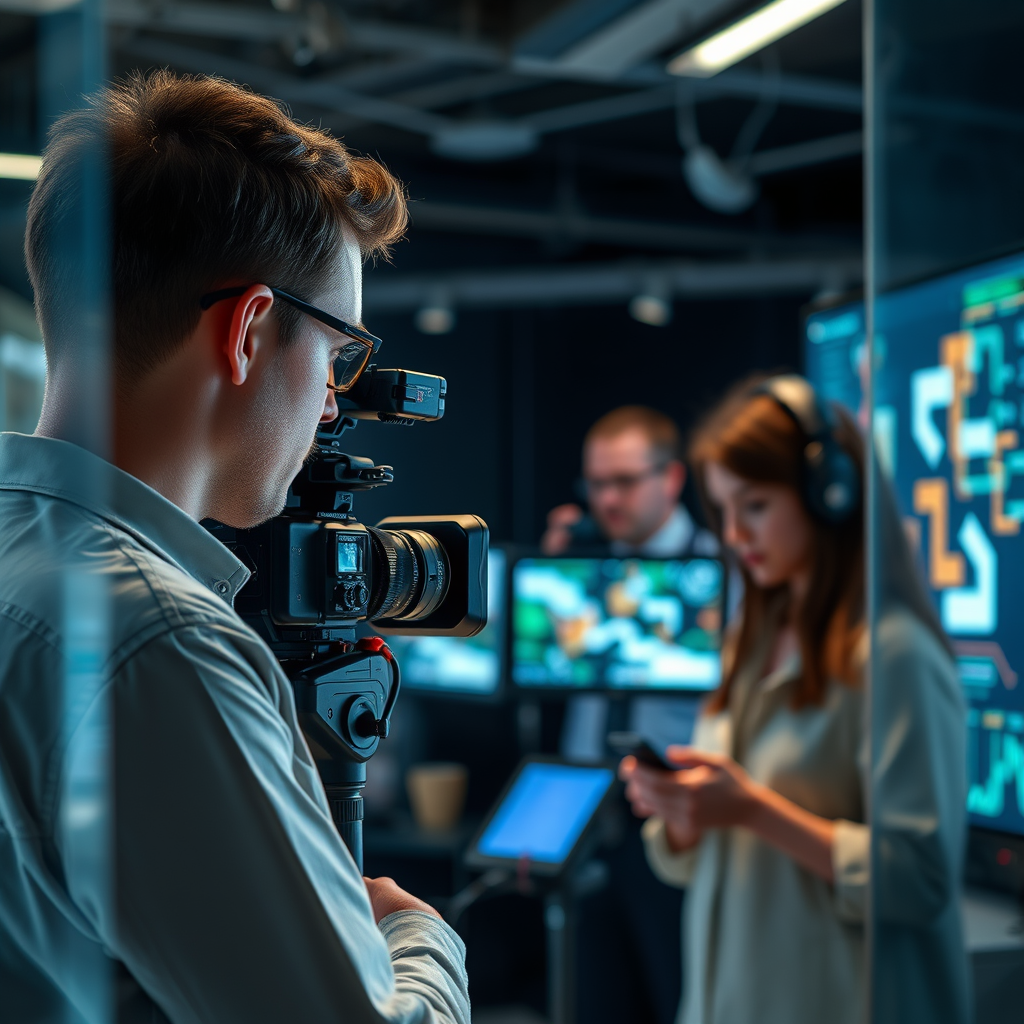
One of the most remarkable contributions of AI to videography is its ability to enhance video quality. AI-driven algorithms employ sophisticated upscaling techniques that can improve resolution and clarity, making even low-quality footage look professional. For instance, software like Topaz Video Enhance AI utilizes deep learning to upscale videos by analyzing and predicting pixel data, thus adding detail that was not originally there.
Moreover, noise reduction and color correction have been revolutionized by machine learning models. These tools can automatically analyze a scene and adjust lighting, contrast, and colors to achieve a perfect balance, all while reducing noise that could distract from the content. For example, Adobe Premiere Pro’s AI-powered features can intelligently differentiate between foreground and background sounds, making it easier to produce high-quality audio alongside stunning visuals.
Automation in Editing Processes
Editing can be one of the most time-consuming aspects of video production, but AI is here to help. By automating routine editing tasks, AI allows creators to focus on the more creative elements of their projects. Tools like Magisto and Adobe Premiere Rush use AI to automatically edit raw footage into polished videos, identifying key moments and suggesting cuts or transitions.
These smart editing tools analyze footage using machine learning to determine the best sequences and pacing. For example, they can recognize emotional cues in the video, such as laughter or tears, and adjust the editing style accordingly to enhance storytelling. This not only saves time but also allows creators to explore new creative directions without getting bogged down in the minutiae of editing.
Advanced Analytics and Insights
AI also plays a crucial role in providing advanced analytics and insights that can significantly enhance storytelling and audience engagement. By utilizing real-time data analysis, creators can better understand how their videos are performing and what resonates with viewers. For instance, platforms like YouTube employ AI to analyze viewer behavior, providing creators with insights into watch time, engagement rates, and even demographics.
Predictive analytics takes this a step further by anticipating viewer preferences and behavior patterns. This means that videographers can tailor their content to meet the specific interests of their audience, leading to more engaging and successful videos. By understanding what works and what doesn’t, creators can refine their strategies, ensuring that each new project is better than the last.
Innovations in Content Creation
The integration of AI in videography has led to remarkable innovations in content creation. AI-generated content, including deep learning techniques, allows for the creation of entirely new visual elements. For instance, tools like Runway ML provide creators with the ability to generate unique visual effects and even entire scenes through AI.
Furthermore, AI has a profound impact on visual effects and animation within videos. Tools like NVIDIA’s GauGAN can transform simple sketches into photorealistic images, enabling artists to visualize concepts rapidly. This capability not only enhances the production quality but also opens doors for creators to experiment with new styles and techniques that were previously out of reach.
Ethical Considerations in AI Usage
As with any technological advancement, the use of AI in creative industries raises important ethical considerations. One of the primary concerns is the balance between originality and automation. While AI can assist in creating content, there is a fine line between enhancement and the over-reliance on automated processes, which could dilute a creator’s unique voice.
Additionally, privacy and consent issues must be addressed. As AI tools become more prevalent, the potential for misuse increases, particularly concerning the manipulation of video footage. Creators must navigate these ethical dilemmas carefully, ensuring that they respect the rights and privacy of individuals involved in their projects while still embracing the benefits of AI.
Future Trends in AI and Videography
Looking ahead, the role of AI in videography is poised to expand even further. Predictions suggest that as AI technologies continue to develop, we will see even more sophisticated editing tools, real-time collaboration features, and enhanced personalization options for viewers. Emerging technologies, such as augmented reality (AR) and virtual reality (VR), are also beginning to integrate AI, creating immersive experiences that redefine storytelling.
As AI becomes more integrated into the videography workflow, creators will have the opportunity to harness these advancements to produce content that is not only visually stunning but also deeply engaging for viewers. Keeping an eye on these trends will be essential for any videographer looking to stay ahead of the curve.
The integration of AI in computational videography presents exciting possibilities for creators and audiences alike. From enhancing video quality and automating tedious tasks to providing valuable insights and fostering innovation, AI is reshaping the landscape of videography. As these technologies continue to evolve, they promise to enhance both the quality and accessibility of video content. Embrace the future of videography by exploring AI tools and techniques to elevate your projects, ensuring your work resonates in an ever-changing digital world.
Frequently Asked Questions
What is the role of AI in computational videography?
AI plays a pivotal role in computational videography by automating various processes involved in video production, enhancing visual quality, and providing intelligent editing tools. It can analyze footage, suggest edits, and even create synthetic scenes, allowing creators to focus on story and creativity rather than technical challenges. This not only speeds up the production process but also democratizes content creation, making high-quality videography accessible to a broader audience.
How does AI improve video editing and post-production workflows?
AI enhances video editing and post-production workflows by streamlining tedious tasks such as color correction, scene detection, and audio synchronization. Machine learning algorithms can categorize footage, suggest optimal cuts, and even auto-generate trailers by analyzing the content’s emotional tone. These advancements lead to faster turnaround times and allow videographers to concentrate on the artistic aspects of their projects, ultimately resulting in higher quality final products.
Why is AI essential for real-time video processing in live events?
AI is essential for real-time video processing in live events because it can analyze and adjust video feeds instantly, optimizing quality and enhancing viewer experience. For example, AI can automatically track moving subjects, apply filters, and blur backgrounds without manual input. This capability not only improves the overall production value of live streaming but also enables dynamic content adaptation, ensuring a more engaging experience for remote audiences.
What are the best AI tools for computational videography?
Some of the best AI tools for computational videography include Adobe Premiere Pro with Sensei, which offers intelligent editing features, and Runway ML, which enables creative professionals to experiment with machine learning models for video effects. Additionally, tools like Magisto and Descript leverage AI for automatic video creation and editing, making them great options for quick edits or social media content. These tools empower videographers to harness the power of AI without needing extensive technical knowledge.
Which industries benefit the most from AI in videography?
Industries such as entertainment, marketing, education, and sports benefit significantly from AI in videography. In entertainment, AI helps streamline film production and enhance visual effects, while marketing teams use AI-generated videos for targeted campaigns and social media engagement. Educational institutions leverage AI to create interactive and engaging learning materials, and sports organizations utilize AI for real-time analysis and highlight generation, optimizing viewer engagement and content delivery.
References
- Computer vision
- https://www.sciencedirect.com/science/article/pii/S0893608021000179
- https://www.nature.com/articles/s41598-020-69138-9
- https://www.theguardian.com/technology/2021/jun/29/ai-video-editing-tools
- https://www.bbc.com/future/article/20210708-how-ai-is-changing-the-way-we-make-videos
- https://www.technologyreview.com/2020/06/15/1002676/ai-video-editing-tools/
- https://www.researchgate.net/publication/3422295_Artificial_intelligence_in_cinema
- https://www.itu.int/en/ITU-T/focusgroups/ai4good/Documents/AI_in_Cinema.pdf