
Spatial computing blends the physical and digital worlds, utilizing technologies like augmented reality (AR), virtual reality (VR), and mixed reality (MR) to create immersive experiences. This innovative approach profoundly impacts display technology, transforming how we interact with digital content. By seamlessly integrating digital information into our physical surroundings, spatial computing enhances user engagement and opens new avenues for various industries. In this article, we’ll explore the core concepts of spatial computing and its implications for display technology.
Understanding Spatial Computing

Spatial computing refers to the technology that enables the interaction between digital and physical environments, allowing users to engage with both realms in a cohesive manner. At its core, spatial computing leverages advanced computing systems to understand, interpret, and manipulate 3D space. The key components of spatial computing include the ability to track and map environments, recognize objects, and provide a responsive interface for users.
The primary technologies involved in spatial computing are augmented reality (AR), virtual reality (VR), and mixed reality (MR). AR enhances the real world by overlaying digital elements, such as images or information, onto our physical surroundings via devices like smartphones or AR glasses. VR, on the other hand, immerses users in a completely digital environment, often using headsets that block out the physical world. MR combines elements of both, allowing digital objects to not only coexist with the physical world but also interact with it in real-time, creating a more integrated experience.
The Evolution of Display Technology
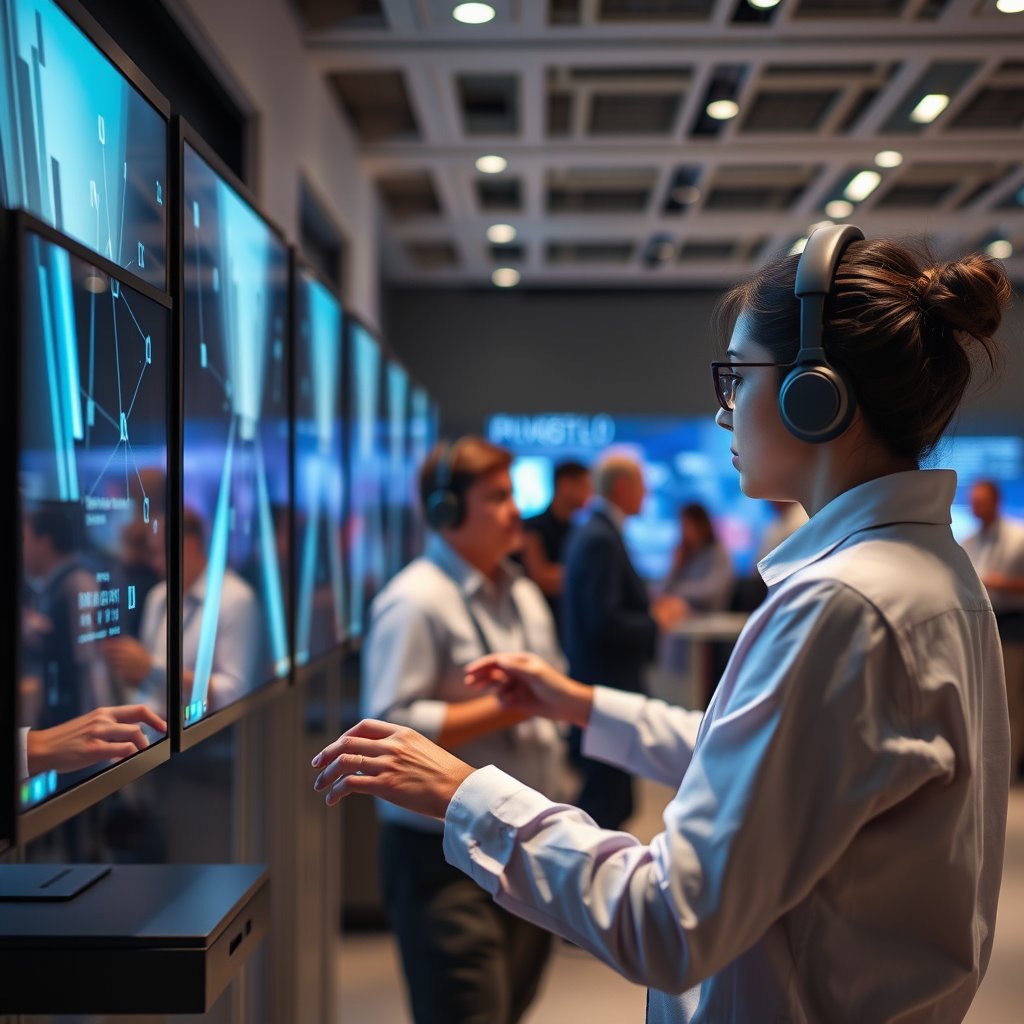
To understand the influence of spatial computing on display technology, it’s essential to consider the historical perspective of display innovations. The journey began with simple monitors and projectors, which laid the groundwork for more sophisticated technologies. The introduction of flat-panel displays in the 1990s marked a significant milestone, making screens thinner and more versatile.
Over the years, key advancements such as OLED (Organic Light Emitting Diode) displays and 4K resolution have dramatically improved visual quality and energy efficiency. These innovations have paved the way for spatial computing, as they provide the necessary resolution and color accuracy for immersive experiences. Technologies like head-mounted displays (HMDs) for VR and AR glasses have further evolved, integrating high-quality displays that enhance user experiences in spatial computing.
How Spatial Computing Enhances User Experience
Spatial computing significantly enhances user experience by creating immersive environments that foster engagement and interaction. For instance, in gaming, players can physically move around their space, interacting with digital objects as if they were part of the real world. This level of immersion can lead to deeper emotional connections and a more memorable experience.
Moreover, real-time data visualization is one of the standout features of spatial computing. Imagine a healthcare professional using AR glasses to visualize a patient’s medical scans while performing surgery, allowing for precise navigation and decision-making. This capability not only improves the quality of care but also reduces the potential for errors. By providing context-aware information in real-time, spatial computing minimizes cognitive load and enhances overall productivity.
Applications of Spatial Computing in Various Industries
The applications of spatial computing span a multitude of industries, showcasing its versatility and transformative potential. In healthcare, AR technologies are already being used for surgical training and patient education, enabling doctors to visualize complex anatomy and procedures with unprecedented clarity. For example, the use of Microsoft HoloLens in surgical settings allows surgeons to overlay critical information directly onto the patient’s body, enhancing precision and safety.
In the gaming industry, titles like Pokémon GO have demonstrated the power of AR by encouraging players to explore their surroundings while interacting with digital characters. This blend of physical and digital interaction has not only boosted engagement but also sparked interest in outdoor activities.
Education is another sector reaping the benefits of spatial computing. Tools like Google Expeditions allow students to take virtual field trips to historical sites or explore the solar system in 3D. This immersive learning experience increases retention and understanding, making education more engaging and interactive.
Moreover, spatial computing enhances productivity and collaboration in the workplace. Virtual meeting platforms that incorporate VR allow remote teams to interact as if they were in the same room, fostering better teamwork and communication. This is particularly valuable in fields like architecture, where clients can walk through virtual models of buildings before they are constructed.
Challenges Faced by Display Technology in Spatial Computing
Despite its potential, the integration of spatial computing with display technology is not without challenges. One significant technical limitation is latency—the delay between user actions and the system’s response. In immersive environments, even a slight delay can disrupt the experience, leading to motion sickness or disorientation.
Additionally, resolution issues can hinder the effectiveness of spatial computing. For AR and MR to be truly convincing, displays must deliver high-resolution visuals that match the detail of the physical world. Current hardware often struggles to meet these demands, particularly in fast-paced applications like gaming or medical simulations.
User adoption also presents a barrier. Many individuals may feel overwhelmed by new technologies or find them cumbersome to use. Improving the user-friendliness of devices, reducing their weight, and enhancing battery life will be essential for encouraging broader adoption.
Future Trends in Spatial Computing and Display Technology
Looking ahead, the synergy between spatial computing and display technology is expected to flourish, with several trends on the horizon. One promising prediction is the development of more advanced holographic displays that can render images in 3D without the need for glasses. This would revolutionize how we interact with digital content, making it more accessible and immersive.
Emerging technologies such as 5G connectivity will also play a crucial role in shaping the future of spatial computing. With faster data transfer rates and lower latency, 5G can support real-time interactions in AR and VR applications, enhancing the user experience and opening new possibilities for remote collaboration.
Additionally, artificial intelligence (AI) will likely play a significant role in spatial computing advancements. AI can help in processing vast amounts of spatial data quickly, improving object recognition and environmental mapping, which are key components of AR and MR experiences.
Conclusion
Spatial computing is revolutionizing display technology by creating immersive, interactive experiences that enhance user engagement across various industries. With applications ranging from healthcare to gaming and education, the potential for spatial computing is immense. However, addressing the challenges of latency, resolution, and user adoption will be crucial for its continued growth. As advancements continue, staying informed about these developments will be essential for leveraging their full potential. Explore the latest trends and consider how they can be applied in your field to stay ahead in this rapidly evolving landscape.
Frequently Asked Questions
What is spatial computing and how does it work?
Spatial computing refers to a technology that integrates digital and physical worlds, allowing users to interact with digital information in three-dimensional space. This is achieved through devices such as augmented reality (AR) glasses and virtual reality (VR) headsets that utilize sensors and cameras to map the environment. By enabling interactions that are natural and intuitive, spatial computing enhances user experiences across various applications, from gaming to industrial design.
How is spatial computing impacting display technology?
Spatial computing is significantly transforming display technology by shifting the focus from traditional 2D screens to immersive 3D displays. This evolution enhances visual experiences by enabling holograms and AR overlays, which provide a more engaging interaction with content. As a result, display technologies are advancing to support higher resolutions, improved refresh rates, and adaptive optics, which are crucial for delivering seamless and realistic spatial experiences.
Why is spatial computing considered the future of user interaction?
Spatial computing is viewed as the future of user interaction because it allows for more natural and intuitive ways to engage with digital content. By leveraging the physical environment, it reduces the reliance on conventional input devices like keyboards and mice, making technology more accessible. This shift not only enhances user engagement but also opens new avenues for industries such as education, healthcare, and entertainment, where immersive experiences can lead to better outcomes.
What are the best applications of spatial computing in everyday life?
The best applications of spatial computing in everyday life include augmented reality navigation, immersive gaming experiences, virtual training simulations, and interactive design tools. For instance, AR navigation apps can overlay directions directly onto the real world, while VR training environments can simulate complex scenarios for professionals. These applications illustrate how spatial computing can enhance productivity, learning, and entertainment by merging the digital and physical realms seamlessly.
Which industries are benefiting the most from advancements in spatial computing?
Industries such as healthcare, education, manufacturing, and entertainment are reaping significant benefits from advancements in spatial computing. In healthcare, for example, surgeons are using AR to visualize patient anatomy during operations, improving precision. In education, immersive learning experiences engage students more effectively than traditional methods. As spatial computing technologies continue to evolve, their applications across various sectors highlight the transformative potential of this innovative field.
References
- https://en.wikipedia.org/wiki/Spatial_computing
- https://www.sciencedirect.com/science/article/pii/S2351978921000058
- https://www.nytimes.com/2021/04/02/technology/spatial-computing-ar-vr.html
- https://www.wired.com/story/spatial-computing-explained/
- https://www.nature.com/articles/s41598-019-48643-7
- https://www.bbc.com/news/technology-56837826
- https://www.itu.int/en/ITU-T/focusgroups/ai4good/Documents/Spatial%20Computing.pdf