In the world of music production, having the right subwoofer is essential for achieving accurate sound reproduction and enhancing the overall audio experience. A quality subwoofer can transform your mixing and mastering process by providing the deep bass and clarity needed to create professional-sounding tracks. In this article, you’ll discover our top picks, key features to consider, and tips for integrating subwoofers into your studio setup, ensuring you make the best choice for your audio production needs.




Understanding the Importance of Subwoofers in Music Production

Subwoofers play a crucial role in music production by delivering the low-frequency response that standard monitors often lack. When producing music, it’s vital to hear every element of your mix accurately, especially the bass instruments and low-end frequencies that form the foundation of many tracks. By incorporating a subwoofer into your studio setup, you can achieve a balanced mix, ensuring that bass-heavy elements like kick drums and bass lines are represented correctly. This level of precision is essential for creating music that translates well across various playback systems, from club speakers to car audio systems. Ultimately, having a reliable subwoofer allows producers to make informed decisions about their mixes, leading to a polished and professional sound.
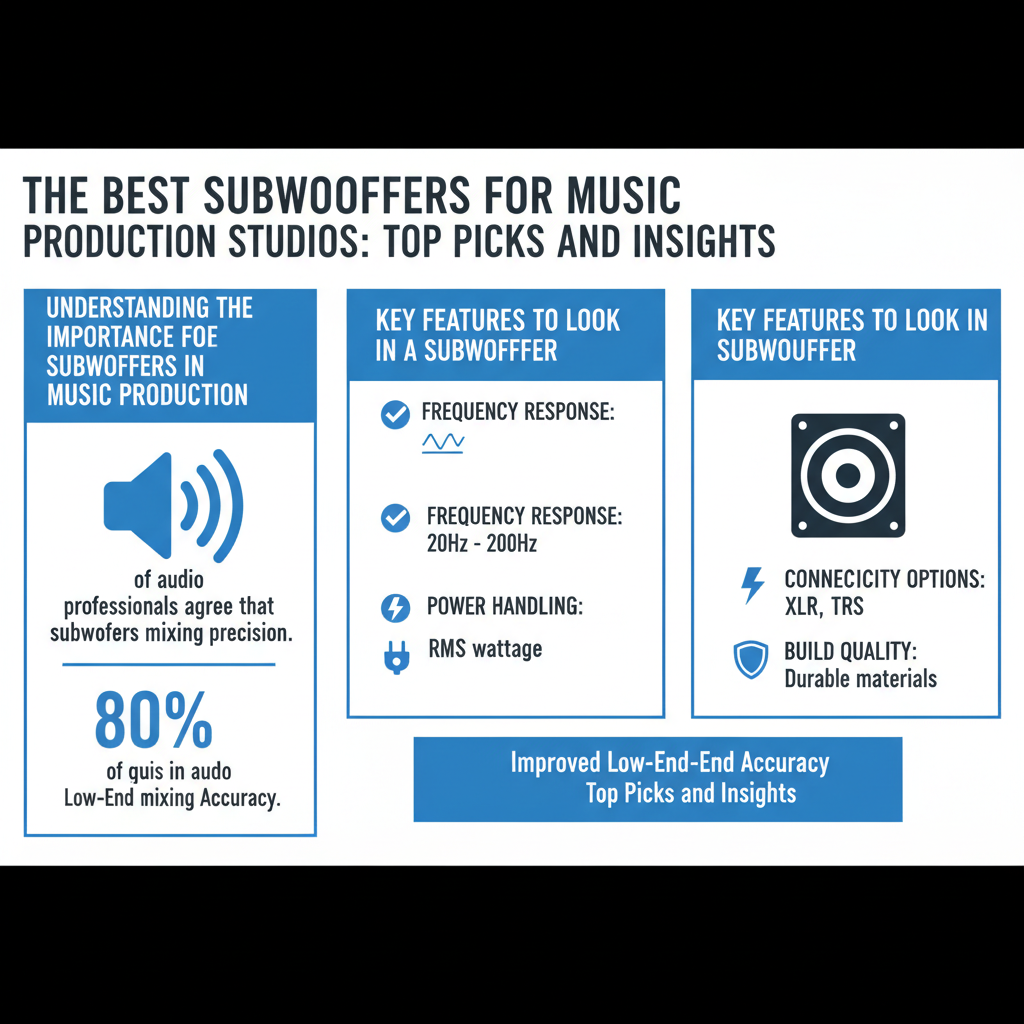
Key Features to Look for in a Subwoofer
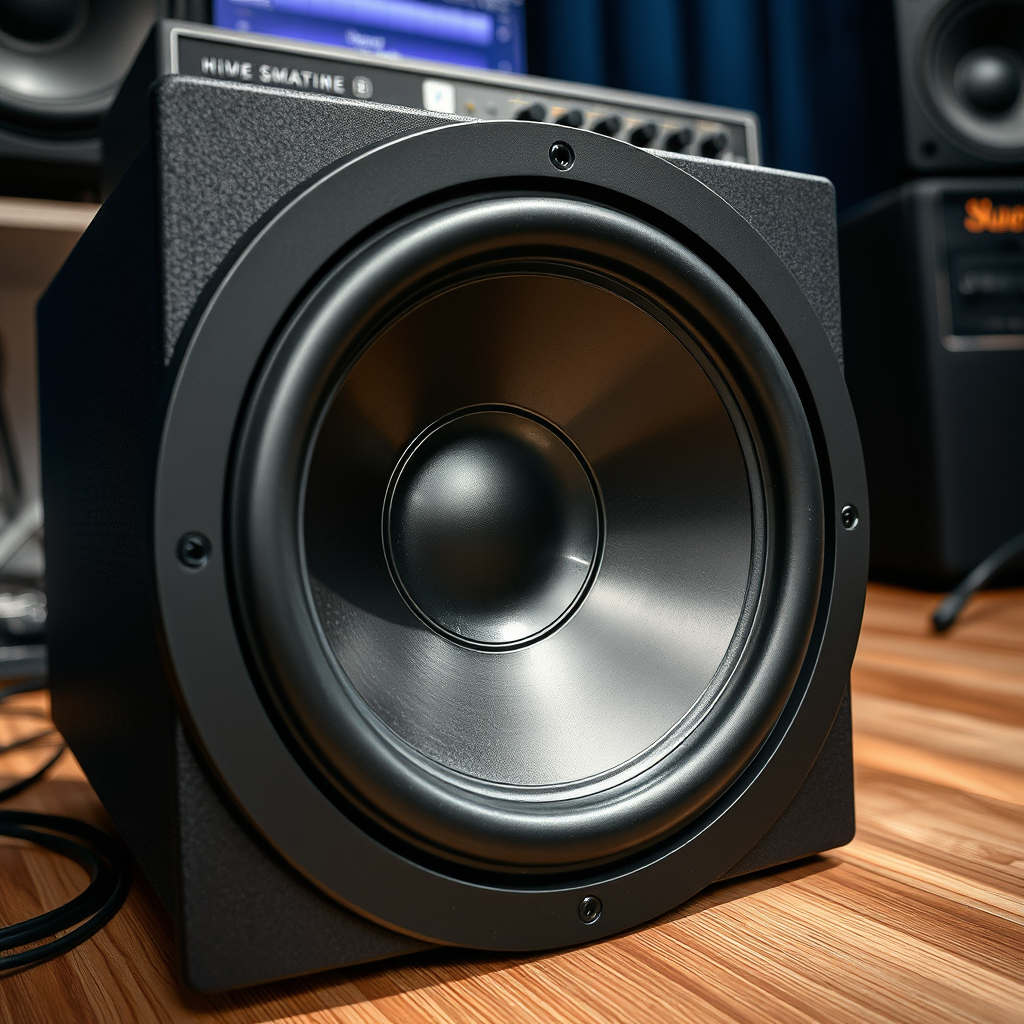
When selecting a subwoofer for your music production studio, several key features should be at the forefront of your decision-making process:
– Frequency Response: A wide frequency range is critical for accurate bass reproduction. Look for a subwoofer that extends below 30 Hz, as this will ensure you can hear sub-bass elements that add depth to your tracks. Models like the KRK 10S2, for instance, boast an impressive frequency response, ensuring you won’t miss any low-end nuances.
– Power Rating: The power rating, measured in watts, indicates how loud and dynamic a subwoofer can be. Higher wattage often translates to better performance, especially in larger studios or when monitoring at higher levels. A subwoofer with at least 150 watts RMS is usually a good starting point for effective bass reproduction.
– Build Quality: Look for sturdy construction and quality materials. A well-built subwoofer will provide longevity and withstand the rigors of a busy studio environment.
– Connectivity Options: Ensure the subwoofer has multiple input options (XLR, TRS, or RCA) to easily integrate with your existing studio monitors and audio interfaces.
– Tuning Capabilities: Some subwoofers come with built-in EQ or room tuning features that allow you to adjust the sound to fit your studio’s unique acoustics, which is essential for accurate monitoring.
Top Subwoofer Picks for Music Production
Here are some of the best subwoofers available on the market for music production studios:
– KRK 10S2: Known for its impressive low-end response, the KRK 10S2 offers room tuning capabilities that make it a favorite among producers. Its built-in EQ and front-facing port design ensure smooth bass response, making it ideal for both tracking and mixing.
– Yamaha HS8S: The HS8S is an excellent companion to the Yamaha HS series monitors. Its precise bass response and seamless integration with other studio monitors make it a solid choice for professionals. The HS8S provides a clear and detailed low-end, allowing producers to make informed mixing decisions.
– JBL 310P: The JBL 310P boasts a powerful 300 watts of amplification and a frequency response down to 27 Hz. Its compact design is perfect for smaller studios, while its robust performance ensures that low frequencies are delivered with clarity and punch.
– Adam Audio Sub10 Mk2: This subwoofer features a unique design with a front-firing bass port, making it perfect for studio environments where space may be limited. With a frequency response down to 28 Hz, the Adam Audio Sub10 Mk2 delivers accurate low-end reproduction, making it an excellent choice for critical listening.
Integrating Subwoofers into Your Studio Setup
Once you’ve selected the perfect subwoofer, the next step is to integrate it into your studio setup effectively:
– Placement: Proper placement of your subwoofer can significantly affect its performance. Ideally, place the subwoofer near the wall or in a corner to enhance bass response. However, avoid placing it directly against a wall to prevent phase issues. Experiment with different positions in your room to find the sweet spot that delivers the best sound.
– Calibration: Calibration is key to achieving a cohesive sound between your subwoofer and monitors. Use measurement tools or software to analyze the frequency response in your studio and adjust the subwoofer’s settings accordingly. Many subwoofers come with built-in calibration features, making this process easier.
– Crossover Settings: Set the crossover frequency to allow your monitors to handle the mid and high frequencies while the subwoofer takes care of the lows. A good starting point for the crossover frequency is between 80 Hz and 100 Hz, but this may vary depending on your monitors.
Budget Considerations for Subwoofers
When it comes to choosing a subwoofer, budget is always a consideration. Fortunately, there are excellent models available across various price ranges:
– Entry-Level Options: If you’re just starting, consider models like the Mackie CR8S-XBT or the Yamaha HS8S, which provide solid performance without breaking the bank. These subwoofers offer a great balance of quality and affordability.
– Mid-Range Choices: For those looking to invest a bit more, options like the KRK 10S2 or the JBL 310P deliver superior performance and features that are worth the extra cost.
– Professional-Grade Subwoofers: If you’re a seasoned producer or working in a professional studio, models like the Adam Audio Sub10 Mk2 or the Focal Sub6 can be excellent long-term investments, providing exceptional sound quality and durability.
It’s essential to weigh the long-term benefits of sound quality against the initial cost. Remember, investing in a good subwoofer can enhance your production capabilities and provide a more enjoyable mixing experience.
Maintenance Tips for Your Subwoofer
To ensure your subwoofer continues to perform at its best, regular maintenance is key:
– Check Connections: Periodically inspect all connections and cables to ensure they’re secure and functioning properly. Loose or damaged connections can affect sound quality and may cause noise issues.
– Keep It Clean: Dust and debris can interfere with your subwoofer’s performance. Regularly clean the exterior and ensure that the drivers are free of obstructions. A soft microfiber cloth works well for this task.
– Monitor Settings: Check your subwoofer’s settings and calibration occasionally, particularly if you’ve made changes to your studio layout or equipment. This will help maintain an accurate and balanced sound.
– Temperature Management: Ensure your subwoofer is placed in a well-ventilated area to avoid overheating. Excessive heat can damage the internal components over time.
By following these maintenance tips, you can extend the lifespan of your subwoofer and ensure consistent sound quality for your music production projects.
By understanding the importance of subwoofers, evaluating their key features, and following integration and maintenance tips, you can significantly enhance your music production experience. Choosing the right subwoofer for your studio will not only improve your mixes but also allow you to enjoy the full spectrum of sound in your music. So, take your time to research and select the best subwoofer that fits your needs and elevate your production game to new heights!
Frequently Asked Questions
What should I look for when choosing a subwoofer for my music production studio?
When selecting a subwoofer for your music production studio, consider factors like frequency response, power output, and size. A frequency range that extends down to 20 Hz is ideal for accurately reproducing low-end sounds, while a power output of at least 100 watts ensures that your subwoofer can handle a variety of music genres without distortion. Additionally, the size of the subwoofer should complement your studio space; smaller rooms may benefit from compact models, while larger spaces can accommodate more powerful options.
How do I integrate a subwoofer into my existing studio setup?
Integrating a subwoofer into your studio setup involves connecting it to your audio interface or mixer using balanced cables to minimize noise. It’s important to set the crossover frequency correctly, which directs low frequencies to the subwoofer while allowing higher frequencies to be handled by your main monitors. Finally, consider the placement of the subwoofer in the room, as positioning it near walls or corners can enhance bass response but may also require acoustic treatment to avoid muddiness.
Why is a subwoofer important for music production?
A subwoofer is crucial for music production because it allows you to accurately hear low-frequency elements in your mixes, such as basslines and kick drums. Without a dedicated subwoofer, these essential components can become lost or poorly represented, leading to imbalanced mixes. Additionally, a good subwoofer helps ensure that your tracks translate well across different playback systems, enhancing the overall quality and professionalism of your productions.
What are the best subwoofers for music production studios in 2023?
Some of the best subwoofers for music production studios in 2023 include the KRK 10S2, JBL 310P, and the Adam Audio Sub8. The KRK 10S2 is renowned for its accurate low-end response and built-in room tuning features, making it ideal for various studio environments. The JBL 310P offers a powerful output with a wide frequency range, while the Adam Audio Sub8 is praised for its compact design and exceptional sound clarity, making it suitable for smaller studios without compromising on quality.
Which subwoofer brands are most trusted by music producers?
Some of the most trusted subwoofer brands among music producers include KRK, JBL, Yamaha, and Genelec. KRK is well-regarded for its balance of affordability and superior sound accuracy, while JBL is known for its powerful and reliable performance. Yamaha offers a range of options that deliver great value and quality, and Genelec is often the choice for professionals seeking precision and durability in high-end studio environments. Each of these brands provides subwoofers that cater to different studio needs and budgets.
References
- Subwoofer
- https://www.izotope.com/en/learn/best-studio-monitors.html
- https://www.soundonsound.com/techniques/guide-studio-monitoring
- https://www.doublenotes.com/studio-monitors-vs-subwoofers
- https://www.researchgate.net/publication/261476301_Subwoofers_for_Music_Production
- https://www.npr.org/sections/monkeysee/2013/12/30/258971159/the-best-studio-monitors-for-music-production
- Search results: Jenkins Music-Production-and-Recording-Technology-Second-Edition-Student-Access-C…