Choosing between wireless and wired microphones ultimately depends on your specific needs and the context in which you’ll be using them. Wireless microphones offer flexibility and mobility, while wired microphones provide reliability and consistent sound quality. In this article, we’ll explore the pros and cons of both types to help you make an informed decision.
Understanding Wireless Microphones

Wireless microphones have revolutionized the way we perform and communicate. One of their standout features is flexibility and mobility. Imagine being a speaker at a conference or a performer on stage—having the freedom to move around without being tethered to a cable can significantly enhance engagement. This mobility allows entertainers to interact with their audience, making performances feel more intimate and dynamic.
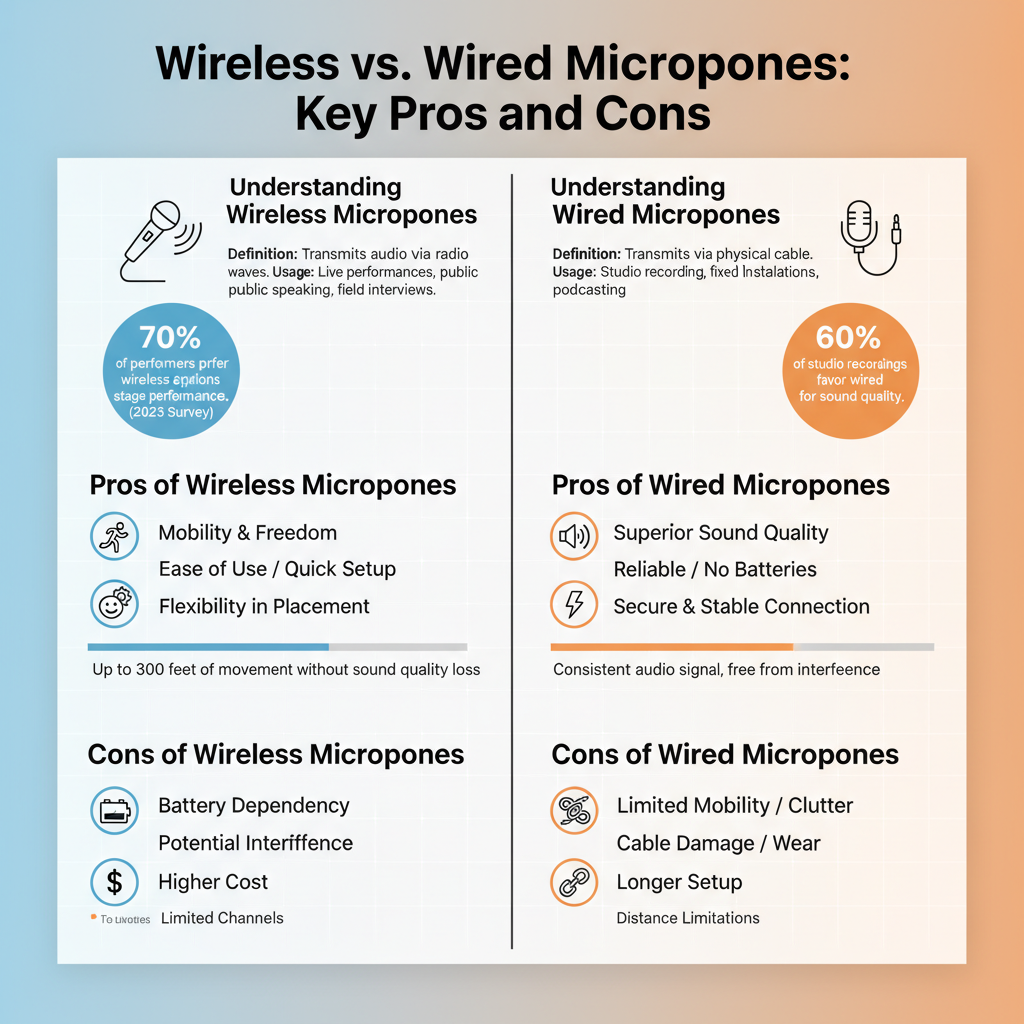
In addition to mobility, the setup convenience of wireless microphones cannot be overstated. Setting up for an event often involves dealing with numerous cables and connectors, which can be time-consuming and stressful. Wireless systems eliminate this hassle, allowing for a more streamlined setup. With just a microphone and a receiver, you can be ready to go in minutes, making them a popular choice for busy event planners and performers who prefer to focus on their craft rather than technical details.
Understanding Wired Microphones

While wireless microphones have their advantages, wired microphones hold a strong place in audio technology. One of their primary benefits is sound quality. Wired microphones typically deliver superior audio fidelity, boasting a richer and clearer sound that is often preferred in studio settings. For instance, professional recording studios frequently rely on high-quality wired microphones because they capture vocals and instruments with exceptional clarity, providing a solid foundation for any recording.
Another compelling factor is reliability. When you use a wired microphone, you eliminate concerns about signal interference and battery failures, two common issues with wireless systems. In critical applications, such as live broadcasts or recording sessions, having a dependable connection can be the difference between success and failure. For example, many broadcasters stick to wired microphones during live TV events to ensure consistent audio quality, avoiding the risk of dropouts.
Pros of Wireless Microphones
Wireless microphones come with several advantages that are hard to ignore. Freedom of movement is arguably the most significant benefit. Whether you are a musician, a public speaker, or a fitness instructor, being able to roam around the stage or room allows you to engage more with your audience, creating a vibrant atmosphere. This freedom can be particularly advantageous in formats like interviews or panel discussions, where interaction is key.
Moreover, using wireless microphones results in reduced cable clutter. In environments where multiple performers or speakers are involved, tangled wires can create not only a messy appearance but also pose safety hazards. By eliminating the need for multiple cables, you can maintain a cleaner setup, which is crucial for both aesthetics and safety—less risk of tripping means a more enjoyable experience for everyone involved.
Cons of Wireless Microphones
Despite their many benefits, wireless microphones do come with some drawbacks. One major concern is interference issues. Wireless signals can be disrupted by various electronic devices, leading to unwanted noise or even complete signal loss. For example, if you’re at an event with numerous wireless devices (like cell phones or other audio equipment), you might experience dropouts or distorted sound, which can be detrimental during a live performance or presentation.
Additionally, users must contend with battery dependency. Wireless microphones typically run on batteries, which means they require regular changes or recharging. This can lead to unexpected downtimes if you haven’t planned accordingly. Imagine being on stage, only to discover that your microphone has run out of power! To avoid this, it’s essential to keep spare batteries on hand or invest in models with longer battery life, which can add to the overall maintenance costs.
Pros of Wired Microphones
Wired microphones are often praised for their consistent performance. They provide a stable connection with minimal signal loss, which is especially important in larger venues where distance and interference can affect sound quality. For example, many audio engineers prefer wired microphones for orchestral recordings because they can rely on a direct connection to achieve the best possible sound.
In terms of budget, wired microphones tend to be cost-effective. Generally, they are less expensive than wireless options, which often require additional equipment like receivers and antennas. For those just starting in audio production or those on a tight budget, wired microphones present an excellent choice. Moreover, they require no ongoing expenses for batteries, making them easier to maintain in the long run.
Cons of Wired Microphones
On the flip side, wired microphones come with their own set of limitations. The most obvious drawback is limited movement. Users are tethered to a specific location, which can hinder performance dynamics. This limitation can be particularly challenging for performers who thrive on interaction and movement, such as actors in a theater production or live bands.
Additionally, the setup complexity cannot be overlooked. Running cables through a venue can be cumbersome and time-consuming, especially if you’re setting up for a large event. The need to manage and conceal cables can lead to additional logistical challenges and may require extra manpower to ensure everything is neatly organized. In contrast to the quick setup of wireless systems, dealing with cables can feel like a daunting task.
Making the Right Choice
When it comes to selecting the right microphone, it’s essential to assess your needs. Consider the type of events you’ll be using the microphone for—if you need to move around frequently, a wireless option may be best. However, if your priority is sound quality and reliability, especially in a studio or controlled environment, a wired microphone may serve you better.
It’s also vital to evaluate your budget. While wireless microphones can offer more features and flexibility, they often come with a higher price tag. Determine what you can afford and weigh the costs against the benefits of each option. A thoughtful analysis will help you make an informed decision that aligns with your audio needs and financial constraints.
Choosing the right microphone can greatly affect your audio experience, whether in a performance, recording, or public speaking scenario. Weigh the pros and cons carefully, and consider your specific needs before making a decision. If you want to dive deeper, explore user reviews and professional recommendations to find the best fit for your situation. Understanding the differences between wireless and wired microphones will empower you to make the best choice for your unique circumstances, ensuring your audio experience is nothing short of exceptional.
Frequently Asked Questions
What are the main differences between wireless and wired microphones?
The primary difference between wireless and wired microphones lies in their connectivity. Wired microphones use a physical cable to connect to a sound system, providing a stable and interference-free audio signal. In contrast, wireless microphones transmit audio signals via radio frequency, allowing for greater mobility and freedom of movement. However, wireless systems can be susceptible to interference and require battery management, whereas wired microphones offer consistent performance without concerns about battery life.
How do I choose the best microphone type for my needs: wired or wireless?
When choosing between wired and wireless microphones, consider your specific needs and environment. If you require mobility for performances, presentations, or events, a wireless microphone may be the best choice for its convenience. However, for studio recording or situations where audio quality is paramount, a wired microphone often delivers superior sound quality with less risk of interference. Evaluate factors like performance location, budget, and intended use to make an informed decision.
Why do professional audio engineers prefer wired microphones over wireless ones?
Professional audio engineers often prefer wired microphones because they provide a more reliable audio signal with minimal latency and interference. Wired systems are less prone to dropouts and provide consistent sound quality, which is crucial in live sound situations. Additionally, wired microphones do not require batteries, eliminating the risk of running out of power during a critical moment, making them a trusted choice for high-stakes environments.
What are the pros and cons of using wireless microphones?
The pros of using wireless microphones include mobility, convenience, and flexibility, allowing performers to move freely without being tethered to a sound system. They are particularly beneficial in large venues and dynamic performances. However, the cons include the potential for audio interference, battery dependency, and sometimes higher costs compared to wired options. It’s essential to weigh these factors against your specific usage scenario to determine if a wireless microphone is the right fit for you.
Which microphone type provides better sound quality: wired or wireless?
Generally, wired microphones are known for delivering superior sound quality compared to wireless microphones, especially in professional settings. The direct connection minimizes signal loss and interference, resulting in clearer and more accurate audio reproduction. However, advancements in wireless technology have improved sound quality significantly, so high-end wireless microphones can also provide excellent audio performance. Ultimately, the choice may depend on your specific usage and the quality of the devices you are considering.
References
- https://en.wikipedia.org/wiki/Microphone
- https://www.itu.int/en/ITU-T/studygroups/2013-2016/15/Documents/Articles/Wireless_vs_Wired_Microphones.pdf
- https://www.npr.org/sections/technology/2020/01/30/799303312/what-is-the-future-of-wireless-microphones
- SAE Institute – Choose your region
- https://www.audio-technica.com/en-us/education/wireless-vs-wired-microphones
- https://www.frontrowed.com/blog/wired-vs-wireless-microphones-pros-and-cons/
- https://www.techhive.com/article/2999831/wired-vs-wireless-microphones-how-to-choose-the-right-mic-for-your-needs.html