

Quantum dots are revolutionizing modern display technology by enhancing color accuracy, brightness, and energy efficiency. These tiny semiconductor particles are at the forefront of a visual transformation, enabling displays to showcase vibrant colors and superior contrast. With their unique properties and versatile applications, quantum dots are not just a trend; they are shaping the future of how we experience visual content, from televisions to smartphones and beyond.
What Are Quantum Dots?

Quantum dots are nanoscale semiconductor particles that exhibit unique optical and electronic properties due to their size. Typically ranging from 2 to 10 nanometers in diameter, these particles possess quantized energy levels, which means that the energy they emit when excited by light can be finely tuned based on their size. This phenomenon is known as the quantum confinement effect, and it allows quantum dots to produce a specific color of light when illuminated.
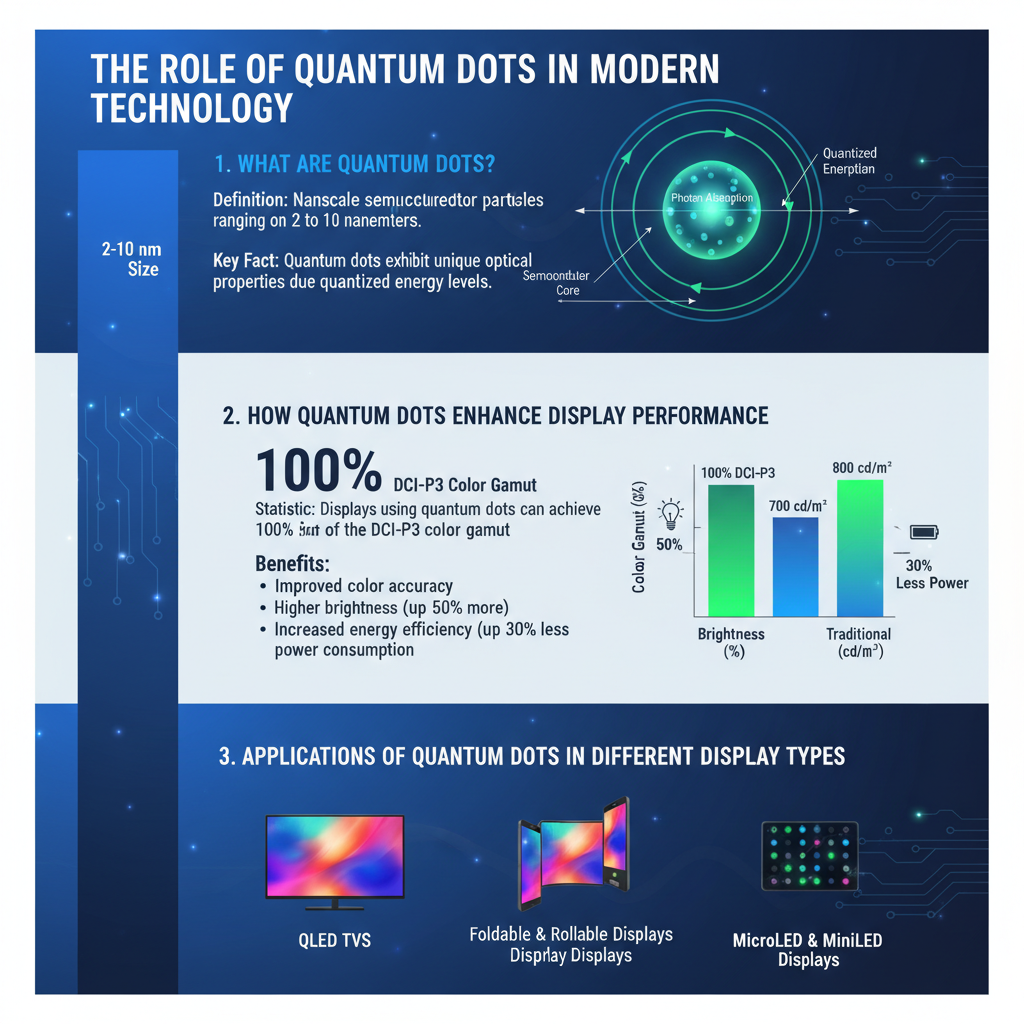
The significance of size and bandgap in determining color cannot be overstated. Essentially, the smaller the quantum dot, the higher the energy of the emitted light, resulting in colors towards the blue end of the spectrum. Conversely, larger dots emit light in the red spectrum. This tunability is crucial for creating displays that are not only more colorful but also more precise, as each quantum dot can be engineered to emit a particular wavelength of light, leading to a broader palette of colors being displayed.
How Quantum Dots Enhance Display Performance

One of the standout features of quantum dots is their ability to improve color reproduction and achieve a wider color gamut than traditional display technologies. For instance, in displays that utilize quantum dots, such as QLED TVs, viewers can experience a broader range of colors that are more vivid and true to life. This is because quantum dots can efficiently convert the backlight into pure colors, resulting in a more accurate representation of the content being viewed.
In addition to color accuracy, quantum dots significantly increase brightness and contrast ratios. Compared to standard LED displays, QLEDs can achieve higher brightness levels while maintaining color fidelity—even in brightly lit environments. This means that whether you’re watching a movie in a dark room or a sunny afternoon, the image quality remains consistent and striking. The enhanced contrast ratios provide deeper blacks and brighter whites, which adds depth and realism to the viewing experience.
Applications of Quantum Dots in Different Display Types
Quantum dots are making significant strides in various display technologies, most notably in LCDs and OLEDs. In LCDs, quantum dots are used as a layer of film that sits between the backlight and the liquid crystal display itself. This enables the screen to produce a wider range of colors without needing a complete redesign of the LCD technology. For example, many TV brands have adopted quantum dot technology to enhance their LCD models, leading to improved color accuracy and energy efficiency.
In OLED displays, quantum dots are integrated to enhance performance further. While OLED technology excels in producing deep blacks and vibrant colors, the addition of quantum dots can help improve the efficiency of light emission and expand the overall color gamut. This combination allows OLED displays to reach new heights in visual performance, making them more appealing to consumers who are looking for the best viewing experience available.
Quantum Dots vs. Traditional Display Technologies
When comparing quantum dots to traditional display technologies such as LED and OLED, several key differences emerge. LED displays, while popular, often struggle with color accuracy and brightness, particularly in environments with ambient light. Quantum dots address these issues by improving color reproduction and allowing for brighter, more vivid displays.
On the other hand, OLED displays have their own strengths, particularly in achieving true blacks thanks to their ability to turn off individual pixels. However, they can sometimes face challenges with color consistency at high brightness levels. Quantum dots can enhance OLED technology by providing brighter colors and a wider range, creating a hybrid that captures the best of both worlds.
Each technology has its advantages and disadvantages. While quantum dots enhance color and brightness, they may also introduce complexities in production and cost. However, their ability to create stunning visual experiences makes them a compelling choice for future display technologies.
Future Trends in Quantum Dot Technology
As we look ahead, the potential advancements in quantum dot materials and fabrication are exciting. Researchers are working on developing new materials that could further enhance the efficiency and performance of quantum dots, such as using perovskite-based quantum dots. These materials have shown promise in delivering even better color performance and stability, which could lead to more competitive pricing and wider adoption.
Moreover, the role of quantum dots in the development of flexible and ultra-thin displays is gaining traction. Imagine a smartphone display that can bend without sacrificing quality or a television that can be rolled up when not in use. As manufacturing techniques improve, the integration of quantum dots into flexible displays could redefine how we interact with technology in our everyday lives.
Challenges Facing Quantum Dot Adoption
Despite the promising advantages of quantum dots, several challenges remain before they can be widely adopted. Current limitations in production techniques make it costly to create high-quality quantum dots consistently. This can result in higher prices for consumer products, which may deter some buyers.
Additionally, environmental concerns surrounding the materials used in quantum dot production are a pressing issue. Some quantum dots contain heavy metals, raising questions about sustainability and safety. The industry must prioritize developing eco-friendly alternatives to ensure that quantum dot technology can thrive without compromising environmental standards.
The integration of quantum dots in modern displays signifies a major leap in visual technology, offering vibrant colors and superior performance. As the industry continues to innovate, staying informed about quantum dot advancements will be crucial for both consumers and manufacturers. Explore the latest options in display technology and consider how quantum dots can enhance your viewing experience.
Frequently Asked Questions
What are quantum dots and how do they work in modern display technology?
Quantum dots are nanoscale semiconductor particles that emit specific colors of light when exposed to energy, such as light or electricity. In modern display technology, quantum dots are used in QLED (Quantum Dot Light Emitting Diode) screens to enhance color accuracy and brightness. They work by converting the backlight into pure colors, allowing for a wider color gamut and improved overall picture quality in televisions and monitors.
How do quantum dots improve color accuracy in displays?
Quantum dots enhance color accuracy by emitting precise wavelengths of light that correspond to specific colors, thanks to their size-tunability. This means that the size of the quantum dot can be adjusted to emit different colors, leading to richer and more vibrant visuals. As a result, displays utilizing quantum dot technology can reproduce a broader spectrum of colors, making images more lifelike and visually appealing.
Why are quantum dots considered superior to traditional LCD technologies?
Quantum dots are considered superior to traditional LCD technologies primarily due to their ability to produce more vibrant colors and higher brightness levels. While traditional LCDs often struggle with color reproduction and require complex filters to achieve desired hues, quantum dots simplify this process by generating pure colors directly. This efficiency leads to improved energy consumption and longer lifespans for displays, making quantum dot technology a preferred choice for high-quality screens.
What are the best applications for quantum dot technology in displays?
The best applications for quantum dot technology include high-end televisions, computer monitors, and mobile devices, where superior color accuracy and brightness are essential. Quantum dots excel in environments where vibrant image quality is crucial, such as in gaming, graphic design, and professional video editing. Additionally, they are increasingly being used in virtual reality (VR) and augmented reality (AR) displays to create immersive experiences.
Which brands are leading the way in quantum dot display technology?
Several brands are at the forefront of quantum dot display technology, with Samsung being one of the pioneers with its QLED TV lineup. Other notable brands include Sony, with its high-end models featuring quantum dot technology, and LG, which incorporates quantum dots in some of its OLED displays. These brands leverage quantum dots to enhance their product offerings, providing consumers with superior visual experiences that highlight the advantages of this innovative technology.