
The main difference between AMOLED and LCD displays lies in their technology and performance characteristics. AMOLED (Active Matrix Organic Light Emitting Diode) screens excel with vibrant colors and deep blacks, thanks to self-illuminating pixels, while LCD (Liquid Crystal Display) screens depend on backlighting, which often results in more muted colors. As we delve deeper into the nuances of these two display types, you’ll gain a clearer understanding of their technology, performance, and the best applications for each.
Understanding Display Technology

At the heart of the difference between AMOLED and LCD displays is their underlying technology. AMOLED displays utilize organic compounds that emit light when an electric current is applied. This means that each pixel can operate independently, turning on and off as needed, allowing for incredible contrast and color depth. For instance, when a pixel is turned off, it appears completely black, resulting in stunning, true blacks that make images pop.
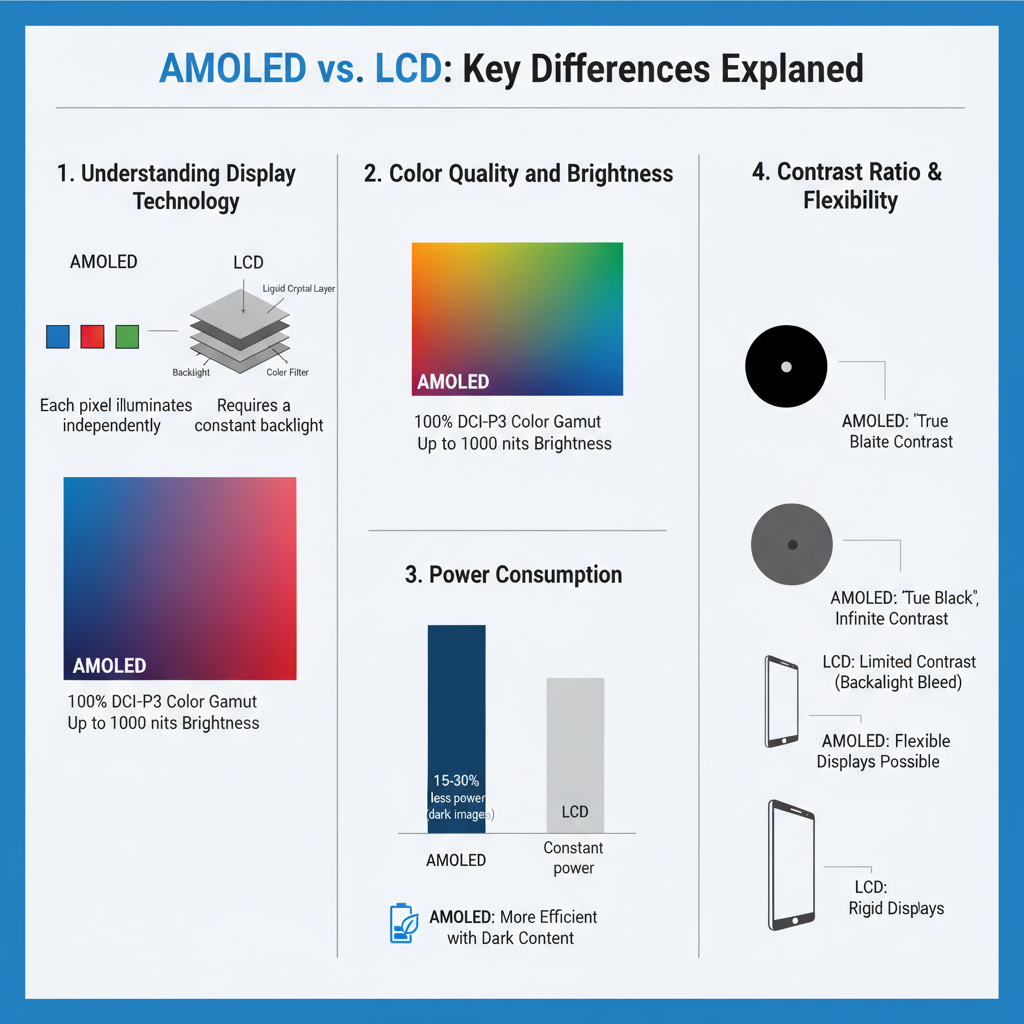
In contrast, LCD technology relies on liquid crystals illuminated by a backlight. The liquid crystals themselves don’t emit light; they simply modulate the light from the backlight to create images. This process can lead to lighter blacks because the backlight can’t be completely turned off for individual pixels. As a result, contrast ratios in LCDs are typically lower than in AMOLEDs, making them less ideal for scenarios where deep blacks and vibrant colors are crucial.
Color Quality and Brightness

When it comes to color quality and brightness, AMOLED displays shine brightest. They boast more vivid colors and higher contrast ratios compared to their LCD counterparts, making them particularly well-suited for media consumption, gaming, and any usage where visual engagement is key. For example, viewing a vivid nature documentary or playing a high-octane game on an AMOLED screen can feel immersive due to the rich color palette and stark contrasts.
However, LCDs have their advantages too. They can often maintain better color consistency across different viewing angles, which is important for group viewing situations, such as watching movies with friends or family. Additionally, many modern LCDs have improved brightness levels, making them more effective in direct sunlight compared to some AMOLED screens, which can struggle with glare and visibility outdoors.
Power Consumption
Power consumption is another crucial area where AMOLED and LCD displays differ significantly. AMOLED screens are known for their efficiency, especially when displaying darker images. Because individual pixels can be completely turned off, power consumption decreases dramatically with darker content. For example, when viewing a black wallpaper or dark-themed app, an AMOLED screen can save battery life, which is a considerable advantage for smartphone users.
On the other hand, LCDs typically maintain a constant power draw, regardless of what’s being displayed. This means that even if the screen shows a dark image, the backlight remains on, leading to higher power consumption overall. For users who prioritize battery life, particularly on mobile devices, this is an essential factor to consider.
Response Time and Refresh Rates
In the realm of response time and refresh rates, AMOLED technology has a clear edge. AMOLED displays generally boast faster response times, which significantly reduces motion blur during fast-paced action scenes in games or movies. This feature enhances the gaming experience, allowing for smoother visuals and more responsive gameplay, especially in competitive settings.
Conversely, LCDs may have slower refresh rates and response times, which can lead to noticeable motion blur during fast-moving visual content. While many high-end LCDs have made strides in this area, competitive gamers often prefer AMOLED screens for their superior performance in action-packed scenarios. This distinction can be a deal-breaker for users who prioritize speed and clarity in their visual experiences.
Durability and Longevity
When it comes to durability and longevity, both display types have their strengths and weaknesses. AMOLED displays, while stunning, can suffer from burn-in issues. This occurs when static images are displayed for extended periods, leaving a permanent imprint on the screen. For instance, if you frequently use apps with static elements like navigation bars or logos, you might eventually notice ghosting effects.
On the flip side, LCDs are less prone to burn-in. However, they can experience issues such as backlight bleed, where light leaks around the edges of the screen, creating uneven brightness. Over time, LCDs may also face challenges with color accuracy and brightness fading. So, if you’re someone who often uses your device for long periods with static images, the choice may lean towards LCD for its durability.
Common Applications
AMOLED technology is commonly found in high-end smartphones and premium devices where display quality is of utmost importance. Brands like Samsung and Google have embraced AMOLED screens in their flagship models, providing users with an unparalleled viewing experience. Additionally, AMOLED displays are increasingly being used in smartwatches and high-resolution televisions, where vibrant colors enhance the overall experience.
On the other hand, LCDs remain a staple in budget devices, monitors, and televisions due to their cost-effectiveness and reliability. Many popular laptops and budget smartphones utilize LCD screens, making them accessible to a broader audience. So, if you’re on a budget or looking for a reliable display for everyday tasks, you’ll likely find plenty of options featuring LCD technology.
Cost and Availability
When it comes to cost and availability, AMOLED technology tends to be more expensive to produce, which translates to higher prices for devices that feature it. This premium pricing can make it less accessible for consumers looking for budget-friendly options. For example, flagship smartphones with AMOLED displays can easily exceed $1,000.
In contrast, LCDs are widely available and generally more affordable, making them a popular choice for many consumers. This accessibility means you can find quality LCD screens across a vast range of devices, from entry-level smartphones to mid-range televisions, allowing users to find something that fits their budget without sacrificing too much quality.
The differences between AMOLED and LCD displays are significant and can drastically affect your viewing experience based on your needs. Understanding these distinctions can help you make an informed decision when choosing a device. Whether you prioritize vibrant colors and contrast or cost-effectiveness and durability, knowing what each display type offers is essential for your next purchase. By weighing these factors, you can choose the display technology that best aligns with your lifestyle and preferences, ensuring that you enjoy an optimal visual experience.
Frequently Asked Questions
What are the main differences between AMOLED and LCD screens?
AMOLED (Active Matrix Organic Light Emitting Diode) screens differ from LCD (Liquid Crystal Display) panels in several key aspects. AMOLED displays use individual pixels that emit light, allowing for true blacks and higher contrast ratios, while LCDs require a backlight, which can lead to less vibrant colors and a more limited contrast range. Additionally, AMOLED screens are typically thinner and more flexible, making them ideal for modern smartphone designs, whereas LCDs are generally sturdier and more cost-effective.
How does the color accuracy of AMOLED compare to LCD displays?
When it comes to color accuracy, AMOLED screens often outperform LCD displays due to their ability to produce deeper blacks and more vibrant colors. AMOLED can achieve a wider color gamut, which results in more vivid images, especially in darker scenes. However, some higher-end LCDs have made significant strides in color accuracy, so the difference may vary depending on the specific models being compared.
Why do AMOLED screens consume less power than LCDs when displaying darker images?
AMOLED screens are more power-efficient than LCDs when displaying darker images because each pixel generates its own light. Thus, when a pixel is black, it is effectively turned off, consuming no power. In contrast, LCDs rely on a constant backlight regardless of the image content, meaning they use the same amount of power whether displaying dark or bright images, leading to higher energy consumption overall.
Which display type is better for outdoor visibility: AMOLED or LCD?
Generally, LCD displays are better suited for outdoor visibility compared to AMOLED screens. This is primarily due to the brightness levels and anti-reflective coatings that are often used in LCDs, making them easier to view in direct sunlight. However, some high-end AMOLED displays have improved brightness and reflectivity features, narrowing the gap, but for consistent outdoor performance, LCDs typically hold the advantage.
What are the best use cases for AMOLED and LCD screens?
AMOLED screens are ideal for users who prioritize vibrant colors and deeper blacks, making them perfect for multimedia consumption, gaming, and graphic design. On the other hand, LCD screens are often preferred for applications requiring consistent color accuracy and brightness, such as professional photo editing and reading in bright conditions. Ultimately, the choice between AMOLED and LCD will depend on individual preferences and specific usage scenarios.
References
- Comparison of display technology
- https://www.sciencedirect.com/science/article/pii/S2351978916300317
- https://www.techradar.com/news/what-is-amoled
- https://www.hdmi.org/manufacturer/hdmi_2_0/faq/amoled_vs_lcd.aspx
- https://www.lg.com/us/led-lcd-technology
- https://www.researchgate.net/publication/319682307_Amoled_vs_LCD_Display_Analysis
- https://www.nytimes.com/2021/07/01/technology/amoled-lcd-displays.html
- https://www.digitaltrends.com/computing/amoled-vs-lcd/