
Adaptive bitrate streaming (ABR) is a technology that optimizes video playback quality based on the viewer’s internet speed and device capabilities. This approach ensures seamless viewing experiences, minimizing buffering and interruptions. In today’s fast-paced digital world, where binge-watching and video consumption are at an all-time high, ABR plays a critical role in delivering high-quality content to diverse audiences. In this article, you will learn how ABR works, its benefits, and why it is crucial for content delivery in today’s digital landscape.



How Adaptive Bitrate Streaming Works

ABR dynamically adjusts video quality in real-time based on the user’s bandwidth, ensuring that viewers receive the best possible experience without unnecessary buffering. Here’s how it works: when a user initiates a video stream, the content is divided into smaller segments, usually lasting just a few seconds. Each of these segments is encoded at multiple resolutions and bitrates, which allows the streaming service to switch between different quality levels as needed.
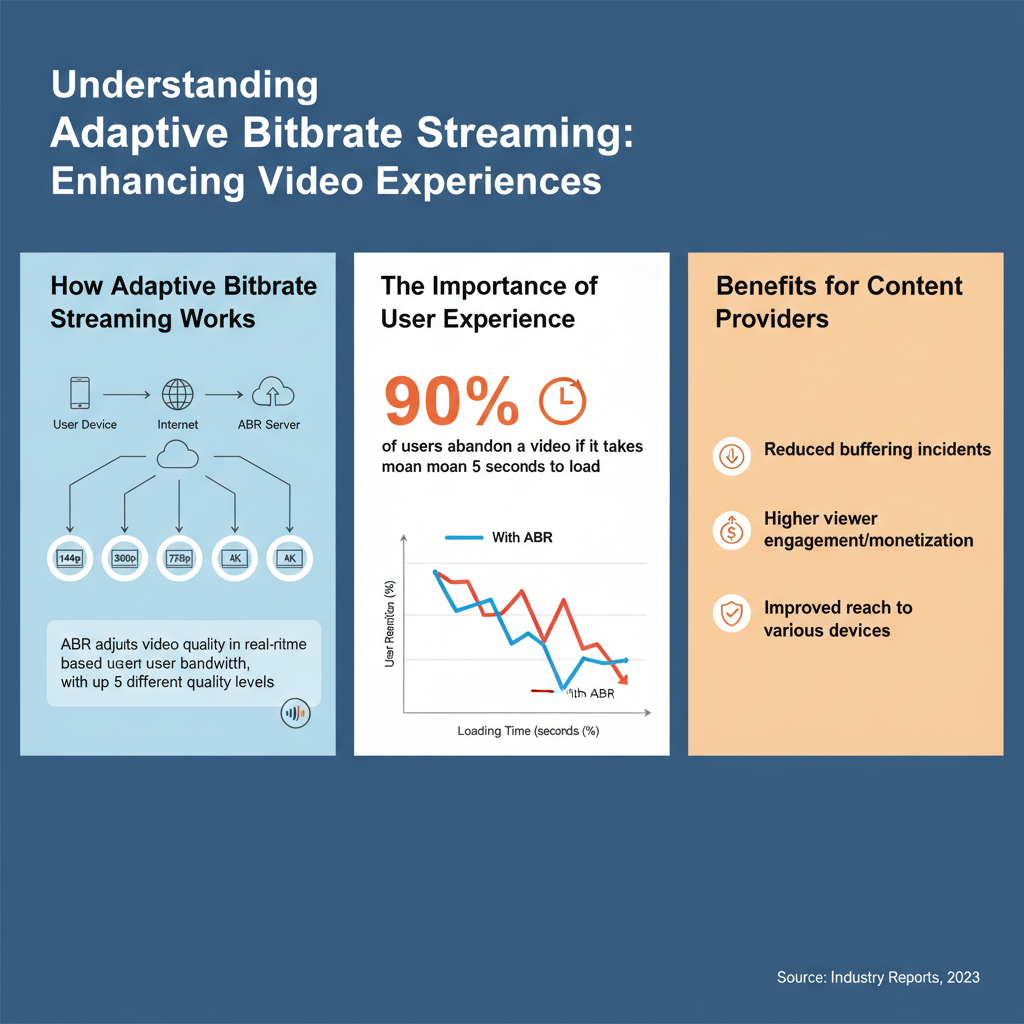
For example, if a viewer has a strong internet connection, they might receive the video in high definition (HD) or even ultra-high definition (UHD). Conversely, if the connection weakens, ABR will seamlessly downscale the video quality to prevent interruptions. This real-time adjustment enhances the viewer’s experience significantly, as they can enjoy continuous playback regardless of fluctuations in their internet speed.
The Importance of User Experience

User experience is paramount in the competitive world of online video streaming. ABR significantly reduces buffering, leading to a smoother viewing experience, which is essential for keeping audiences engaged. Research shows that even a few seconds of buffering can lead to viewer frustration and increased drop-off rates. By minimizing interruptions, ABR allows for uninterrupted viewing on various devices, from smartphones to smart TVs.
Imagine watching a thrilling movie on your smart TV, only to face constant interruptions due to buffering—frustrating, right? With ABR, whether you’re watching on a mobile phone while commuting or on a large screen at home, the streaming service adapts to your connection, ensuring enjoyable and uninterrupted entertainment. This adaptability is vital as it caters to viewers’ diverse preferences and environments, making it an essential component of modern video streaming.
Benefits for Content Providers
For content providers, the benefits of adaptive bitrate streaming are substantial. One of the most significant advantages is the ability to reach a wider audience by accommodating different internet speeds. Given that internet connectivity varies widely across regions, ABR allows providers to serve high-quality content to users with slower connections, thereby expanding their market reach.
Moreover, ABR reduces the risk of user drop-off due to poor streaming quality, enhancing viewer retention. According to studies, platforms that utilize ABR can see up to a 30% increase in viewer retention rates compared to those that do not. This means that content providers not only keep their existing audience engaged but also attract new viewers who might otherwise be deterred by a less reliable streaming experience. In an era where content is king, ensuring that it is accessible and enjoyable for all users is a game-changer.
Technical Aspects of ABR
Understanding the technical aspects of adaptive bitrate streaming is crucial for delivering high-quality video streams effectively. Key protocols like HTTP Live Streaming (HLS) and Dynamic Adaptive Streaming over HTTP (DASH) are instrumental in supporting ABR. HLS, developed by Apple, is widely used and compatible with many devices, while DASH is an open standard that allows for more flexibility and scalability.
Additionally, the encoding process is essential for ABR to function efficiently. Content providers must ensure that their video files are encoded at various resolutions and bitrates to facilitate the seamless switching that ABR relies on. This involves choosing the right codecs and optimizing file sizes without compromising quality, a task that requires both technical expertise and an understanding of viewer preferences. By mastering these technical aspects, providers can ensure a smooth streaming experience for their audience.
Challenges and Considerations
While adaptive bitrate streaming offers numerous benefits, it also comes with its own set of challenges and considerations. Implementing ABR can require more server resources and sophisticated encoding strategies, which might be daunting for smaller content providers or those with limited budgets. The need for additional storage and bandwidth can escalate costs, making it crucial for businesses to weigh the benefits against the investment required.
Moreover, content providers must consider the trade-off between quality and bandwidth consumption. While ABR allows for high-quality streaming, it can also lead to increased data usage, which may not be ideal for all viewers, especially those with limited data plans. Striking a balance between providing excellent quality and managing bandwidth effectively is a critical consideration for any content provider looking to implement ABR.
Future Trends in Adaptive Bitrate Streaming
As technology continues to evolve, so do the demands placed on adaptive bitrate streaming. The rise of 4K and 8K content, for example, necessitates more advanced ABR techniques to ensure smooth playback without overwhelming network infrastructure. As viewers increasingly expect higher resolutions, content providers must adapt their streaming capabilities accordingly.
Additionally, artificial intelligence (AI) and machine learning are poised to play a significant role in optimizing streaming performance. These technologies can analyze user behavior and network conditions more effectively, allowing for even more precise adjustments in real-time. By leveraging AI, content providers can enhance the viewer experience further, ensuring that audiences receive the highest quality content possible, regardless of their connection.
The increasing reliance on video content makes adaptive bitrate streaming an essential technology for both viewers and content providers. By ensuring high-quality viewing experiences across various platforms and internet speeds, ABR not only enhances user satisfaction but also supports the growth of digital media consumption. Embrace adaptive bitrate streaming to stay relevant in a fast-evolving digital landscape.
Frequently Asked Questions
What is adaptive bitrate streaming and how does it work?
Adaptive bitrate streaming is a technology that allows video or audio content to be delivered over the internet at varying quality levels based on the user’s current network conditions. It works by encoding the media at multiple bitrates and resolutions, enabling the streaming service to switch between these versions in real-time. This ensures a smooth viewing experience without buffering, as the streaming server dynamically adjusts the quality to match the user’s bandwidth and device capabilities.
Why does adaptive bitrate streaming matter for online video delivery?
Adaptive bitrate streaming is crucial for online video delivery as it enhances user experience by minimizing interruptions and buffering, which are significant pain points for viewers. It ensures that content is accessible to a broader audience, including those with slower internet connections or mobile devices, by providing the best possible quality without compromising playback. This technology also helps content providers optimize bandwidth usage, leading to cost savings and improved viewer retention.
How does adaptive bitrate streaming improve user experience during live events?
During live events, adaptive bitrate streaming significantly enhances user experience by automatically adjusting the video quality in response to the viewer’s internet speed. This means that if a viewer’s connection fluctuates, they won’t experience frustrating interruptions or delays; instead, the stream adapts in real-time to maintain continuity. This is especially important for live sports, concerts, or news broadcasts where viewers expect seamless viewing and immediate access to content.
Which platforms utilize adaptive bitrate streaming for their services?
Many popular streaming platforms utilize adaptive bitrate streaming to deliver content efficiently, including Netflix, YouTube, Hulu, and Amazon Prime Video. These services employ this technology to ensure that users receive the highest quality video possible according to their internet capabilities. Additionally, live streaming platforms like Twitch and Facebook Live also implement adaptive bitrate streaming to provide a better viewing experience for their audiences.
What are the best practices for implementing adaptive bitrate streaming for my content?
To implement adaptive bitrate streaming effectively, you should start by encoding your video at multiple bitrates and resolutions, ensuring that you cover a range of devices and internet speeds. Utilize a reliable content delivery network (CDN) to distribute your streams efficiently. Additionally, monitor user experience metrics, such as buffering rates and playback quality, to make necessary adjustments and optimize the viewing experience. Implementing these best practices will help you deliver high-quality content that adapts to your audience’s needs.
References
- Adaptive bitrate streaming
- https://www.wired.com/story/adaptive-bitrate-streaming-explained/
- https://www.itu.int/en/ITU-T/focusgroups/sa/Pages/adaptive-bitrate-streaming.aspx
- https://www.sciencedirect.com/science/article/pii/S1877050919311765
- https://www.techradar.com/news/what-is-adaptive-bitrate-streaming-and-why-does-it-matter
- https://www.streamingmedia.com/Articles/What-is-ABR-Adaptive-Bitrate-Streaming-139233.aspx