
Cloud-based video streaming operates by delivering video content over the internet, allowing users to access media on-demand without the need for extensive local storage. This innovative approach has changed how we watch movies, TV shows, and online videos, making it easier than ever to enjoy our favorite content anytime, anywhere. In this article, you will discover the underlying technologies, benefits, and challenges associated with cloud-based streaming, enabling you to grasp how this modern method has transformed the way we consume video content.




How Cloud-Based Video Streaming Functions

At the core of cloud-based video streaming is the use of Content Delivery Networks (CDNs), which are essential for distributing video content efficiently across various locations. CDNs consist of a network of servers strategically placed around the globe, allowing for faster delivery of video files by storing cached copies closer to users. This reduces latency and buffering, enhancing the viewing experience significantly.
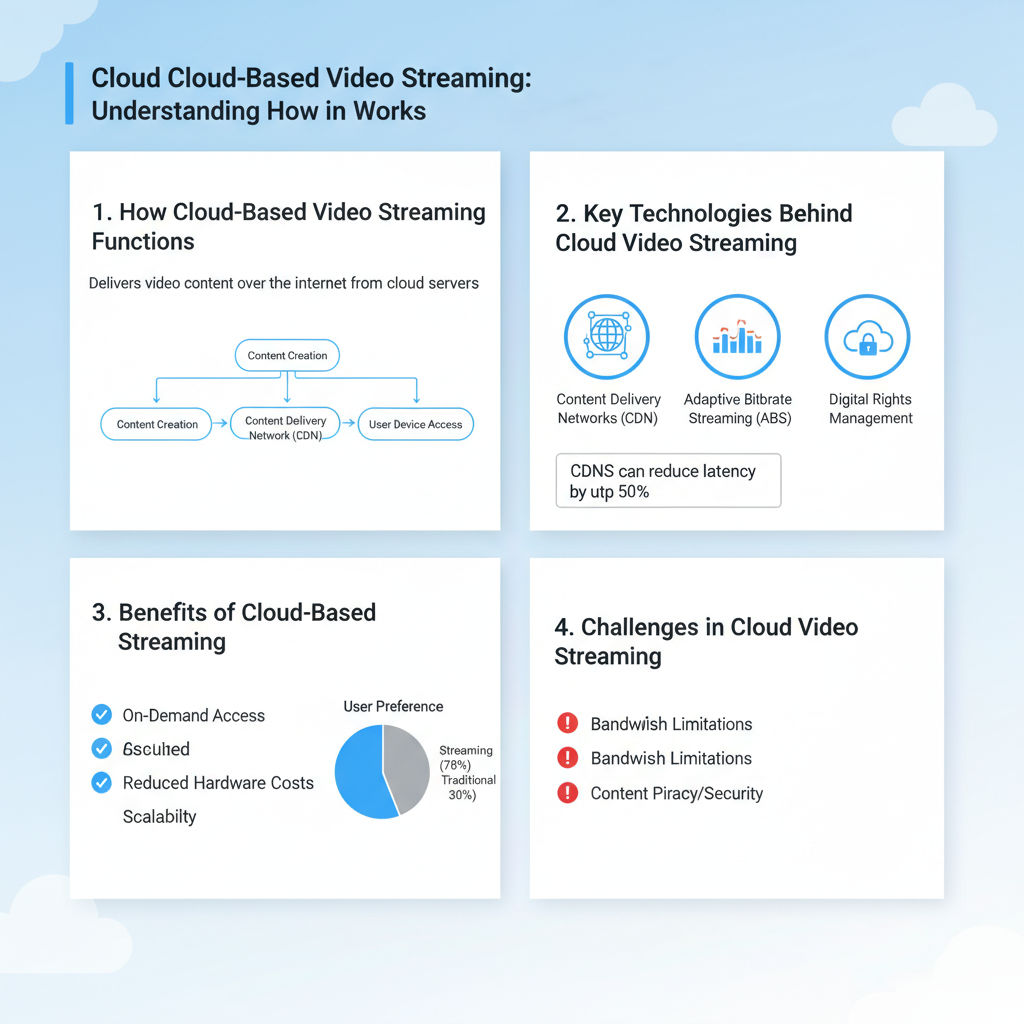
Additionally, cloud servers play a crucial role in storing and managing vast libraries of video files. Instead of relying on local hard drives, these servers house the content and serve it to users as needed. This means that providers can offer extensive collections without requiring individual users to download large files, making it easier for everyone to access a wealth of media.
Key Technologies Behind Cloud Video Streaming
Several key technologies make cloud video streaming possible, starting with streaming protocols like HTTP Live Streaming (HLS) and Real-Time Messaging Protocol (RTMP). These protocols help facilitate smooth playback by breaking video files into smaller segments, which can be sent over the internet in real-time. As a result, users can start watching content almost immediately without waiting for the entire file to download.
Another significant advancement is adaptive bitrate streaming, which optimizes the video quality based on the user’s internet bandwidth. If a viewer has a slow connection, the system automatically lowers the video quality to prevent buffering. Conversely, if they have a high-speed connection, the streaming quality improves, ensuring a seamless experience. This technology is vital for maintaining viewer engagement, as it provides a smooth experience regardless of varying internet speeds.
Benefits of Cloud-Based Video Streaming
One of the most significant benefits of cloud-based video streaming is its accessibility from multiple devices. Whether you’re using a smartphone, tablet, laptop, or smart TV, you can enjoy your favorite shows and movies without the need for cumbersome downloads. This flexibility means that you can start watching on one device and continue on another without missing a beat.
Scalability is another key advantage for providers. Cloud infrastructure allows streaming services to accommodate varying audience sizes without the burden of significant hardware investments. Whether a platform experiences a surge in users during a popular show’s premiere or a sudden spike due to a viral trend, cloud-based systems can handle the demand efficiently. This adaptability is essential in today’s fast-paced digital world, ensuring that viewers always have access to the content they love, whenever they want it.
Challenges in Cloud Video Streaming
Despite its many advantages, cloud video streaming does come with challenges. One of the most prominent issues is the dependence on internet connectivity. If a user has a slow or unstable connection, it can lead to buffering and interruptions, which can be frustrating and disrupt the viewing experience. For this reason, providers are continually seeking ways to optimize their services and improve the reliability of streaming, even in less-than-ideal network conditions.
Security risks also pose a challenge in the realm of cloud video streaming. With the rise of piracy and unauthorized access to content, protecting intellectual property is a top priority for streaming services. Companies must implement robust security measures, such as encryption and digital rights management (DRM), to safeguard their content. Balancing effective security with user accessibility is an ongoing concern that requires constant attention and innovation.
Popular Platforms Utilizing Cloud Video Streaming
Many of the most popular streaming platforms leverage cloud-based video streaming technology to deliver content to millions of users efficiently. Netflix, for instance, uses a sophisticated combination of CDNs and adaptive streaming to ensure its vast library is readily available to subscribers worldwide. The platform’s unique recommendation algorithm, powered by machine learning, further enhances user engagement by personalizing content suggestions based on viewing habits.
Hulu also takes advantage of cloud streaming, offering both on-demand content and live TV options. This hybrid approach allows users to access a wide range of media, catering to different preferences and viewing styles. YouTube, on the other hand, thrives on user-generated content and utilizes cloud streaming to handle the massive volume of uploads and views it receives daily. Each of these platforms showcases the versatility and effectiveness of cloud-based video streaming in catering to diverse audiences.
Future Trends in Cloud-Based Video Streaming
As technology continues to evolve, the future of cloud-based video streaming looks bright. One of the most exciting predictions is the advancement of video quality, with 8K streaming on the horizon. As internet speeds increase and compression technologies improve, viewers can expect even sharper images and more immersive experiences.
Additionally, the potential impact of emerging technologies like artificial intelligence (AI) and machine learning on content personalization is tremendous. These technologies can analyze viewer behavior more accurately, enabling platforms to offer tailored content recommendations that align with individual preferences. This level of personalization not only enhances user satisfaction but also increases engagement and loyalty to streaming services.
The integration of virtual reality (VR) and augmented reality (AR) into cloud-based streaming is another trend to watch. As these technologies become more mainstream, the way we experience video content could shift dramatically, offering immersive storytelling experiences that go beyond traditional viewing.
The evolution of cloud-based video streaming has revolutionized how we consume media, making it more accessible and flexible than ever. By understanding the mechanics behind it, you can appreciate the advantages it offers, as well as the challenges that come with it. As we look to the future, it’s clear that cloud-based video streaming will continue to shape the entertainment landscape, and staying informed about these developments will enhance your viewing experience. Whether you’re a casual viewer or a dedicated cinephile, exploring cloud-based video streaming is an exciting journey worth taking!
Frequently Asked Questions
What is cloud-based video streaming and how does it work?
Cloud-based video streaming refers to the delivery of video content over the internet via cloud computing technology. Instead of relying on local servers or storage devices, video files are stored in a cloud environment and streamed to users through their devices. This method allows for faster loading times, scalability, and easier access to a vast library of content, as users can stream videos anytime and anywhere with an internet connection.
How does cloud-based video streaming differ from traditional streaming services?
The primary difference between cloud-based video streaming and traditional streaming services lies in the infrastructure. Traditional streaming often relies on physical servers that can limit scalability and may lead to buffering during peak usage times. In contrast, cloud-based streaming utilizes a distributed network of servers that can automatically scale to accommodate varying user demands, resulting in a more reliable and efficient viewing experience, with less downtime and improved load times.
Why should businesses consider adopting cloud-based video streaming?
Businesses should consider adopting cloud-based video streaming because it offers enhanced flexibility, cost savings, and scalability. With the ability to host, manage, and distribute videos without extensive hardware investments, businesses can reach wider audiences with ease. Additionally, cloud solutions typically come with advanced analytics features that allow companies to track viewer engagement and optimize their content strategy based on real-time data.
What are the best practices for optimizing video content for cloud-based streaming?
To optimize video content for cloud-based streaming, businesses should focus on several key practices: compress video files to reduce loading times without sacrificing quality, use adaptive bitrate streaming to adjust video quality based on the user’s internet speed, and implement a content delivery network (CDN) to enhance loading speeds globally. Moreover, including metadata and captions can improve searchability and accessibility, ensuring that content reaches a broader audience.
Which cloud-based video streaming platforms are most recommended for businesses?
Some of the most recommended cloud-based video streaming platforms for businesses include Vimeo, Brightcove, and AWS Elemental Media Services. Each platform offers unique features tailored for various business needs, such as high-quality video hosting, customizable player options, and robust analytics. When choosing a platform, consider factors like ease of use, scalability, price, and the specific features that meet your organization’s video streaming requirements.
References
- Cloud computing
- Topics | IBM
- https://www.cio.com/article/242069/how-cloud-streaming-works.html
- https://www.sciencedirect.com/topics/computer-science/cloud-video-streaming
- https://www.wired.com/story/how-video-streaming-works/
- https://www.npr.org/2020/04/21/840220949/the-rise-of-live-streaming-in-a-time-of-social-distancing
- https://www.digitaltrends.com/computing/cloud-computing-explained/




One thought on “Cloud-Based Video Streaming: Understanding How It Works”