
HDR (High Dynamic Range) significantly enhances streaming video quality by providing a wider range of colors and improved contrast, making images more vibrant and lifelike. This technology elevates your viewing experience, allowing you to see details in dark and bright areas of the image that you might have missed before. As streaming services continue to evolve, understanding HDR and how it impacts video quality is essential for anyone looking to make the most of their home entertainment setup.
What is HDR?
HDR stands for High Dynamic Range, which enhances the contrast and color range in video. Traditional video formats often struggle with a limited color palette and contrast, leading to images that can appear flat or dull. HDR addresses this by allowing for deeper blacks and brighter whites, resulting in more realistic images that feel closer to what the human eye can perceive. With HDR, scenes that feature both bright sunlight and deep shadows can be rendered with incredible detail, allowing viewers to appreciate the full depth of the visuals.
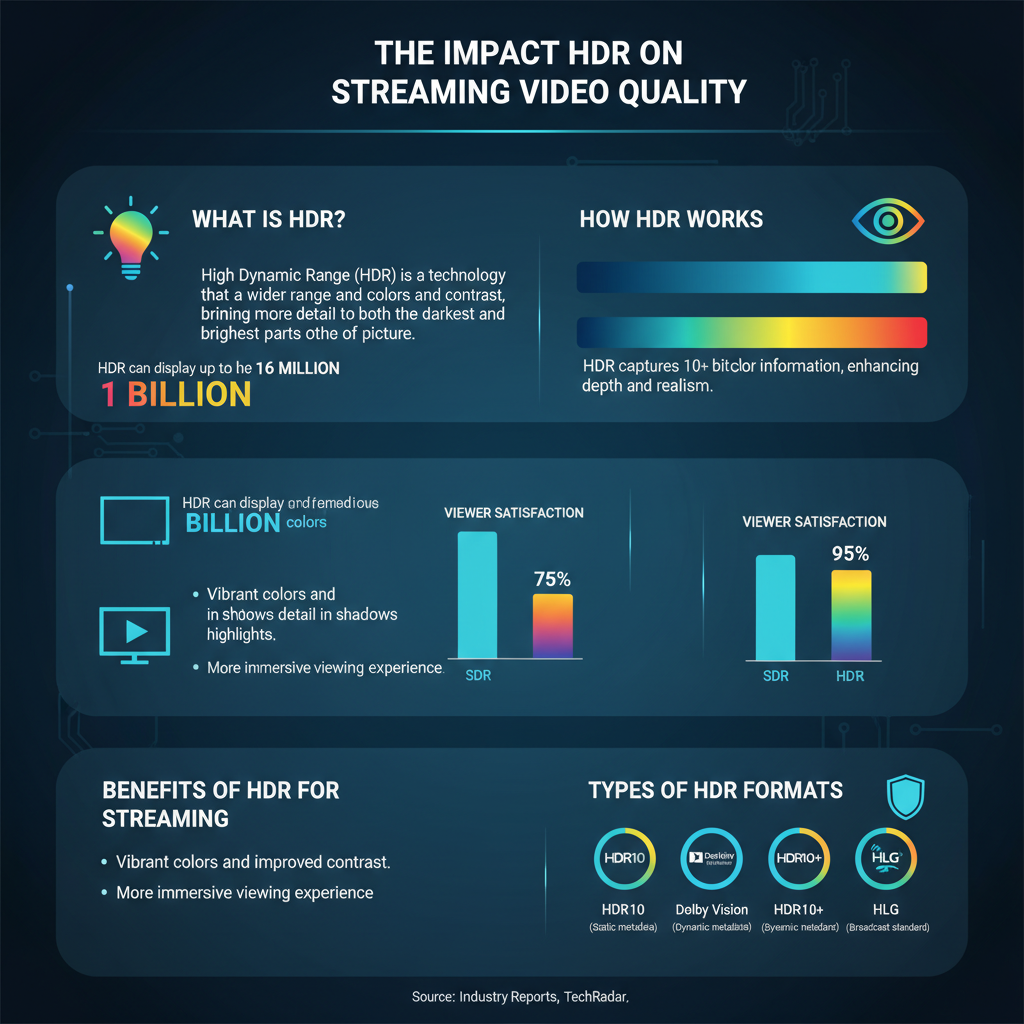
For instance, think about watching a sunset. In standard dynamic range (SDR), you might see a muted gradient from orange to purple. But with HDR, you can experience the vivid oranges, the intense purples, and even the rich textures in the clouds. This dramatic improvement in image quality is what makes HDR a game-changer for video streaming.
How HDR Works

HDR uses metadata to convey information about brightness and color levels to compatible displays. This metadata acts as a guide for the display, informing it how to adjust its output for the best visual experience. HDR content can come from various sources, including films, TV shows, and video games, and is often mastered with multiple exposures of the same scene. This technique combines different lighting conditions to create a more dynamic image that captures a broader spectrum of light.
For example, consider a scene shot in a dimly lit room with a bright window. In HDR, the display can show the intricate details in the shadows and the bright highlights simultaneously, which would be challenging to achieve in standard video formats. This capability makes HDR not just an upgrade in quality, but a completely different way of experiencing visual storytelling.
Benefits of HDR for Streaming
HDR offers a more immersive viewing experience by delivering richer colors and details that pull you into the story. The enhanced contrast allows for a more profound emotional impact; think of the gripping tension in a thriller or the warmth of a romantic scene. Popular streaming platforms like Netflix, Amazon Prime, and Disney+ support HDR content, increasing the variety of options for viewers.
For instance, Netflix’s original series often come in HDR, allowing viewers to appreciate the carefully crafted visuals in their full glory. The benefit of HDR goes beyond aesthetics; it enhances storytelling by making scenes more engaging and lifelike. With HDR, every frame becomes a work of art, giving you a reason to watch your favorite shows or movies again and again.
Types of HDR Formats
Common HDR formats include HDR10, Dolby Vision, and HLG (Hybrid Log-Gamma), each with unique features and compatibility. HDR10 is the most widely supported format and provides a good balance of quality and accessibility, while Dolby Vision offers dynamic metadata that adjusts the picture settings scene by scene for even greater visual fidelity. HLG, on the other hand, is particularly suited for live broadcasts and is gaining traction for its compatibility with existing SDR displays.
Understanding these formats can help consumers choose the right equipment and services for HDR viewing. If you’re investing in a new TV or streaming device, look for one that supports multiple HDR formats to ensure you can enjoy the best possible picture across various content providers. The right HDR setup can transform your viewing experience, but knowing which format to prioritize can make all the difference.
Requirements for HDR Streaming
To enjoy HDR content, you need a compatible streaming device, HDR-supported TV, and a fast internet connection. Many modern TVs come with HDR capabilities, but it’s essential to check the specifications, as not all HDR TVs are created equal. Additionally, your streaming device (like a Roku, Apple TV, or gaming console) must also support HDR.
A fast internet connection is crucial for streaming HDR content smoothly. Ideally, you should aim for a speed of at least 25 Mbps to enjoy 4K HDR video without buffering. Moreover, optimizing your device settings and your TV’s picture mode can greatly enhance the HDR experience, ensuring you get the most out of your investment. Checking for updates on your streaming device can also help maximize performance and compatibility.
Challenges and Limitations of HDR
While HDR offers many benefits, it does come with its challenges. Not all content is available in HDR, and some devices may not fully support the format, which can lead to a frustrating viewing experience. Furthermore, streaming in HDR often requires higher bandwidth, potentially leading to buffering issues on slower connections.
As a viewer, it’s essential to be aware of these limitations and plan accordingly. Make sure you have access to HDR content on your preferred streaming services and consider upgrading your internet plan if you experience buffering. Additionally, while HDR can dramatically enhance visuals, poor-quality source material may not see the same benefits. Therefore, choosing high-quality content is just as important as having the right technology.
Future of HDR in Streaming
The demand for HDR is increasing, and more content creators are adopting HDR technology as it becomes more accessible. With advancements in camera technology and post-production processes, filmmakers are more equipped than ever to produce HDR content that captivates audiences. Streaming services are also investing heavily in HDR programming, signaling a strong commitment to delivering high-quality viewing experiences.
As streaming technology continues to evolve, we can expect HDR to become even more integrated into the viewing experience. The rise of 8K content and improvements in compression technologies promise to make HDR more widely available and reduce the bandwidth challenges currently faced by many viewers. In the near future, HDR may become the standard for all video content, transforming how we watch movies and shows forever.
Summarizing the effects of HDR on streaming video quality reveals its transformative impact on viewer experience through enhanced colors and details. To fully enjoy HDR, ensure you have the right equipment and internet speed. Explore HDR content on your favorite streaming platforms to elevate your viewing experience today! With the right setup, you’ll not only watch movies—you’ll immerse yourself in them.
Frequently Asked Questions
What is HDR, and how does it improve streaming video quality?
HDR, or High Dynamic Range, is a technology that enhances the contrast and color range of video content. By allowing for brighter highlights and deeper blacks, HDR provides a more lifelike viewing experience. This improved quality makes scenes appear more realistic, with details in shadows and highlights that are often lost in standard dynamic range (SDR) content, resulting in an immersive streaming experience.
How can I tell if a streaming service offers HDR content?
To determine if a streaming service provides HDR content, check the service’s official website or app for information on supported formats. Most major streaming platforms, like Netflix, Amazon Prime Video, and Disney+, prominently display HDR titles or offer filters to search specifically for HDR content. Additionally, your device settings may indicate HDR compatibility, which is essential for viewing HDR content.
Why does my HDR streaming video look worse than expected?
If HDR streaming video appears subpar, several factors could be at play. First, ensure that your display device supports HDR and is correctly configured to utilize it. Additionally, your internet connection speed should be fast enough to handle high-bandwidth HDR streams, as slow speeds can lead to buffering and reduced quality. Finally, some HDR content may not be mastered well, affecting the overall viewing experience.
What is the best streaming device for HDR video quality?
The best streaming device for HDR video quality includes options like the Roku Ultra, Apple TV 4K, and Amazon Fire TV Stick 4K. These devices not only support multiple HDR formats, such as HDR10, HDR10+, and Dolby Vision, but also deliver consistent performance and a user-friendly interface. When choosing a device, consider your specific viewing needs, including supported applications and video formats, to ensure the best HDR experience.
Which HDR formats should I look for when streaming video?
When streaming video, you should look for HDR formats such as HDR10, Dolby Vision, and HDR10+. HDR10 is a widely adopted standard, while Dolby Vision offers dynamic metadata for improved scene-by-scene optimization. HDR10+ also provides similar benefits to Dolby Vision but is less common. Choosing content that supports these formats will enhance your video quality, making your viewing experience more vibrant and immersive.
References
- High-dynamic-range television
- https://www.sciencedirect.com/science/article/pii/S1361372319303485
- https://www.theverge.com/2020/1/8/21055010/hdr-video-streaming-quality-explained
- https://www.nytimes.com/2020/12/29/technology/hdr-streaming.html
- https://www.itu.int/en/ITU-T/studygroups/2017-2020/16/Pages/hdr.aspx
- https://www.npr.org/2021/07/29/1020802011/hdr-video-explained
- https://www.cnet.com/news/hdr-vs-sdr-video-explained/
- https://www.techradar.com/news/what-is-hdr-and-why-is-it-important-for-streaming-video
- https://www.researchgate.net/publication/335144123_An_Empirical_Study_of_High_Dynamic_Range_Video_Streaming_Quality