
Eye-tracking in virtual reality (VR) refers to the technology that monitors and analyzes where a user is looking within a VR environment. This technology enhances user experience by enabling more immersive interactions and optimizing performance. By understanding what eye-tracking is and how it functions, we can appreciate its significant impact on the VR landscape. In this article, you will learn about the mechanics of eye-tracking, its applications, and why it is crucial for the future of VR experiences.
Understanding Eye-Tracking Technology
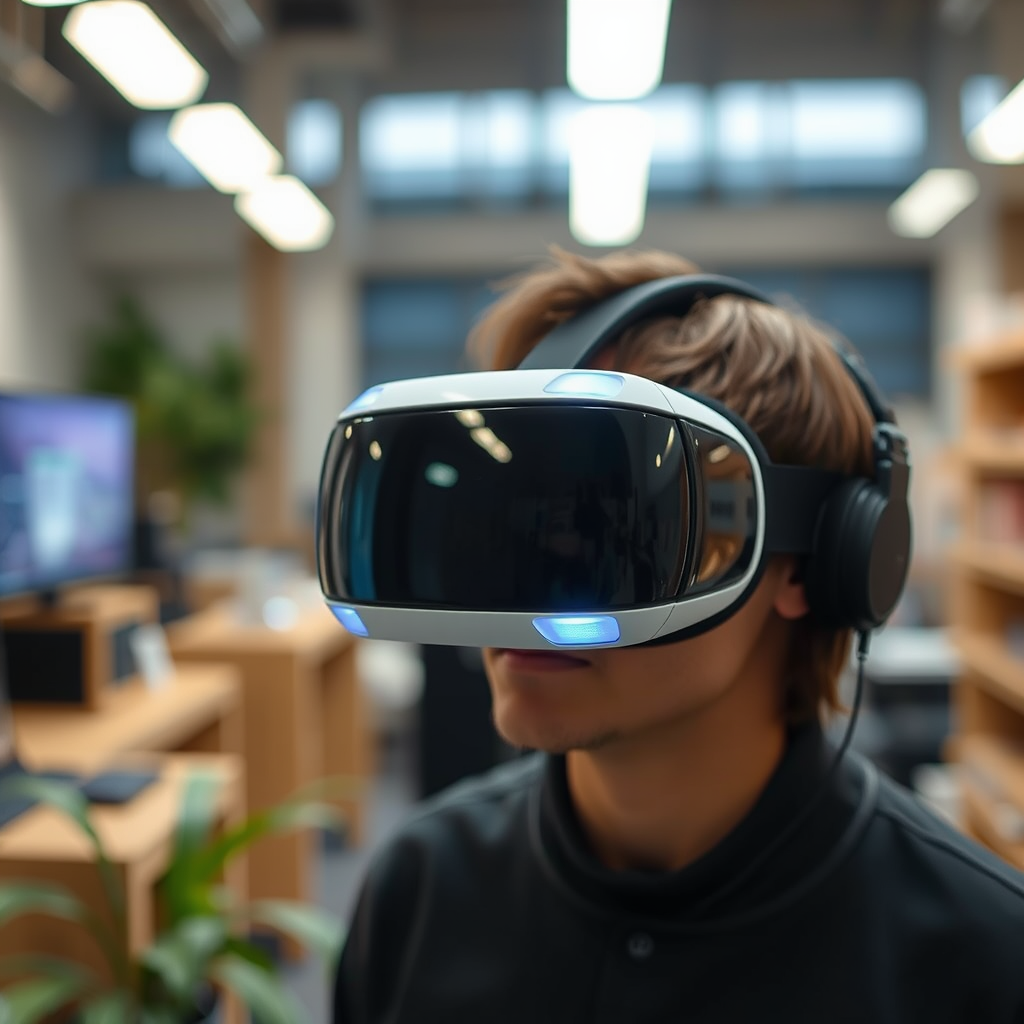
Eye-tracking technology is a fascinating innovation that captures the subtleties of human gaze. It utilizes infrared cameras and sensors to detect the position and movement of the eyes, allowing the system to determine precisely where a user is looking in a three-dimensional space. This intricate dance of light and technology enables VR systems to create a more engaging and interactive environment.
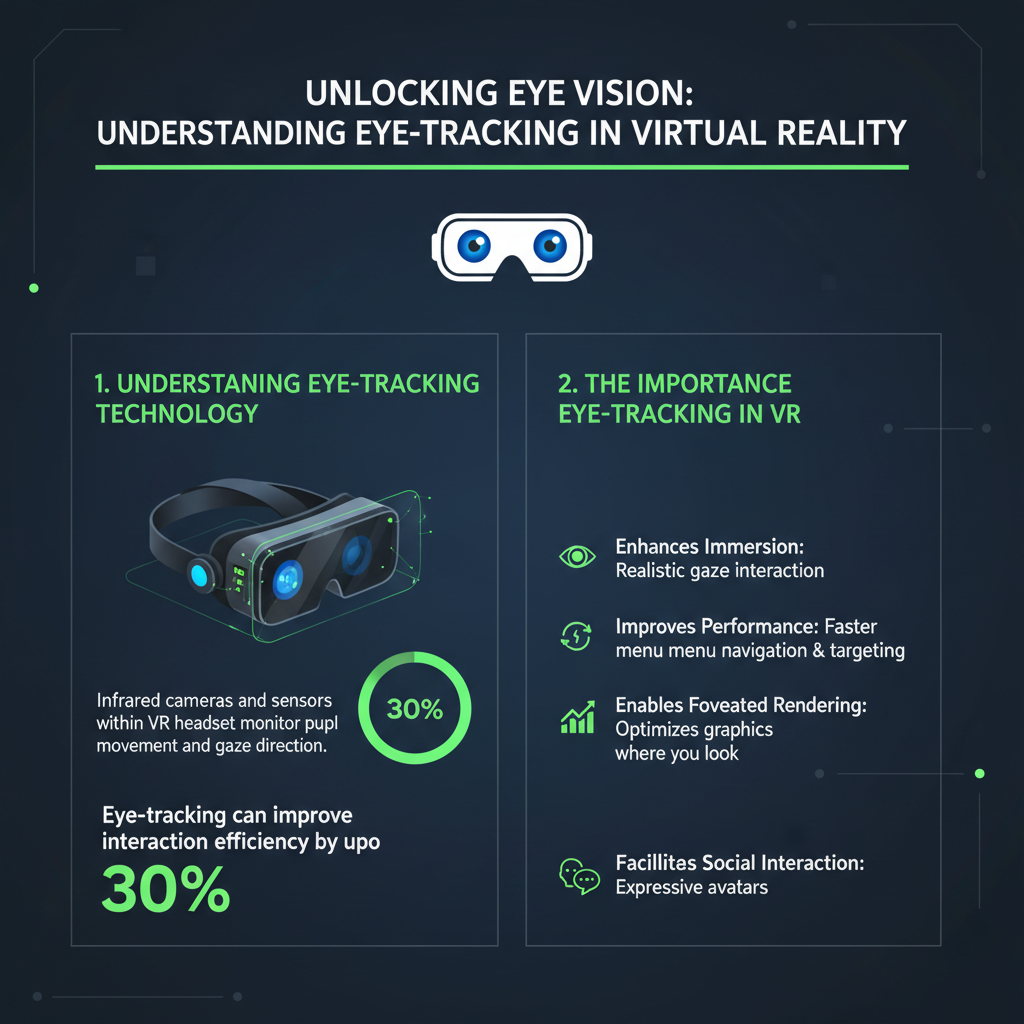
Eye-tracking can be implemented in two primary ways: through hardware integrated into VR headsets or as external accessories. Some of the latest VR headsets, like the Oculus Quest Pro and HTC Vive Pro Eye, come with built-in eye-tracking technology, making them incredibly user-friendly and intuitive. On the other hand, there are external devices available that can add eye-tracking capabilities to existing VR systems, providing flexibility for developers and users alike. This ability to integrate seamlessly into various hardware setups is a game-changer in the realm of virtual reality.
The Importance of Eye-Tracking in VR
The importance of eye-tracking in VR cannot be overstated. It enhances immersion by allowing users to interact with environments in a more natural manner. Imagine walking through a virtual museum where you can simply look at an exhibit to trigger a detailed audio guide or information pop-up. This level of interaction feels instinctive and can significantly enrich the user’s experience.
Moreover, eye-tracking provides valuable data on user attention and engagement. Developers can analyze where users are focusing their gaze, which areas of a virtual environment are most captivating, and how long users spend looking at specific elements. This insight is invaluable; it helps creators craft more effective and engaging content tailored to user preferences. For instance, in VR marketing, understanding gaze patterns can help brands design more appealing advertisements that captivate their target audience.
Applications of Eye-Tracking in Various Fields
Eye-tracking technology has found its way into various fields, making a remarkable impact across the board. In gaming, for example, eye-tracking enables real-time interaction based on player focus. Imagine a first-person shooter where the game’s AI can react dynamically to where a player is aiming their gaze, enhancing gameplay and strategy. Titles like “Far Cry 6” and “Tomb Raider” have started integrating this feature, making the gaming experience more immersive and responsive.
In education and training simulations, eye-tracking serves as a powerful tool for assessing user understanding and engagement levels. For instance, in medical training, trainees can be monitored to ensure they are focusing on critical areas during surgical simulations. This assessment leads to better training outcomes as educators can provide targeted feedback based on where students’ attention is directed.
Furthermore, eye-tracking is making waves in accessibility applications. By allowing users to control devices with their gaze, individuals with mobility impairments can interact with technology in ways that were previously unimaginable. This opens up a world of possibilities for inclusivity in VR experiences.
Benefits of Eye-Tracking for User Experience
The integration of eye-tracking creates more realistic and responsive environments that adapt to user gaze, significantly improving engagement. When users feel that their actions—merely by looking—are influencing the environment, it heightens their connection to the virtual world. This dynamic interaction can lead to longer sessions and deeper immersion, which is precisely what VR creators aim for.
Additionally, eye-tracking reduces the need for complex controls, as users can simply look at objects to interact. This simplification is especially beneficial for newcomers to VR technology who may feel overwhelmed by intricate controls. For instance, in a VR game, a player could look at a weapon to pick it up or gaze at a door to open it, making the experience much more accessible and intuitive.
Moreover, the ability to track eye movements allows developers to create more personalized experiences. By analyzing users’ gaze patterns, VR developers can tailor content to better suit individual preferences, thereby enhancing user satisfaction and retention.
Challenges and Limitations of Eye-Tracking in VR
Despite its many advantages, eye-tracking technology does come with its challenges and limitations. One of the primary concerns is that eye-tracking can be affected by lighting conditions. Bright or uneven lighting can interfere with the infrared sensors, leading to inaccurate tracking and frustrating user experiences. Developers must consider these environmental factors when designing VR experiences to ensure consistent and reliable performance.
User variability is another significant challenge. Everyone’s eyes are different in terms of shape, size, and movement patterns, which can affect the accuracy of eye-tracking. Some users may experience discomfort or fatigue during prolonged use of eye-tracking technology, leading to potential limitations in its application.
Additionally, there are concerns about privacy and data security when collecting gaze data. As eye-tracking technology gathers sensitive information about users’ attention and focus, it raises questions about how this data is stored, used, and protected. Developers must prioritize ethical considerations and transparency to gain users’ trust and ensure compliance with privacy regulations.
The Future of Eye-Tracking in VR
Looking ahead, the future of eye-tracking in VR appears bright and full of potential. Advances in AI and machine learning are expected to enhance eye-tracking accuracy and capabilities. These technologies can analyze vast amounts of data quickly, allowing for more sophisticated gaze detection and interpretation. As a result, we can anticipate even more personalized and engaging VR experiences.
As VR technology evolves, eye-tracking may become a standard feature across various platforms, paving the way for more intuitive interfaces. Imagine a future where you can navigate entire virtual environments using only your eyes, creating a seamless and immersive experience that feels entirely natural. This level of integration could redefine how we interact with technology and revolutionize the way we experience virtual reality.
Moreover, as industries continue to explore the potential of VR—from entertainment to healthcare and beyond—eye-tracking will play a pivotal role in creating effective and immersive solutions. The possibilities are endless, and we are just scratching the surface of what eye-tracking can achieve in the VR space.
The integration of eye-tracking in VR systems significantly enhances user interaction and engagement by allowing for natural, intuitive experiences. As this technology continues to develop, it will play a pivotal role in shaping the future of virtual reality. Explore the possibilities of eye-tracking in your own VR projects or experiences to see the difference it can make. Understanding and embracing this technology will not only enrich your VR experiences but also keep you at the forefront of innovation in this exciting field.
Frequently Asked Questions
What is eye-tracking in VR and how does it work?
Eye-tracking in virtual reality (VR) refers to the technology that monitors and analyzes where a user is looking within a VR environment. It utilizes specialized sensors and cameras to detect the position and movement of the eyes, translating that data into real-time interaction within the virtual space. This technology enhances user immersion by allowing for more intuitive control and interaction, as the system can respond to the user’s gaze, creating a more engaging experience.
Why is eye-tracking important in VR applications?
Eye-tracking is crucial in VR because it significantly improves user experience and interaction. By understanding where users are looking, developers can optimize graphics rendering, enhance focus on important elements, and create more natural user interfaces. Additionally, eye-tracking can help identify user interest and emotional engagement, which is valuable for research, training, gaming, and marketing applications.
How does eye-tracking enhance gaming experiences in VR?
Eye-tracking enhances VR gaming experiences by enabling more realistic interactions and gameplay mechanics. For instance, it can allow players to aim weapons simply by looking at targets, leading to faster and more intuitive actions. Furthermore, it can also dynamically adjust the visual quality by focusing processing power on areas where the player is looking, ensuring a smoother performance and heightened realism.
Which VR headsets currently support eye-tracking technology?
Several leading VR headsets incorporate eye-tracking technology, including the HTC Vive Pro Eye, Oculus Quest Pro, and the Varjo VR-3. These devices utilize advanced eye-tracking capabilities to deliver not only immersive experiences but also features like foveated rendering, which optimizes performance by reducing the graphical load in peripheral vision areas. As the technology becomes more prevalent, more headsets are expected to integrate eye-tracking in the future.
What are the potential applications of eye-tracking in VR beyond gaming?
Beyond gaming, eye-tracking in VR has numerous applications across various fields such as education, healthcare, and marketing. In education, it can facilitate personalized learning experiences by tracking student engagement. In healthcare, it can assist in therapy and rehabilitation by monitoring patient reactions. Additionally, marketers can use eye-tracking data to gauge consumer interest in advertisements, allowing for more targeted and effective marketing strategies.
References
- Eye tracking
- https://www.sciencedirect.com/science/article/pii/S2212017319300544
- https://www.ncbi.nlm.nih.gov/pmc/articles/PMC7000529/
- Frontiers | Choice Between Salary and Employer Brand: The Roles of Materialism and Inclination to…
- https://www.technologyreview.com/2021/05/07/1023423/eye-tracking-vr/
- https://www.hindawi.com/journals/jece/2021/6661607/
- https://www.researchgate.net/publication/342800482_Eye_Tracking_in_Virtual_Reality_A_Review
- https://www.theverge.com/2019/1/14/18181453/eye-tracking-vr-technology-importance-virtual-reality
- https://www.tandfonline.com/doi/full/10.1080/09528822.2021.1972462