
The future of cloud gaming and streaming graphics is incredibly promising, with advancements that are set to redefine the gaming experience. As technology evolves, gamers can anticipate enhanced accessibility and visually stunning gameplay without the need for high-end hardware. This article will delve into the transformative forces at play, including technological innovations, increasing bandwidth, and the emergence of robust cloud infrastructures that are shaping the future of gaming.


![Xbox Game Pass Ultimate – 1 Month Membership – Xbox Series X|S, Xbox One, Windows, Cloud Gaming Devices [Digital Code]](https://m.media-amazon.com/images/I/51bMCG9v4vL._SL500_.jpg)
The Rise of Cloud Gaming

Cloud gaming, also known as game streaming, allows players to access and play video games hosted on remote servers rather than on local devices. This means gamers can enjoy high-quality games on a variety of devices, including smartphones, tablets, and smart TVs, without the need for powerful gaming rigs. Currently, services like Google Stadia, NVIDIA GeForce NOW, and Xbox Cloud Gaming (formerly Project xCloud) have gained significant traction, enabling players to stream their favorite titles seamlessly over the internet.
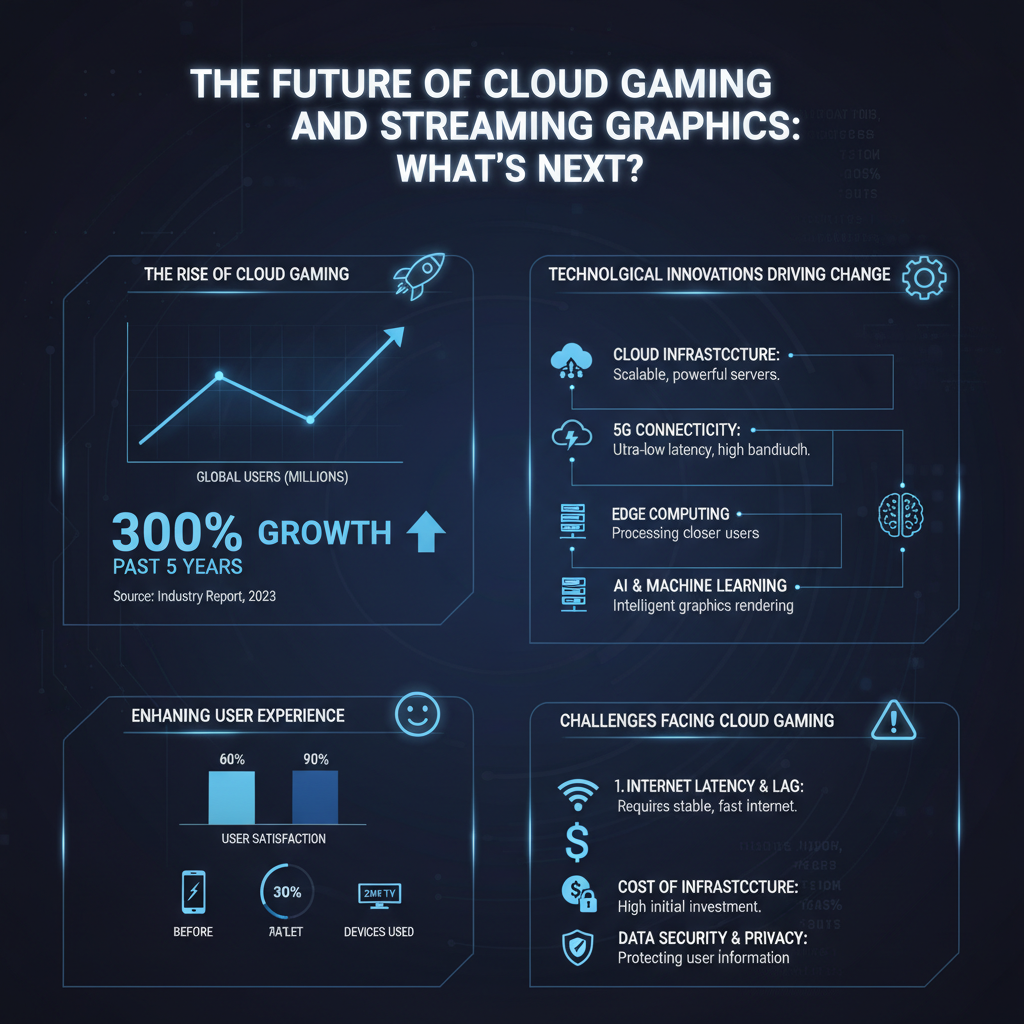
These platforms have made gaming more accessible than ever, removing the barriers of cost and hardware limitations. With just a stable internet connection, players can dive into expansive worlds filled with breathtaking graphics and intricate gameplay. As the technology matures, we can expect even more options and better performance, further solidifying cloud gaming’s place in the industry.
Technological Innovations Driving Change

At the heart of cloud gaming’s growth are several technological innovations that are fundamentally changing how games are delivered and experienced. A major player in this revolution is the rollout of 5G technology, which promises to drastically reduce latency and improve streaming quality. With 5G networks, gamers can expect lower response times and smoother gameplay, making the experience nearly indistinguishable from traditional gaming methods.
Additionally, advancements in graphics rendering techniques, such as real-time ray tracing and AI-enhanced graphics, are pushing the envelope of what’s possible in gaming visuals. AI integration is particularly exciting; it allows for dynamic adjustments in graphics and performance based on the player’s device and network conditions. This means that even with varying levels of bandwidth, gamers can enjoy an optimized experience tailored to their specific circumstances.
Enhancing User Experience
User experience remains a top priority in cloud gaming, and several features are being developed to ensure seamless interaction. One of the most vital aspects is adaptive streaming, which adjusts the game’s quality based on the user’s bandwidth. This means that if network conditions fluctuate, the game can automatically lower its graphical fidelity to maintain a stable frame rate, preventing frustrating lag or interruptions.
Moreover, features like cross-platform play and instant game access are becoming standard. Gamers can now jump into a game with friends regardless of their platform, whether it’s a console, PC, or mobile device. Instant access to a vast library of games, often available through subscription models, further enhances the user experience, allowing players to explore new titles without the commitment of purchasing them outright.
Challenges Facing Cloud Gaming
Despite the promising future of cloud gaming, several challenges remain that could impede its widespread adoption. Technical hurdles such as latency and server downtime can disrupt gameplay, leading to a frustrating experience for players. While advancements in 5G and cloud infrastructure aim to mitigate these issues, they are not entirely eliminated.
Additionally, traditional gaming methods still hold a strong appeal for many players, particularly those who value the tactile experience of consoles and PCs. The competition with physical formats can create resistance among certain demographics, especially those who are skeptical about relying on internet connectivity for their gaming needs. Overcoming this resistance will require cloud gaming services to demonstrate undeniable value and reliability.
The Impact of Streaming Graphics on Game Development
As cloud gaming continues to gain traction, game developers are adapting their design strategies to align with this new paradigm. The potential for more immersive experiences through high-quality graphics means developers are increasingly focusing on creating visually stunning worlds that can take full advantage of advanced streaming technologies. This shift encourages innovation, pushing developers to explore creative ways to engage players and enhance storytelling.
Moreover, the focus on multiplayer experiences and community-driven content is becoming more pronounced, as cloud gaming allows for larger player bases and more dynamic interactions. As developers embrace cloud capabilities, we can expect a wave of fresh content that leverages the strengths of streaming graphics, ultimately enriching the gaming landscape.
Future Trends to Watch
Looking ahead, several trends are poised to shape the future of cloud gaming and graphics technology in the next five years. One notable prediction is the continued rise of subscription models, which are becoming increasingly popular as they allow gamers to access a wide array of titles for a fixed monthly fee. This model reduces the financial barrier for entry and encourages players to try new games they might not have otherwise purchased.
Additionally, the integration of virtual reality (VR) and augmented reality (AR) into cloud gaming could provide even more immersive experiences. As cloud infrastructure improves, the potential for VR and AR gaming becomes more feasible, blurring the lines between the digital and physical worlds. Gamers can anticipate a future where they can explore vast virtual environments in real-time, enhancing their overall gaming experience.
The landscape of cloud gaming is also likely to see the emergence of more partnerships between tech companies and gaming studios, leading to innovative content and experiences that leverage the strengths of both industries.
As the future of cloud gaming and streaming graphics unfolds, we find ourselves on the brink of a new era in gaming. With rapid advancements in technology and infrastructure, gamers can expect a more immersive, accessible, and enjoyable experience. Embracing the changes ahead will be vital, as the gaming world continues to evolve, ultimately redefining how we connect and engage with our favorite pastime.
Frequently Asked Questions
What is cloud gaming and how does it work?
Cloud gaming, also known as game streaming, allows players to access and play video games via the internet without the need for expensive hardware or consoles. Instead of running games locally on a device, the processing is handled on remote servers, and the gameplay is streamed to the user’s device in real-time. This technology leverages high-speed internet and advanced data compression techniques to deliver high-quality graphics and low-latency gameplay directly to players’ screens.
How will advancements in streaming graphics impact the gaming industry?
Advancements in streaming graphics technology are set to revolutionize the gaming industry by enabling higher-quality visuals and more immersive experiences without requiring powerful local hardware. This includes improvements in resolution, frame rates, and visual effects that can be delivered seamlessly over the cloud. As a result, gaming will become more accessible, allowing a broader audience to enjoy cutting-edge graphics, regardless of their device capabilities.
Why is latency a critical concern for cloud gaming?
Latency is critical in cloud gaming because it refers to the delay between a player’s input and the corresponding action on-screen. High latency can lead to a frustrating gaming experience, especially in fast-paced genres like first-person shooters or racing games. As cloud gaming services improve their infrastructure and utilize edge computing to reduce latency, the overall user experience will enhance, making cloud gaming a more viable option for serious gamers.
What are the best platforms for cloud gaming in 2023?
As of 2023, some of the best platforms for cloud gaming include NVIDIA GeForce NOW, Xbox Cloud Gaming, and PlayStation Now. Each platform offers unique features, such as game libraries, subscription models, and integration with existing gaming ecosystems. Players should consider their preferred games, subscription costs, and device compatibility when choosing a cloud gaming service that suits their needs.
Which technologies are shaping the future of cloud gaming and streaming graphics?
Several technologies are shaping the future of cloud gaming and streaming graphics, including 5G connectivity, edge computing, and AI-driven rendering. 5G networks provide the high-speed internet necessary for seamless streaming, while edge computing brings data processing closer to the user, reducing latency. Additionally, AI can optimize graphics rendering in real-time, enhancing visual quality and performance, making high-end gaming experiences more accessible to players worldwide.
References
- Cloud gaming
- https://www.bbc.com/news/technology-58190685
- https://www.theguardian.com/games/2021/jul/06/cloud-gaming-the-future-of-video-games
- https://www.sciencedirect.com/science/article/pii/S187705092100156X
- https://www.nytimes.com/2021/10/20/technology/cloud-gaming.html
- https://www.wired.com/story/cloud-gaming-future/
- https://www.techrepublic.com/article/cloud-gaming-where-it-is-now-and-where-its-going/
- https://www.microsoft.com/en-us/research/publication/the-future-of-cloud-gaming/