


AI-powered noise reduction in videos utilizes advanced algorithms to identify and eliminate unwanted background sounds, resulting in clearer audio quality. This technology enhances viewer experience by ensuring that dialogue and important sounds are more prominent while distracting noises are significantly minimized. As video content becomes increasingly important in our digital world, understanding how AI noise reduction works can help creators deliver professional and engaging videos. In this article, we’ll delve deeper into the mechanisms behind AI noise reduction and its applications in video production.
Understanding Noise in Video Audio

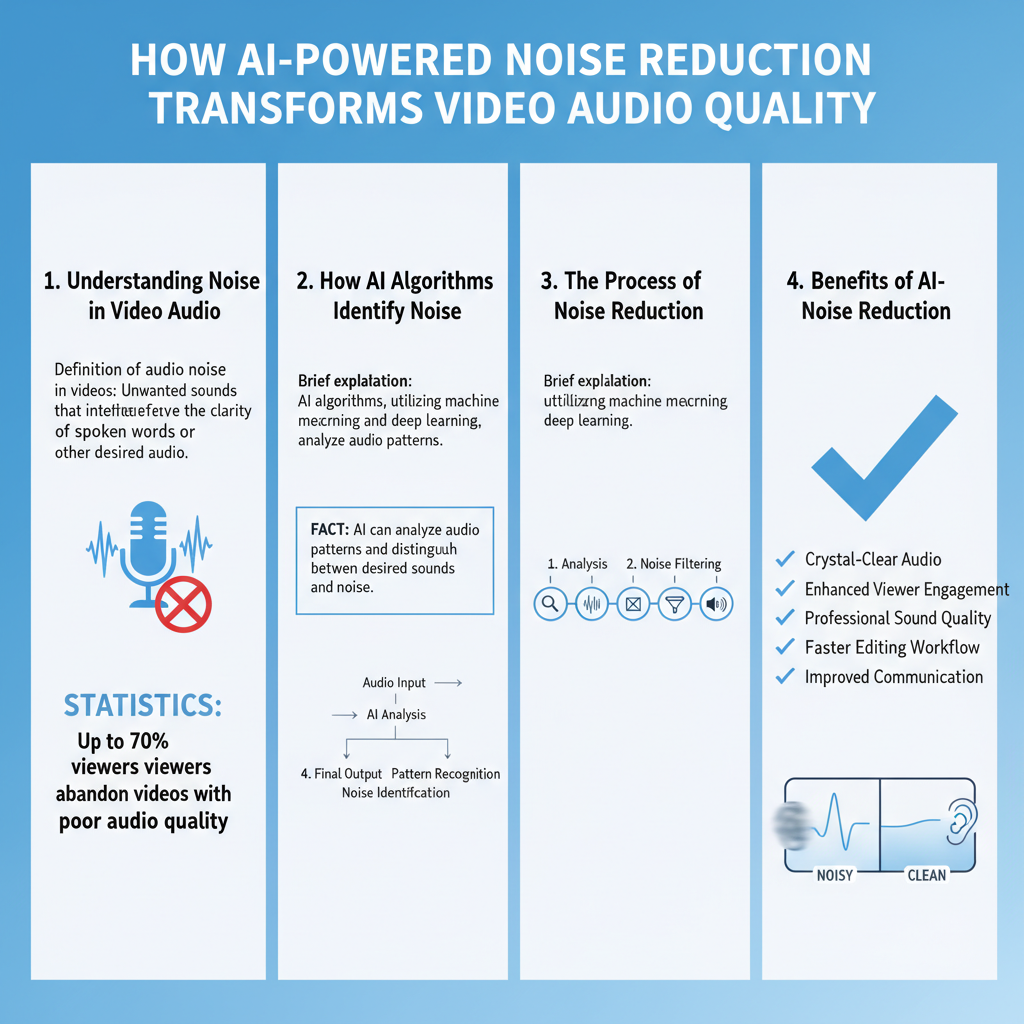
Noise in audio refers to any unwanted sound that interferes with the clarity of the primary audio content, such as dialogue, music, or sound effects. Common sources of noise include environmental factors like wind rustling through trees, traffic sounds from nearby roads, or even the hum of electronics. In the context of video, clear audio is crucial for viewer engagement. Imagine watching a gripping documentary or an exciting tutorial, only to be distracted by constant background chatter or the whirring of an air conditioner. This distraction can lead to frustration, causing viewers to disengage from the content. By ensuring audio clarity, creators can keep their audience focused and invested in the material being presented.
How AI Algorithms Identify Noise

AI algorithms leverage machine learning techniques to differentiate between noise and desired sounds. These algorithms are trained using vast datasets that include a variety of audio samples. By analyzing patterns in these samples, AI can learn to recognize the characteristics of different sounds. For example, it can distinguish the sharp crackle of a voice from the low rumble of distant traffic.
The process begins with the creation of sound profiles, which are essentially digital fingerprints of specific audio elements. When a video is processed, the AI system analyzes the incoming audio against these profiles to identify which sounds are necessary, such as dialogue or music, and which are classified as noise. This ability to learn and adapt makes AI a powerful tool in audio processing, allowing it to continuously improve its accuracy in noise detection.
The Process of Noise Reduction
The noise reduction process typically involves several key steps, starting with sound sampling. During this phase, the AI captures segments of the audio to analyze the frequency and amplitude of the sounds present. Once the unwanted noise is identified, filtering techniques are applied to minimize its impact.
There are two main approaches to noise reduction: real-time and post-production. Real-time noise reduction occurs during the recording phase, allowing for immediate adjustments to the audio before it’s even captured. This is especially useful for live broadcasts or streaming services where audio quality is paramount. On the other hand, post-production noise reduction is applied after the video has been recorded. This method allows for more in-depth analysis and adjustments, ensuring that the final product is polished and professional.
For instance, during the post-production phase, an editor might use AI-powered software to analyze a video of an interview filmed outdoors. The AI identifies the rustling leaves and distant traffic sounds and applies filters to reduce these noises without compromising the speaker’s voice, thus enhancing the overall audio quality.
Benefits of AI-Powered Noise Reduction
The benefits of AI-powered noise reduction are numerous. First and foremost, enhanced audio clarity leads to improved viewer retention and satisfaction. When the dialogue is crisp and clear, viewers are more likely to stay engaged with the content. This is particularly important for educators, marketers, and content creators who rely on audience engagement for success.
Additionally, AI noise reduction technology can save both time and costs in the video editing process. Traditional noise reduction methods often require extensive manual adjustments, which can be time-consuming. With AI, much of the process can be automated, allowing editors to focus on other creative aspects of their projects. For instance, a filmmaker might spend hours manually tweaking audio tracks, but with AI tools, those hours can be reduced to mere minutes, enabling faster turnaround times and more efficient production workflows.
Challenges and Limitations
While AI-powered noise reduction offers significant advantages, it is not without its challenges and limitations. One potential pitfall is over-processing, where the AI may eliminate certain sounds that are essential to the context of the video. For example, in a nature documentary, the sounds of birds chirping or water flowing might be deemed noise by the AI, leading to a less immersive experience for the viewer.
Moreover, the need for human oversight remains crucial in certain scenarios. AI does not possess the nuanced understanding of context that a human editor does. Therefore, while it can greatly assist in the noise reduction process, a skilled professional should review the output to ensure that important audio elements are preserved. Balancing AI efficiency with human intuition is key to achieving the best results.
Future of AI in Audio Processing
The future of AI in audio processing looks promising, with predictions pointing towards even more sophisticated advancements in noise reduction technology. As machine learning algorithms become more refined, we can expect AI to better understand and replicate human auditory perception, allowing for more nuanced audio editing.
Moreover, new applications in live broadcasting and streaming services are likely to emerge. For instance, imagine a live sports event where AI automatically adjusts the audio levels in real-time, enhancing the crowd’s cheers while minimizing distracting sounds like announcements or equipment noise. This could revolutionize how we experience live events, providing a more immersive viewing experience.
Additionally, AI could play a role in personalizing audio experiences for viewers. By learning individual preferences, AI could optimize sound settings to cater to specific audience needs, making content more accessible and enjoyable for everyone.
Implementing AI-powered noise reduction in video production can significantly elevate the quality of your content. By understanding its mechanisms and benefits, you can effectively utilize this technology to create more professional and engaging videos. For those looking to improve their audio quality, consider exploring AI tools available in the market today. As technology continues to evolve, staying informed and adaptable will ensure that your content stands out in an increasingly competitive landscape.
Frequently Asked Questions
What is AI-powered noise reduction in videos and how does it work?
AI-powered noise reduction in videos refers to the use of artificial intelligence algorithms to identify and eliminate unwanted background noise while preserving the clarity of the primary audio. This technology operates by analyzing audio frequencies and patterns, distinguishing between desirable sounds (like voices) and noise (like static or ambient sounds), and selectively filtering out the latter, resulting in cleaner, more professional-sounding video content.
How can I implement AI noise reduction in my video editing process?
Implementing AI noise reduction in your video editing process can be achieved through various software tools that incorporate this technology, such as Adobe Premiere Pro, Final Cut Pro, or specialized audio editing software like Audacity with AI plugins. Simply import your video or audio track into the software, locate the AI noise reduction feature, and follow the prompts to analyze and reduce noise levels, ensuring you enhance audio quality without losing important sound details.
Why should I use AI-powered noise reduction instead of traditional methods?
AI-powered noise reduction offers several advantages over traditional methods, including greater accuracy and efficiency. While conventional techniques may rely on manual adjustments or static filters, AI learns from the audio data, adapting its noise reduction strategies to various sound environments. This results in a more natural-sounding output, minimizing artifacts and maintaining the integrity of the original audio, which is crucial for professional video production.
What are the best software options for AI noise reduction in videos?
Some of the best software options for AI noise reduction in videos include Adobe Premiere Pro with its built-in ‘Essential Sound’ panel, DaVinci Resolve with its Fairlight audio suite, and standalone tools like iZotope RX or Audacity with AI plugins. These tools provide advanced features for effectively reducing noise while preserving audio quality, catering to both beginners and professional editors looking for efficient editing solutions.
Which types of noise can AI noise reduction effectively eliminate in videos?
AI noise reduction can effectively eliminate various types of noise in videos, including background hums, wind noise, static, and other ambient sounds that detract from the primary audio. It excels at isolating human voices and musical elements, allowing for clearer communication and enhanced viewer experience. By intelligently discerning audio signals, AI can adapt to different noise profiles, making it a versatile tool for diverse video production scenarios.
References
- Noise reduction
- https://www.sciencedirect.com/science/article/pii/S0925231221000503
- https://www.ncbi.nlm.nih.gov/pmc/articles/PMC7568979/
- https://www.researchgate.net/publication/3423081_A_Survey_on_Noise_Reduction_Techniques_in_Videos
- https://www.techrepublic.com/article/how-ai-is-changing-the-future-of-video-editing/
- https://www.bbc.com/future/article/20220207-what-is-ai-and-how-does-it-work
- https://www.nature.com/articles/s41598-019-51601-1
- https://www.itu.int/en/ITU-T/recommendations/rec.aspx?id=12339


