
As AI technology continues to advance, the future of AI-generated video content promises to reshape how we create and consume visual media. Emerging trends indicate that AI is not only streamlining production processes but also making high-quality video creation accessible to everyone. This article will delve into the innovative tools shaping video creation, explore diverse applications across various industries, and discuss the ethical considerations and challenges we face as this technology evolves.
The Rise of AI in Video Production
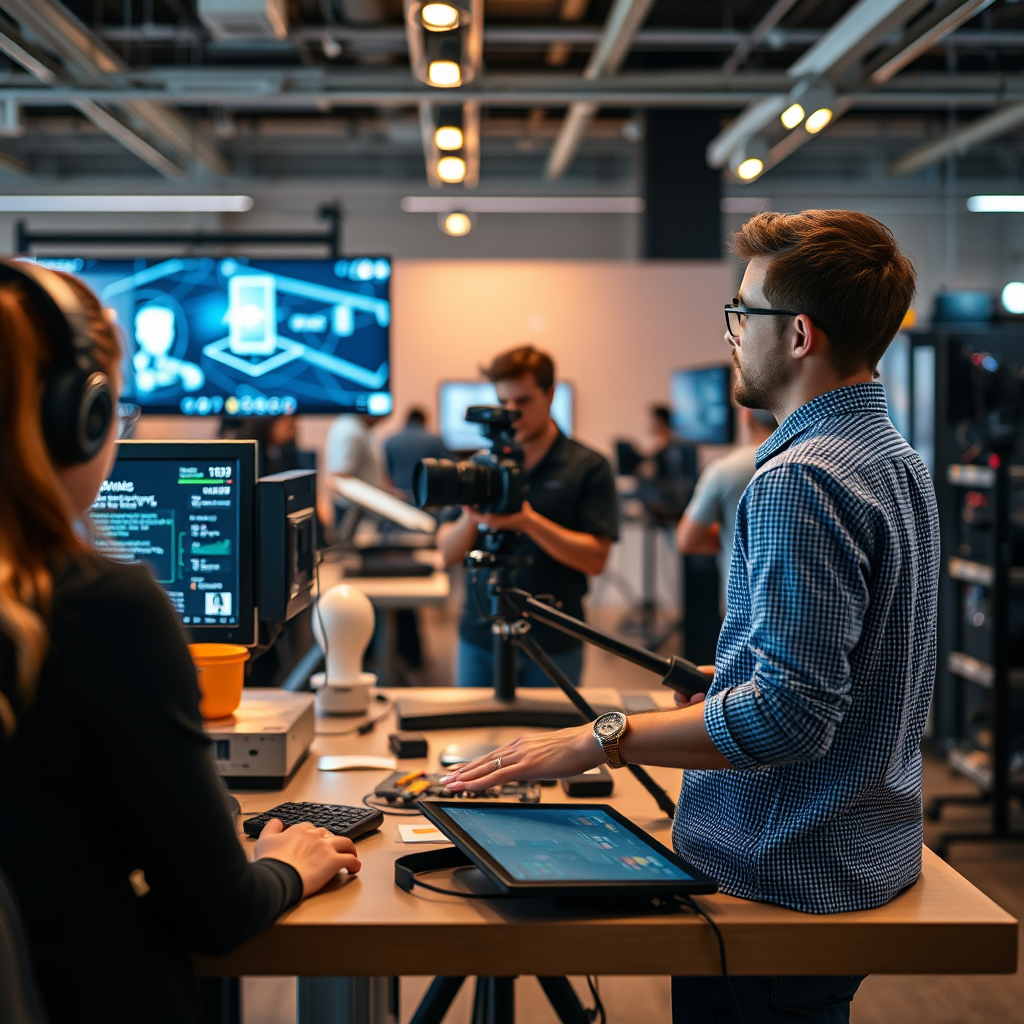
AI tools are streamlining the video creation process, significantly reducing both time and costs associated with traditional production methods. With the integration of AI, creators can automate mundane tasks such as video editing, color correction, and even audio synchronization. Take, for instance, platforms like Magisto and InVideo, which use AI algorithms to analyze footage and generate polished videos within minutes. This means filmmakers can focus more on storytelling and creativity instead of getting bogged down by technical details.
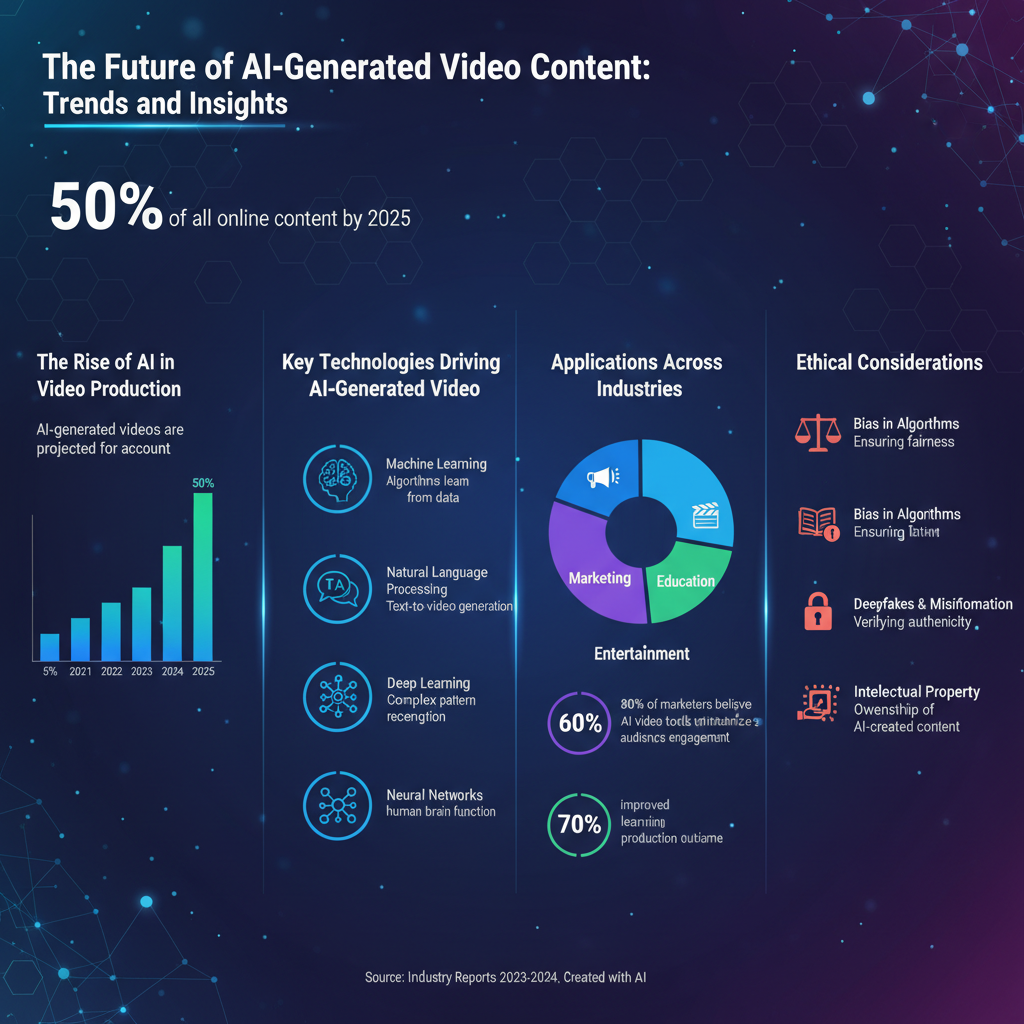
Moreover, increased accessibility allows even non-professionals to produce high-quality video content. With user-friendly interfaces and guided workflows, anyone with a smartphone and an internet connection can create engaging videos. This democratization of video production is leading to a surge of content creators on platforms like YouTube and TikTok, where user-generated content is thriving. As a result, businesses and influencers are discovering new ways to connect with their audiences, making creativity more widespread than ever.
Key Technologies Driving AI-Generated Video

Machine learning algorithms are enhancing video editing and production efficiency by analyzing vast amounts of data to learn patterns and preferences. For example, tools like Adobe Premiere Pro are incorporating AI features like Auto Reframe, which automatically adjusts the aspect ratio of a video to fit different platforms, saving creators time and ensuring their content looks great everywhere.
Natural language processing (NLP) is another key technology enabling the automatic generation of scripts and voiceovers. Services like Synthesia use NLP to create lifelike avatars that can deliver scripted content in various languages and tones. This capability not only speeds up the production process but also allows for greater personalization, making videos more relatable to diverse audiences.
Applications Across Industries
AI-generated videos are making significant strides in various industries. In marketing and advertising, companies are leveraging AI to create personalized content that resonates with their target demographics. For example, brands like Coca-Cola have utilized AI to analyze consumer data, enabling them to tailor video ads that speak directly to individual preferences. This targeted approach can enhance engagement rates and improve ROI, showcasing the power of AI in creating impactful marketing strategies.
In the realm of education, AI is being used to create engaging instructional videos tailored to diverse learning styles. Platforms like Kaltura and Edpuzzle empower educators to generate customized videos that incorporate interactive elements, quizzes, and feedback loops. This not only enriches the learning experience but also allows teachers to address the unique needs of their students, fostering a more inclusive educational environment.
Ethical Considerations and Challenges
With the rapid rise of AI-generated content, several ethical considerations and challenges have emerged. Concerns over deepfakes and misinformation are prompting discussions about regulation and accountability. As AI technology becomes more sophisticated, the line between genuine and manipulated content blurs, raising questions about trust in visual media. Companies and platforms are now facing pressure to implement measures that verify the authenticity of video content, as seen with initiatives from social media giants like Facebook and Twitter.
Additionally, intellectual property issues arise with AI-generated content ownership and rights. If an AI creates a video, who owns the copyright? This question is complex and remains largely unanswered. As creators and businesses navigate these waters, it’s essential to establish clear guidelines that protect the rights of all parties involved while encouraging innovation.
The User Experience and Content Quality
AI can optimize video content based on viewer preferences and engagement metrics, ensuring that the final product resonates with the audience. By analyzing data such as watch time, click-through rates, and viewer feedback, AI tools can suggest alterations to improve overall quality and engagement. For example, platforms like Vidooly utilize AI to provide insights into what works and what doesn’t, allowing creators to iterate on their content effectively.
However, balancing automation with creative input remains essential for maintaining high-quality production. While AI can enhance efficiency and personalization, it cannot fully replicate human creativity and intuition. The most successful content creators will be those who leverage AI as a tool to complement their unique vision rather than as a replacement for their artistic instincts.
Future Predictions for AI Video Content
Anticipated advancements in AI-generated video content include fully automated production pipelines and interactive video experiences. Imagine a world where an AI can produce an entire video, from concept to final cut, based solely on parameters set by the creator. This could lead to an explosion of content creation, enabling brands and individuals to generate tailored videos at an unprecedented scale.
Moreover, collaboration between human creators and AI tools will redefine storytelling techniques. As AI continues to evolve, we can expect to see more interactive and immersive video experiences that engage viewers in new ways. Augmented reality (AR) and virtual reality (VR) could play pivotal roles, allowing audiences to interact with video content beyond passive viewing.
The rapid evolution of AI-generated video content holds exciting prospects for creators and consumers alike. As we navigate this changing landscape, staying informed about the latest technologies and trends will be crucial. Embrace the future of video content by exploring AI tools today! The future is bright, and those who adapt to these changes will undoubtedly find new opportunities to tell their stories and connect with audiences in meaningful ways.
Frequently Asked Questions
What are the main benefits of using AI-generated video content for businesses?
AI-generated video content offers several significant benefits for businesses, including cost efficiency, speed, and personalization. By automating the video creation process, companies can produce high-quality videos at a fraction of the traditional cost and time. Additionally, AI can analyze audience data to create tailored content that resonates with specific demographics, enhancing engagement and conversion rates.
How is AI-generated video content created?
AI-generated video content is created through a combination of machine learning algorithms, natural language processing, and computer vision. These technologies allow AI to analyze existing video and audio content, create scripts, and even generate visual elements. Platforms utilizing AI can convert text into video by matching it with relevant images, animations, and voiceovers, resulting in a cohesive and engaging final product.
Why should marketers embrace AI-generated video content in their strategies?
Marketers should embrace AI-generated video content because it enables them to stay competitive in an increasingly digital landscape. As consumer preferences shift towards visual content, AI can help marketers produce videos that are not only visually appealing but also data-driven, ensuring that they meet audience expectations. Furthermore, leveraging AI can streamline workflows, allowing marketers to focus on creative strategies rather than time-consuming production tasks.
What types of content can be effectively produced through AI video generation?
Various types of content can be effectively produced through AI video generation, including promotional videos, social media clips, tutorials, and explainer videos. AI excels in creating content that requires repetitive elements or dynamic updates, such as product showcases and news updates. This versatility makes AI-generated videos an invaluable tool for businesses in diverse industries looking to enhance their visual storytelling capabilities.
Which AI tools are the best for generating video content currently available?
Some of the best AI tools for generating video content available today include Synthesia, Pictory, and Lumen5. Synthesia enables users to create videos using AI avatars and voice synthesis, making it ideal for training and corporate communications. Pictory focuses on transforming text into engaging videos with minimal effort, while Lumen5 offers a user-friendly interface for marketers to create videos from blog posts or articles, enhancing content repurposing strategies.
References
- Artificial intelligence
- https://www.bbc.com/news/technology-58558053
- https://www.sciencedirect.com/science/article/pii/S1877050921001861
- https://www.nytimes.com/2023/02/23/technology/ai-video-content.html
- https://www.theguardian.com/technology/2023/mar/15/ai-video-content-future
- https://www.nationalgeographic.org/article/artificial-intelligence-and-video-content/
- https://www.wired.com/story/ai-generated-video-content-future/
- https://www.technologyreview.com/2023/05/01/1065231/ai-generative-video-content-future/