
Understanding the ethics of AI in video manipulation is essential in our tech-savvy world, where authenticity, consent, and the potential for misuse are at stake. As AI technology continues to evolve, it poses intriguing ethical dilemmas that affect not just individuals but society as a whole. This article delves into these critical issues, offering insights into how AI technologies are reshaping video content and what it means for our perception of reality.




Understanding AI Video Manipulation

AI video manipulation encompasses a range of technologies designed to alter video content using artificial intelligence. Techniques such as deepfake technology, which employs deep learning algorithms to create realistic-looking videos that can swap faces or fabricate scenes, are prime examples. Other applications include video enhancement and automated editing tools that can modify footage in real-time. Industries like entertainment and advertising leverage these technologies to create engaging content, from blockbuster movies that utilize CGI to influencer marketing campaigns showcasing products in a highly stylized manner.
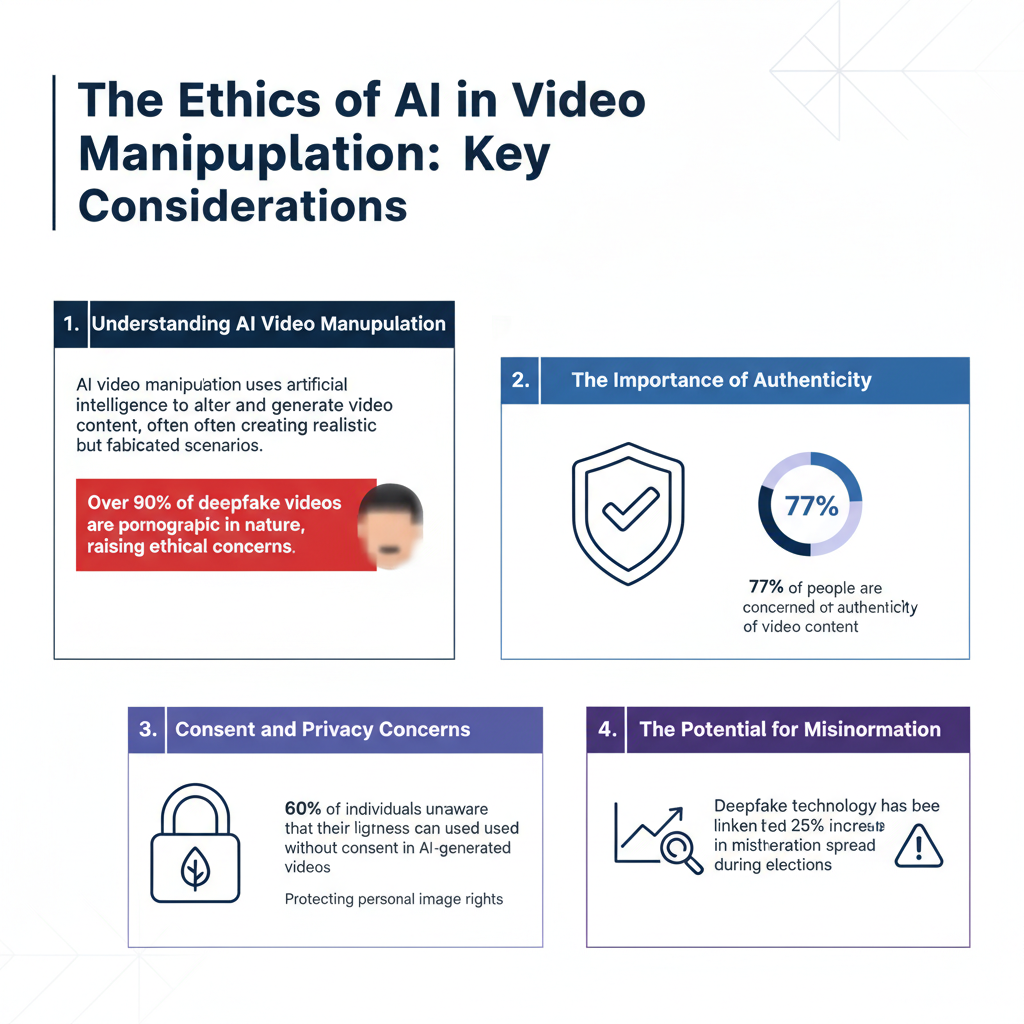
In the entertainment industry, for instance, AI can help create stunning visual effects that enhance storytelling. In advertising, companies can tailor their messages to resonate more effectively with target audiences. However, while these applications can lead to creative innovations, they also raise critical questions about the integrity and authenticity of the content being produced.
The Importance of Authenticity

Authenticity is a cornerstone of trust in our digital interactions. When videos are manipulated, they can significantly impact public trust and perception. For instance, in the realm of news media, the authenticity of video footage is paramount; if viewers cannot trust what they see, it undermines the very foundation of journalism. A manipulated video can mislead audiences, creating false narratives that can sway public opinion or incite conflict.
Consider the impact of deepfake videos that falsely depict political figures making inflammatory statements. These videos can rapidly spread through social media, leading to widespread misinformation and eroding trust in legitimate news sources. In political campaigns, authenticity becomes crucial as candidates rely on their public image to connect with voters. When manipulated content surfaces, it can distort a candidate’s message, leading to unfair consequences.
Consent and Privacy Concerns
The ethical implications surrounding consent and privacy in video manipulation cannot be overlooked. Using someone’s likeness without their explicit permission raises serious ethical dilemmas. For instance, deepfake technology can create videos featuring individuals saying or doing things they never actually did, potentially damaging reputations and invading personal privacy.
As society grapples with these concerns, various privacy laws and regulations become increasingly relevant. For example, laws such as the General Data Protection Regulation (GDPR) in the European Union emphasize the importance of obtaining consent for data use, which extends to likenesses in video content. Ethical practices in video manipulation must prioritize obtaining consent, not only to respect individual rights but to maintain a trust-based relationship between creators and audiences.
The Potential for Misinformation
One of the most alarming consequences of AI-generated videos is their potential to spread misinformation. Manipulated content can easily go viral, leading to widespread misconceptions that can impact public opinion and even political outcomes. A notable case involved a deepfake video of President Obama that, while created for comedic purposes, highlighted how easily such technology can be misused.
The rapid dissemination of manipulated content can create a climate of confusion and distrust. The virality of misleading videos can overshadow factual reporting, making it difficult for audiences to discern reality from fabrication. This scenario underscores the urgent need for media literacy education, equipping individuals with the skills to critically assess the authenticity of the videos they encounter.
Ethical Guidelines and Best Practices
As the landscape of AI video manipulation evolves, so does the need for ethical guidelines and best practices. Various organizations and institutions have begun developing frameworks to guide creators in responsibly using these technologies. For instance, the Partnership on AI has issued principles that emphasize fairness, accountability, and transparency in AI applications.
Creators and organizations should adopt best practices, such as clearly labeling manipulated content and providing disclaimers when using AI-generated videos. This transparency helps audiences understand the nature of the content they consume, fostering a culture of trust. Additionally, engaging in open dialogues about the implications of video manipulation can encourage responsible use while promoting awareness of potential misuse.
The Role of Technology in Ethics
Technology itself can play a crucial role in mitigating ethical risks in video manipulation. For instance, watermarking technologies can help verify the authenticity of video content, allowing viewers to distinguish between genuine and manipulated footage. Furthermore, advancements in AI can lead to the development of tools that automatically flag or identify manipulated videos, providing an additional layer of protection against misinformation.
Transparency and accountability are vital in the ethical deployment of AI in video manipulation. Developers must consider the potential ramifications of their technologies, ensuring that they are used to enhance creativity without compromising integrity. By fostering a culture of ethical responsibility, the technology industry can help ensure that AI advancements benefit society as a whole.
Future Implications and Considerations
Looking ahead, the future of AI video manipulation is filled with both promise and challenges. As technology becomes more sophisticated, the potential for misuse may also increase. This reality calls for ongoing dialogue and research in the field of AI ethics, particularly as new capabilities emerge.
The ethical ramifications of AI video manipulation will likely continue to evolve, necessitating a proactive approach to address potential concerns. Engaging a diverse range of stakeholders, including technologists, ethicists, policymakers, and the public, can help foster a comprehensive understanding of these issues and lead to more informed decision-making.
As we navigate this complex landscape, it is essential to remain vigilant and committed to ethical considerations in AI video manipulation. By fostering awareness and establishing robust guidelines, we can work toward a digital future that prioritizes authenticity, consent, and responsible innovation.
The discussion surrounding the ethics of AI in video manipulation highlights the delicate balance between innovation and responsibility. As technology advances, it is imperative for creators, regulators, and consumers to engage in thoughtful conversations about the implications of these tools. By fostering awareness and establishing ethical guidelines, we can navigate the complexities of AI responsibly and ensure a more trustworthy digital future.
Frequently Asked Questions
What are the ethical concerns surrounding AI in video manipulation?
The ethical concerns around AI in video manipulation primarily revolve around misinformation, consent, and the potential for deepfake technology to be misused. Deepfakes can create hyper-realistic videos that misrepresent reality, leading to the spread of false narratives or damaging reputations. Additionally, issues of consent arise when individuals are depicted in manipulated videos without their approval, raising questions about privacy and autonomy in the digital age.
How can AI video manipulation tools be used responsibly?
Responsible use of AI video manipulation tools involves adhering to ethical guidelines and transparency standards. Creators should clearly disclose when content has been altered, especially in sensitive contexts like news reporting or political advertising. Additionally, implementing consent protocols and ensuring that manipulated content does not infringe on individual rights can help mitigate ethical concerns and promote responsible usage of these advanced technologies.
Why is consent important in AI video manipulation?
Consent is crucial in AI video manipulation because it respects individuals’ rights to control their own likeness and personal data. Without consent, manipulated videos can violate privacy laws and ethical norms, potentially leading to personal and reputational harm. Furthermore, obtaining consent fosters trust between creators and audiences, ensuring that the use of AI technology aligns with societal values and ethical standards.
What can be done to combat the negative effects of AI-generated video manipulation?
Combating the negative effects of AI-generated video manipulation requires a multi-faceted approach that includes education, regulatory frameworks, and technology solutions. Educating the public about the existence of deepfakes and how to identify them can reduce the impact of misinformation. Additionally, implementing regulations that govern the use of AI in media, along with developing detection technologies that can identify altered content, can help mitigate potential harm and uphold ethical standards.
Which organizations are leading the discussion on the ethics of AI in video manipulation?
Several organizations are at the forefront of the discussion on the ethics of AI in video manipulation, including the Partnership on AI, which focuses on best practices for AI technologies, and the Future of Privacy Forum, which addresses consent and privacy issues. Academic institutions and think tanks, such as the Berkman Klein Center for Internet & Society at Harvard, also contribute valuable research and recommendations on ethical AI usage. These organizations promote dialogue among technologists, ethicists, and policymakers to ensure responsible development and application of AI technologies.
References
- Deepfake
- https://www.bbc.com/news/technology-50011747
- https://www.theguardian.com/technology/2021/oct/01/deepfakes-ethical-implications
- https://www.sciencedirect.com/science/article/pii/S0160791X19301896
- https://www.nytimes.com/2020/01/23/opinion/deepfake-technology.html
- https://www.aaas.org/news/ethics-deepfakes-and-ai-manipulation-video
- https://www.hrw.org/report/2021/11/15/deepfakes-and-other-ai-manipulation-techniques/impact-democracy-and-human-rights
- Dedicating Lanes for Priority or Exclusive Use by Connected and Automated Vehicles | The National…
- https://www.itu.int/en/ITU-T/Study-Groups/2020-2023/13/Pages/default.aspx