
Machine learning significantly improves video recommendation algorithms by analyzing user behavior and preferences to deliver personalized content. This technology enables platforms to suggest videos that align with viewers’ interests, thereby increasing engagement and satisfaction. By leveraging vast amounts of data and sophisticated algorithms, video streaming services can provide users with a tailored viewing experience that keeps them coming back for more. In this article, we will explore how machine learning powers these algorithms and the benefits it brings to both users and content creators.




Understanding Video Recommendation Algorithms

Video recommendation algorithms are the backbone of many popular platforms like YouTube, Netflix, and Hulu. These algorithms utilize complex models to predict what content users will enjoy based on a variety of factors. At their core, these algorithms analyze data such as watch history, likes, shares, and even the average duration of views. For instance, if a user frequently watches cooking videos, the algorithm takes note of this pattern and begins to suggest similar content, such as baking tutorials or international cuisine explorations.
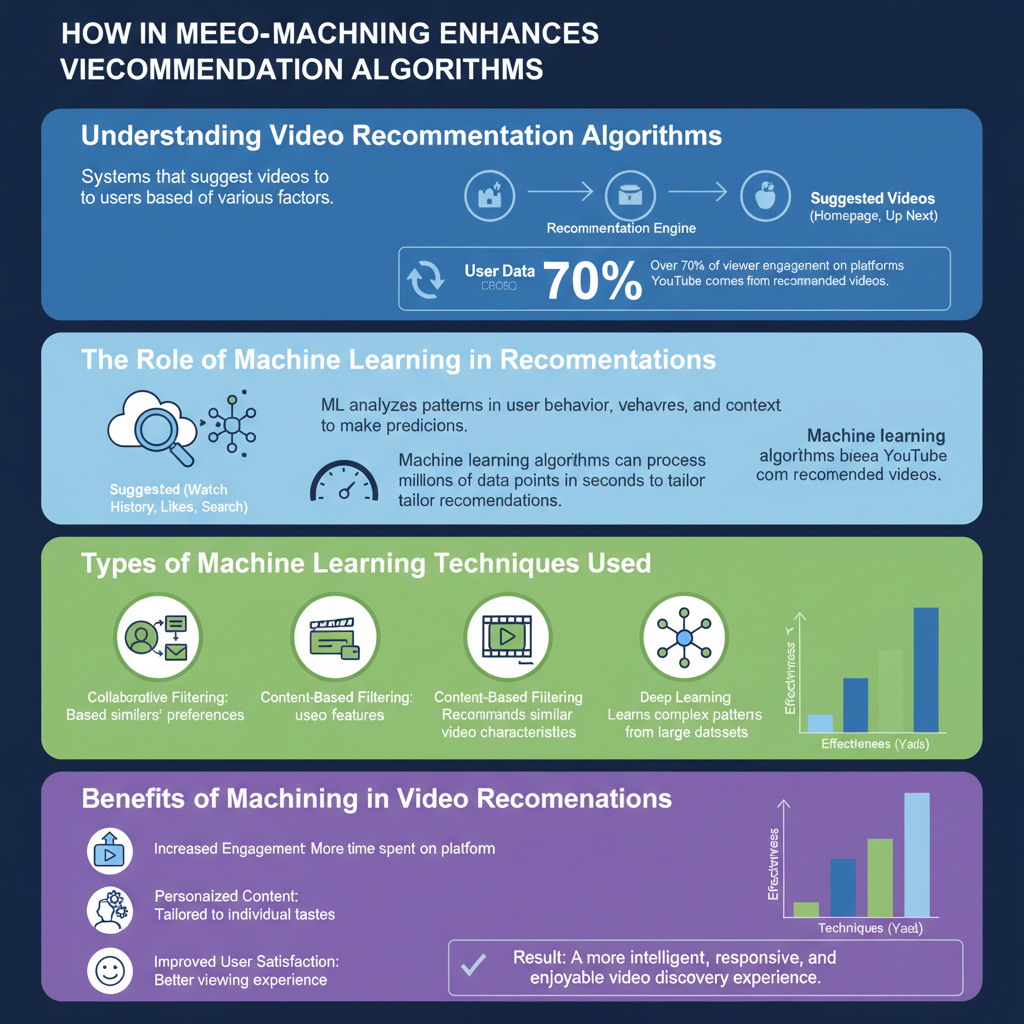
Moreover, these algorithms go beyond mere surface-level analysis. They can assess how long a viewer stays engaged with a specific type of video and whether they return to similar content later. By using this data, platforms can refine their suggestions, making them increasingly relevant to each individual user. This personalization not only enhances user satisfaction but also encourages longer viewing sessions, which is a win-win for both the platform and its users.
The Role of Machine Learning in Recommendations

Machine learning algorithms play a crucial role in the efficiency and effectiveness of video recommendation systems. One of their strongest advantages is their ability to process vast amounts of data quickly, identifying patterns and trends that may not be immediately obvious to human analysts. For example, machine learning can uncover that viewers who watch a certain documentary are also likely to enjoy related content, even if the two genres are not directly connected.
These algorithms are also adaptive, meaning they can learn and improve over time. As they gather data from new user interactions, they refine their predictions, becoming more accurate in their recommendations. This continuous learning process allows platforms to keep up with changing viewer preferences and trends. For instance, a sudden spike in interest for a particular genre—like true crime—can be swiftly identified, and relevant content can be pushed to the forefront of recommendations, ensuring users are always in the loop with current trends.
Types of Machine Learning Techniques Used
In the realm of video recommendations, two primary machine learning techniques are commonly employed: collaborative filtering and content-based filtering.
Collaborative filtering is based on the idea that users who have similar tastes will enjoy similar content. It analyzes the preferences of similar users to recommend videos. For example, if User A and User B both enjoyed a specific sci-fi movie, the algorithm might recommend other films that User B watched to User A, assuming their tastes align. This technique is particularly effective in large user bases, where the diversity of preferences can lead to rich insights.
On the other hand, content-based filtering focuses on the characteristics of the videos themselves. This method examines elements such as genre, tags, and descriptions. For instance, if a user frequently watches romantic comedies, the algorithm will prioritize suggesting videos that fall within that genre and have similar tags, like “romance” or “comedy.” This approach ensures that users are introduced to new content that fits their established preferences while also allowing for some exploration of related genres.
Benefits of Machine Learning in Video Recommendations
The incorporation of machine learning into video recommendations yields numerous benefits, enhancing the overall user experience. One of the most significant advantages is the delivery of personalized content. By analyzing individual user preferences, algorithms can suggest videos that resonate deeply with viewers, leading to increased viewer retention. For example, a user who enjoys travel vlogs will be more likely to keep watching if they are consistently provided with relevant recommendations.
Higher engagement rates are another major benefit. When users find content that aligns with their interests, they are more likely to spend extended periods on the platform, leading to increased ad views and subscription renewals. This creates a virtuous cycle where the platform benefits financially while users enjoy a tailored experience. Additionally, content creators also benefit, as they can reach targeted audiences more effectively, enhancing their chances of gaining subscribers and views.
Challenges in Implementing Machine Learning
Despite the many advantages, implementing machine learning algorithms for video recommendations is not without its challenges. One of the most pressing concerns is data privacy. As platforms collect more data to personalize recommendations, they must ensure that user information is protected. Striking the right balance between personalization and user privacy is crucial for building trust.
Another challenge is ensuring algorithm transparency. Users want to know why certain videos are being recommended to them. By providing insights into how recommendations are generated, platforms can foster a sense of trust and satisfaction. If users understand that their preferences are being respected and catered to, they are more likely to engage with the platform positively.
Future Trends in Video Recommendation Algorithms
Looking ahead, we can expect to see exciting developments in video recommendation algorithms, particularly with the increased use of deep learning. This advanced form of machine learning allows for a more nuanced understanding of user preferences, making recommendations even more precise. Deep learning can analyze not just user behavior but also contextual factors, such as time of day or trending topics, adding an additional layer of personalization.
Additionally, the integration of real-time data will play a significant role in the evolution of video recommendations. By utilizing current trends and events, platforms can provide dynamic recommendations that resonate with users in the moment. For example, if a global event sparks interest in a specific documentary or news piece, platforms can quickly adapt their recommendations to reflect this surge in interest, ensuring that users remain engaged with timely and relevant content.
With these advancements, the future of video recommendation algorithms looks promising, paving the way for an even more personalized and engaging viewing experience.
Machine learning is integral to the evolution of video recommendation algorithms. By enhancing personalization and engagement, this technology not only benefits viewers but also supports content creators in reaching their target audiences. As we continue to see advancements in machine learning techniques, the potential for creating more tailored and relevant content will only grow. Explore how you can leverage these insights in your own video content strategies today!
Frequently Asked Questions
How does machine learning improve the accuracy of video recommendation algorithms?
Machine learning enhances the accuracy of video recommendation algorithms by analyzing user behavior, preferences, and interactions with content. By leveraging vast amounts of data, algorithms can identify patterns and trends that inform personalized recommendations. This leads to more relevant video suggestions, increasing user engagement and satisfaction as they receive content tailored to their interests.
What are the key techniques used in machine learning for video recommendations?
Key techniques used in machine learning for video recommendations include collaborative filtering, content-based filtering, and deep learning. Collaborative filtering utilizes user interactions to suggest videos that similar users have enjoyed, while content-based filtering analyzes the features of videos themselves. Deep learning models, such as neural networks, further enhance these methods by processing complex data and uncovering hidden relationships between users and video content.
Why is user data important in machine learning video recommendation systems?
User data is crucial for machine learning video recommendation systems as it provides the foundational insights needed to generate personalized suggestions. By collecting data on user interactions, such as viewing history, likes, and time spent watching, algorithms can create accurate profiles that reflect individual preferences. This data-driven approach allows platforms to continuously refine and optimize recommendations, improving user retention and satisfaction.
Which platforms utilize machine learning for video recommendations, and how effective are they?
Major platforms like YouTube, Netflix, and Amazon Prime utilize machine learning for video recommendations with significant effectiveness. These platforms analyze millions of user interactions and employ sophisticated algorithms to curate personalized content feeds. As a result, they often report higher viewer retention rates and increased watch times, showcasing the power of machine learning in enhancing user experience and content discovery.
How can businesses leverage machine learning for their own video recommendation systems?
Businesses can leverage machine learning for their video recommendation systems by incorporating user analytics and implementing algorithms that analyze viewer behavior. By utilizing tools and frameworks such as TensorFlow or PyTorch, companies can develop custom models tailored to their specific audience. This not only enhances user engagement by delivering personalized content but also drives conversions, making it a valuable strategy for businesses in the digital landscape.
References
- Recommender system
- https://towardsdatascience.com/machine-learning-in-video-recommendation-systems-3f6c6c5a3f4b
- https://www.sciencedirect.com/science/article/pii/S0957417421002364
- https://www.bbc.com/news/technology-58546925
- https://www.researchgate.net/publication/338167503_Deep_Learning_for_Video_Recommendation_A_Survey
- https://www.itu.int/en/ITU-T/focusgroups/AI4E/Pages/default.aspx
- https://www.oreilly.com/radar/what-we-learned-from-a-year-of-video-recommendation-research/
- https://www.nature.com/articles/s41586-020-2012-9
- https://www.microsoft.com/en-us/research/publication/machine-learning-for-video-recommendation-systems/