
The primary difference between CMOS and CCD sensors in video cameras lies in their technology and performance characteristics. CMOS sensors are generally faster and more power-efficient, making them a popular choice for many modern devices, while CCD sensors excel in image quality and sensitivity, often preferred for professional applications. In this article, we will dive deep into the key features, advantages, and disadvantages of both sensor types, equipping you with the knowledge to make informed decisions about video camera performance.




Understanding CMOS Sensors

CMOS, or Complementary Metal-Oxide-Semiconductor, sensors are a type of image sensor that has gained significant traction in the video camera market thanks to their innovative design. Unlike traditional sensors, which use a more complex architecture, CMOS sensors convert light into electrical signals directly in each pixel. This design allows for faster readout speeds, which is especially beneficial for high-speed video applications such as sports broadcasting or action scenes in films.
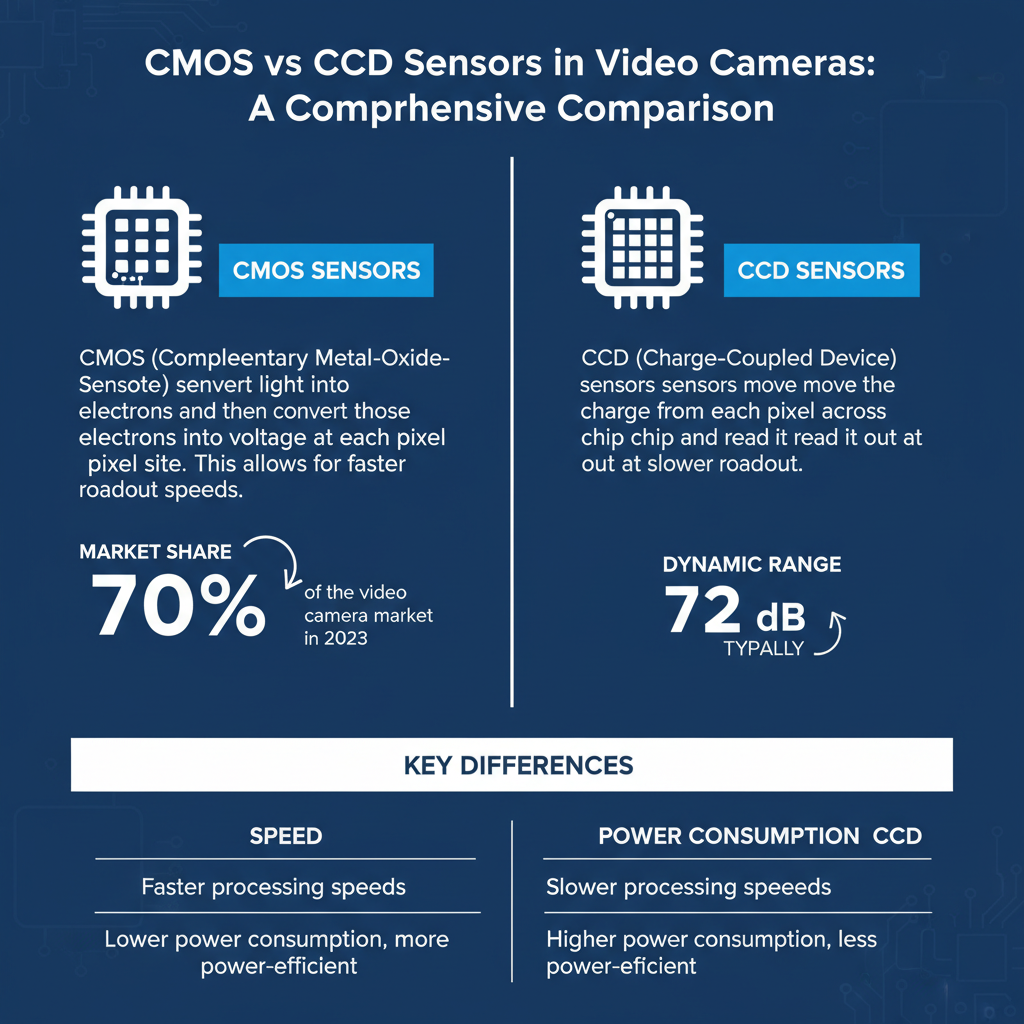
One of the standout features of CMOS sensors is their ability to integrate additional circuitry on the same chip. This integration can include features like analog-to-digital converters, which further enhance processing speeds and reduce the need for external components. This means that cameras equipped with CMOS sensors can be more compact and lightweight, providing a great advantage for handheld and portable devices. Furthermore, CMOS sensors are known for their lower power consumption, which translates to longer battery life—an essential factor for videographers on the go.
Understanding CCD Sensors

In contrast, CCD, or Charge-Coupled Device, sensors utilize a different technology that involves transferring electrical charge across the chip to create images. This mechanism allows CCD sensors to achieve remarkably high-quality images, characterized by low noise levels and excellent dynamic range. These attributes make CCD sensors particularly well-suited for professional video production, where image fidelity is paramount.
One of the key strengths of CCD sensors is their ability to handle low-light conditions better than their CMOS counterparts. This sensitivity is vital for filmmakers working in environments with limited lighting, as it allows for the capture of clearer, sharper images without introducing excessive noise. Moreover, the design of CCD sensors typically leads to more stable performance, which minimizes the chances of image artifacts—unwanted distortions that can detract from the viewing experience.
Key Differences Between CMOS and CCD
When comparing CMOS and CCD sensors, a few fundamental differences emerge that can significantly impact your choice of video camera:
– Power Consumption: One of the most notable distinctions is power consumption. CMOS sensors are designed to be energy-efficient, consuming less power compared to CCD sensors, which require a higher energy input for operation. This efficiency can lead to longer operational periods for battery-powered devices, making CMOS a favorite in consumer-grade cameras.
– Image Quality: In terms of image quality, CCD sensors generally hold an edge, particularly in dynamic range and color accuracy. This is crucial for filmmakers and videographers who strive for the most lifelike representation of their subjects. While CMOS technology has made substantial advancements over the years, CCD remains the gold standard for high-end professional cameras.
Advantages of CMOS Sensors
CMOS sensors offer a variety of advantages that cater to different needs and preferences:
– Versatility: The ability to produce CMOS sensors in smaller sizes means they are often more adaptable to various camera types, from smartphones to compact digital cameras. This versatility allows manufacturers to create a broader array of camera options for consumers, including lightweight and portable devices.
– Cost: Another significant advantage of CMOS sensors is their lower manufacturing costs. This cost efficiency is passed on to consumers, resulting in more affordable camera models. As a result, you’ll find that many entry-level and mid-range video cameras feature CMOS sensors, making them accessible for hobbyists and aspiring filmmakers.
Advantages of CCD Sensors
While CMOS sensors have their strengths, CCD sensors also boast unique advantages that appeal to professionals:
– Image Clarity: CCD sensors are particularly adept at delivering exceptional clarity, especially in low-light situations. This makes them a preferred choice for environments like concerts, events, or nighttime shoots where lighting is less than optimal. The ability to produce clearer images can elevate the overall quality of video production.
– Stability: The inherent design of CCD technology tends to provide more stable performance, which minimizes image artifacts and noise. This stability is crucial in professional settings, where even minor imperfections can detract from the final product. For serious filmmakers and broadcasters, the reliability of CCD sensors can be a game-changer.
Applications in Video Cameras
The applications of CMOS and CCD sensors vary widely based on their strengths and characteristics:
– CMOS Sensors: You’ll find CMOS sensors predominantly in consumer-grade cameras, including smartphones, webcams, and compact digital cameras. Their efficiency, affordability, and compact size make them perfect for everyday use. For instance, many vloggers rely on cameras equipped with CMOS sensors to capture high-quality video content without breaking the bank.
– CCD Sensors: On the other hand, CCD sensors are often utilized in high-end cameras and specialized applications, such as scientific imaging, broadcast television, and cinematography. Their superior image quality and low noise levels make them ideal for professional video production, where every detail matters. For example, many documentary filmmakers prefer CCD sensors for their ability to capture stunning visuals in challenging lighting conditions.
The differences between CMOS and CCD sensors significantly influence the performance and choice of video cameras. Understanding these distinctions can help you select the right camera for your needs, whether you’re a hobbyist or a professional. As technology continues to evolve, both sensor types will likely see further advancements, so it’s worth keeping an eye on the latest developments in video camera technology. Explore options that best suit your requirements, and consider trying cameras with both sensor types to see which you prefer.
Frequently Asked Questions
What are the main differences between CMOS and CCD sensors in video cameras?
The primary differences between CMOS (Complementary Metal-Oxide-Semiconductor) and CCD (Charge-Coupled Device) sensors lie in their technology and performance characteristics. CMOS sensors are typically more power-efficient, allowing for longer battery life and faster processing speeds, while CCD sensors often deliver superior image quality with less noise in low-light conditions. Additionally, CMOS sensors can integrate more features on the chip, making them versatile for modern video applications, whereas CCD sensors are known for their excellent dynamic range and color reproduction.
How does image quality differ between CMOS and CCD sensors in video recording?
Image quality can vary significantly between CMOS and CCD sensors, especially in challenging lighting situations. CCD sensors generally produce better image quality with less noise and improved color fidelity, making them suitable for professional video applications. However, advancements in CMOS technology have greatly improved their image quality, enabling them to compete closely with CCDs, particularly in well-lit conditions. For most casual users, the difference may not be noticeable, but for high-end production, CCD may still hold an edge.
Why do some video cameras prefer CMOS sensors over CCD sensors?
Many video cameras prefer CMOS sensors due to their lower power consumption, which leads to longer battery life and reduced heat generation. CMOS technology allows for faster readout speeds, making it ideal for high-speed video recording and real-time processing. Additionally, CMOS sensors are smaller and can integrate additional circuitry on the same chip, allowing manufacturers to create more compact and feature-rich devices, appealing to both consumer and professional markets.
Which type of sensor is better for low-light video recording: CMOS or CCD?
Generally, CCD sensors are considered better for low-light video recording due to their ability to capture more light and produce cleaner images with less noise compared to CMOS sensors. CCDs have superior sensitivity and dynamic range, making them ideal for environments with challenging lighting. However, recent advancements in CMOS sensor technology have improved their low-light performance significantly, so high-end CMOS sensors can also deliver impressive results in dim conditions.
What should I consider when choosing between a video camera with a CMOS or CCD sensor?
When choosing between a video camera with a CMOS or CCD sensor, consider factors such as your intended use, lighting conditions, and budget. If you need a camera for versatile applications, especially in varying light conditions, a CMOS sensor may offer better performance and features. On the other hand, if you’re focused on high-quality video production in low-light settings, a CCD sensor might be the better choice. Additionally, weigh the camera’s specifications, such as resolution, frame rate, and additional features, to ensure it meets your specific needs.
References
- Charge-coupled device
- CMOS
- https://www.sciencedirect.com/topics/engineering/ccd-sensor
- https://www.sciencedirect.com/science/article/abs/pii/S0030401817303780
- https://www.nature.com/articles/s41598-019-51638-5
- https://www.bbc.com/news/technology-41527632
- https://www.researchgate.net/publication/324337309_Comparison_of_CCD_and_CMOS_image_sensors_in_a_video_camera
- https://www.itu.int/en/ITU-T/focusgroups/ai4i/Documents/White_Paper_16.pdf



5 thoughts on “The Role of CMOS vs. CCD Sensors in Video Cameras”