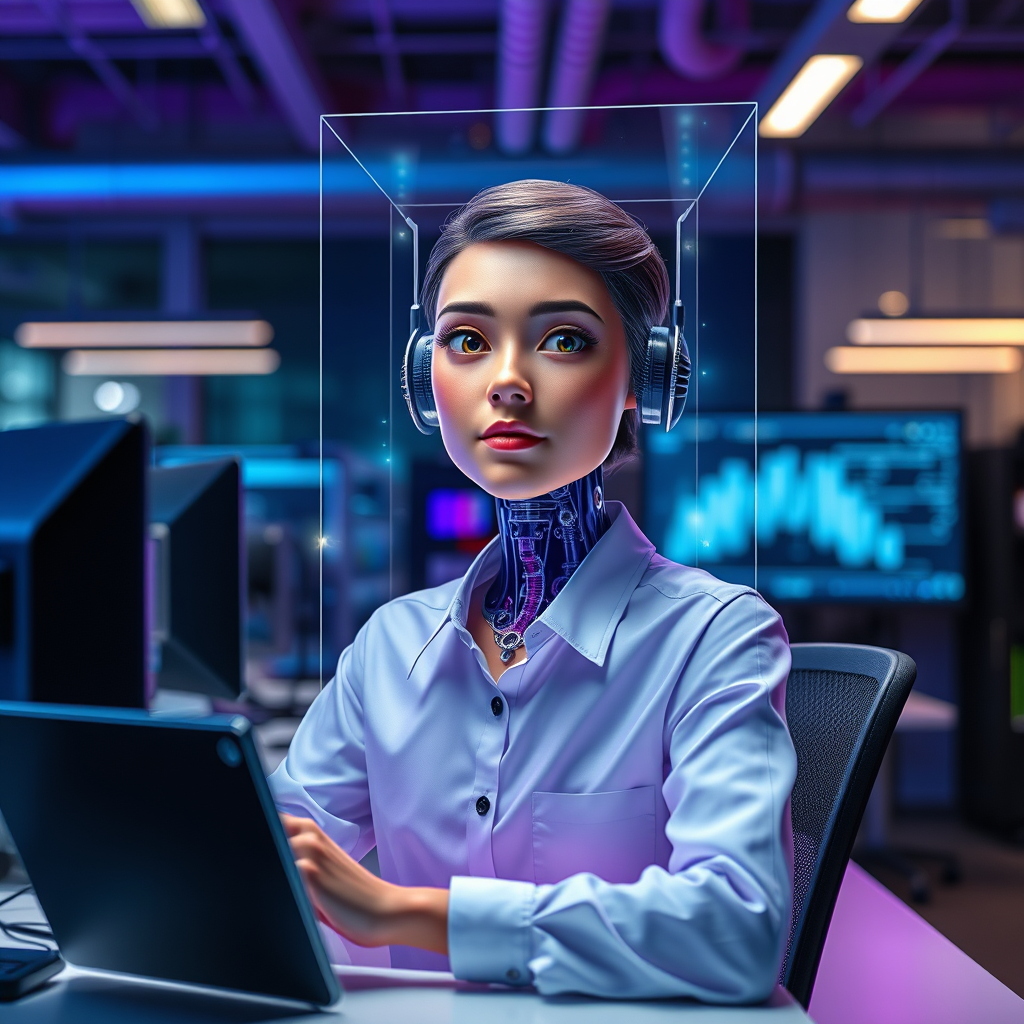

The integration of AI technology allows for the groundbreaking creation of 3D holographic avatars in real-time, revolutionizing our interactions within virtual environments. This innovative approach uses advanced algorithms to analyze user data and generate lifelike representations, making digital communication more immersive and personal. As we delve into this topic, we will explore the mechanics behind AI-driven holography, the technologies enabling real-time avatar rendering, and the exciting potential applications these avatars hold across various sectors.
Understanding AI and Holography

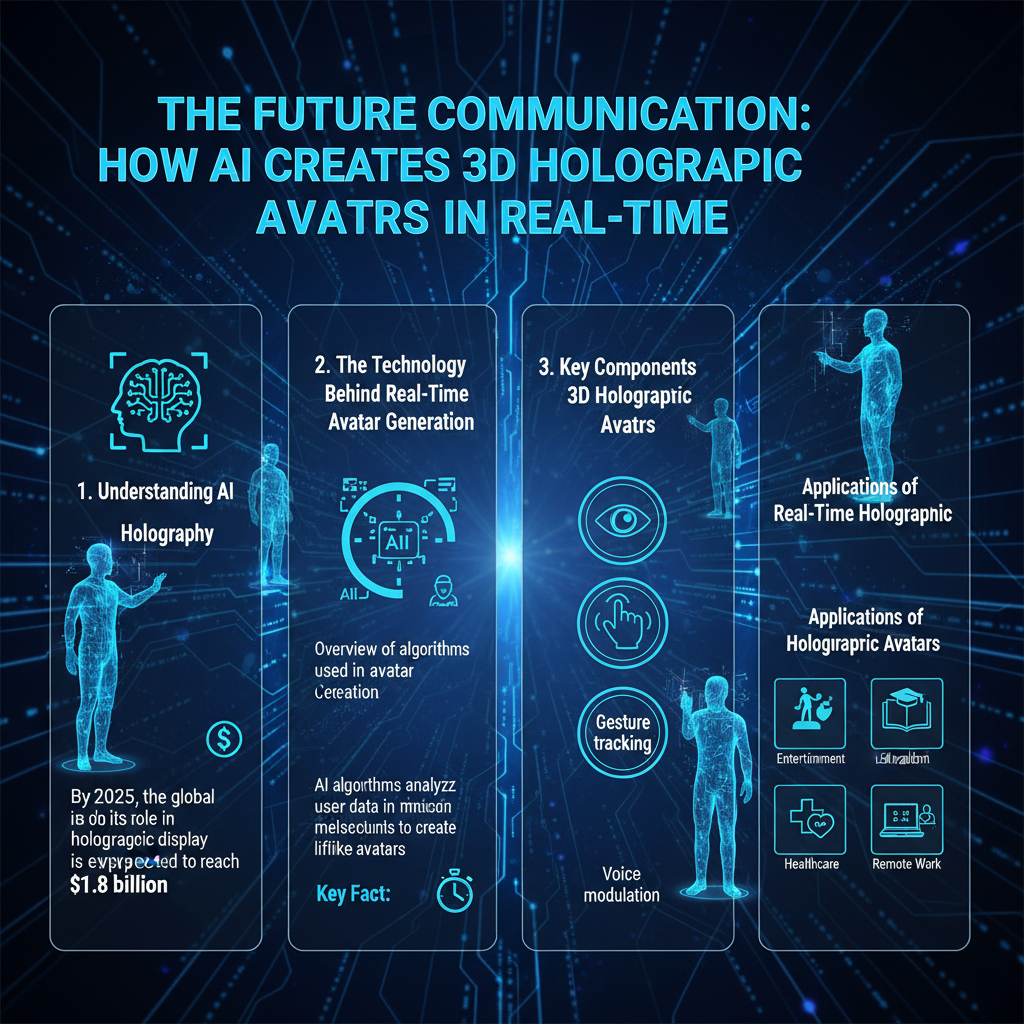
AI plays a crucial role in creating realistic 3D holographic avatars by analyzing a wealth of user data, including facial expressions, gestures, and even voice inflections. This analysis allows the avatar to mimic the user’s emotional state and movements, making interactions feel more genuine. The core of holography lies in its use of light waves to project three-dimensional images, which enhances the immersive experience of digital interactions. Thanks to advancements in light-field technology, holograms can be displayed in a way that allows viewers to see them from different angles, adding depth and realism to avatars.
For instance, imagine a virtual meeting where each participant appears as a holographic avatar, responding in real-time to their surroundings and conversations. This capability not only adds a layer of engagement but also helps bridge the gap created by physical distance, allowing for a more connected experience.
The Technology Behind Real-Time Avatar Generation

Real-time rendering techniques are at the heart of generating 3D holographic avatars. These methods enable the instantaneous updating of avatars as users move or change facial expressions, creating a seamless interaction. With the help of advanced algorithms and powerful computing, avatars can reflect changes almost instantaneously, ensuring that the digital representation is closely aligned with the user’s actions.
Machine learning models, particularly deep learning networks, are trained on extensive datasets that include a wide variety of facial expressions, movements, and contexts. This training allows the models to recognize and replicate human behavior with greater accuracy and responsiveness. For example, a user smiling will not only cause the avatar to smile but may also adjust its body language to reflect joy, enhancing the overall interaction.
Key Components of 3D Holographic Avatars
Creating lifelike 3D holographic avatars requires several key components. Depth sensors and high-resolution cameras are essential for capturing user movements and expressions in real-time. These devices can track subtle changes in posture and facial features, ensuring that the avatar closely mirrors the user.
Moreover, advanced graphics processing units (GPUs) are critical in handling the complex calculations necessary for rendering holograms. The power of GPUs allows for high-quality graphics and smooth transitions, making the avatars appear more realistic. For instance, GPUs can manage thousands of polygons and textures simultaneously, enabling detailed and intricate designs that bring avatars to life.
Additionally, software platforms that integrate AI and graphics processing capabilities are becoming more prevalent, making it easier for developers to create and deploy these holographic avatars across different applications.
Applications of Real-Time Holographic Avatars
The applications of real-time holographic avatars are vast and varied. One of the most impactful areas is in virtual meetings and collaborative workspaces. Businesses can leverage these avatars to enhance the presence of participants, making remote interactions feel more personal and engaging. Imagine a team meeting where every member appears as a 3D hologram, allowing for more effective communication and collaboration.
In the gaming industry, these avatars can transform gameplay experiences by enabling players to interact with realistic representations of themselves and others. For instance, in virtual reality games, players can engage in a more immersive way, where their avatars react to their movements and expressions, making the experience feel authentic and engaging.
Beyond business and gaming, industries such as healthcare and education are also exploring the potential of holographic avatars. Medical professionals can use them for patient consultations, providing a more interactive experience, while educators can create more engaging learning environments where students participate as holographic avatars, enhancing their connection to the material.
Challenges in Real-Time Holographic Avatar Creation
Despite the exciting potential of real-time holographic avatars, there are challenges that need to be addressed. Technical limitations, such as latency and processing power, can impact the quality of holograms. For example, if there is a delay in rendering the avatar’s movements, it could lead to a disjointed experience that detracts from the immersive quality.
Moreover, ethical considerations arise regarding how avatars are represented and utilized in various contexts. The potential for misuse or misrepresentation is a concern, particularly if avatars are used in deceptive ways. Ensuring that the technology is used responsibly and ethically is paramount as it continues to evolve.
Future Trends in AI Holography
Looking ahead, ongoing advancements in AI and visualization technologies promise even more realistic and immersive avatars. The development of more sophisticated machine learning algorithms will enable avatars to not only mimic physical characteristics but also understand and express complex emotions more authentically.
Moreover, as the technology becomes more accessible, we may see a widespread adoption of holographic avatars in entertainment, education, and remote work environments. This could lead to new ways of storytelling, interactive learning experiences, and collaborative workflows that reshape how we connect in both personal and professional settings.
The ability of AI to generate 3D holographic avatars in real-time is transforming how we interact with technology and each other. By understanding the underlying technologies and applications, you can better appreciate the future of digital communication. Engaging with these advancements could open new opportunities for personal and professional growth, ushering in an era where our digital interactions are as rich and meaningful as those in the physical world.
Frequently Asked Questions
What technologies are used in AI to generate 3D holographic avatars in real-time?
AI utilizes several cutting-edge technologies to create 3D holographic avatars in real-time, including machine learning algorithms, computer vision, and depth-sensing cameras. These technologies work together to capture and analyze user movements and expressions, allowing for dynamic and lifelike avatar representations. Additionally, real-time rendering engines ensure that these avatars can be displayed seamlessly in various environments, enhancing user interaction.
How does AI improve the realism of 3D holographic avatars?
AI enhances the realism of 3D holographic avatars through advanced neural networks that analyze vast amounts of data on human behavior and appearance. By employing techniques such as facial recognition and motion capture, AI can replicate subtle facial expressions and gestures, making avatars more relatable and lifelike. Furthermore, real-time feedback mechanisms allow the avatars to adapt instantly to user interactions, ensuring a more immersive experience.
Why are 3D holographic avatars important for virtual communication?
3D holographic avatars play a crucial role in virtual communication by providing a more engaging and interactive platform for users. Unlike traditional video calls, holographic avatars allow for a sense of presence and connection, mimicking real-life interactions. This technology is particularly beneficial in fields like telemedicine, education, and remote collaboration, where effective communication can enhance understanding and reduce feelings of isolation.
What are the best applications for real-time 3D holographic avatars?
The best applications for real-time 3D holographic avatars include virtual reality (VR) environments, online gaming, remote training simulations, and teleconferencing. In educational settings, these avatars can facilitate interactive learning experiences, while in the entertainment industry, they can enhance storytelling by providing immersive character interactions. Additionally, businesses are increasingly using holographic avatars for marketing and customer service, as they can create memorable brand experiences.
Which software platforms are popular for creating 3D holographic avatars using AI?
Several software platforms are renowned for creating AI-driven 3D holographic avatars, including Unreal Engine, Unity, and Blender. These platforms offer robust tools for developers, allowing them to integrate AI technologies and create realistic avatars that can be animated in real-time. Moreover, platforms like Ziva Dynamics and NVIDIA Omniverse provide advanced simulation capabilities, making it easier for creators to produce high-quality holographic experiences tailored to specific applications.
References
- Holography
- https://www.sciencedirect.com/science/article/pii/S1877050919317588
- https://www.bbc.com/future/article/20201204-how-holograms-could-change-the-future-of-communications
- https://www.nature.com/articles/s41598-020-68804-3
- https://www.researchgate.net/publication/338328964_A_Survey_on_Holographic_3D_Display_Technologies
- https://www.technologyreview.com/2020/09/23/1008279/holograms-3d-technology-ai/
- https://www.frontiersin.org/articles/10.3389/frobt.2021.758345/full