
Volumetric video is a transformative technology that captures three-dimensional spaces and objects, allowing for immersive experiences in augmented reality (AR) and virtual reality (VR) applications. By recording video from multiple angles and using depth information, volumetric video creates lifelike representations that enhance user engagement and emotional connection. In this article, you’ll learn how volumetric video is created, its benefits, and how it enhances user experiences in AR and VR environments.
What is Volumetric Video?
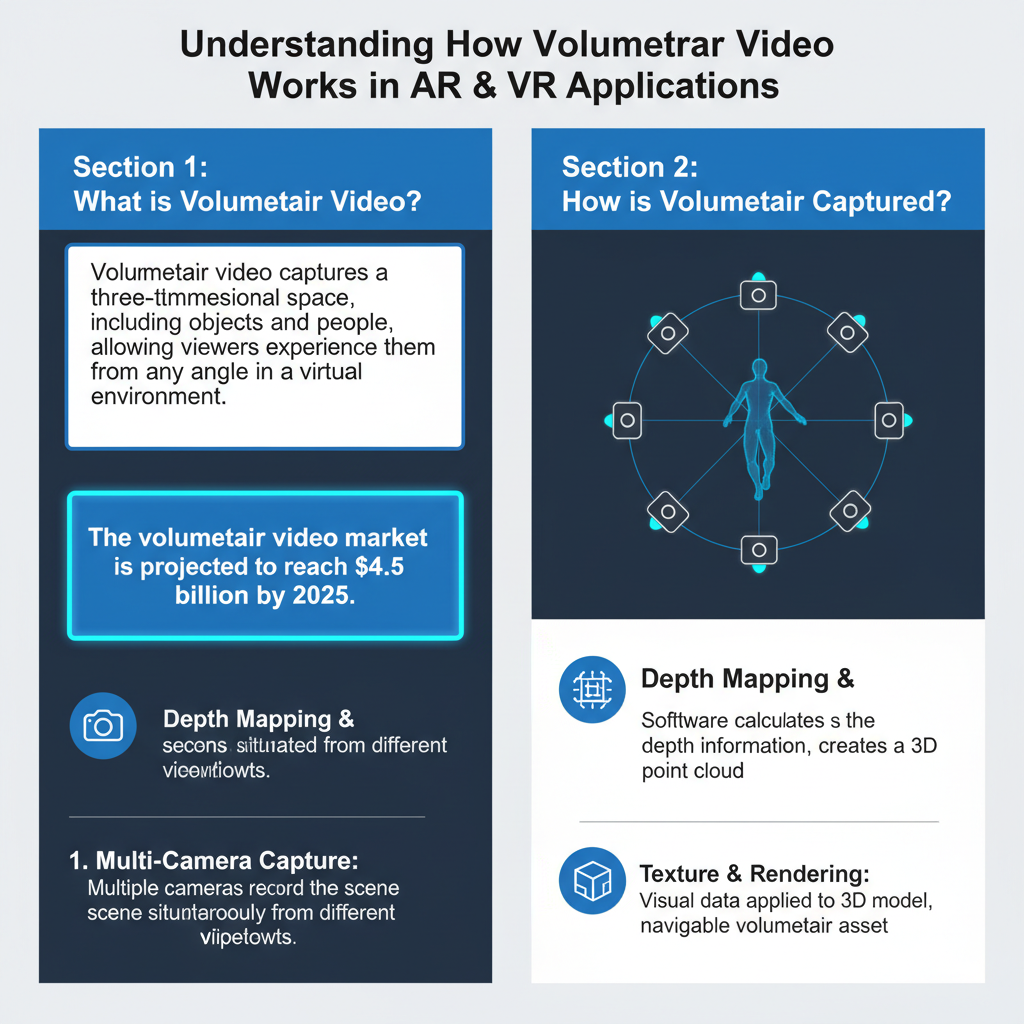
Volumetric video refers to the technique of capturing a three-dimensional space in a way that allows users to experience it from various angles, making it vastly different from traditional video formats, which are typically flat and two-dimensional. The significance of volumetric video in media stems from its ability to create realistic interactions within digital environments, enabling users to feel as if they are part of the scene rather than just observers. Traditional video captures a single view of a scene, while volumetric video records from multiple perspectives, allowing for a dynamic viewing experience that can change based on the viewer’s position. This immersive quality makes volumetric video particularly suited for applications in AR and VR, where realism is key to user engagement.
How is Volumetric Video Captured?
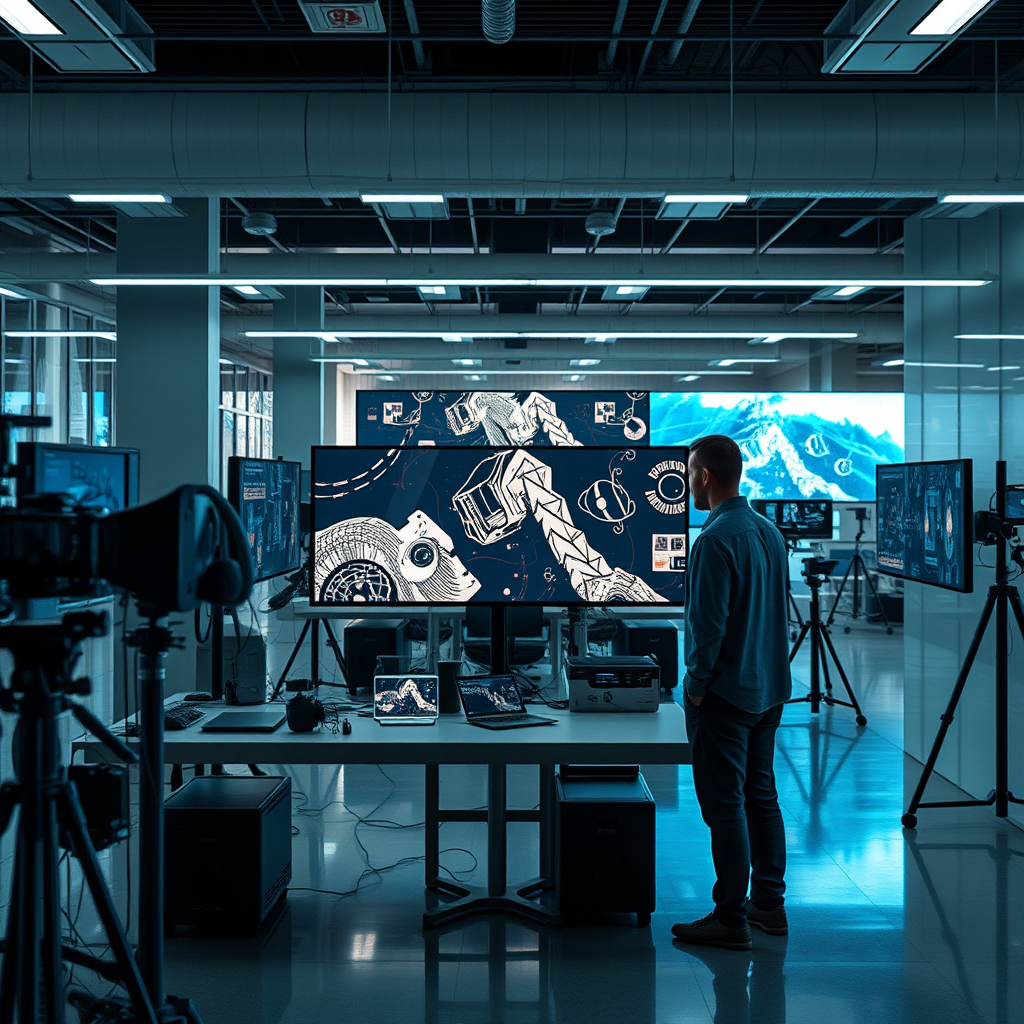
Capturing volumetric video involves advanced technology and specialized equipment. Typically, a multi-camera setup is used—often consisting of dozens of cameras arranged in a circular or spherical pattern around the subject. Each camera captures video footage from a slightly different angle, and these images are then processed with depth-sensing technology, which measures the distance to the subject and creates a 3D model of the environment. This depth information is crucial for accurately rendering how objects appear from various viewpoints, ensuring that the experience remains seamless and realistic.
The process of creating volumetric video begins with the careful setup of cameras and lights to ensure even illumination and minimal shadows. Once the recording is complete, the footage is processed using sophisticated algorithms that stitch the various views together while maintaining accurate depth mapping. The end result is a digital representation that can be manipulated and viewed from any angle, providing an experience that feels tangible and immersive.
The Role of Volumetric Video in AR Applications
In augmented reality applications, volumetric video significantly enhances user experiences by allowing for realistic interactions with digital content. For instance, imagine using an AR app to visualize a life-sized dinosaur in your living room—volumetric video makes it possible to see the dinosaur from all angles, as if it were really there. This level of engagement not only captivates users but also encourages exploration and interaction.
Prominent AR applications, such as Microsoft’s HoloLens and Snapchat’s Lens Studio, are already leveraging volumetric video to create captivating experiences. For example, Snapchat has utilized volumetric captures of celebrities, enabling users to interact with lifelike holograms in their environments. Such applications not only entertain but also offer educational opportunities, allowing users to learn about historical figures or scientific concepts in an engaging manner.
The Role of Volumetric Video in VR Applications
Volumetric video plays a pivotal role in creating immersive storytelling and environments in virtual reality. By capturing real-world scenarios and translating them into 3D experiences, developers can craft narratives that draw users into the story. This technique is especially powerful in gaming and training simulations, where the goal is to provide users with an authentic experience.
One notable case study is the interactive documentary “The Hangman,” which uses volumetric video to put viewers in the shoes of a character facing moral dilemmas. This immersive storytelling invites users to make choices that affect the narrative, creating a personalized experience that traditional video cannot replicate. Similarly, VR games like “Half + Half” use volumetric video to allow players to engage with characters in a more meaningful way, enhancing the overall gaming experience.
Benefits of Using Volumetric Video
The major benefits of volumetric video lie in its ability to increase realism and immersion compared to traditional video formats. By providing a 3D perspective, users can walk around and interact with digital objects as if they were physically present. This heightened sense of presence can lead to deeper emotional connections, as users are more likely to engage with lifelike representations of characters and environments.
Moreover, volumetric video fosters enhanced user engagement by allowing for interactive experiences that traditional media simply cannot offer. This interactivity is particularly valuable in sectors like education and training, where realistic simulations can improve learning outcomes by providing hands-on experiences.
Challenges and Limitations of Volumetric Video
Despite its advantages, volumetric video does come with its fair share of challenges and limitations. One of the primary technical challenges is the need for significant processing power and storage capacity. The high-resolution data captured from multiple cameras can lead to large file sizes, making it necessary to utilize advanced compression techniques and powerful hardware to handle the data effectively.
Additionally, the current technology has limitations in capturing fast-moving subjects or complex environments, which can result in artifacts or distortions in the final product. As the field evolves, there is still room for improvement in both the capture technology and the algorithms used for processing volumetric video to overcome these challenges.
Future of Volumetric Video in AR & VR
Looking ahead, the future of volumetric video in AR and VR is promising, with predictions suggesting significant advancements in technology. Innovations in camera technology, such as lighter and more compact devices, could make capturing volumetric video more accessible and affordable. Furthermore, as AI and machine learning continue to develop, we can expect improvements in processing speed and quality, making it easier to create and render volumetric video in real-time.
The potential impact of volumetric video spans various industries, including gaming, education, and entertainment, where immersive experiences can enhance user engagement and learning outcomes. For instance, in education, volumetric video could allow students to explore historical events or scientific phenomena in a more engaging and interactive manner, transforming traditional learning methods.
Volumetric video is revolutionizing the way we interact with digital content in AR and VR, offering unmatched realism and immersive experiences. As the technology continues to evolve, staying informed will be crucial for anyone interested in these dynamic fields. Keep an eye on upcoming trends and consider exploring volumetric video tools for your next project!
Frequently Asked Questions
What is volumetric video and how does it differ from traditional 3D video?
Volumetric video captures a three-dimensional space and the objects within it, allowing viewers to experience motion from multiple angles. Unlike traditional 3D video, which is typically a flat representation viewed from a single perspective, volumetric video uses depth sensors and multiple cameras to create a digital model that can be interacted with in augmented reality (AR) and virtual reality (VR) applications. This immersive technology provides a more realistic and engaging experience for users.
How is volumetric video created for use in AR and VR applications?
The creation of volumetric video involves capturing real-world subjects and environments through an array of cameras positioned around the subject. These cameras record data from various angles, which is then processed using computer vision algorithms to reconstruct a 3D model. The resulting digital asset can be integrated into AR and VR applications, allowing users to view and interact with the content in a more lifelike manner, enhancing overall user engagement.
Why is volumetric video important for AR and VR experiences?
Volumetric video is significant for AR and VR because it enhances realism and interactivity, making experiences more immersive. By allowing users to navigate around and view content from different angles, volumetric video creates a sense of presence that traditional video formats cannot achieve. This technology is especially valuable in entertainment, education, and training simulations, where a high level of detail and engagement is essential for effective learning and enjoyment.
What are the best use cases for volumetric video in AR and VR applications?
The best use cases for volumetric video include virtual concerts, sports events, educational training, and interactive storytelling. In entertainment, artists can perform live in virtual spaces, allowing fans to experience concerts as if they were there. In education, volumetric video can be used to create immersive learning environments, enabling students to explore complex subjects, such as anatomy or engineering, in three dimensions.
Which technologies are commonly used to produce and display volumetric video in AR and VR?
Common technologies used for producing volumetric video include depth-sensing cameras, such as Microsoft Kinect and Intel RealSense, along with software for 3D reconstruction like Depthkit and Unity. For displaying volumetric video, specialized platforms and devices such as HoloLens, Oculus Quest, and immersive projection systems are utilized to create the AR and VR environments. These technologies work together to deliver a seamless and engaging user experience that leverages the full capabilities of volumetric video.
References
- Volumetric capture
- https://www.sciencedirect.com/science/article/pii/S0167739X20319036
- https://www.technologyreview.com/2021/03/25/1020889/volumetric-video-ar-vr/
- https://www.researchgate.net/publication/335081683_Volumetric_Video_A_Survey_of_Recent_Advances_and_Future_Directions
- https://www.theverge.com/2021/4/30/22400474/volumetric-video-ar-vr-explained
- https://www.microsoft.com/en-us/research/publication/volumetric-video-for-virtual-reality/
- https://www.nature.com/articles/s41598-019-49611-0
- https://www.bbc.com/future/article/20200212-how-volumetric-video-is-changing-the-way-we-see-the-world
- https://www.itu.int/en/ITU-T/focusgroups/vr-ar/Pages/default.aspx