
The integration of AI technology significantly enhances holographic displays in medical training by providing realistic simulations and personalized learning experiences. This advancement allows medical professionals to engage in immersive training that can lead to better retention of complex procedures and techniques, ultimately improving patient outcomes. As healthcare continues to evolve, leveraging these innovative tools is becoming essential for training the next generation of medical professionals. Let’s delve into how this powerful combination of AI and holography is changing the landscape of medical education.
The Role of AI in Holography
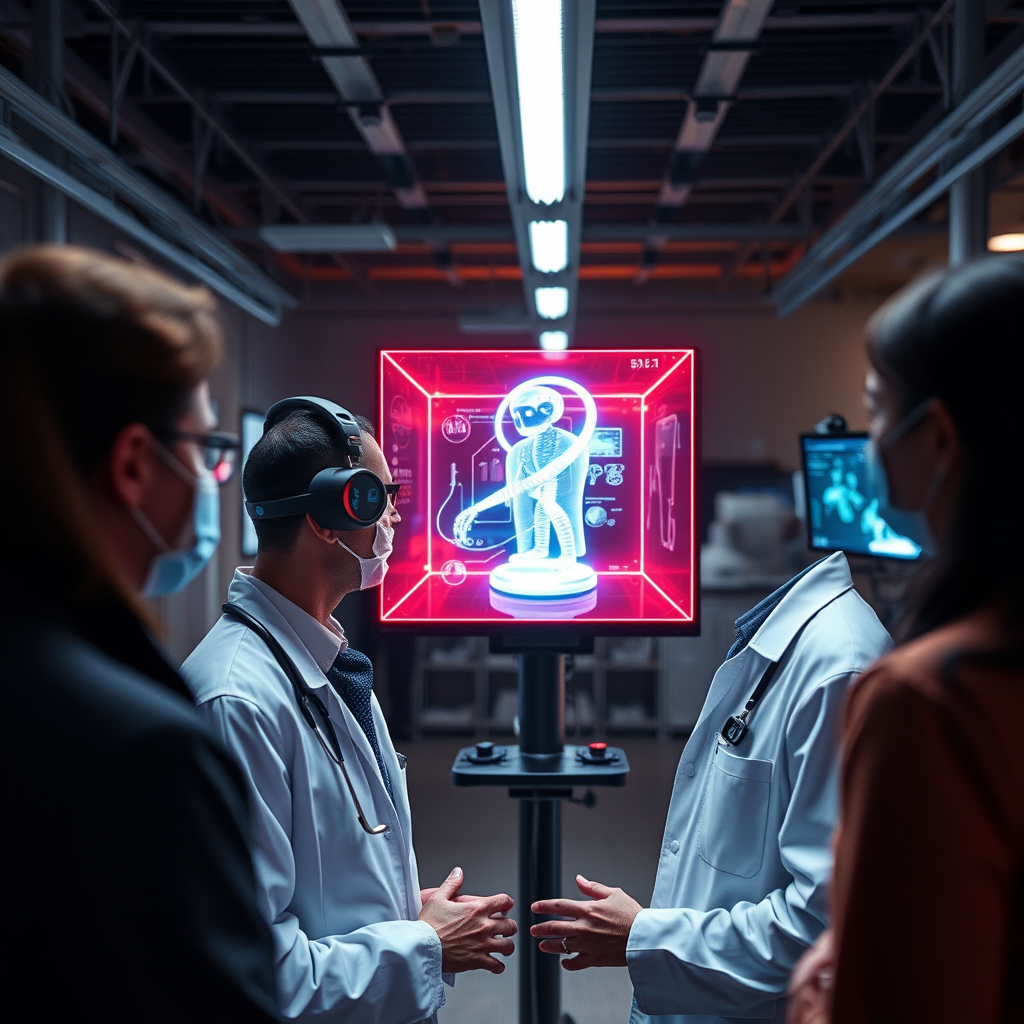
AI algorithms play a crucial role in enhancing the rendering quality of holographic images. By utilizing advanced computational techniques, these algorithms can create images that are not only more lifelike but also more detailed. For instance, they can simulate realistic lighting and shadows, which are vital for understanding anatomical structures in a three-dimensional space. This level of realism helps trainees visualize and comprehend complex biological forms, making it easier for them to memorize and apply this knowledge in real-world situations.
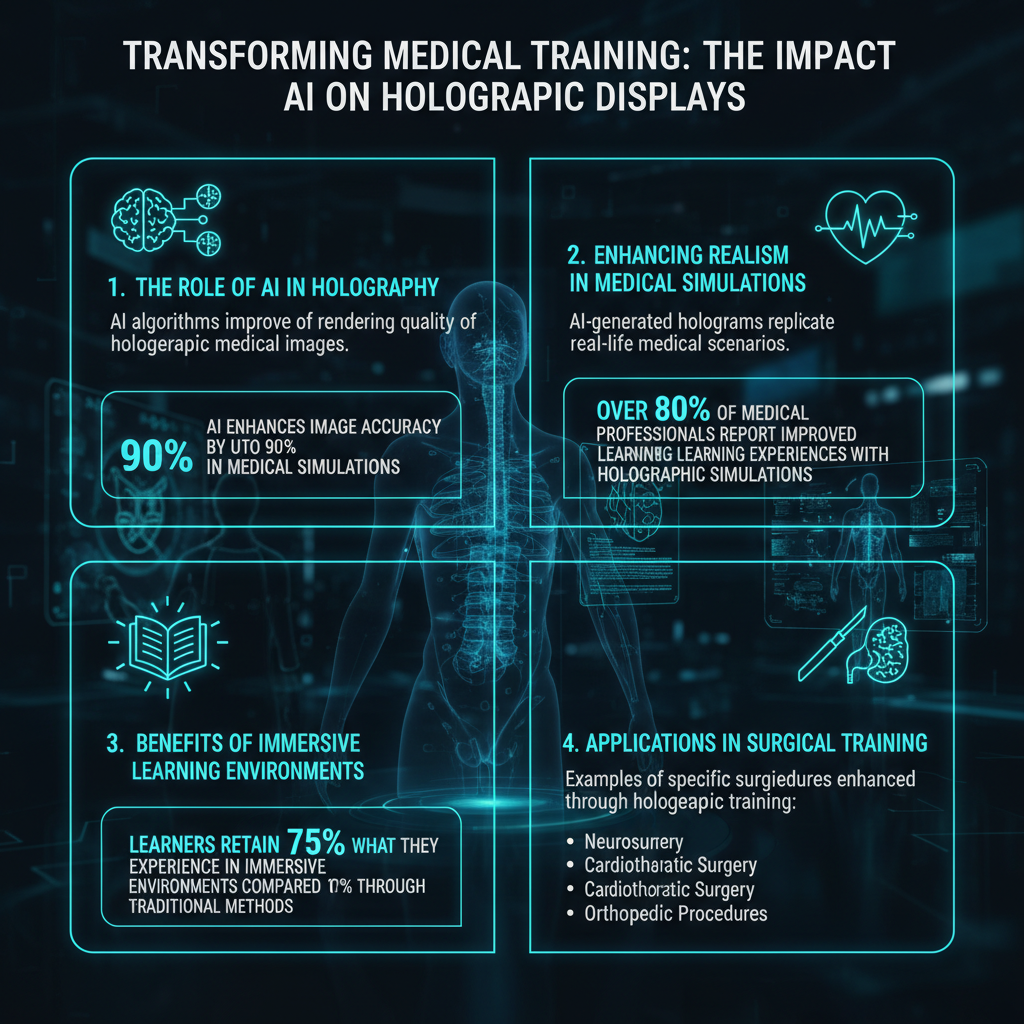
Moreover, machine learning enables real-time adjustments based on user interactions. If a trainee makes a mistake during a procedure simulation, the AI can quickly adapt the simulation to provide feedback and guide the learner through the correct steps. This interactivity greatly enhances engagement, as medical professionals are not just passive observers; they are active participants in their learning journey. This dynamic approach ensures that each training session is tailored to the individual, allowing them to progress at their own pace and build confidence in their skills.
Enhancing Realism in Medical Simulations
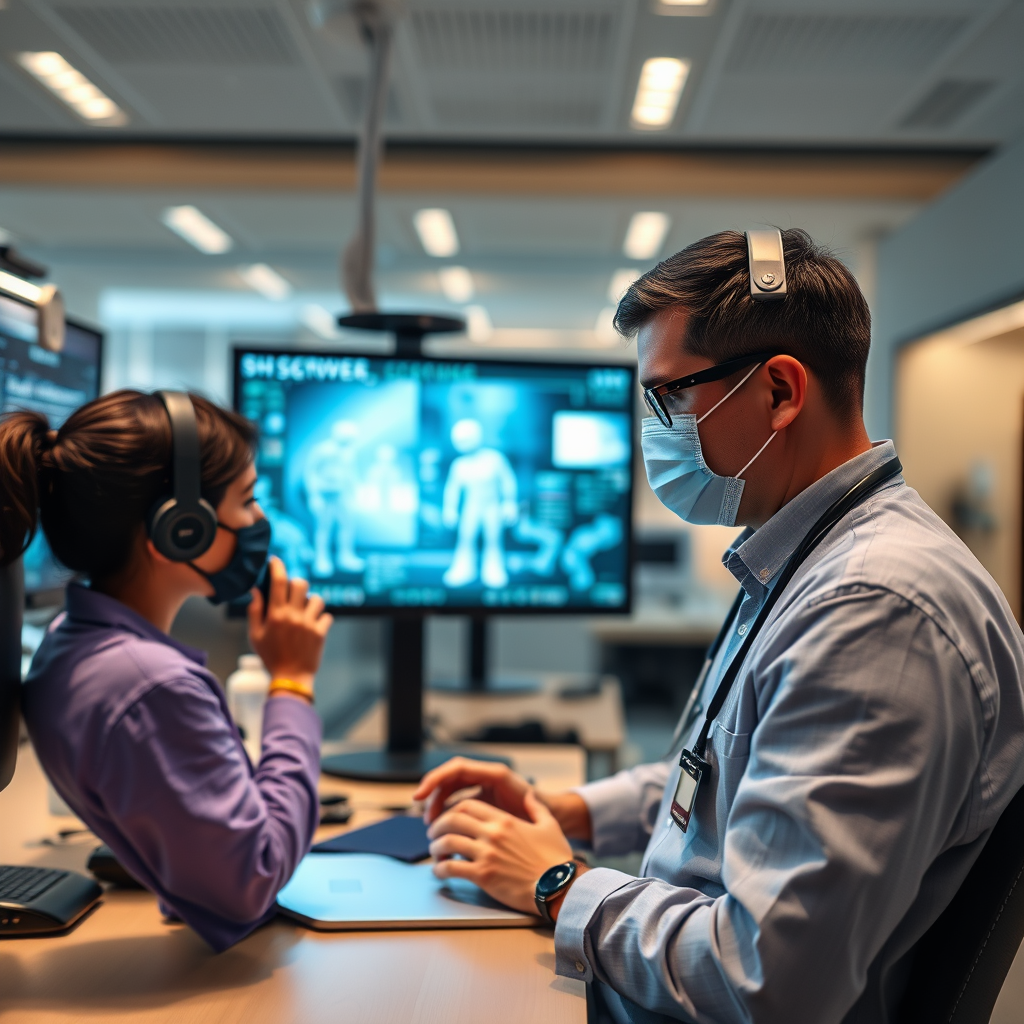
Holographic displays are capable of simulating intricate anatomical structures with remarkable precision, which is a game-changer for medical training. Imagine a medical student being able to “walk around” a 3D representation of a human heart, examining the valves, arteries, and chambers from every angle. This form of visualization is not just theoretical; it’s available today thanks to advancements in holography and AI.
In addition to static models, AI can create dynamic scenarios that adapt to the trainee’s skill level. For example, a novice may start with basic procedures such as identifying organs, while an advanced trainee can be immersed in complex surgical simulations that involve real-time decision-making and problem-solving. This adaptability ensures that learners are constantly challenged without feeling overwhelmed, making the training experience both effective and enjoyable. With this level of customization, trainees can engage deeply with the material, resulting in a stronger understanding of medical concepts.
Benefits of Immersive Learning Environments
One of the most significant advantages of holographic displays in medical training is the ability for trainees to practice procedures in a risk-free environment. Traditional training methods, such as using cadavers or simulated mannequins, come with inherent risks and limitations. Holographic simulations remove these concerns, allowing learners to make mistakes and learn from them without jeopardizing patient safety. For instance, a trainee can practice suturing techniques repeatedly until they achieve proficiency, all within a controlled, virtual environment.
Furthermore, the immersive nature of holography aids in retaining complex medical information better than traditional methods. Studies have shown that experiential learning—learning through doing—is one of the most effective ways to retain information. Holographic training provides a hands-on experience that engages multiple senses, making it easier for trainees to recall information when needed in real-life situations. This method not only boosts confidence but also significantly reduces the likelihood of errors, leading to improved patient care.
Applications in Surgical Training
Holographic displays are particularly beneficial in the field of surgical training. These systems allow for 3D visualization of surgical procedures, enhancing understanding among trainees. For example, surgeons can visualize upcoming operations in detail, understanding the complex interplay of tissues and organs before even stepping into the operating room. AI-driven simulations can replicate various surgical conditions, from routine procedures to rare emergencies, thus preparing trainees for a wide range of scenarios they may encounter in their careers.
Consider the case of laparoscopic surgery, where precision and spatial understanding are vital. Holographic displays can project a 3D representation of the surgical field, allowing trainees to practice their techniques without any of the risks associated with live patients. They can adjust their approach based on the AI feedback, refining their skills and boosting their surgical acumen. This type of training not only enhances skill acquisition but also builds the mental resilience required for successful surgical practice.
Future Trends in AI and Holographic Technology
The future of AI and holographic technology in medical training looks promising, with ongoing advancements likely to lead to even more sophisticated training tools. For instance, the integration of AI with virtual reality (VR) could create comprehensive training environments that simulate real-world hospital settings. Imagine a scenario where medical trainees can enter a virtual hospital, interact with virtual patients, and collaborate with peers in real-time—all while receiving AI-generated feedback on their performance.
As AI continues to evolve, we can expect improvements in the personalization of training experiences. Future holographic systems may utilize biometric data to assess a trainee’s stress levels or cognitive load, adjusting the difficulty of simulations accordingly. This level of customization could further enhance the learning experience, ensuring that each trainee receives the support they need to excel.
Challenges and Considerations
Despite the numerous benefits, there are challenges and considerations that healthcare institutions must address before widespread adoption of AI-enhanced holographic training can occur. Technical limitations and high costs can impede implementation, particularly for smaller facilities or those in resource-limited settings. Investments in hardware and software, along with ongoing maintenance, can pose significant financial challenges.
Moreover, ensuring user-friendly interfaces is essential for effective training outcomes. If the technology is too complicated or cumbersome to use, it may create barriers for both trainers and trainees. Institutions must invest in proper training for educators and staff to ensure they can effectively utilize these advanced tools to their fullest potential.
The advancements in AI and holographic displays are revolutionizing medical training by offering immersive, adaptive, and interactive learning experiences. As technology continues to evolve, healthcare professionals can look forward to even more innovative solutions that further bridge the gap between theory and practice. By embracing these advancements, medical institutions can significantly enhance the quality of training, ultimately leading to better patient outcomes and a more capable healthcare workforce. Explore how your institution can leverage these technologies to enhance medical training today!
Frequently Asked Questions
What are the primary benefits of using AI in holographic displays for medical training?
The integration of AI in holographic displays for medical training enhances the learning experience by providing interactive, real-time simulations and personalized learning paths. AI algorithms can analyze a trainee’s performance, adapting the holographic content to address their specific weaknesses and areas for improvement. This leads to more effective skill acquisition, better retention of complex medical concepts, and ultimately improved patient care.
How does AI improve the realism of holographic simulations in medical education?
AI enhances the realism of holographic simulations in medical education by utilizing machine learning techniques to create lifelike scenarios that mimic real-life patient interactions. AI can analyze vast amounts of medical data to generate realistic anatomical models and symptoms, allowing trainees to engage with virtual patients realistically. This immersive experience fosters critical thinking and decision-making skills that are essential in medical practice.
Why should medical institutions invest in AI-enhanced holographic displays?
Medical institutions should invest in AI-enhanced holographic displays because they offer cutting-edge training solutions that can significantly improve learning outcomes and operational efficiency. These advanced systems provide a safe, cost-effective way to practice procedures without the risks associated with live patients, ultimately leading to better-prepared healthcare professionals. Moreover, the ability to visualize complex medical conditions in 3D allows for deeper understanding and retention of information.
Which medical fields benefit the most from AI-enhanced holographic training?
Several medical fields benefit greatly from AI-enhanced holographic training, including surgery, anatomy, and emergency medicine. Surgical trainees can practice intricate procedures in a risk-free environment, while those in emergency medicine can simulate high-pressure scenarios. Additionally, specialties like radiology and cardiology utilize 3D holographic models to understand complex structures and conditions, enhancing diagnostic skills and patient management.
What challenges do medical educators face when implementing AI in holographic displays?
Medical educators face challenges such as the high cost of developing and maintaining AI-enhanced holographic systems, as well as the need for technical training for both instructors and students. Additionally, integrating these advanced technologies into existing curricula can be complex and time-consuming. Ensuring that educators are well-versed in using AI tools effectively is crucial to maximizing their potential and achieving the desired educational outcomes.
References
- https://www.ncbi.nlm.nih.gov/pmc/articles/PMC7057170/
- https://www.sciencedirect.com/science/article/pii/S1877050919312022
- https://www.wired.com/story/holographic-displays-ai-medical-training/
- https://www.bbc.com/future/article/20211011-how-holograms-are-changing-the-future-of-medicine
- https://www.healthaffairs.org/doi/10.1377/hlthaff.2020.01055
- https://www.nature.com/articles/s41598-021-89229-6
- https://www.ama-assn.org/delivering-care/public-health/how-holography-can-transform-medical-training