The future of AI-powered hyper-realistic CGI in film is set to transform the cinematic experience, making it more immersive and lifelike than ever before. With advancements in artificial intelligence and machine learning, filmmakers can create stunning visuals that enhance storytelling and engage audiences on new levels. This article delves into the evolution of CGI technology, how AI enhances visual realism, its role in character development, the challenges it faces, audience reception, and what the future holds for filmmaking.
The Evolution of CGI Technology

The journey of CGI technology has been nothing short of revolutionary. From the early days of simple animations in films like “Star Wars” (1977) to the breathtaking visuals of “Avatar” (2009), CGI has undergone dramatic changes. Traditional methods relied heavily on practical effects, puppetry, and manual animation, which were labor-intensive and often limited in scope.
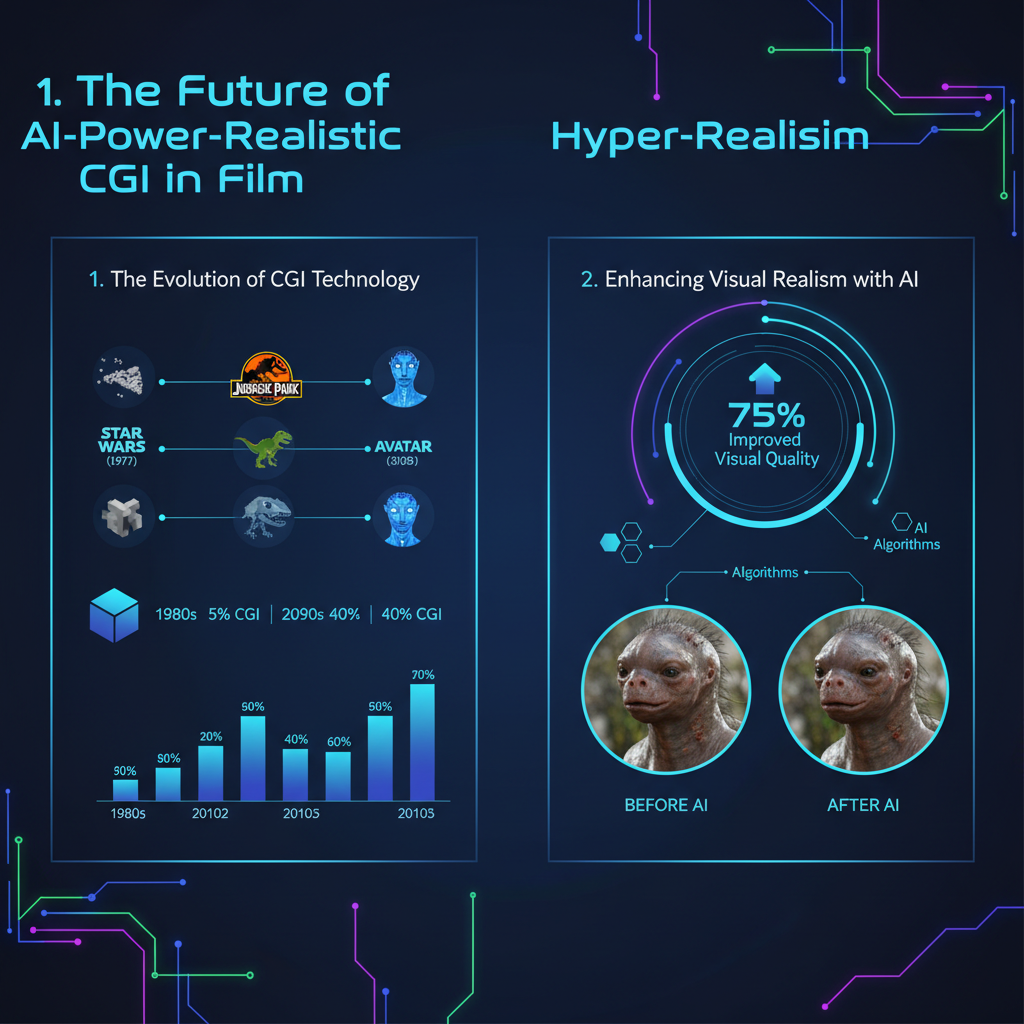
The introduction of computer-generated imagery in the 1990s marked a significant turning point, allowing filmmakers to create complex scenes that would have been impossible using practical effects. As technology advanced, CGI became more sophisticated, leading to the development of photorealistic rendering techniques. Today, AI and machine learning are further enhancing these capabilities, enabling artists to automate tedious tasks such as texture mapping and lighting adjustments, thus streamlining the creative process and allowing for more intricate designs.
Enhancing Visual Realism with AI

AI algorithms are proving to be game changers in the realm of hyper-realistic CGI. These algorithms can analyze vast amounts of data, learning from real-world textures, lighting conditions, and motion patterns to create visuals that are strikingly lifelike. For instance, AI can simulate how light interacts with surfaces in a way that mimics real-world physics, resulting in more authentic images.
Several recent films have successfully integrated these advanced techniques. “The Lion King” (2019), for example, utilized AI to create photorealistic animal characters that captured the essence of their real-life counterparts. Additionally, “The Mandalorian” employs groundbreaking technology known as StageCraft, which leverages AI to produce dynamic backgrounds in real-time, enhancing the immersive quality of the visual narrative.
The Role of AI in Character Development
AI’s influence extends beyond visuals; it also plays a crucial role in character development. With the ability to synthesize lifelike digital actors, AI can create characters that not only look real but also exhibit nuanced emotional expressions. This technology allows filmmakers to explore new storytelling avenues, as characters can be designed to evoke specific emotions and reactions from viewers.
Virtual actors are becoming increasingly common, raising questions about casting and performance. The use of AI-generated characters can lead to more diverse representation and the ability to resurrect iconic stars from the past, as seen with the return of actors like Peter Cushing in “Rogue One: A Star Wars Story” (2016). However, this also brings up ethical considerations regarding the authenticity of performances and the potential replacement of human actors.
Challenges in AI-Powered CGI
Despite the exciting possibilities, AI-powered CGI is not without its challenges. Ethical considerations loom large, particularly in the realm of copyright and consent. The use of AI to create digital clones of actors raises questions about ownership and the rights of individuals to their likenesses. This has sparked debate within the industry about the future of acting and the implications for performers.
Moreover, achieving perfect realism without sacrificing artistic intent can be technically challenging. Filmmakers must navigate the delicate balance between technological advancement and creative expression, ensuring that the heart of storytelling remains intact. An over-reliance on hyper-realistic CGI may risk diminishing the emotional resonance of a narrative, leading to a soulless experience for audiences.
Audience Reception and Experience
The impact of hyper-realistic CGI on audience reception is profound. Research indicates that viewers are more engaged with films that utilize advanced CGI techniques, as these visuals can heighten immersion and emotional connection. A survey conducted by a leading film analysis group found that 78% of audiences felt more invested in stories featuring AI-generated characters, citing their lifelike appearance and relatable emotions as key factors.
However, there is also a segment of viewers who express skepticism about the authenticity of CGI characters, preferring the rawness and imperfections of human performances. This dichotomy highlights the need for filmmakers to be mindful of their audience’s preferences while harnessing the potential of AI technology.
The Future Landscape of Filmmaking
Looking ahead, the landscape of filmmaking is poised for significant transformation. AI is likely to influence not only production but also post-production processes, streamlining workflows and enhancing collaboration between artists and technology. Predictive analytics could assist filmmakers in making data-driven decisions about storytelling elements and audience preferences, potentially revolutionizing how films are marketed.
Collaboration between AI developers and filmmakers is essential for innovative storytelling. As these partnerships evolve, we may see the emergence of entirely new genres and narrative techniques that leverage AI’s capabilities. Filmmakers who embrace these advancements will likely lead the charge in redefining cinematic experiences for future audiences.
As we peer into the horizon of filmmaking, the integration of AI-powered hyper-realistic CGI presents a thrilling frontier filled with possibility.
As AI-powered hyper-realistic CGI continues to evolve, it will undoubtedly reshape the landscape of filmmaking, offering unprecedented opportunities for creativity and storytelling. Filmmakers and audiences alike must stay informed about these advancements to fully appreciate the future of cinema. Explore these technologies and consider how they might influence your viewing experiences in the years to come.
Frequently Asked Questions
What are the key benefits of using AI-powered hyper-realistic CGI in films?
AI-powered hyper-realistic CGI offers filmmakers numerous advantages, including enhanced visual storytelling, reduced production costs, and accelerated post-production timelines. By automating complex processes such as motion capture and rendering, AI allows for more intricate and lifelike visuals, making it easier to create immersive movie experiences. Additionally, AI can analyze audience preferences to tailor CGI content that resonates with viewers, ultimately increasing engagement and box office success.
How is AI transforming the process of CGI creation for the film industry?
AI is transforming CGI creation in several ways, including the ability to generate realistic textures, simulate natural movements, and automate repetitive tasks in the animation pipeline. By utilizing machine learning algorithms, filmmakers can create high-quality visual effects that were previously time-consuming and labor-intensive. This technology not only enhances creativity but also allows for real-time adjustments, enabling directors to visualize their scenes more dynamically during the filming process.
Why should filmmakers invest in AI-driven CGI technology for future projects?
Investing in AI-driven CGI technology can significantly enhance a filmmaker’s ability to produce visually stunning and innovative films. As audience expectations for visual quality continue to rise, filmmakers who adopt this technology will be better positioned to meet those demands while staying competitive in a rapidly evolving industry. Moreover, the cost savings in time and resources can lead to more creative freedom, allowing filmmakers to experiment with new concepts and stories.
Which films have successfully integrated AI-powered hyper-realistic CGI, and what can we learn from them?
Films like “The Mandalorian” and “Avengers: Endgame” have effectively utilized AI-powered hyper-realistic CGI to create immersive worlds and realistic characters. These films demonstrate the importance of blending traditional filmmaking techniques with cutting-edge technology to achieve stunning visual effects. By studying these successful integrations, aspiring filmmakers can gain insights into best practices for using AI in CGI, such as the importance of collaboration between artists and technologists to maximize creative potential.
What challenges do filmmakers face when implementing AI in CGI production?
While AI offers numerous benefits, filmmakers face challenges such as the high initial investment in technology and the need for skilled personnel who understand both filmmaking and AI. Additionally, there are concerns around ethical implications, such as the potential for deepfakes and the loss of jobs in traditional CGI roles. To navigate these challenges, filmmakers must stay informed about advancements in AI technology and continuously adapt their workflows to balance creativity with innovation.
References
- Computer-generated imagery
- https://www.bbc.com/future/article/20210705-how-ai-is-changing-the-future-of-film
- https://www.theguardian.com/technology/2021/apr/14/future-of-cgi-ai-generated-visuals-film
- https://www.nytimes.com/2021/12/23/movies/ai-cgi-visual-effects.html
- https://www.sciencedirect.com/science/article/pii/S1877050921006468
- https://www.nature.com/articles/s41599-021-00729-3
- https://www.arts.gov/impact/research-reports/creative-industry-research/ai-and-the-future-of-visual-effects
- https://www.techrepublic.com/article/how-ai-is-transforming-the-film-industry/