In today’s digital landscape, AI generates dynamic video thumbnails tailored to individual user interests, significantly enhancing engagement and click-through rates. This advanced technology analyzes user behavior and preferences to create visually appealing thumbnails that resonate with viewers, making them more likely to click and watch. As video content continues to dominate online platforms, understanding how AI tailors these thumbnails can provide invaluable insights for marketers and content creators alike.
Understanding AI and Video Thumbnails

AI algorithms are revolutionizing the way video thumbnails are created by utilizing vast amounts of data derived from user interactions. Thumbnails serve as the first impression of a video; they are crucial for attracting viewers and increasing engagement. The effectiveness of a thumbnail can directly influence whether users choose to watch a video or scroll past it.
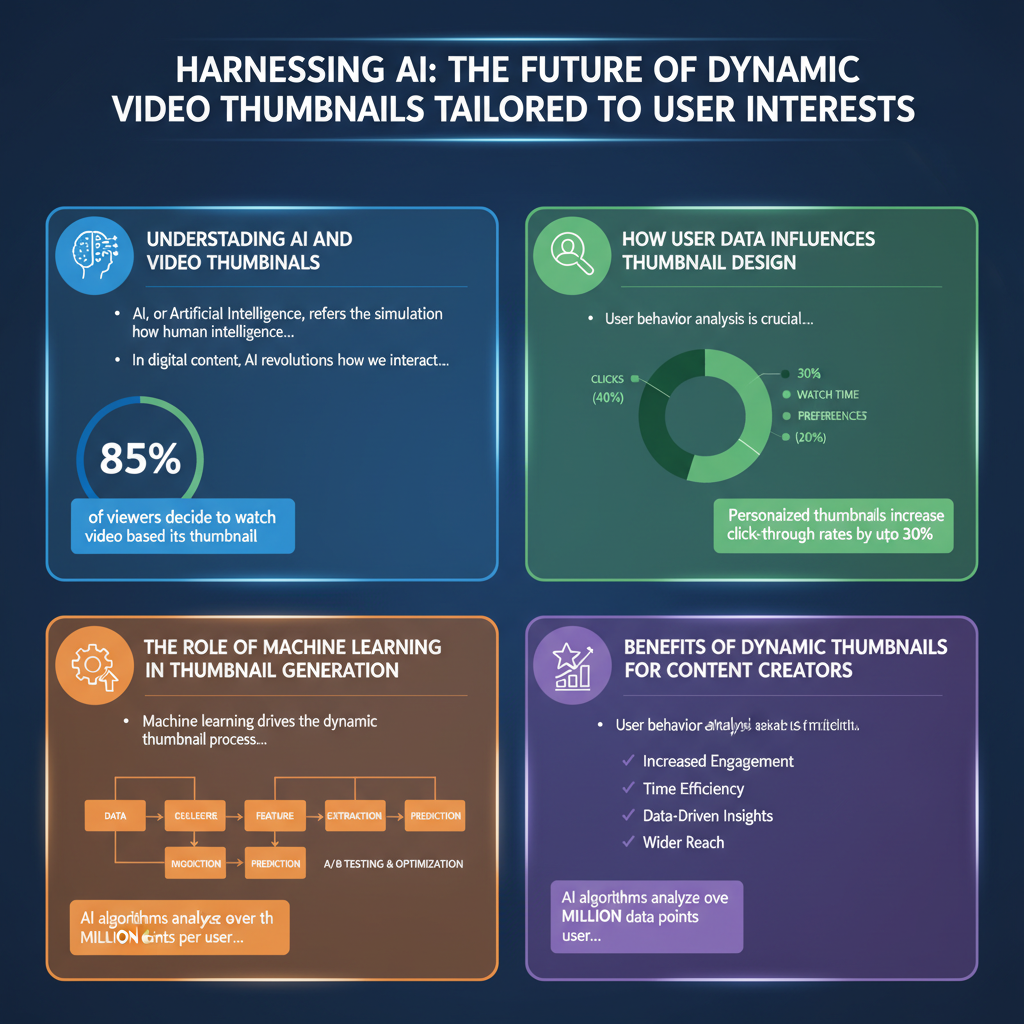
AI leverages machine learning techniques to analyze metrics such as click-through rates, user demographics, and even social media behavior. By processing this data, AI can generate thumbnails that are not only visually compelling but also aligned with what users are most likely to find appealing. This understanding of visual cues and user preferences allows content creators to present their videos in the best possible light.
How User Data Influences Thumbnail Design

User data is the backbone of AI-driven thumbnail design. Key factors like user interests, demographics, and viewing history play a pivotal role in informing how thumbnails are crafted. For instance, if a user frequently watches cooking videos, the AI may prioritize images featuring vibrant food visuals, attractive plating, or even dynamic action shots of cooking techniques.
Furthermore, AI can analyze patterns in user behavior to predict what will attract specific audiences. For example, younger viewers might respond better to colorful, fast-paced thumbnails, while older audiences might prefer more straightforward, informative designs. By tapping into this rich reservoir of data, AI creates customized thumbnails that resonate deeply with each unique viewer, ultimately driving higher engagement.
The Role of Machine Learning in Thumbnail Generation
Machine learning is at the heart of AI-driven thumbnail generation, enabling systems to improve their designs over time. As more data is collected, these algorithms learn which types of thumbnails perform better with certain demographics or content types. For instance, if a particular thumbnail featuring a smiling face results in higher click-through rates, the AI will recognize this pattern and begin to incorporate similar features into future designs.
Continuous feedback loops are essential for this process. When users interact with a video, AI collects data on their responses—did they click on the thumbnail? Did they watch the video? This feedback allows the machine learning algorithms to adapt and evolve, refining their thumbnail designs based on real-world user interactions. Over time, this results in increasingly sophisticated and effective thumbnails that cater to the tastes and preferences of the audience.
Benefits of Dynamic Thumbnails for Content Creators
The benefits of using dynamic thumbnails powered by AI for content creators are substantial. Higher click-through rates lead to increased viewership and, consequently, potential revenue. Personalized thumbnails not only enhance user experience but also build brand loyalty, as viewers begin to associate specific styles and themes with their favorite content creators.
For example, YouTube channels that successfully implement personalized thumbnails often see a marked increase in subscribers and engagement. Dynamic thumbnails can also help in promoting specific videos during peak viewing times, ensuring that content is seen by the right audience at the right moment. This level of customization fosters a deeper connection between creators and their viewers, creating a more engaged community.
Challenges in Implementing AI-Generated Thumbnails
Despite the many advantages, implementing AI-generated thumbnails does come with its challenges. One significant hurdle is balancing personalization with privacy concerns regarding data usage. As users become increasingly aware of how their data is being utilized, content creators must navigate the fine line between creating engaging content and respecting user privacy.
Moreover, there’s the challenge of ensuring that generated thumbnails remain relevant and appealing over time. Trends in visual aesthetics can shift rapidly, and what works today may not resonate tomorrow. Therefore, content creators must continuously refine their strategies, using AI not just to generate thumbnails but also to monitor changing viewer preferences and adjust accordingly.
Future Trends in AI and Video Thumbnails
As AI technology continues to evolve, the future of dynamic video thumbnails looks promising. Advancements in machine learning algorithms may lead to even more sophisticated designs that can adapt in real-time based on live user interactions. Imagine a scenario where a thumbnail changes dynamically while a viewer hovers over it, showcasing different angles or scenes from the video based on their interests.
Additionally, AI could incorporate more nuanced emotional recognition, allowing thumbnails to reflect not just user interests but also emotional engagement. This could lead to designs that evoke specific feelings, enhancing the likelihood of clicks. The potential for real-time updates based on live user interactions might redefine how content creators engage with their audiences, making video marketing strategies more effective and personalized than ever before.
As AI continues to evolve, the generation of dynamic video thumbnails based on user interests will play a pivotal role in video marketing strategies. By leveraging user data and machine learning, content creators can enhance viewer engagement and drive success. Embrace this technology to stay ahead in the competitive digital landscape, and watch your video content flourish like never before.
Frequently Asked Questions
What is the process by which AI generates dynamic video thumbnails based on user interest?
AI generates dynamic video thumbnails by analyzing user data and engagement metrics to identify preferences and interests. This process typically involves machine learning algorithms that assess factors such as viewer demographics, previous viewing behavior, and content interaction. By utilizing this information, the AI can create visually appealing thumbnails that are more likely to attract clicks and increase viewer engagement.
How does AI determine the best thumbnail for a specific user?
AI determines the best thumbnail for a specific user by leveraging predictive analytics and personalization techniques. It examines historical data on how users interact with different types of thumbnails, such as colors, images, and text styles. By understanding these patterns, the AI tailors thumbnails to resonate with individual user preferences, increasing the likelihood of attracting their attention and optimizing click-through rates.
Why is using AI-generated thumbnails beneficial for content creators?
Using AI-generated thumbnails is beneficial for content creators because it enhances viewer engagement and boosts video visibility. By personalizing thumbnails based on user interests, creators can improve click-through rates and attract a wider audience. Additionally, AI tools can save time and resources, allowing creators to focus on content quality while optimizing their promotional strategies through data-driven insights.
What are the best practices for integrating AI-generated video thumbnails into my content strategy?
The best practices for integrating AI-generated video thumbnails into your content strategy include consistently monitoring performance metrics to refine your thumbnail selection process and leveraging A/B testing to evaluate different thumbnail designs. It’s also crucial to ensure your thumbnails are visually cohesive with your brand identity and are optimized for mobile viewing. Regularly updating your thumbnails based on emerging trends and user feedback can further enhance engagement.
Which platforms utilize AI to generate dynamic video thumbnails, and how do they differ?
Several platforms utilize AI to generate dynamic video thumbnails, including YouTube, Facebook, and Vimeo. YouTube employs machine learning algorithms to analyze user engagement patterns and suggest thumbnail options to creators. Facebook, on the other hand, leverages user interaction data to automatically generate thumbnails that are tailored to specific audience segments. Each platform’s approach varies in terms of data sources and algorithms used, but the goal remains the same: to optimize viewer engagement through personalized visual content.
References
- Artificial intelligence
- https://www.sciencedirect.com/science/article/pii/S0957417421002649
- https://www.nytimes.com/2022/05/01/technology/ai-video-technology.html
- https://www.bbc.com/news/technology-57293457
- https://www.researchgate.net/publication/342972123_Artificial_Intelligence_in_Media_Production
- https://www.wired.com/story/how-ai-is-changing-video-production/
- https://www.technologyreview.com/2019/10/09/1009279/how-ai-is-revolutionizing-video-production/
- https://www.npr.org/2021/12/15/1064893689/how-ai-is-changing-the-way-you-watch-video-content