
AI generates personalized movie trailers by analyzing viewer preferences and utilizing advanced algorithms to tailor content that resonates with individual tastes. This innovative approach not only enhances the viewer experience but also increases engagement and interest in films. In this article, you will learn how AI technology works behind the scenes, the benefits of personalized trailers, and what the future holds for this innovative approach in the film industry.
Understanding AI in Movie Trailers
At its core, AI uses sophisticated algorithms to sift through vast amounts of user data, identifying patterns and preferences that influence viewing habits. When a viewer interacts with a streaming platform, their behavior—such as the types of movies they watch, their ratings, and even the time spent on various genres—provides valuable insights. Machine learning, a subset of AI, plays a pivotal role in this process. By training on historical data, machine learning algorithms can predict which film elements will appeal to individual viewers. For example, if a user frequently watches romantic comedies starring a particular actor, the algorithm will prioritize similar films and highlight those traits in their personalized trailer.
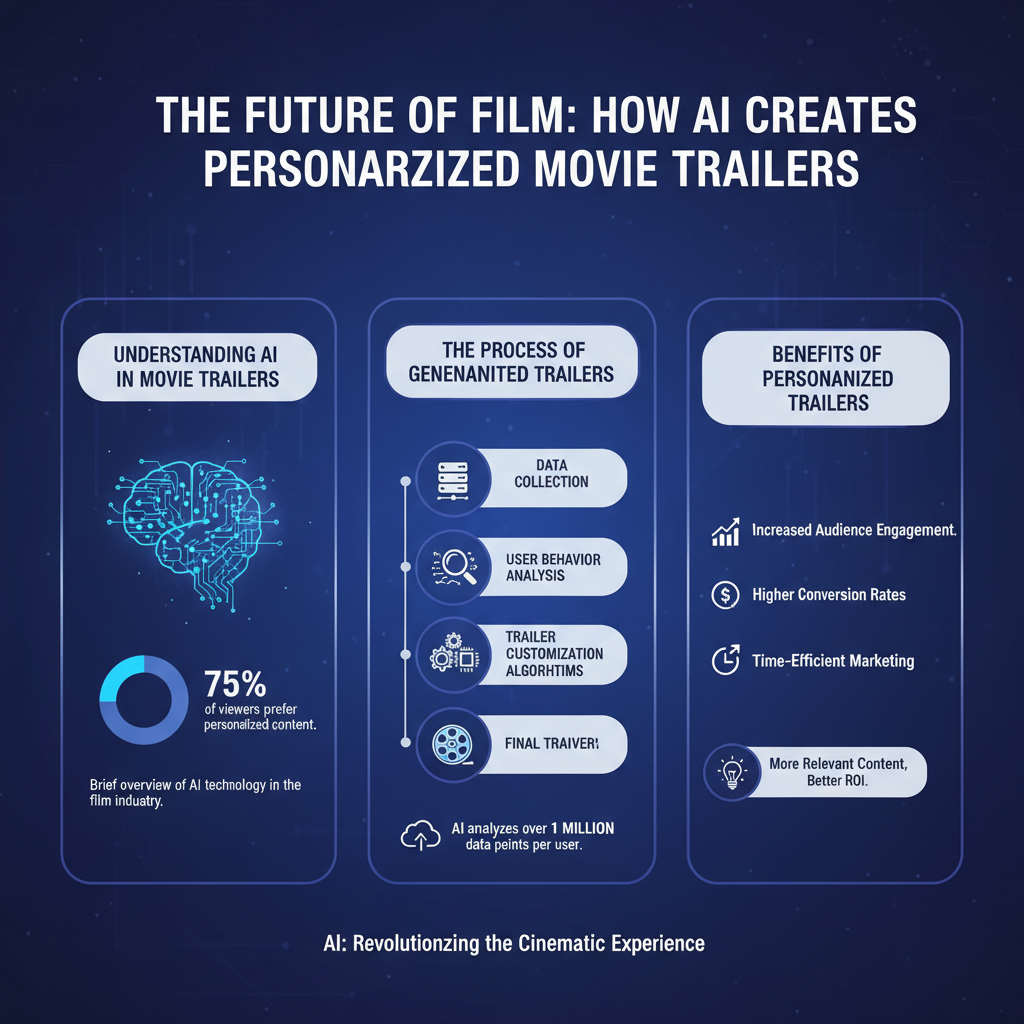
The Process of Generating Personalized Trailers
Creating a personalized movie trailer involves several systematic steps to ensure that the final product resonates with the viewer.
1. Data Collection: The first step is gathering data on viewer preferences. This includes analyzing viewing history, genre likes and dislikes, search queries, and even social media interactions.
2. Data Processing: Once the data is collected, it undergoes processing to identify patterns. This could involve clustering viewers into segments based on similar preferences or behaviors.
3. Content Selection: AI algorithms select scenes, dialogues, and music that align with the identified preferences. For instance, if a viewer enjoys action-packed thrillers, the AI will choose fast-paced scenes from the movie.
4. Trailer Assembly: The selected content is then assembled into a coherent trailer. This step often involves using natural language processing to create engaging voiceovers or text overlays that match the viewer’s interests.
5. Feedback Loop: After deployment, viewer reactions are monitored to refine the AI’s understanding of preferences, creating a cycle of continuous improvement.
By utilizing this workflow, the personalization of movie trailers becomes a dynamic and responsive process, ensuring each viewer receives content tailored uniquely to their tastes.
Benefits of Personalized Trailers
The advantages of personalized trailers extend beyond mere novelty; they have tangible impacts on viewer engagement and film marketing.
1. Enhanced Viewer Engagement: Personalized content is more likely to capture attention. Viewers are more inclined to watch a trailer that speaks directly to their interests, leading to higher engagement rates. For example, a viewer who loves thrillers may be drawn in by a trailer emphasizing suspenseful elements, increasing the chances they will watch the film.
2. Increased Interest in Featured Films: By showcasing films that align closely with viewers’ preferences, personalized trailers can significantly boost the likelihood of audiences choosing to watch those films. This targeted approach has been shown to increase click-through rates, thus influencing box office performance and streaming numbers positively.
3. Improved Viewer Retention: Personalized trailers can help retain viewers on platforms by consistently offering them content that matches their tastes. This fosters a deeper connection with the platform, encouraging subscriptions and long-term loyalty.
Challenges and Limitations of AI-Generated Trailers
While the potential for AI-generated trailers is vast, there are challenges and limitations that need addressing.
1. Data Privacy and User Consent: The collection of viewer data raises significant concerns regarding privacy. Viewers may be apprehensive about how their data is used, which can lead to distrust in platforms that employ such technologies. Ensuring transparency and obtaining informed consent is crucial for building user trust.
2. Capturing Nuanced Preferences: AI can struggle with the subtleties of human taste. For example, while a user may love romantic films, they might also enjoy the occasional sci-fi flick. AI can sometimes oversimplify preferences and miss out on these nuances, leading to a less satisfying viewing experience.
3. Algorithm Bias: If the data used to train AI algorithms is biased or unrepresentative, the resulting trailers may inadvertently reinforce stereotypes or exclude certain genres or demographics. Regular audits and updates to the algorithms can help mitigate these issues.
Future Trends in AI-Driven Movie Marketing
As AI technology continues to evolve, the landscape of trailer personalization will likely undergo significant transformations.
1. Predictive Analytics: Future AI systems may employ advanced predictive analytics, allowing them to anticipate viewer preferences even before they emerge. This capability could lead to even more tailored content that aligns with shifting trends in viewer interests.
2. Integration with Broader Marketing Strategies: AI-generated trailers may increasingly be integrated with wider marketing campaigns. For instance, social media platforms could use personalized trailers as targeted ads, reaching viewers where they are most active.
3. Interactive Trailers: Imagine a future where trailers are not just one-way presentations but interactive experiences. Viewers could influence the content of the trailer in real-time, selecting scenes or genres that they prefer, creating a unique viewing experience.
Case Studies: Successful Implementations
Several films have successfully utilized AI to create personalized trailers, showcasing the potential of this technology.
1. Netflix’s “Bird Box”: Netflix used AI to analyze viewer data to create tailored trailers for “Bird Box.” By highlighting different scenes for different audience segments, they managed to increase viewer interest and engagement substantially.
2. Warner Bros’ “The Meg”: Warner Bros employed AI technology to generate multiple trailer versions for “The Meg,” focusing on different elements such as action sequences or comedic aspects based on viewer preferences. This strategy helped attract a more diverse audience.
3. Amazon Prime Video: Amazon has experimented with AI-generated trailers for its original content, analyzing viewer interactions to deliver trailers that reflect individual tastes, enhancing viewer engagement on the platform.
The audience reception for these AI-generated trailers has often been positive, with many viewers expressing appreciation for the tailored experience. This, in turn, has had a measurable impact on box office performance and streaming engagement.
Personalized movie trailers powered by AI represent a significant advancement in film marketing. As this technology continues to evolve, it promises to enhance the viewer experience and create deeper connections with audiences. Take a moment to explore your favorite film platforms and see how personalization is being implemented or stay tuned for future developments in AI and entertainment.
Frequently Asked Questions
What is the process by which AI generates personalized movie trailers based on user preferences?
AI generates personalized movie trailers by utilizing machine learning algorithms and big data analytics to analyze user preferences, viewing history, and demographic information. These systems assess various elements of movies, such as genre, pacing, and character development, to create trailers that resonate with individual tastes, ensuring that the content highlights aspects most likely to engage the viewer.
How does AI understand my movie preferences to create tailored trailers?
AI understands your movie preferences through data collection and analysis techniques, including collaborative filtering and natural language processing. By examining your past viewing behaviors, ratings, and even social media interactions, AI can identify patterns and preferences, allowing it to curate trailers that showcase films you are more likely to enjoy based on similarities with other users’ tastes.
Why are personalized movie trailers more effective than traditional trailers?
Personalized movie trailers are more effective than traditional trailers because they cater to individual tastes, enhancing viewer engagement and emotional connection. By focusing on the elements that resonate with a specific audience—such as favorite genres, actors, or themes—these tailored trailers can increase the likelihood of a user deciding to watch a film, ultimately leading to higher viewer satisfaction and retention.
What are some of the best AI tools used for generating personalized movie trailers?
Some of the best AI tools for generating personalized movie trailers include platforms like Magisto, Wibbitz, and Vidyard, which utilize advanced algorithms to create dynamic video content based on user data. Additionally, companies like IBM and Google offer AI-driven solutions that analyze viewer preferences and automate the trailer creation process, ensuring that the content is tailored to maximize viewer engagement.
Which industries benefit most from AI-generated personalized movie trailers?
The film and entertainment industry benefits the most from AI-generated personalized movie trailers, as it allows studios to market films more effectively to targeted audiences. Additionally, streaming services like Netflix and Amazon Prime use these technologies to enhance user experience, increase viewership, and optimize marketing strategies through tailored content delivery that aligns with subscribers’ tastes and preferences.
References
- https://en.wikipedia.org/wiki/Artificial_intelligence_in_film_and_video
- https://www.sciencedirect.com/science/article/pii/S0360131521006783
- https://www.theguardian.com/technology/2021/mar/29/how-ai-is-changing-the-way-we-watch-movies
- https://www.bbc.com/future/article/20210329-how-ai-is-changing-the-way-films-are-made
- https://www.nytimes.com/2021/06/01/movies/ai-movie-trailers.html
- https://www.wired.com/story/how-ai-is-revolutionizing-movie-trailers/
- https://www.npr.org/2021/07/21/1018354963/how-ai-is-revolutionizing-film-marketing