
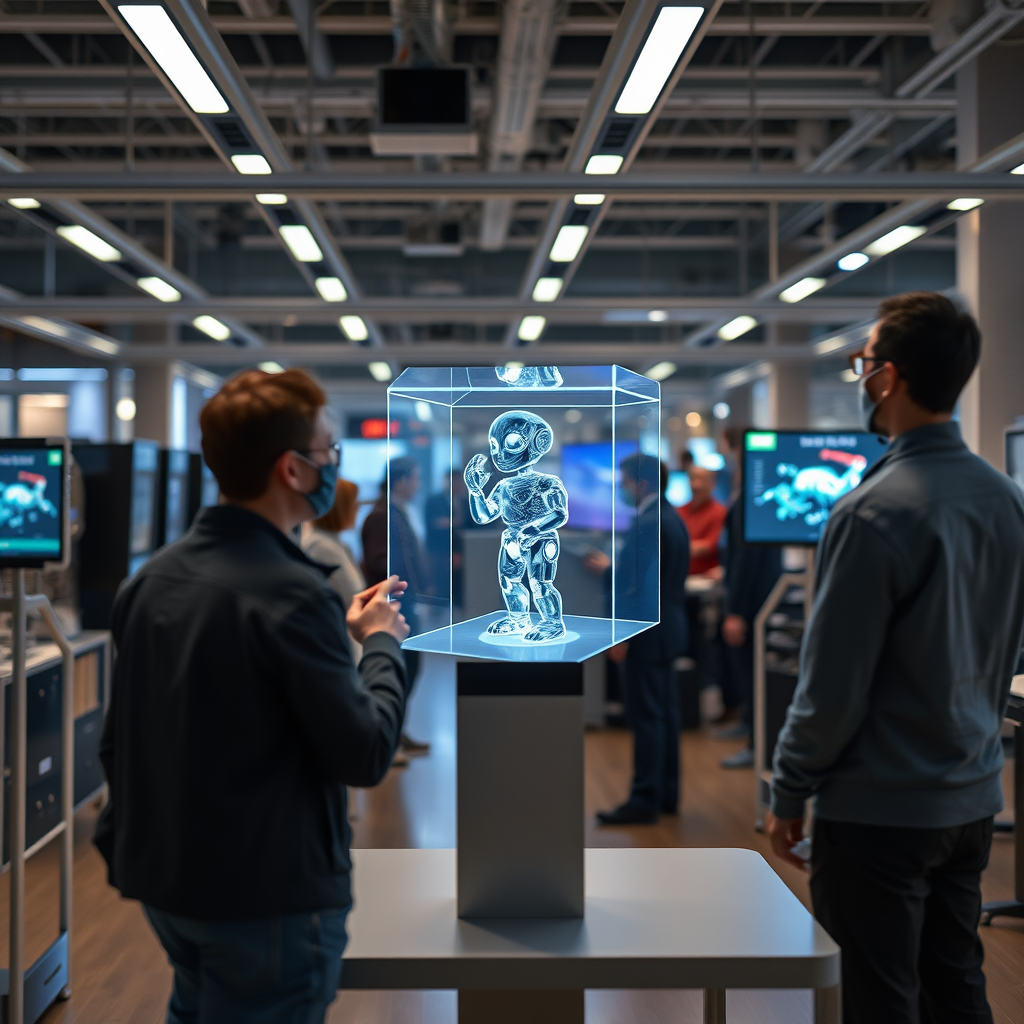
AI-generated 3D holograms function in real-time by utilizing advanced algorithms and data processing techniques that create lifelike images projected into space. This innovative technology combines artificial intelligence with holography to produce dynamic visuals that can interact with their environment and users. In this article, you will learn how these holograms are generated, the technology behind them, and their applications across various fields.
Understanding AI and Holography
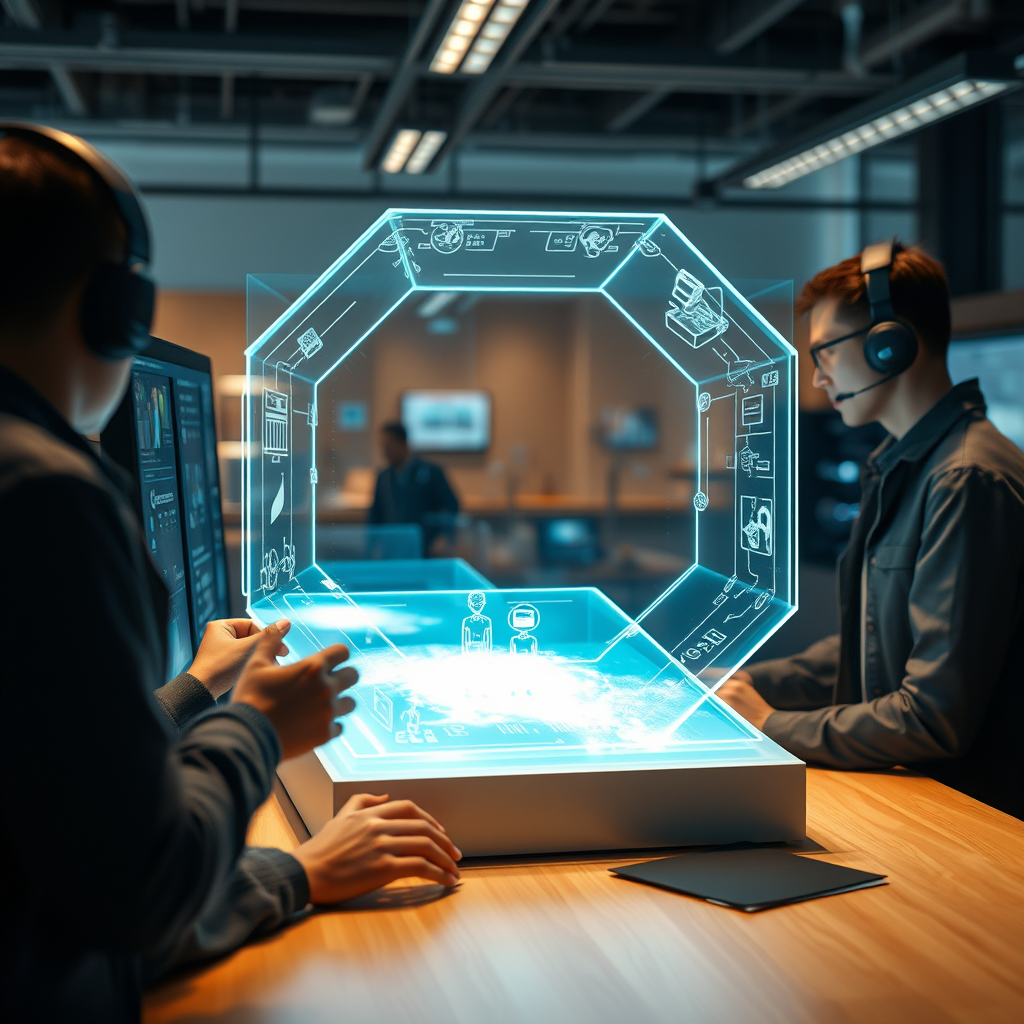
Artificial Intelligence (AI) refers to the simulation of human intelligence in machines that are programmed to think and learn like humans. In the context of generating holograms, AI plays a crucial role in processing large datasets and creating realistic visual representations. By leveraging machine learning algorithms, AI can analyze various parameters such as depth, texture, and lighting to enhance the quality of holograms.
Holography, on the other hand, is a photographic technique that records light fields to create three-dimensional images. Unlike traditional imaging techniques that capture flat pictures, holography captures the interference patterns of light, allowing for a more immersive experience. This difference is significant because holograms can be viewed from different angles, providing depth perception and a sense of realism that standard images cannot achieve. Together, AI and holography are paving the way for stunning visual experiences that can be utilized in numerous applications.
The Technology Behind Real-Time Generation
To enable real-time generation of 3D holograms, specific hardware components are required. These include high-resolution sensors, which capture images and depth information, and powerful projectors that display the holograms in space. Some systems also use laser technology to create precise light patterns that form the holographic image.
On the software side, complex algorithms are essential for processing the vast amounts of data collected by the sensors. Real-time hologram creation relies on sophisticated software that can interpret this data almost instantaneously, translating it into visual representations. For instance, techniques like ray tracing and volumetric rendering allow computers to simulate how light interacts with objects, producing high-quality holograms that respond dynamically to users’ movements. This synergy between hardware and software is what makes real-time holography possible.
Data Processing and Visualization
The creation of 3D images using AI-generated holograms begins with data collection. Sensors, such as cameras and depth-sensing devices, gather information about the environment and the objects within it. This data is then analyzed by AI algorithms, which identify patterns and generate the necessary visual elements to construct the hologram.
In real-time applications, latency and speed are critical factors. Any delay in processing can disrupt the user experience, making it vital for systems to operate with minimal lag. Advances in computing power and optimized algorithms have significantly improved the ability to generate holograms quickly and accurately. For example, the use of Graphics Processing Units (GPUs) has enabled faster calculations, allowing for smoother transitions and interactions with holograms. This efficiency is particularly important in applications such as virtual meetings or gaming, where real-time feedback enhances engagement.
Applications of AI-Generated 3D Holograms
AI-generated 3D holograms have found a variety of applications across different fields, with entertainment and gaming being among the most prominent. In the gaming industry, developers are using holography to create immersive experiences that allow players to interact with 3D environments in ways that were previously unimaginable. Imagine stepping into a game world where characters and landscapes appear to float in front of you, responding to your movements in real time.
Beyond entertainment, the medical field is also leveraging this technology. Holograms can be used in surgical simulations, allowing medical professionals to visualize complex procedures in 3D before performing them. This not only enhances training but also aids in pre-operative planning, improving patient outcomes. Additionally, holographic displays can be utilized in educational settings, helping students understand complex concepts by visualizing them in three dimensions. For instance, biology students can explore the intricacies of human anatomy through interactive holograms, making learning more engaging and effective.
Challenges and Limitations
Despite the exciting potential of AI-generated 3D holograms, there are still significant challenges and limitations to consider. One of the main technical challenges is achieving high-quality holograms that are viewable from multiple angles without distortion. This requires advanced algorithms and high-resolution displays, which can be costly and complex to implement.
Furthermore, accessibility and cost remain significant barriers to widespread adoption. Many of the current systems are expensive, limiting their use to specialized industries or high-budget projects. As technology advances, it is hoped that these costs will decrease, making holographic solutions more accessible to various sectors, including education and small businesses.
Future Trends in Holography
Looking ahead, the future of AI and holographic technology is bright. Experts predict that advancements in AI, particularly in machine learning and computer vision, will lead to even more refined and realistic holograms. As computational power continues to grow, we can expect faster processing times and improved holographic quality.
The potential impact of these advancements is vast, with industries such as entertainment, healthcare, education, and even retail poised to benefit significantly. Imagine walking into a store where holographic displays provide personalized information about products, or attending a medical conference where holographic presentations allow for more interactive discussions. As these technologies develop, they promise to enhance our everyday experiences in remarkable ways.
The technology behind AI-generated 3D holograms is advancing rapidly, bringing exciting possibilities for the future. As we explore their capabilities and applications, it’s essential to stay informed about these developments and consider how they might enhance our experiences in various fields. From entertainment to healthcare, the integration of AI and holography has the potential to revolutionize the way we interact with digital content, making our world more immersive and engaging.
Frequently Asked Questions
What are AI-generated 3D holograms and how do they work in real-time?
AI-generated 3D holograms are advanced visual representations created using artificial intelligence algorithms that analyze data and generate three-dimensional images. In real-time, these holograms are produced by processing inputs from various sensors and cameras, allowing for dynamic interactions and adjustments based on user movements or environmental changes. This technology combines computer vision, machine learning, and holographic display techniques to create realistic and immersive experiences.
How can businesses utilize AI-generated 3D holograms in marketing?
Businesses can leverage AI-generated 3D holograms in marketing by creating engaging advertisements and interactive product displays that captivate audiences. These holograms can be used in retail environments, trade shows, and online platforms to showcase products in a visually striking manner, enhancing the customer experience. By integrating holograms into their marketing strategies, companies can differentiate themselves from competitors and provide a memorable impression that drives consumer interest.
Why are AI-generated 3D holograms considered innovative in the tech industry?
AI-generated 3D holograms are deemed innovative because they introduce a new dimension to visual communication and interactive experiences. Unlike traditional 2D displays, these holograms offer a more immersive way to present information, making it easier for users to understand complex concepts. The combination of AI with holography allows for real-time adaptability and personalization, enhancing user engagement and providing a transformative approach to virtual interactions across various sectors, including education, healthcare, and entertainment.
What are the best applications for AI-generated 3D holograms in education?
The best applications for AI-generated 3D holograms in education include interactive anatomical models for medical training, virtual field trips in geography, and immersive historical reconstructions for history lessons. By using these holograms, educators can provide students with an engaging and hands-on learning experience that fosters better understanding and retention of information. This technology not only makes learning more enjoyable but also accommodates different learning styles, catering to visual and kinesthetic learners effectively.
Which technologies are essential for creating effective AI-generated 3D holograms?
Creating effective AI-generated 3D holograms requires a combination of several technologies, including machine learning algorithms, computer vision systems, and advanced display hardware such as holographic projectors or augmented reality devices. Additionally, powerful graphics processing units (GPUs) are essential for rendering high-quality images in real-time. Integrating these technologies enables the seamless creation and interaction with holograms, ensuring they are both visually appealing and functional for various applications.
References
- Holography
- https://www.sciencedirect.com/science/article/pii/S1877050919311556
- https://www.nature.com/articles/s41598-020-76700-9
- https://www.bbc.com/future/article/20210118-the-future-of-holograms
- https://www.forbes.com/sites/bernardmarr/2021/02/01/the-future-of-holograms-in-business-and-education/
- https://www.researchgate.net/publication/342542215_Real-time_holographic_display_using_a_3D_projector
- https://www.tandfonline.com/doi/abs/10.1080/09500340.2021.1893134
- https://www.techspot.com/news/89236-ai-holograms-promise-revolutionize-communication.html