
AI significantly enhances real-time rendering in the metaverse by optimizing graphics processing, enhancing interactivity, and personalizing user experiences. As virtual environments become more complex and demanding, AI technologies are stepping in to transform rendering techniques, leading to immersive and responsive experiences that captivate users like never before. This article will guide you through the various ways AI is revolutionizing real-time rendering and the profound impact it has on our interactions within the metaverse.
Understanding Real-Time Rendering
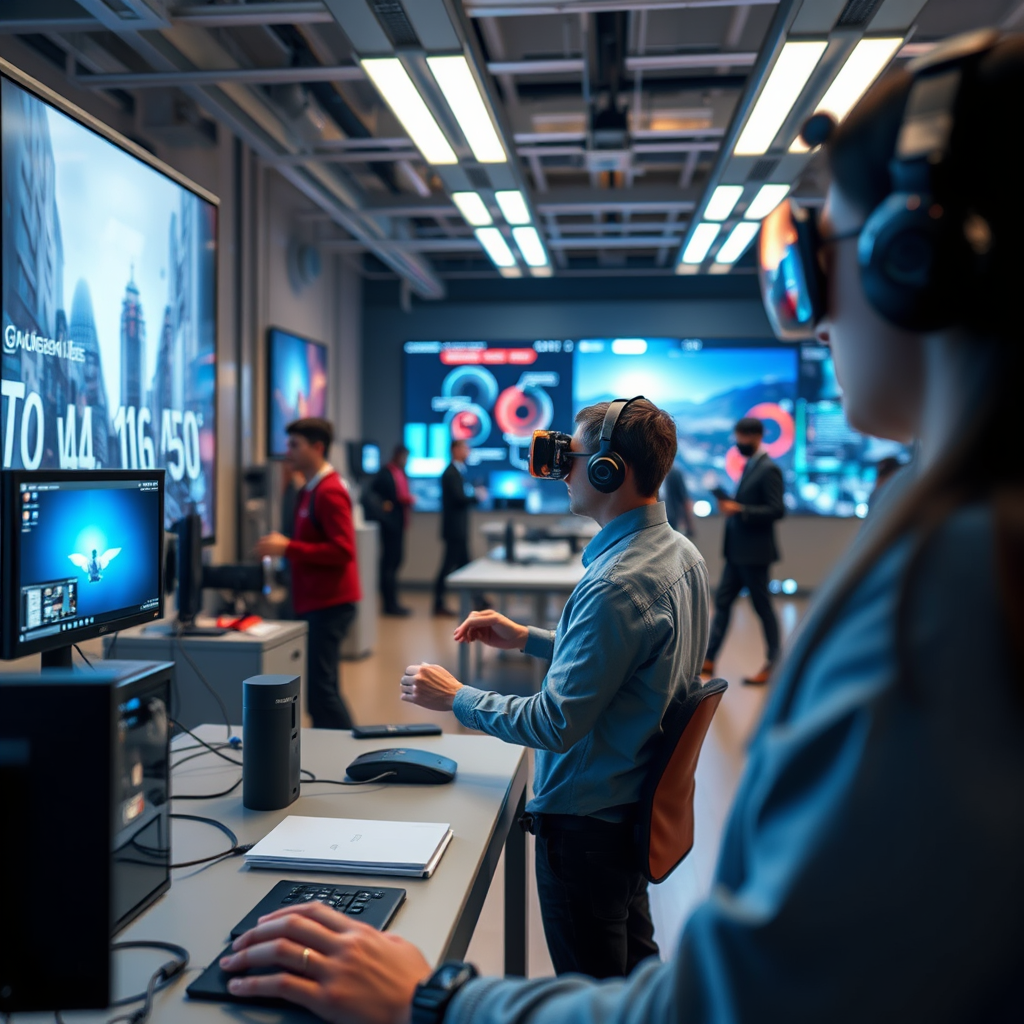
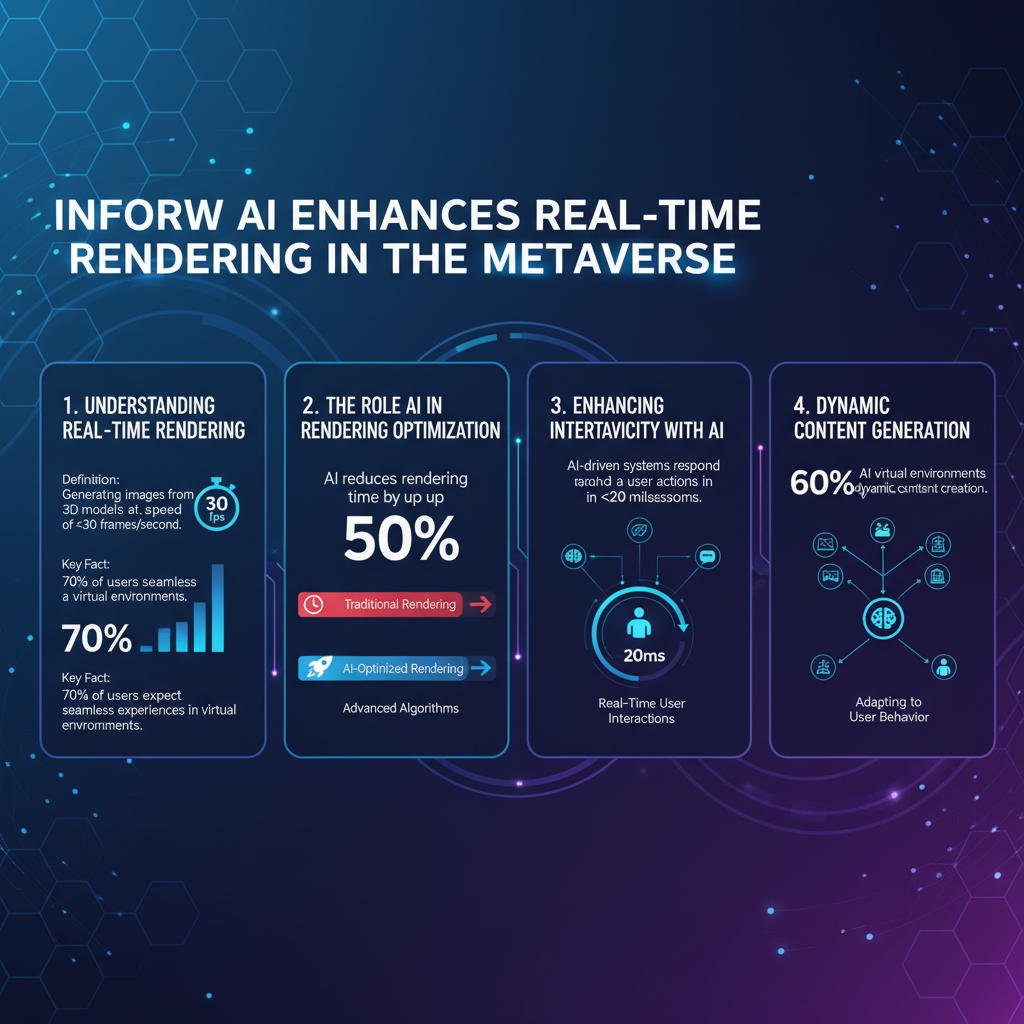
Real-time rendering refers to the process of generating images from 3D models at a speed fast enough to allow for interactive experiences, typically at least 30 frames per second. This is crucial in virtual environments like the metaverse, where users expect smooth and lifelike graphics that respond immediately to their actions. Imagine walking through a digital landscape and seeing the sun set or shadows shift in real-time; this is the magic of real-time rendering.
However, achieving high-quality rendering at such rapid speeds poses several challenges. First, the sheer volume of calculations required to create detailed textures, lighting, and shadows can overwhelm traditional graphics processing units (GPUs). Additionally, maintaining performance while scaling the complexity of environments—especially as more users join—can lead to trade-offs in quality. Striking the right balance between visual fidelity and performance remains a significant hurdle for developers in the metaverse.
The Role of AI in Rendering Optimization

AI algorithms play a pivotal role in reducing the computational load during rendering. One of the primary techniques involves using machine learning to analyze and predict what elements of a scene need to be rendered in high detail and which can be simplified or omitted without sacrificing the overall experience. For instance, techniques like deep learning can identify and enhance textures based on previous frames, allowing for quicker processing.
Additionally, AI can optimize rendering through methods such as image upscaling and denoising. By leveraging neural networks, developers can create high-resolution textures from lower-resolution images, significantly improving visual quality while keeping the rendering pipeline efficient. This means that users can enjoy stunning graphics without the need for ultra-high-end hardware, making immersive experiences accessible to a broader audience.
Enhancing Interactivity with AI
One of the most exciting areas where AI shines is in enhancing interactivity. AI’s capability to process user inputs in real-time creates a responsive experience that feels more natural and engaging. For example, in gaming environments, AI can analyze player behavior to adjust the game’s difficulty dynamically, ensuring that users remain challenged but not overwhelmed.
Moreover, AI-driven interactions can make virtual spaces feel alive. Imagine walking through a virtual market where vendors greet you based on your previous purchases or a game where non-player characters (NPCs) adapt their dialogue and actions based on your choices. These interactions foster a sense of agency and immersion, making users feel like they are truly part of the world around them.
Dynamic Content Generation
Dynamic content generation is another area where AI excels, significantly improving user engagement. AI can create and modify content on-the-fly, allowing virtual environments to evolve based on user actions or preferences. For instance, in a social virtual reality setting, AI can generate unique avatars or environments tailored to individual users, making every visit feel fresh and personalized.
Procedural generation, powered by AI, enables developers to create vast, complex worlds with far less manual labor. This not only saves time but also allows for adaptive environments that respond to user behavior. Consider a game where the landscape changes based on player decisions—this level of dynamism keeps users invested as they explore and interact.
Personalization Through AI
Personalization is key to enhancing user experiences in the metaverse, and AI is at the forefront of this transformation. By analyzing user data, AI can tailor experiences based on individual preferences and behaviors. For example, a user who frequently visits art galleries in a virtual space might receive recommendations for new exhibits or artists that align with their tastes.
The benefits of personalized environments are substantial. They not only increase user retention—keeping players coming back for more—but also enhance satisfaction levels, as users feel more connected to the content they engage with. In a world where attention spans are short, providing a uniquely tailored experience can make all the difference.
Future Trends in AI and Rendering
As technology continues to evolve, several emerging trends may influence real-time rendering in the metaverse. One such trend is the rise of cloud gaming, where powerful remote servers handle the heavy lifting of rendering, allowing users to access high-quality graphics on less powerful devices. This shift could democratize access to advanced virtual experiences, making them available to a wider audience.
Additionally, advancements in AI, such as improved natural language processing and computer vision, could further enhance the interactivity and realism of the metaverse. Imagine conversing with an AI that understands context and emotion, creating deeper relationships within virtual spaces.
Predictions suggest that AI’s role will only grow, shaping the visual landscape of the metaverse in ways we can only begin to imagine. As developers harness these technologies, we can expect environments that are not only visually stunning but also deeply immersive and responsive to the needs of each user.
AI is revolutionizing real-time rendering in the metaverse by making environments more realistic, interactive, and personalized. By leveraging AI technologies, developers can create immersive experiences that captivate users and push the boundaries of virtual reality. As we continue to explore these advancements, it’s clear that AI will play a critical role in shaping the future of digital interactions. For those looking to delve deeper into these innovations, exploring AI tools and techniques in rendering can provide valuable insights into the exciting future that awaits us in the metaverse.
Frequently Asked Questions
How does AI improve the performance of real-time rendering in the metaverse?
AI enhances real-time rendering in the metaverse by optimizing graphics processing and reducing latency. Techniques such as machine learning algorithms can predict user interactions and pre-render scenes, allowing for smoother experiences. Additionally, AI-driven tools can automatically adjust graphical fidelity based on system performance, ensuring that users enjoy high-quality visuals without compromising frame rates.
What are the benefits of using AI for texture and asset generation in the metaverse?
AI can significantly speed up texture and asset generation in the metaverse by automating the creation of high-resolution graphics. This not only saves time for developers but also allows for more diverse and intricate environments, as AI can analyze existing assets and generate new ones that fit seamlessly into the game world. Consequently, this enhances the overall aesthetic quality and immersion, making the virtual environment more engaging for users.
Why is AI essential for optimizing user experience in real-time rendering within virtual environments?
AI is essential for optimizing user experience in real-time rendering as it enables adaptive graphics rendering based on individual user preferences and hardware capabilities. By analyzing user behavior, AI can tailor visual elements and interactions, ensuring that each user experiences the metaverse in a personalized manner. This adaptability not only enhances immersion but also minimizes issues such as motion sickness and lag, which can detract from the user experience.
What role does AI play in enhancing lighting and shadow effects in real-time rendering?
AI plays a critical role in enhancing lighting and shadow effects in real-time rendering by utilizing techniques like ray tracing and neural networks to simulate realistic light interactions. AI can analyze complex scenes in real time, adjusting lighting and shadows dynamically as the environment or user perspective changes. This results in more lifelike visuals and depth perception, significantly improving the overall realism of the metaverse.
Which AI technologies are most effective for real-time rendering in the metaverse?
Several AI technologies are effective for real-time rendering in the metaverse, including machine learning, deep learning, and procedural generation algorithms. Machine learning is used for predictive analytics to enhance frame rates, while deep learning facilitates advanced graphics processing, such as texture synthesis. Procedural generation allows for the creation of vast and diverse environments with minimal manual input, making these technologies essential for developers looking to create rich, immersive experiences.
References
- Metaverse
- https://www.nature.com/articles/s41598-021-92757-7
- https://www.sciencedirect.com/science/article/pii/S0097849321000842
- https://www.bbc.com/news/technology-58638789
- https://www.techrepublic.com/article/how-ai-is-changing-real-time-rendering-in-video-games-and-the-metaverse/
- Page Not Found | GovInfo
- https://www.wired.com/story/how-ai-is-transforming-the-metaverse/