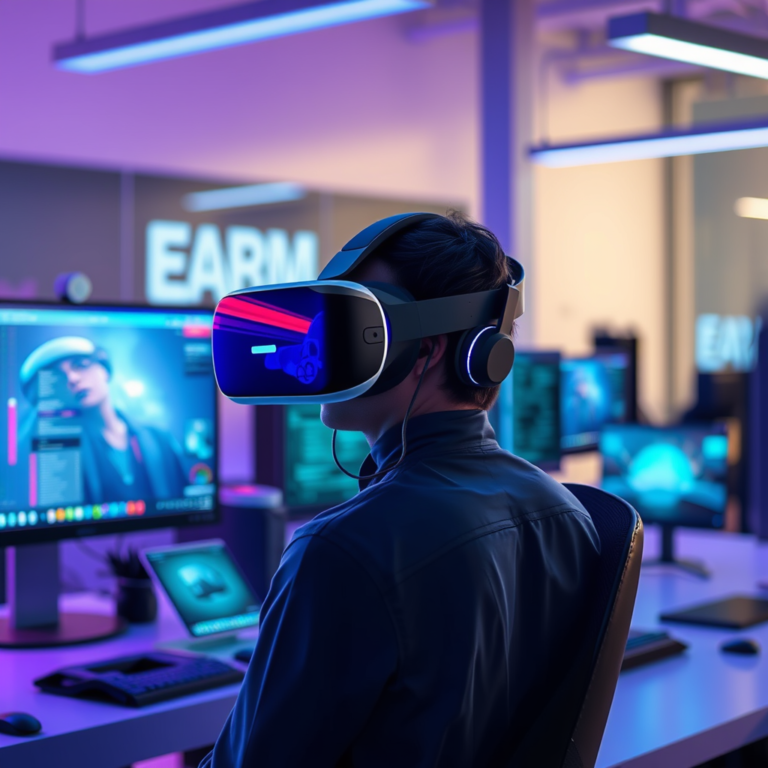

The integration of AI-powered displays will significantly enhance the user experience in the metaverse, making it more interactive, immersive, and personalized. As technology evolves, these advanced displays will not only transform how we engage with virtual environments but also reshape our interactions with one another. In this article, you will discover how these technologies are shaping virtual environments, improving user interactions, and creating a new standard for digital engagement.
The Role of AI in Display Technology
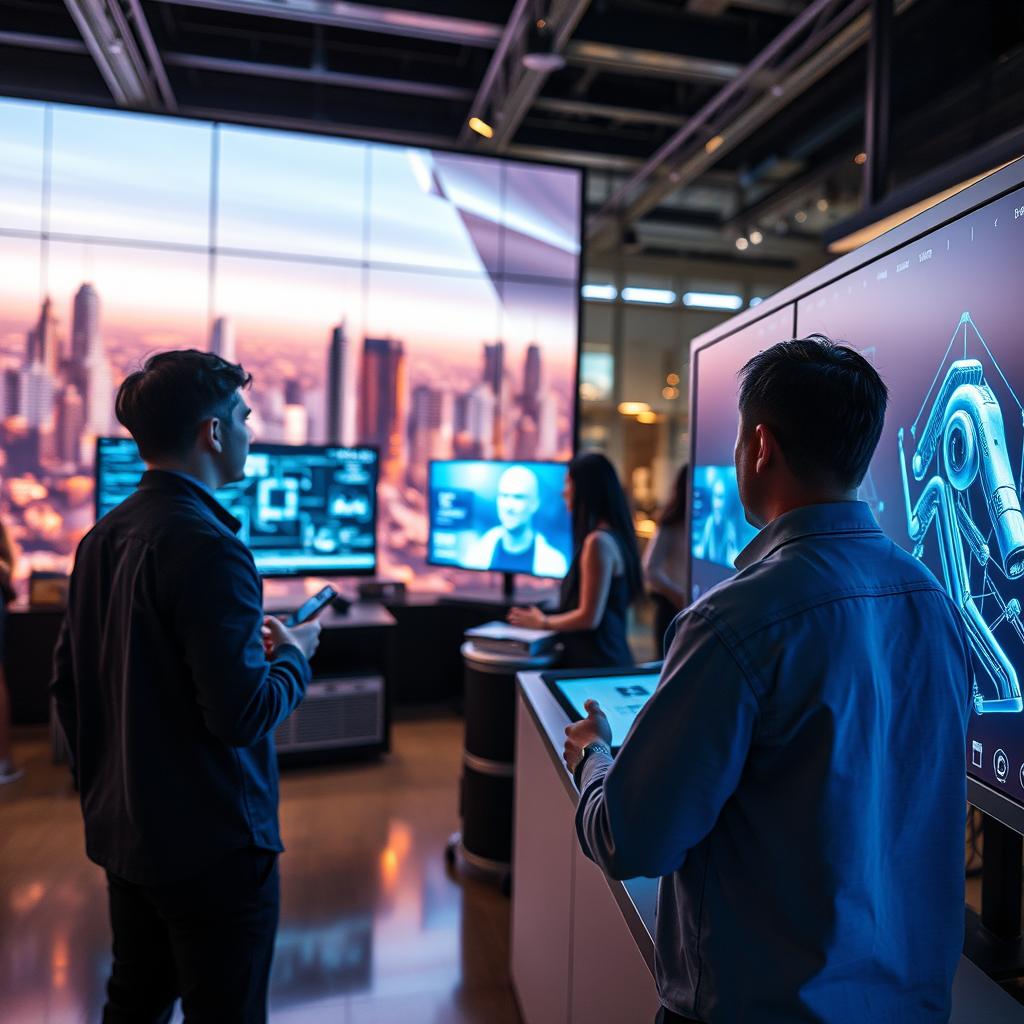
AI algorithms are revolutionizing display technology by optimizing visual content in real-time. Imagine a virtual world that dynamically adjusts to your preferences, whether you’re playing a game, attending a concert, or exploring an art gallery. These algorithms analyze user behavior, preferences, and contextual data to deliver a tailored visual experience. For example, if you’re in a gaming scenario and favor vibrant colors or specific themes, AI can modify the display settings to highlight those preferences, ensuring you receive a personalized gaming experience.
Machine learning plays an equally crucial role in enhancing image quality and responsiveness. As users navigate through various virtual environments, AI systems can quickly process data to improve frame rates and reduce latency. This means that movements feel smooth and natural, minimizing any sense of disconnection that can often arise in virtual reality experiences. By creating a seamless experience, AI-powered displays foster deeper engagement and immersion in the metaverse.
Enhancing User Interaction in the Metaverse

User interaction is at the heart of the metaverse, and AI-powered displays are taking it to the next level. One of the most exciting advancements is in the realm of natural language processing (NLP). With voice interactions becoming increasingly sophisticated, users can communicate with avatars and virtual assistants in a conversational manner. Imagine asking your virtual guide for directions or information about a specific item in a digital store, and receiving a natural, context-aware response. This advancement not only makes interactions more enjoyable but also encourages users to explore more extensively.
Advanced gesture recognition systems are another significant leap forward. Users can navigate virtual spaces through intuitive hand movements or facial expressions, eliminating the need for cumbersome controllers. Picture a scenario where you can simply wave your hand to open a virtual door or raise your eyebrows to express surprise. This fluidity in interaction mimics real-life movements, making the virtual environment feel more tangible and engaging.
Personalization and Customization
Personalization is a key factor in enhancing user experience, and AI is leading the charge in tailoring content and experiences. By analyzing user behavior—such as browsing patterns, time spent on certain activities, and even emotional responses—AI can curate experiences that resonate with individual users. For instance, if a user frequently visits art galleries within the metaverse, the system can recommend new exhibitions based on their previous interests.
Dynamic user interfaces also play a vital role in customization. Imagine logging into a virtual workspace where the layout changes based on your historical interactions. If you often access certain tools or applications, the display can prioritize those, making your workflow more efficient. This level of adaptability not only enhances productivity but also creates a more enjoyable user experience, as interactions feel more relevant and intuitive.
Creating Immersive Environments
One of the most captivating aspects of AI-powered displays is their ability to create immersive environments. AI enhances spatial audio and visual effects, deepening the sense of presence that users feel in virtual spaces. For example, if you’re attending a virtual concert, the sound can dynamically adjust based on your location in the virtual venue, creating a more authentic experience that mimics being there in person.
Moreover, real-time environmental changes made possible through smart displays allow virtual worlds to respond to user actions. If you step into a virtual forest and choose to interact with a specific tree, AI can animate the tree’s branches in response, perhaps even unleashing a shower of pixelated leaves. This responsiveness not only heightens immersion but also encourages exploration and interaction, making the metaverse a vibrant, living space.
The Impact on Social Interactions
As we immerse ourselves in the metaverse, the quality of our social interactions is paramount. AI-driven avatars are at the forefront of this transformation, capable of simulating realistic emotions and responses. This technology allows avatars to exhibit facial expressions, gestures, and even tone of voice that reflect their user’s feelings, resulting in more engaging social dynamics. Imagine chatting with friends in a virtual café, where your avatar can smile, nod, or express surprise, making conversations feel more authentic and human.
Additionally, virtual spaces can host events specifically tailored to audience preferences, enhancing community engagement. AI can analyze user data to curate events that resonate with specific groups, whether it’s a gaming tournament, a live art show, or a virtual networking event. This not only fosters a sense of belonging but also creates opportunities for users to connect over shared interests, ultimately enriching the social fabric of the metaverse.
Future Trends in AI-Powered Displays
Looking ahead, the possibilities for AI-powered displays in the metaverse are vast and exciting. Emerging technologies like holography and augmented reality are set to elevate display capabilities even further. Imagine stepping into a mixed-reality environment where holographic displays provide a 360-degree view of your virtual surroundings, allowing for unparalleled interaction and engagement.
Predictions indicate that as AI continues to evolve, it will enable more sophisticated interactions, such as predictive analytics for user engagement. This means that the metaverse could anticipate user needs and preferences, proactively suggesting activities or content based on past behavior. For instance, if you often attend gaming events, the AI could notify you about upcoming tournaments or new game releases that align with your interests, ensuring you never miss out on opportunities to connect and engage.
The implementation of AI-powered displays in the metaverse promises to revolutionize how we interact with digital worlds and each other. As these technologies continue to evolve, they will create a more connected and engaging virtual experience. Embrace the change by exploring the latest developments in AI and the metaverse, and consider how you can leverage these advancements for your own projects or interests. The future is bright, and the possibilities are endless!
Frequently Asked Questions
What are AI-powered displays and how do they function in the metaverse?
AI-powered displays are advanced visual interfaces that utilize artificial intelligence to enhance user interaction within the metaverse. These displays can analyze user behavior, preferences, and environmental factors to provide personalized content, recommendations, and immersive experiences. By integrating AI algorithms, these displays adapt in real-time, allowing for a more engaging and intuitive user experience in virtual environments.
How will AI-powered displays improve user experience in the metaverse?
AI-powered displays significantly enhance user experience in the metaverse by offering tailored content and dynamic interactions. They can recognize user emotions and adjust the display’s visual elements accordingly, creating a more immersive atmosphere. Additionally, these displays can facilitate seamless navigation and interaction, making it easier for users to explore virtual worlds, socialize, and participate in activities, ultimately leading to increased user satisfaction.
Why are AI-powered displays essential for the future of the metaverse?
AI-powered displays are essential for the future of the metaverse because they enable a more personalized and responsive virtual environment. As the metaverse continues to evolve, user expectations for interactivity and engagement will rise. AI displays not only enhance these experiences but also provide valuable insights into user behavior, helping developers create more compelling content and applications that resonate with users, thereby driving adoption and growth.
Which industries can benefit the most from AI-powered displays in the metaverse?
Several industries stand to benefit from AI-powered displays in the metaverse, including gaming, education, healthcare, and retail. In gaming, these displays can create more immersive experiences, while in education, they can facilitate interactive learning environments. Healthcare can leverage AI displays for virtual consultations and training simulations, and retail can enhance online shopping experiences through personalized recommendations and virtual try-ons, making them invaluable across various sectors.
What are the best practices for integrating AI-powered displays into metaverse applications?
When integrating AI-powered displays into metaverse applications, best practices include focusing on user experience design, ensuring responsiveness, and prioritizing data privacy. Developers should create intuitive interfaces that cater to different user preferences and behaviors, while also ensuring that AI algorithms are optimized for performance. Additionally, transparent data usage policies should be established to build user trust, making sure that privacy concerns are addressed as AI technologies evolve and become more integrated into the metaverse.
References
- Metaverse
- https://www.techrepublic.com/article/what-is-the-metaverse/
- https://www.wired.com/story/metaverse-what-it-is/
- https://www.bbc.com/news/technology-58865388
- https://www.sciencedirect.com/science/article/pii/S0267364921000253
- https://www.nature.com/articles/d41586-021-03284-8
- https://www.technologyreview.com/2021/09/30/1035021/metaverse-explained/
- https://www.forbes.com/sites/bernardmarr/2021/11/29/how-ai-is-shaping-the-metaverse-and-the-future-of-work/