
To effectively prevent unauthorized screen recording in secure systems, organizations leverage AI technologies that utilize behavior analysis, content protection, and real-time monitoring. These advanced measures not only help in safeguarding sensitive information but also bolster an organization’s overall security infrastructure. In this article, we will explore how AI plays a crucial role in enhancing security against screen recording threats, ensuring that private data remains protected in an increasingly digital world.
Understanding Unauthorized Screen Recording Threats

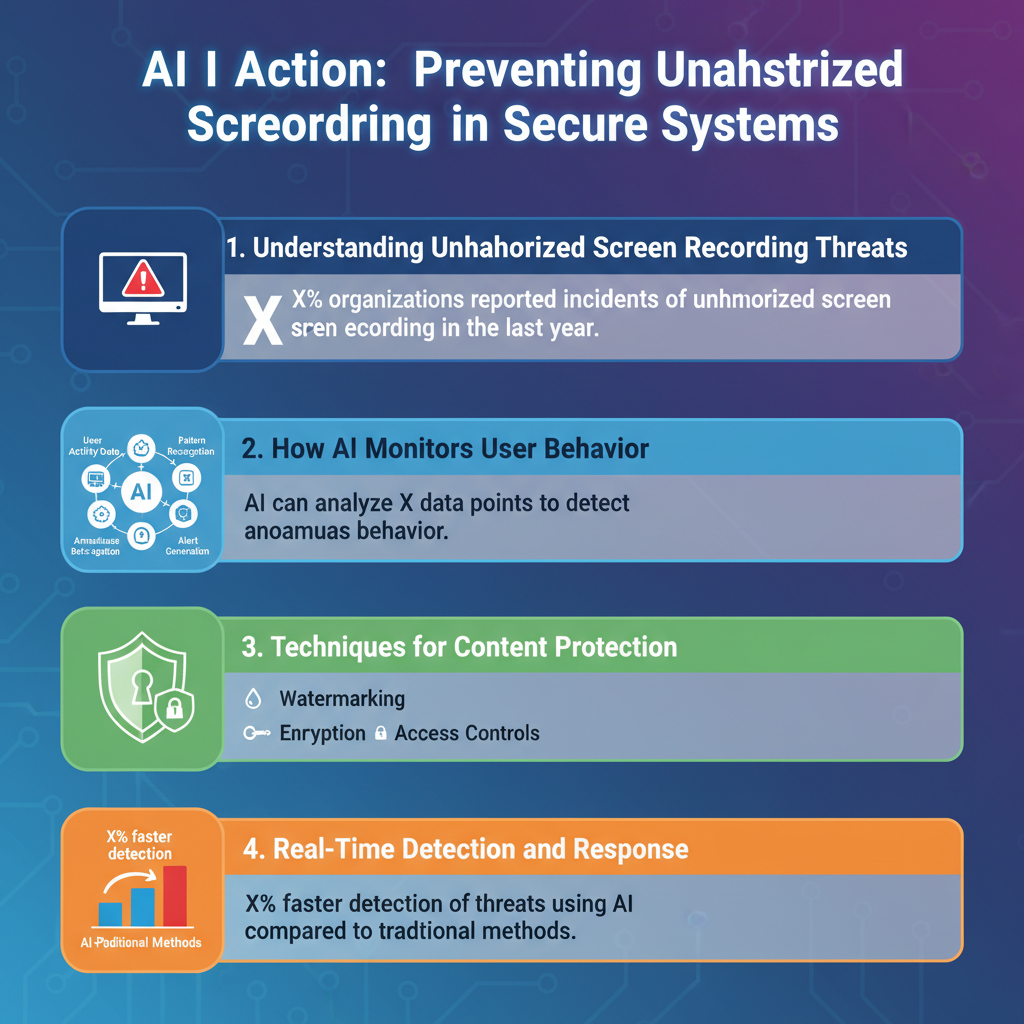
Unauthorized screen recording refers to the act of capturing the visual output displayed on a device’s screen without permission. This can happen through various means, such as using software tools designed for screen capturing or even physical devices like cameras. The implications for security can be serious, as this practice can lead to data breaches, intellectual property theft, and the exposure of confidential information.
For example, consider a financial services firm that conducts sensitive transactions involving customer data. If an employee were to inadvertently record their screen during a transaction, they could expose sensitive customer information to malicious actors. The consequences can be dire: loss of customer trust, regulatory penalties, and the reputational damage that follows a data breach. On a personal level, individuals can also be victims of screen recording, potentially leading to identity theft or the unauthorized sharing of private information.
How AI Monitors User Behavior

AI algorithms are pivotal in monitoring user interactions within secure systems. By analyzing patterns in user behavior, these algorithms can identify activities that deviate from the norm, which may indicate potential unauthorized recordings. For instance, if a user suddenly starts accessing sensitive documents during odd hours or frequently toggles between applications, AI can flag this behavior for further scrutiny.
Additionally, AI can utilize machine learning to continuously improve its understanding of what constitutes typical user behavior. This means that over time, the system becomes more adept at distinguishing between benign actions and those that warrant further investigation. When suspicious activity is detected, alerts can be triggered, allowing security teams to respond swiftly to potential threats.
Techniques for Content Protection
To deter unauthorized screen recording, AI employs various content protection techniques that are both innovative and effective. One common method is watermarking, where digital watermarks are embedded into content. This can deter screen recording by visibly marking sensitive information. For example, a watermark might display the user’s ID or a timestamp whenever they view a confidential document, discouraging them from recording it.
Obfuscation is another technique that AI utilizes. This involves rendering text or images in a way that makes them difficult to interpret when viewed through a screen recording. For instance, sensitive information might be dynamically blurred or pixelated if an unauthorized recording tool is detected. This makes it challenging for anyone attempting to capture the screen to obtain usable data.
Moreover, dynamic content rendering is gaining traction. This method allows the system to change how information is displayed based on the user’s access rights. If unauthorized access is suspected, the content can automatically switch to a less detailed view to obscure sensitive data, ensuring that even if a recording attempt occurs, the captured information lacks value.
Real-Time Detection and Response
One of the remarkable features of AI in security systems is its ability to provide real-time detection and response to unauthorized recording attempts. When an AI system identifies a potential threat, it can send immediate alerts to security personnel, enabling them to take action before data is leaked.
Automated responses can also be part of the mix. For example, if a screen recording attempt is detected, the system can automatically lock the screen or log the user out, effectively preventing any potential data breaches before they escalate. This proactive approach not only minimizes the risk of data loss but also enhances the overall security environment, allowing organizations to act quickly and decisively against threats.
Integration with Existing Security Protocols
Integrating AI solutions into existing security frameworks is essential for maximizing effectiveness. Many organizations already have traditional security measures in place, such as firewalls, intrusion detection systems, and user access controls. By incorporating AI, these measures can be enhanced and supplemented with advanced analytics and real-time monitoring capabilities.
For example, an organization might use AI to analyze logs from traditional security systems to uncover patterns of suspicious behavior that may not have been noticed otherwise. This combination of AI-driven insights with established protocols creates a robust security posture that can adapt to evolving threats while maintaining the integrity of sensitive information.
Combining AI with traditional security measures ensures that organizations can leverage the strengths of both approaches. While AI provides speed and accuracy in identifying threats, traditional measures offer a foundational layer of security that is essential for comprehensive protection.
Future Trends in AI Security Solutions
The future of AI in security solutions looks promising, with emerging technologies set to enhance protection against screen recording and other threats. Advancements in natural language processing, for instance, could enable AI systems to better understand the context of user interactions, making it easier to identify potentially malicious activities.
Moreover, the integration of AI with biometric security measures, such as facial recognition or fingerprint scanning, can add another layer of security. This could help in distinguishing between authorized users and potential intruders, further reducing the risk of unauthorized screen recording.
As AI technology continues to evolve, we can expect it to adapt to new security challenges, including the ever-changing tactics employed by cybercriminals. Predictive analytics may play a critical role, allowing organizations to anticipate threats before they occur and proactively strengthen their defenses against unauthorized recording attempts.
Effective measures against unauthorized screen recording are critical for maintaining the integrity of secure systems. By understanding and implementing AI-driven solutions, organizations can significantly enhance their security posture. Embrace these technologies and consider evaluating your current security measures to protect sensitive information. With AI as a partner in security, organizations can not only safeguard their data but also foster a culture of digital trust and responsibility.
Frequently Asked Questions
What are the main technologies that AI uses to prevent unauthorized screen recording in secure systems?
AI utilizes various technologies to prevent unauthorized screen recording, including computer vision, behavior analysis, and machine learning algorithms. These technologies can detect unusual patterns, such as the presence of screen recording software or unauthorized devices attempting to capture information. By continuously monitoring user behavior and system interactions, AI can flag potential security breaches in real-time, ensuring sensitive data remains protected.
How does AI identify and block unauthorized screen recording attempts?
AI identifies and blocks unauthorized screen recording attempts by analyzing system processes and user behavior. For instance, it can recognize software signatures associated with screen recording applications and monitor for suspicious activity, like multiple screen captures occurring simultaneously. Once detected, AI can trigger alerts or automatically disable access to the secure system, effectively safeguarding sensitive information from being recorded without permission.
Why is preventing unauthorized screen recording crucial for data security?
Preventing unauthorized screen recording is crucial for data security because it helps protect sensitive information from being leaked or stolen. Screen recordings can capture confidential data, such as financial records, intellectual property, or personal information, which can lead to identity theft or corporate espionage. By employing AI-driven solutions to monitor and block these activities, organizations can maintain compliance with data protection regulations and enhance their overall security posture.
What are the best practices for implementing AI solutions to secure against screen recording?
The best practices for implementing AI solutions against screen recording include conducting a thorough risk assessment to identify vulnerabilities, employing multi-layered security approaches, and ensuring continuous monitoring of user activities. Organizations should also provide user training on secure practices and regularly update their AI models to adapt to new threats. By following these practices, companies can create a robust defense against unauthorized screen recording while safeguarding sensitive information.
Which industries benefit most from AI preventing unauthorized screen recording?
Industries that benefit most from AI preventing unauthorized screen recording include finance, healthcare, legal, and technology sectors. These industries typically handle highly sensitive data, such as personal health information, financial records, and proprietary technology. By implementing AI-driven security measures, these sectors can effectively protect their critical information from potential breaches and maintain customer trust while complying with regulatory standards.
References
- https://en.wikipedia.org/wiki/Screen_capture
- https://www.nist.gov/news-events/news/2020/07/new-nist-guide-securely-managing-remote-access
- https://www.ncbi.nlm.nih.gov/pmc/articles/PMC6900678/
- https://www.sciencedirect.com/science/article/pii/S187705091931460X
- https://www.techrepublic.com/article/how-ai-and-machine-learning-are-changing-cybersecurity/
- https://www.wired.com/story/how-ai-is-helping-to-prevent-cyber-attacks/