
Augmented reality (AR) video significantly improves medical education by providing immersive, interactive experiences that enhance learning and retention. By integrating AR into medical training, students can visualize complex anatomical structures and practice procedures in a safe, controlled environment. This innovative approach not only makes learning more engaging but also prepares future healthcare professionals more effectively than traditional methods. In this article, we will explore how AR video transforms traditional medical education methods and the benefits it offers to both students and educators.
The Power of Immersive Learning

One of the most exciting aspects of AR video is its ability to create realistic simulations that engage students more effectively than traditional methods. Imagine a medical student donning AR glasses and seeing a 3D heart beating in front of them, with the ability to rotate, zoom in, and even dissect it virtually. This immersive learning experience is not only captivating but also deepens understanding in ways that textbooks and lectures simply cannot match.
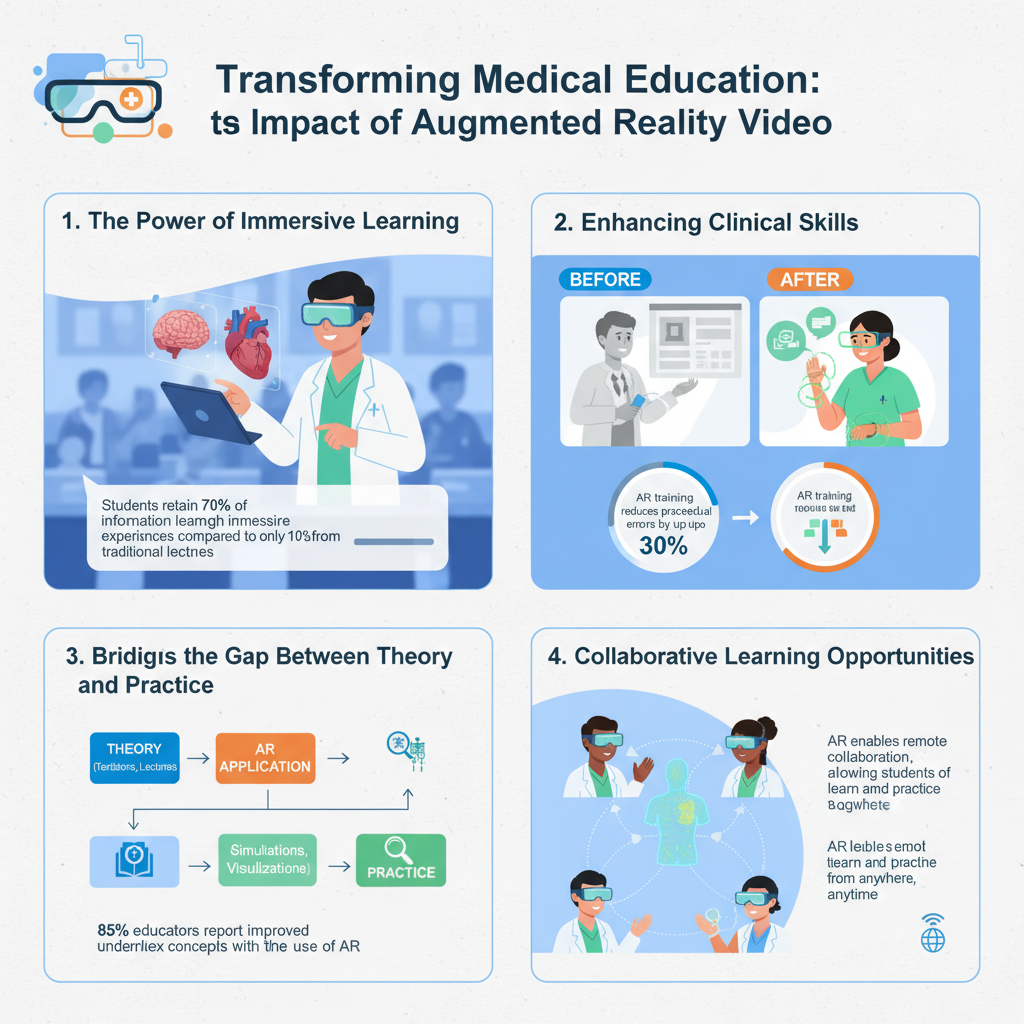
With AR technology, students can interact with 3D models, enhancing their spatial understanding of anatomy and procedures. This hands-on approach allows learners to visualize the intricate relationships between different body systems. For instance, a student studying the respiratory system can manipulate a 3D model of the lungs and observe how they interact with the diaphragm in real-time. By engaging multiple senses—sight, touch, even movement—AR creates an environment where learning feels more intuitive and less abstract.
Enhancing Clinical Skills

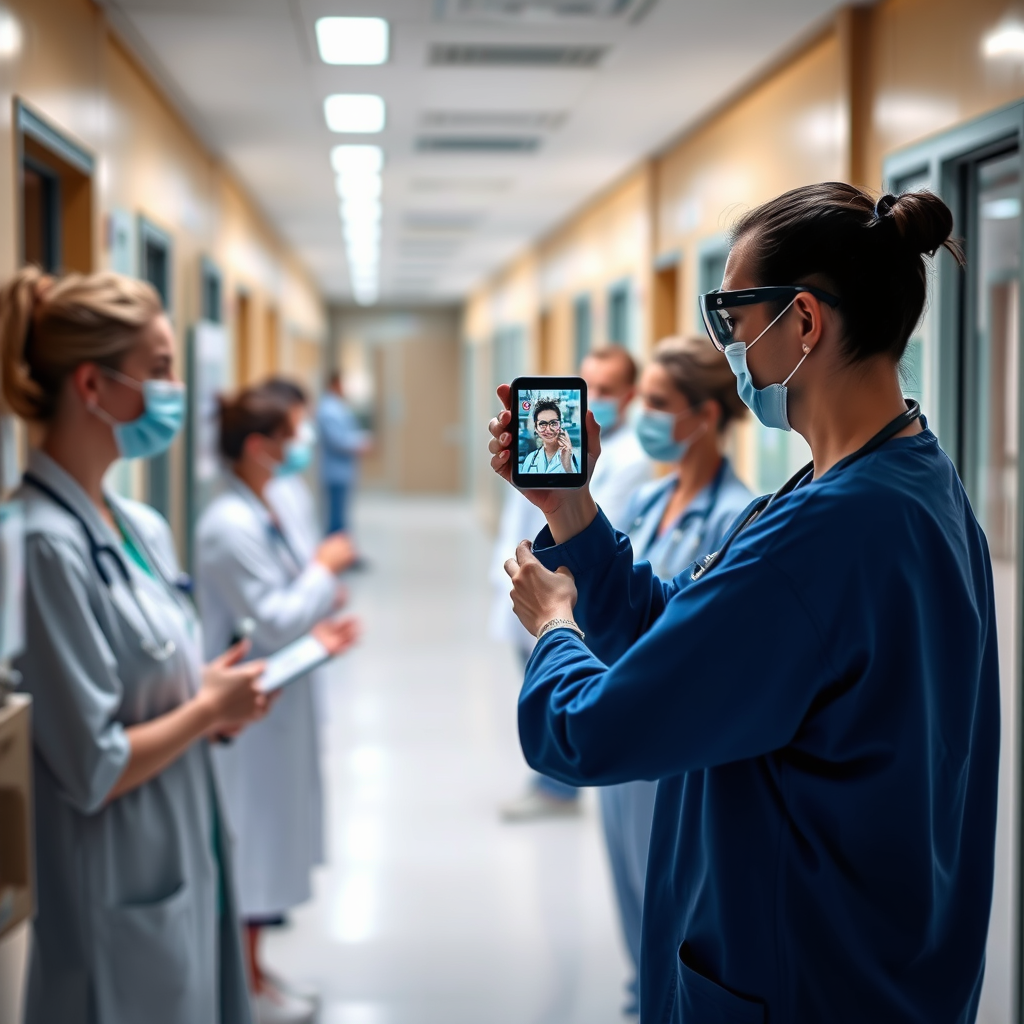
AR video allows for hands-on practice without the risks associated with real-life procedures. Through simulated environments, medical students can perform complex tasks such as intubation, suturing, or even surgical operations without the fear of harming a patient. This kind of practice is invaluable in building the clinical skills necessary for real-world medical scenarios.
Moreover, medical students can repeat simulations until they achieve proficiency, leading to greater confidence in their skills. For example, a student struggling with a particular surgical technique can practice it multiple times in AR, receiving instant feedback on their performance. This iterative learning process fosters mastery and allows students to develop muscle memory before entering a clinical setting. As a result, they approach real-life procedures with increased confidence and competence.
Bridging the Gap Between Theory and Practice
AR video helps students visualize complex concepts, making theoretical knowledge more applicable. Traditional teaching methods often leave students grappling with abstract ideas, but AR provides a bridge between theoretical frameworks and their practical applications. For instance, when learning about the circulatory system, students can watch blood flow through a 3D model, seeing the impact of various factors like blockages or diseases in real-time.
Real-time feedback during AR training sessions aids in the immediate correction of mistakes. Unlike traditional classrooms where feedback may take time or come only after a test, AR allows instructors to provide instant insights while students are still engaged in their learning process. This immediate reinforcement not only solidifies knowledge but also enhances critical thinking skills, as students learn to adapt and improve on the spot.
Collaborative Learning Opportunities
Another significant benefit of AR technology is its ability to promote teamwork among students. In a medical setting, collaboration is crucial, and AR can simulate real-world scenarios that require students to work together. For example, a group of students might tackle a complex case study in AR, where they must diagnose a virtual patient and plan a treatment strategy collaboratively.
Instructors can guide multiple students through the same AR scenario, fostering a collaborative environment. This not only enhances learning but also builds essential communication and teamwork skills that are vital in the medical field. As students share their insights and experiences during these AR sessions, they learn from each other, creating a richer educational experience that mirrors the collaborative nature of healthcare.
Cost-Effectiveness and Accessibility
Integrating AR video into medical education can also lead to significant cost savings. The traditional need for expensive cadaver labs and physical training equipment can be reduced, making medical education more affordable for institutions. With AR, students can access high-quality, interactive learning experiences without the associated costs of physical resources.
Furthermore, AR technology makes high-quality medical education accessible to a wider audience, including remote learners. Students in rural areas or those unable to attend traditional classes due to various constraints can benefit from AR applications, bringing medical education to their fingertips. This democratization of learning resources ensures that aspiring healthcare professionals everywhere have the opportunity to receive top-notch training.
Future Trends in Medical Education with AR
The future of medical education with AR is bright, as continuous advancements in technology will lead to even more sophisticated educational tools. We can anticipate the development of more realistic simulations that include not only anatomy but also complex physiological processes and patient interactions. Imagine an AR system that not only shows the anatomy but also simulates patient responses based on the student’s actions.
Additionally, the potential integration of artificial intelligence (AI) could personalize learning experiences based on individual student needs. For instance, an AR program could assess a student’s performance in real-time, adjusting the complexity of the simulation to match their skill level. This personalized approach would ensure that every student receives the attention they need to thrive, making medical education more effective than ever.
The integration of augmented reality video into medical education is revolutionizing how future healthcare professionals are trained. By offering immersive, interactive experiences, AR not only enhances learning and retention but also prepares students for real-world medical challenges. As we look to the future, embracing AR technologies in training or educational institutions will undoubtedly lead to a more competent, confident, and capable healthcare workforce.
Frequently Asked Questions
How does augmented reality video enhance medical training for students?
Augmented reality (AR) video enhances medical training by providing immersive, interactive experiences that allow students to visualize complex anatomical structures and medical procedures in a 3D environment. This technology enables learners to engage with realistic simulations, improving their understanding of concepts and procedures, and subsequently increasing retention rates. Through AR, students can practice skills in a risk-free environment, bridging the gap between theoretical knowledge and practical application.
What are the benefits of using augmented reality video in medical education?
The benefits of using augmented reality video in medical education are numerous. It allows for more effective spatial learning by visualizing anatomy and surgical techniques in real-time. Additionally, AR fosters collaboration among students and instructors, as they can interact with the same digital models from different locations. This technology also caters to various learning styles, making it easier for students to grasp difficult concepts through visual and kinesthetic learning.
Why is augmented reality video considered a game-changer for medical education?
Augmented reality video is considered a game-changer for medical education because it transforms traditional learning methods into more engaging and effective experiences. By integrating AR with medical curricula, students can gain hands-on practice without the risks associated with real-life procedures. This technology not only enhances engagement but also helps in developing critical thinking and problem-solving skills, preparing future healthcare professionals for real-world challenges.
Which medical fields benefit the most from augmented reality video training?
Medical fields that benefit the most from augmented reality video training include surgery, anatomy, and emergency medicine. In surgery, AR allows for precise visualization of surgical sites and techniques, enhancing a surgeon’s ability to perform complex procedures. Anatomy students can explore interactive 3D models, gaining a deeper understanding of bodily systems, while emergency medicine professionals can simulate high-pressure scenarios to improve decision-making skills during critical situations.
How can medical institutions implement augmented reality video into their curriculum?
Medical institutions can implement augmented reality video into their curriculum by first assessing their technological infrastructure and training faculty on AR tools. Collaborating with AR development companies to create tailored educational content can enhance the learning experience. Furthermore, integrating AR modules into existing courses and providing students with access to AR devices can foster a more interactive and engaging learning environment, ultimately improving the quality of medical education.
References
- Augmented reality
- https://www.ncbi.nlm.nih.gov/pmc/articles/PMC7384690/
- Frontiers | Place-Based Diminished Returns of Parental Educational Attainment on School Performan…
- https://www.sciencedirect.com/science/article/pii/S1877050919307375
- https://www.healthaffairs.org/doi/10.1377/hlthaff.2020.00611
- https://www.educause.edu/annual-conference/2020/agenda/augmented-reality-in-medical-education
- https://www.ama-assn.org/delivering-care/public-health/augmented-reality-can-help-teach-medical-students
- https://www.journalofmedicalinternetresearch.org/2021/5/e21723/
- https://www.bbc.com/future/article/20200824-how-augmented-reality-is-transforming-healthcare
- https://www.theguardian.com/education/2021/jun/01/augmented-reality-in-medical-education