
Cloud gaming leverages AI to enhance low-latency video streaming by optimizing data processing, predicting player actions, and minimizing delays. This innovative technology allows players to enjoy high-quality graphics and fast response times without the need for powerful local hardware. In this article, you’ll discover how these technologies work together to create a seamless gaming experience, making it possible for players to dive into their favorite games from virtually any device.
Understanding Cloud Gaming
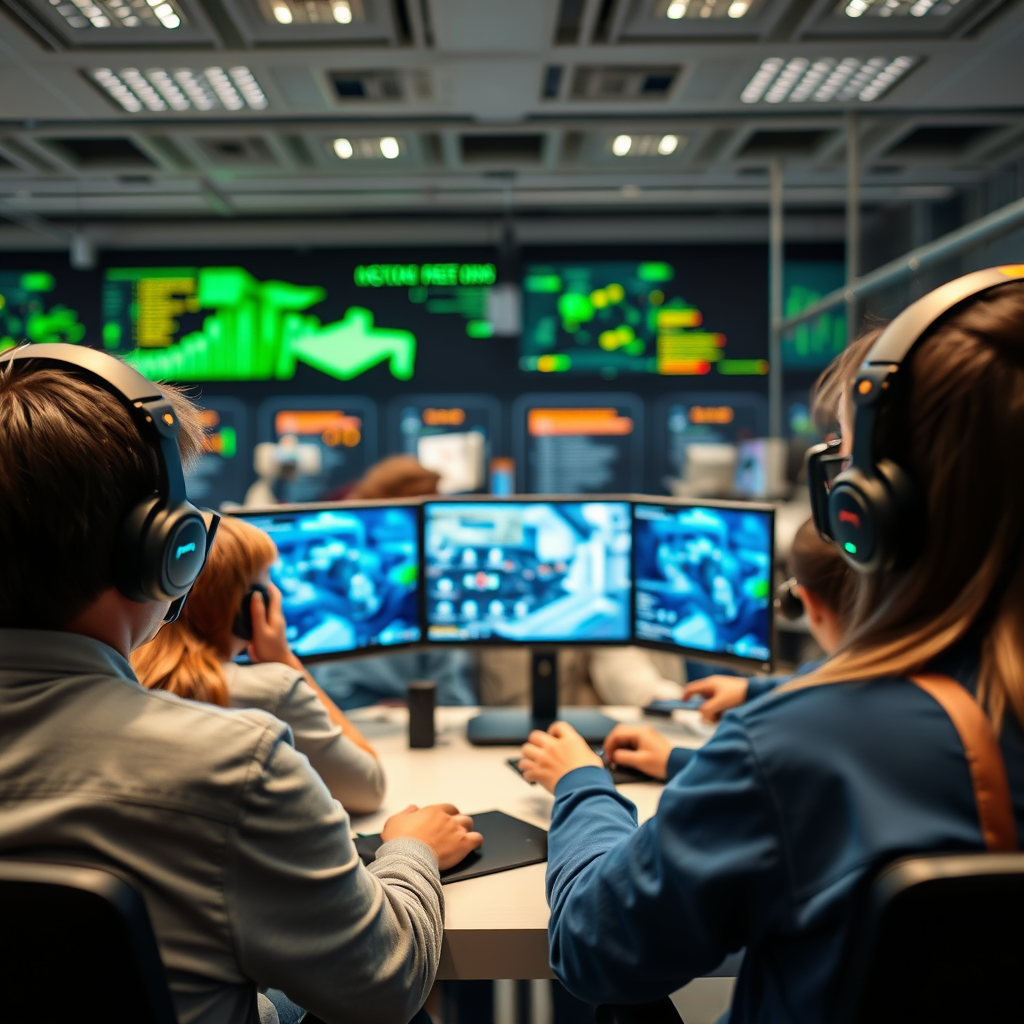
Cloud gaming, often referred to as game streaming, is a method of playing video games via the internet rather than through traditional means, where games are installed on local hardware like consoles or PCs. In cloud gaming, the game runs on remote servers, and the video and audio output is streamed to the player’s device, while the player’s inputs are sent back to the server. This model contrasts sharply with traditional gaming, where all processing power is required on the user’s hardware, limiting the quality and complexity of games based on the user’s equipment.
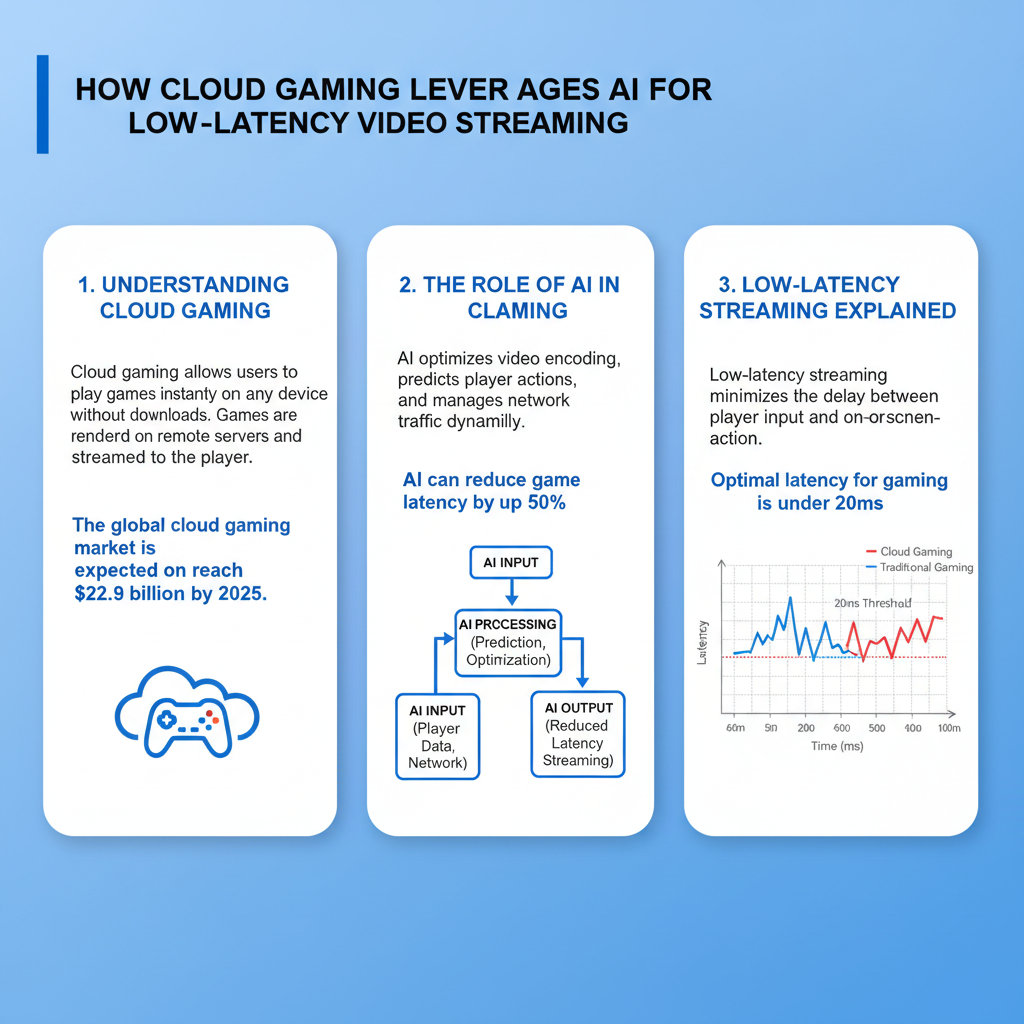
To support cloud gaming, a robust infrastructure is necessary. This includes high-performance servers located in data centers, capable of handling multiple gaming sessions simultaneously. Additionally, a reliable and fast internet connection is crucial, as streaming games demands high bandwidth and low latency to ensure a fluid experience. The combination of these elements creates an environment where players can access cutting-edge games without needing the latest hardware.
The Role of AI in Cloud Gaming
AI algorithms play a pivotal role in enhancing cloud gaming platforms. By analyzing vast amounts of data, AI can optimize performance and streamline the gaming experience. For instance, AI helps manage network traffic by predicting peak usage times and allocating resources accordingly, ensuring that players have a smooth experience even during high-demand periods.
Moreover, AI applications are being integrated into various aspects of game performance. One notable example is dynamic difficulty adjustment, where AI monitors a player’s skill level in real-time and adjusts the game’s difficulty to keep them engaged without becoming frustrated. Additionally, AI can enhance NPC (non-playable character) behaviors, making them more realistic and responsive to player actions, which enriches the entire gaming experience.
Low-Latency Streaming Explained
Low-latency streaming is defined as the ability to transmit data with minimal delay. In gaming, this is critically important because even a fraction of a second can impact gameplay; think about how essential quick reactions are in competitive multiplayer games. A delay in communication between the player and the game can lead to frustrating experiences, such as missed targets or unresponsive controls.
Several factors contribute to latency issues in cloud gaming environments. Network congestion is a major culprit, as more users sharing the same bandwidth can slow down the connection. Additionally, the physical distance between the player and the data center can introduce delays; the farther the data has to travel, the longer it takes for actions to be processed and reflected in the game. Understanding these factors helps in appreciating the significance of AI in addressing latency.
AI Techniques for Reducing Latency
AI employs various techniques to reduce latency in cloud gaming, the most notable being predictive analytics. By analyzing player behavior patterns, AI can anticipate actions before they occur. For example, if a player frequently makes a particular move or decision, the system can prepare the necessary resources in advance, effectively reducing the time it takes for the action to be processed and displayed.
Another effective technique is adaptive bitrate streaming. This method involves adjusting the video quality in real-time based on the player’s internet connection speed. If the connection becomes slower, the AI can automatically lower the video quality to maintain a smooth experience, preventing buffering or lag. Conversely, if the connection improves, the system can enhance the visual quality, ensuring players always have the best possible experience based on their current conditions.
The Impact of AI on Player Experience
AI significantly improves graphics rendering and frame rates, leading to a smoother gaming experience. By optimizing how graphics are processed and displayed, AI can ensure that high-quality visuals are maintained without overwhelming the server or the player’s connection. This is particularly important in fast-paced games, where every frame counts.
Additionally, AI plays a vital role in personalizing gaming experiences based on player preferences. By analyzing gameplay styles and choices, AI can tailor game elements—such as difficulty levels, in-game rewards, and even storylines—to suit individual players. This level of customization not only enhances player enjoyment but also fosters a deeper connection between gamers and the games they play.
Future Trends in AI and Cloud Gaming
As technology continues to evolve, the future of AI in cloud gaming holds exciting possibilities. Predictive modeling could become even more sophisticated, allowing for ultra-responsive gameplay that feels instantaneous, regardless of internet conditions. We might also see advancements in machine learning algorithms that enhance graphics and sound quality dynamically, further immersing players in their virtual worlds.
However, with these advancements come potential challenges. As games become more complex and resource-intensive, maintaining low latency will require continuous innovation in server technology and data transmission methods. Solutions such as edge computing, where data processing occurs closer to the user, may help alleviate some of these challenges by reducing the physical distance between players and servers.
By harnessing the power of AI, cloud gaming is poised to deliver an unparalleled gaming experience with minimal latency. If you’re interested in learning more about cloud gaming or exploring different platforms, start by checking out the latest offerings in the market today!
Frequently Asked Questions
How does AI improve low-latency video streaming in cloud gaming?
AI enhances low-latency video streaming in cloud gaming by optimizing data transmission and dynamically adjusting video quality based on network conditions. Machine learning algorithms analyze user behavior and network performance in real-time, enabling the system to predict and preemptively buffer content. This results in smoother gameplay with minimal lag, providing players with a more immersive experience.
What role does AI play in reducing lag during cloud gaming sessions?
AI plays a crucial role in reducing lag during cloud gaming by employing predictive algorithms that anticipate user input and adjust streaming parameters accordingly. By analyzing player actions and network traffic, AI can minimize the delay between user commands and the corresponding in-game response. This proactive approach helps create a seamless gaming experience, even in high-demand scenarios.
Why is low latency important in cloud gaming, and how can AI help achieve it?
Low latency is essential in cloud gaming because it directly impacts the responsiveness of gameplay; high latency can lead to frustrating delays that disrupt the player’s experience. AI helps achieve low latency by optimizing data routes and managing bandwidth usage in real-time, ensuring that video streams are delivered quickly and efficiently. This results in faster reactions to player inputs and a more enjoyable gaming session.
Which AI technologies are most effective for enhancing cloud gaming performance?
Several AI technologies are particularly effective for enhancing cloud gaming performance, including machine learning algorithms, neural networks, and predictive analytics. These technologies enable systems to learn from user behavior, optimize video compression techniques, and dynamically adjust settings to suit individual network conditions. By leveraging these advanced technologies, cloud gaming providers can deliver high-quality, low-latency experiences to players.
What are the best practices for gamers to ensure low-latency cloud gaming?
To ensure low-latency cloud gaming, gamers should focus on using a stable and high-speed internet connection, preferably through a wired Ethernet connection rather than Wi-Fi. Additionally, choosing gaming platforms that utilize advanced AI technologies can significantly improve performance. Keeping devices updated and minimizing background applications can further enhance gaming responsiveness and reduce potential lag during gameplay.
References
- Cloud gaming
- https://www.sciencedirect.com/science/article/pii/S1877050919310191
- https://www.nytimes.com/2021/01/06/technology/cloud-gaming-ai.html
- https://www.bbc.com/news/technology-55867948
- https://www.techrepublic.com/article/how-ai-is-changing-cloud-gaming/
- https://www.wired.com/story/cloud-gaming-ai-latency/
- https://www.researchgate.net/publication/332143231_Cloud_Gaming_and_AI_The_Future_of_Gaming
- https://www.microsoft.com/en-us/research/publication/ai-and-cloud-gaming/