Displays play a pivotal role in medical imaging and healthcare by enhancing the visualization of critical information, which is essential for accurate diagnosis and effective treatment. From X-ray films to high-definition MRI scans, modern displays bring clarity and detail that empower healthcare professionals to make informed decisions. In this article, we’ll explore the various types of displays used in medical imaging, their impact on diagnosis, the integration with advanced imaging technologies, the importance of calibration, future innovations, and how they are transforming telemedicine.
Types of Displays in Medical Imaging

In the realm of medical imaging, the types of displays used are crucial for ensuring that the images are both clear and precise. The most commonly employed technologies are LCD (Liquid Crystal Display) and LED (Light Emitting Diode), which are favored for their high resolution and brightness. These displays enable radiologists and other medical professionals to see intricate details in images, crucial for accurate interpretations.
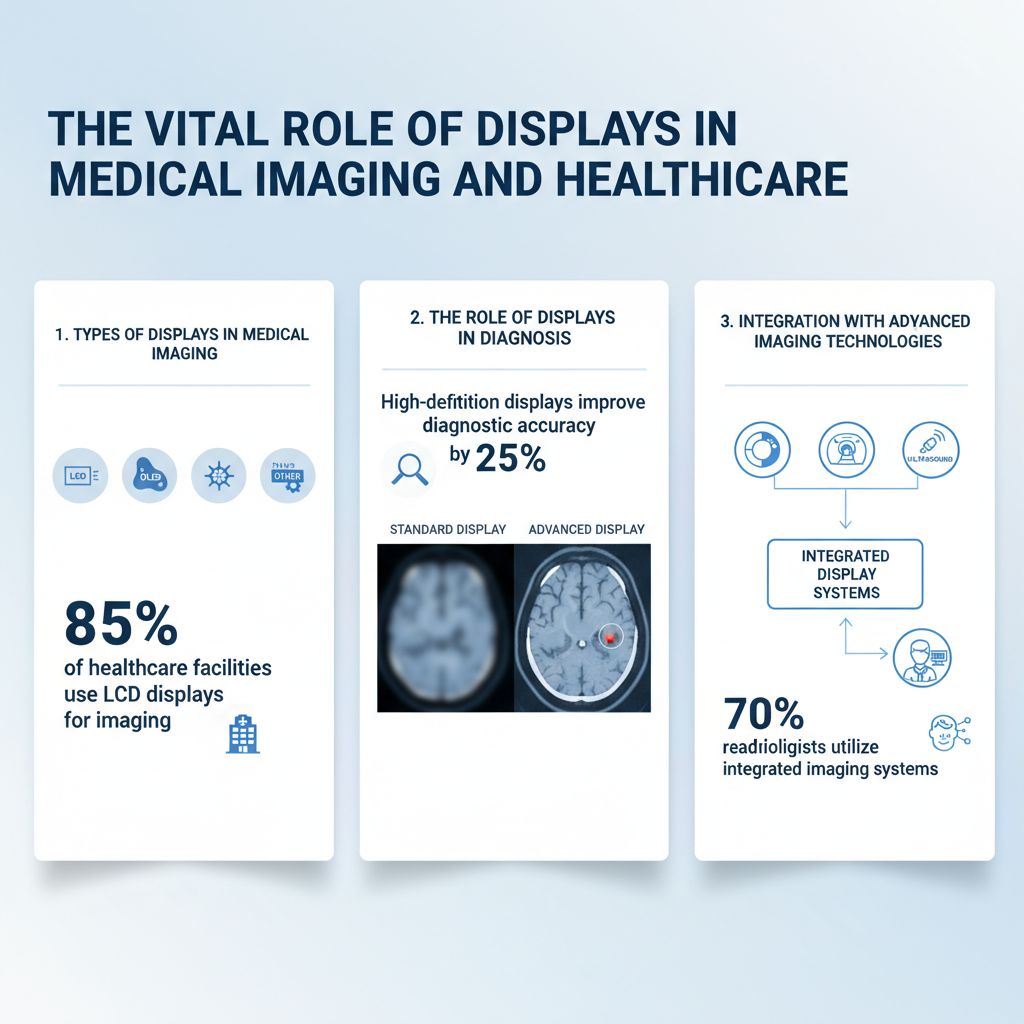
Specialized displays designed for radiology, such as monochrome displays for viewing X-rays, are engineered to enhance contrast and ensure color accuracy. These displays are critical when examining subtle differences in tissue densities or identifying small lesions. For instance, a multi-modality display can combine images from different imaging techniques, such as PET and CT, allowing for a more comprehensive understanding of a patient’s condition.
Furthermore, advancements in display technology have led to the development of high-dynamic-range (HDR) displays that can present a broader range of colors and brightness levels. This capability is particularly important in medical imaging, where the nuances of color can inform diagnosis and treatment plans.
The Role of Displays in Diagnosis

Displays serve as the window through which healthcare professionals visualize complex images, making them invaluable in the diagnostic process. The ability to see precise details allows for the identification of various conditions, from fractures in bones to tumors in soft tissues. Enhanced image quality—achieved through advanced display technologies—significantly reduces the likelihood of misdiagnosis, which can lead to better patient outcomes.
For example, a radiologist reviewing a high-resolution MRI on a calibrated display can detect minute changes in brain structure that may indicate early stages of neurological disease. Conversely, a low-quality display may obscure critical details, potentially leading to a missed diagnosis. This underscores why healthcare providers must prioritize investing in high-quality display systems and maintain them regularly.
Moreover, displays equipped with software tools can facilitate features such as zooming, panning, and even annotating images, allowing healthcare professionals to collaborate more effectively. This interactivity not only enriches the diagnostic process but also fosters better communication among specialists.
Integration with Advanced Imaging Technologies
The synergy between displays and imaging modalities like CT (Computed Tomography), MRI (Magnetic Resonance Imaging), and ultrasound is transforming how healthcare professionals visualize and interpret images. Displays act as the interface between these complex technologies and the healthcare provider, ensuring that the images produced are not only high-quality but also delivered in real-time.
Advanced imaging systems often come equipped with software that enhances display capabilities. For example, 3D reconstruction tools allow radiologists to view cross-sectional images in a three-dimensional format, providing a more intuitive understanding of the anatomical structures involved. This capability is especially beneficial in surgical planning, where surgeons can visualize the exact layout of organs and tissues before operating.
Additionally, the integration of artificial intelligence (AI) in imaging is further enhancing display functionality. AI algorithms can analyze images in real-time, highlighting areas of concern for healthcare providers and providing decision support. This means that displays are not just passive tools; they are becoming active participants in the diagnostic journey.
Importance of Display Calibration
Maintaining the accuracy of medical displays is vital, and regular calibration is an essential practice for ensuring that displays deliver consistent color and brightness. Calibration helps to accommodate variations in display performance over time, which can lead to discrepancies in image interpretation.
Healthcare facilities must adhere to medical standards and regulations, such as those set by the American College of Radiology (ACR) and the Radiological Society of North America (RSNA). These guidelines dictate the calibration frequency and methods necessary to maintain display accuracy. For example, a facility might implement a monthly calibration schedule, using specialized software and hardware to ensure compliance.
Proper calibration not only enhances the reliability of the images but also builds trust in the diagnostic process, both for healthcare professionals and patients. When healthcare providers can rely on the accuracy of their displays, they can make better decisions, ultimately leading to improved patient care and safety.
The Future of Displays in Healthcare
Looking ahead, the future of displays in healthcare is poised for exciting innovations. Technologies like augmented reality (AR) and virtual reality (VR) are beginning to find applications in medical training and surgical procedures. For instance, AR can overlay digital images onto the physical world, helping surgeons visualize critical anatomy during operations, while VR can provide immersive training experiences for medical students.
Moreover, the development of flexible and portable display technologies is likely to enhance accessibility across various healthcare settings. Imagine a lightweight, foldable display that can be easily transported to remote clinics or used in emergency situations. Such innovations could bridge the gap in healthcare access, particularly in underserved areas.
As healthcare continues to embrace telemedicine, the role of displays will only grow in significance. High-quality, portable displays will become crucial in remote consultations, ensuring that healthcare providers can accurately assess patients from a distance. This evolution paves the way for more inclusive healthcare delivery, allowing patients to receive the care they need regardless of their geographical location.
Impact on Telemedicine
In the age of telemedicine, high-quality displays are essential for facilitating remote consultations. Healthcare providers rely on clear and detailed images to accurately assess patients, making it imperative that telemedicine platforms support high-resolution imaging. Displays equipped with advanced features can help clinicians maintain diagnostic accuracy even when not in the same physical space as their patients.
For example, a dermatologist conducting a virtual consultation can examine high-resolution images of a patient’s skin condition, allowing for precise evaluations and treatment recommendations. The clarity of the display, combined with effective communication tools, enhances the overall patient experience and fosters a sense of trust in the remote healthcare process.
Furthermore, as telemedicine continues to evolve, the integration of artificial intelligence and machine learning into display technologies will enhance diagnostic capabilities. Future displays may automatically adjust settings based on the type of image being viewed, ensuring optimal clarity and detail, regardless of the imaging modality.
The impact of displays on telemedicine is profound, allowing for more efficient healthcare delivery, improved patient access, and better health outcomes overall.
Medical imaging and healthcare utilize displays to enhance the clarity and accuracy of critical information, leading to better patient care. As we’ve explored, the types of displays, their roles in diagnosis, and future innovations all play a crucial part in shaping the landscape of healthcare. By staying informed about the latest display technologies and their applications, healthcare professionals can maximize their effectiveness and ultimately improve patient outcomes. Embracing these advancements will not only enhance medical practice but also pave the way for a brighter, more accessible future in healthcare.
Frequently Asked Questions
What types of displays are commonly used in medical imaging and healthcare?
In medical imaging and healthcare, several types of displays are utilized, including LCD (Liquid Crystal Display), OLED (Organic Light Emitting Diode), and LED (Light Emitting Diode) displays. LCD monitors are widely used due to their affordability and good image quality, while OLED displays offer superior contrast and color accuracy, making them ideal for high-resolution imaging tasks. Additionally, specialized medical-grade displays are designed to meet specific standards, ensuring the clarity and precision necessary for diagnostic purposes.
How do display technologies impact the accuracy of medical imaging?
Display technologies play a crucial role in the accuracy of medical imaging by affecting image resolution, color reproduction, and contrast levels. High-quality displays ensure that radiologists and healthcare professionals can see minute details in images such as X-rays, MRIs, and CT scans, which are essential for accurate diagnosis. Poor display quality can lead to misinterpretations, potentially impacting patient care. Therefore, investing in advanced display technologies can significantly enhance diagnostic confidence and patient outcomes.
Why is it important to use calibrated displays in healthcare settings?
Calibrated displays are essential in healthcare settings because they ensure that the images are presented with consistent brightness, contrast, and color accuracy. Calibration helps to minimize discrepancies that can arise from different display technologies, which is crucial for accurate diagnosis and treatment planning. Inconsistent display settings can lead to errors in interpreting medical images, thus impacting clinical decisions. Regular calibration is important to maintain compliance with medical standards and improve patient safety.
Which display features should healthcare professionals prioritize for medical imaging?
Healthcare professionals should prioritize features such as high resolution, wide color gamut, and high dynamic range (HDR) when selecting displays for medical imaging. A high resolution allows for greater detail visualization, while a wide color gamut ensures that the colors in images are represented accurately, which is vital for detecting abnormalities. Additionally, HDR capabilities help in displaying a more extensive range of brightness levels, enhancing the visibility of both dark and bright areas in medical images, leading to better diagnostic accuracy.
What are the best practices for maintaining displays used in healthcare?
Maintaining displays in healthcare involves several best practices, including regular calibration, cleaning, and monitoring for performance issues. Regular calibration should be performed to ensure that the image quality remains consistent and meets medical standards. Displays should be cleaned using appropriate products to prevent damage and ensure optimal visibility. Additionally, healthcare facilities should have monitoring systems in place to detect any performance degradation, allowing for timely maintenance or replacement of displays to ensure continuous high-quality imaging.
References
- Medical imaging
- https://www.ncbi.nlm.nih.gov/pmc/articles/PMC6685139/
- https://www.fda.gov/medical-devices/products-and-medical-procedures/general-hospital-devices-and-supplies/medical-imaging
- Umbilical Cord Blood Transplantation in Children and Adults – The EBMT Handbook – NCBI Bookshelf
- https://radiology.rsna.org/content/early/2020/04/23/radiol.2020200436
- https://www.sciencedirect.com/science/article/pii/S1361841519301829
- https://www.auntminnie.com/index.aspx?sec=def&sub=adv&pag=dis&ItemID=118978
- https://www.healthit.gov/topic/scientific-initiatives/medical-imaging