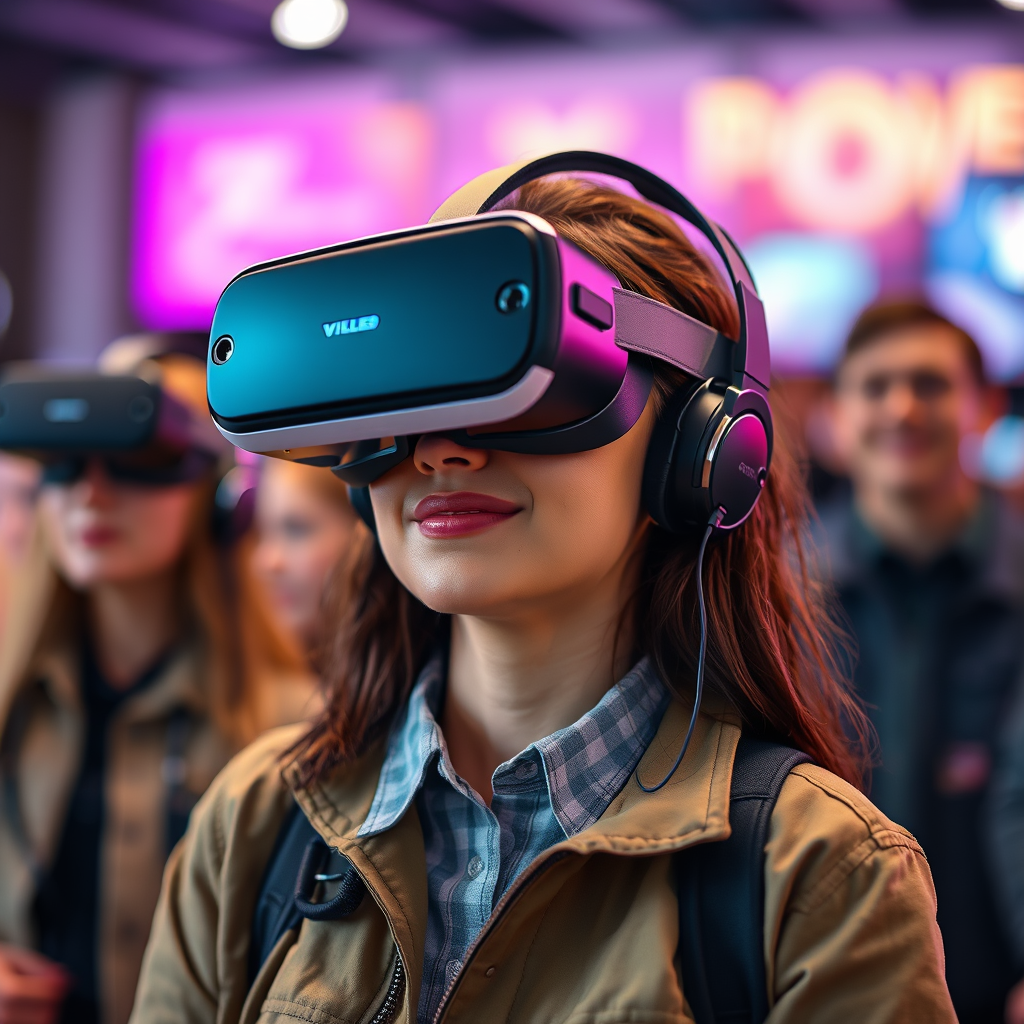

Virtual reality headsets work by immersing the user in a digital environment, utilizing advanced technology to create a three-dimensional experience that can engage multiple senses. These headsets transport users to entirely new worlds or enhance real-world settings, making them an exciting tool for gaming, training, and education. In this article, you’ll learn how these headsets operate, the key components involved, and what makes them a fascinating innovation in today’s tech landscape.
Understanding the Basics of Virtual Reality

Virtual reality (VR) creates a simulated environment that can mimic the real world or create entirely new experiences. This immersive technology allows users to not just observe, but actively participate in a three-dimensional space. By wearing a VR headset, you can feel as if you are actually inside a different universe, whether it’s exploring ancient ruins, flying through space, or engaging in a thrilling game. The magic of VR lies in its ability to engage multiple senses—sight, sound, and often touch or movement—creating a fully immersive experience.
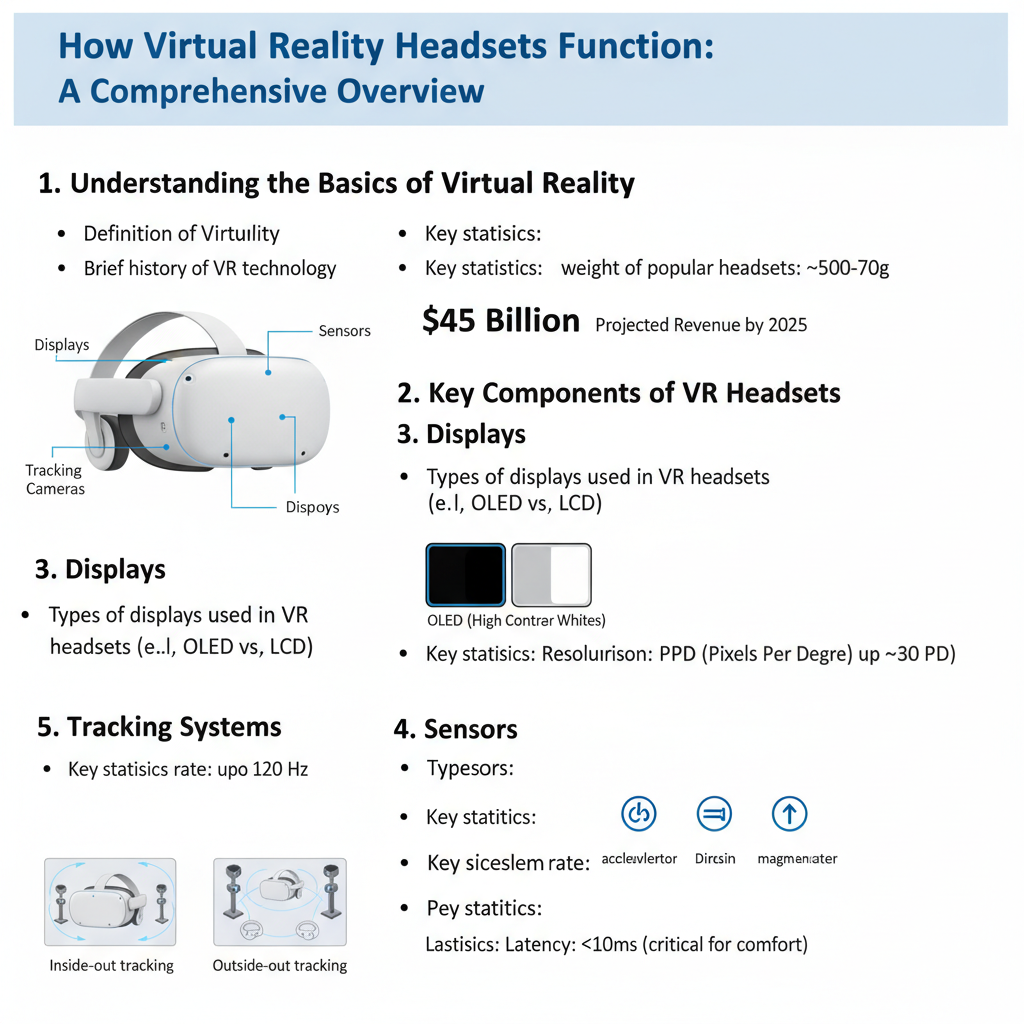
Headsets typically include screens, sensors, and audio systems to enhance the immersive experience. These components work together to provide a seamless transition between the physical environment and the virtual world. The result is a sensation of presence that can be both exhilarating and enlightening.
Key Components of VR Headsets

Displays
Most VR headsets use OLED (Organic Light-Emitting Diode) or LCD (Liquid Crystal Display) screens that provide high resolution and refresh rates for a smooth visual experience. The choice of display technology is crucial, as it directly impacts the clarity and vibrancy of the virtual environment. OLED screens are often favored for their deeper blacks and more vibrant colors, which can make the virtual world feel more lifelike. Resolution is also important; higher pixel counts reduce the “screen door effect,” where users can see the lines between pixels, thus enhancing immersion. For instance, headsets like the Oculus Quest 2 feature resolutions around 1832 x 1920 per eye, enabling users to see details more clearly.
Sensors
Motion sensors are another critical component of VR headsets. They track the user’s head and body movements, allowing for real-time interaction with the virtual environment. This tracking is essential for maintaining the illusion of being present in a different world. Most modern VR headsets incorporate gyroscopes, accelerometers, and magnetometers to detect orientation and movement. This technology ensures that when you turn your head or move your body, the virtual environment responds immediately, creating a seamless experience.
How Tracking Systems Work
Inside-Out Tracking
Inside-out tracking uses cameras mounted on the headset to gauge the position relative to the surroundings. This method is beneficial because it eliminates the need for external sensors, making the setup process easier and more portable. The headset’s cameras analyze the environment and adjust the user’s virtual perspective accordingly. For example, the Microsoft HoloLens employs this technology, allowing users to interact with augmented reality elements without any external hardware.
Outside-In Tracking
On the other hand, outside-in tracking relies on external sensors placed in the environment to monitor the headset’s location and movements. This method can offer more precise tracking since fixed sensors can cover a larger area and provide consistent data. Systems like the HTC Vive use external base stations to track the headset’s position, ensuring that movements are captured accurately even in larger play spaces. This configuration can be particularly useful for multi-user setups or more extensive VR experiences.
The Role of Audio in VR
Audio plays a crucial role in enhancing the realism of virtual reality experiences. Spatial audio technology simulates sound from various directions, creating a more immersive experience. This means that as you turn your head, the sounds in the virtual environment shift accordingly, mimicking how we perceive sound in the real world. High-quality headphones are often integrated or recommended to maximize audio effects, making it easier to hear subtle cues that can enhance gameplay or storytelling. For instance, games like “Half-Life: Alyx” use spatial audio to create tension and excitement, guiding users through their virtual experiences with sound.
The Importance of Controllers and Input Devices
Handheld controllers allow users to interact with virtual objects, providing tactile feedback and enhancing engagement. These devices often feature buttons, triggers, and touchpads, enabling a variety of interactions within the virtual world. For example, the Oculus Touch controllers are designed to track hand movements and gestures, allowing for a more intuitive way to pick up objects or navigate menus. Some systems also support hand tracking, offering a more natural way to manipulate the virtual world without physical controllers. This advancement makes VR experiences feel more personal and immersive, as users can naturally reach out and interact with their surroundings.
Applications of Virtual Reality Technology
Gaming
Gaming is perhaps the most well-known application of virtual reality technology, providing users with interactive and immersive experiences that redefine gameplay. Titles like “Beat Saber” and “The Walking Dead: Saints & Sinners” showcase how VR can transform traditional gaming into something that feels incredibly engaging and physically dynamic. Players can swing virtual lightsabers or fend off zombies, all while feeling as though they are truly inside the game.
Training and Education
Beyond gaming, VR is used in simulations for medical, military, and professional training, allowing users to practice in a risk-free environment. Medical students can perform virtual surgeries, pilots can navigate aircraft in realistic flight simulations, and military personnel can train for combat scenarios without real-world consequences. The immersive nature of VR can enhance learning and retention, making complex subjects more accessible and engaging. For instance, VR training programs have been adopted by various organizations, including the United States Army, to prepare soldiers for real-world situations in a controlled setting.
Challenges and Future Developments in VR
Technical Limitations
Despite its incredible potential, VR technology faces several challenges. Technical limitations, such as motion sickness, can hinder user experience. This issue arises when there is a disconnect between visual input and physical movement, causing discomfort for some users. Additionally, the need for high-performance hardware can be a barrier to widespread adoption, as not everyone has access to the latest gaming rigs or consoles capable of running VR applications smoothly.
Future Innovations
Looking ahead, advances in technology could lead to lighter headsets, improved graphics, and more accessible VR experiences across various fields. Researchers and developers are continuously working on reducing the weight of headsets and improving battery life, which will make prolonged use more comfortable. Furthermore, as the technology matures, we can expect to see enhanced haptic feedback systems that make virtual interactions feel even more realistic. Innovations in wireless technology will likely eliminate the need for cumbersome cables, allowing for greater freedom of movement.
Virtual reality headsets are revolutionary devices that create immersive experiences through complex technology involving displays, sensors, audio, and user interactivity. As the technology continues to develop, it promises exciting applications across multiple industries. Whether you’re a gamer, a professional seeking to enhance your skills, or a curious individual wanting to explore new worlds, VR has something to offer. If you’re curious to dive deeper into the world of VR, consider exploring different headset options or trying out a VR experience at a local venue. The future of virtual reality is bright, and it’s an adventure waiting to be explored!
Frequently Asked Questions
What are the main components of a virtual reality headset?
A virtual reality (VR) headset typically consists of several key components: the display (either LCD or OLED), lenses, sensors, and audio output. The display provides immersive visuals, while lenses help focus the image for each eye, creating a 3D effect. Sensors track the user’s head movements and position in real time, enhancing the sense of presence. Additionally, built-in audio outputs deliver spatial sound, further immersing users in the virtual environment.
How does motion tracking work in virtual reality headsets?
Motion tracking in VR headsets is achieved through a combination of sensors, such as gyroscopes, accelerometers, and external cameras or sensors. These components detect the user’s head movements and orientation, allowing the VR system to adjust the displayed images accordingly. This real-time tracking creates a seamless experience, making users feel as if they are genuinely present in the virtual world, which is crucial for reducing motion sickness and enhancing immersion.
Why do some virtual reality headsets require external sensors?
Some VR headsets require external sensors to improve positional tracking accuracy and to expand the play area. These sensors help detect the user’s movements in three-dimensional space, which is especially beneficial for room-scale VR experiences. By using external sensors, the headset can achieve greater precision in movement tracking, ensuring a smoother and more immersive experience compared to standalone headsets that rely solely on internal sensors.
What is the best virtual reality headset for beginners?
The best virtual reality headset for beginners often depends on individual preferences and budget, but the Oculus Quest 2 is widely recommended. It offers an all-in-one, wireless experience with a user-friendly setup, making it accessible for newcomers. With a robust library of games and apps, and the ability to connect to a PC for more advanced experiences, it provides an excellent introduction to the world of virtual reality without the need for complex configurations.
Which virtual reality headset offers the best resolution and field of view?
As of October 2023, the Varjo Aero is known for offering one of the best resolutions and field of view in the VR market, boasting an impressive resolution of 2880 x 1600 per eye and a 115-degree field of view. This high fidelity is ideal for professional applications, such as simulations and design, where clarity is crucial. However, it comes at a premium price, making it more suitable for enthusiasts and professionals rather than casual users.
References
- Virtual reality
- https://www.sciencedirect.com/science/article/pii/S1877050919313330
- https://www.nasa.gov/feature/nasa-pioneers-new-approaches-to-virtual-reality
- https://www.ncbi.nlm.nih.gov/pmc/articles/PMC7313882/
- https://www.techrepublic.com/article/how-virtual-reality-works/
- https://www.edutopia.org/article/what-virtual-reality-and-how-does-it-work
- https://www.bbc.com/future/article/20200730-how-does-virtual-reality-work
- Frontiers | Long-Term Physical Exercise and Mindfulness Practice in an Aging Population
- https://www.technologyreview.com/2021/05/25/1025093/virtual-reality-how-it-works/
- https://www.verywellmind.com/what-is-virtual-reality-5195732