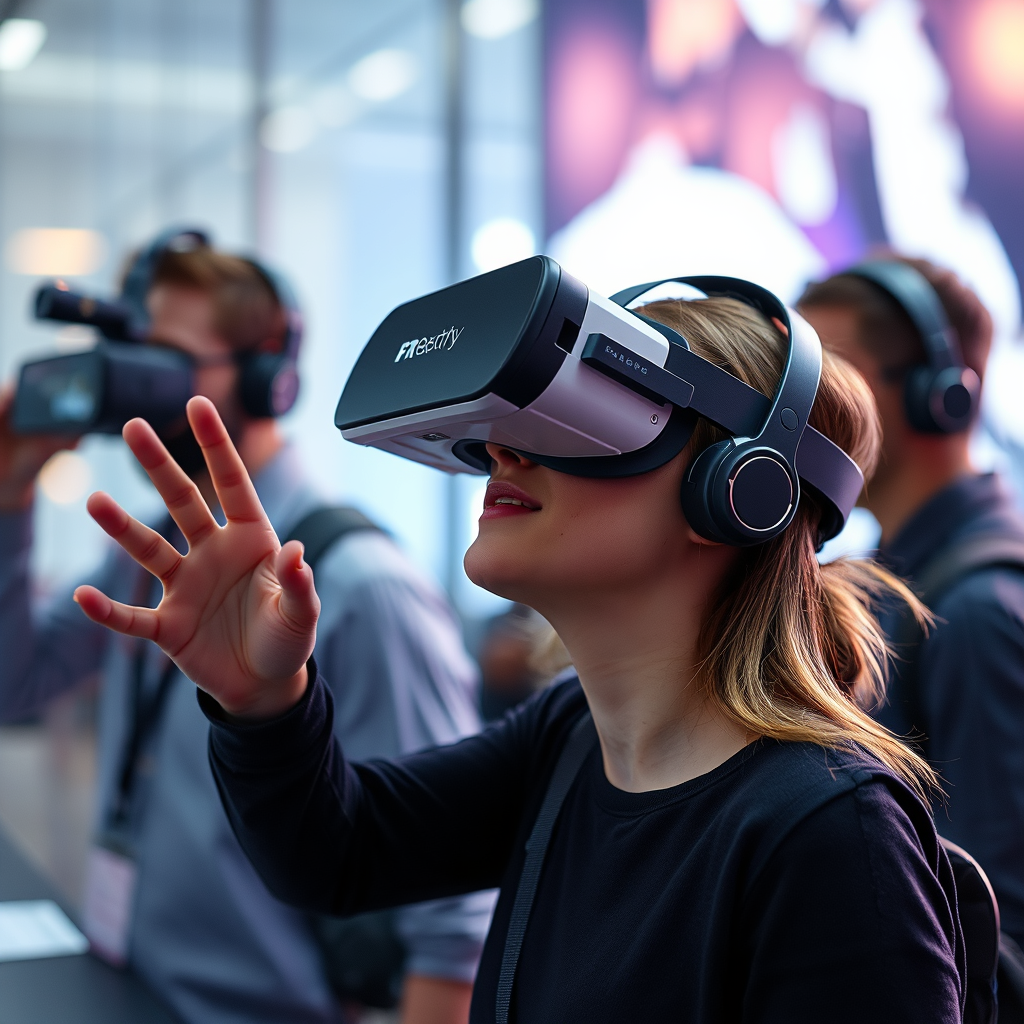

Virtual reality (VR) headsets significantly improve immersion through high-resolution displays, offering users a more engaging and lifelike experience. By providing sharper images and a wider field of view, these headsets allow for deeper interaction with virtual environments. In this article, we’ll explore how resolution, refresh rates, and field of view contribute to the immersive experience of VR.
The Importance of High Resolution in VR
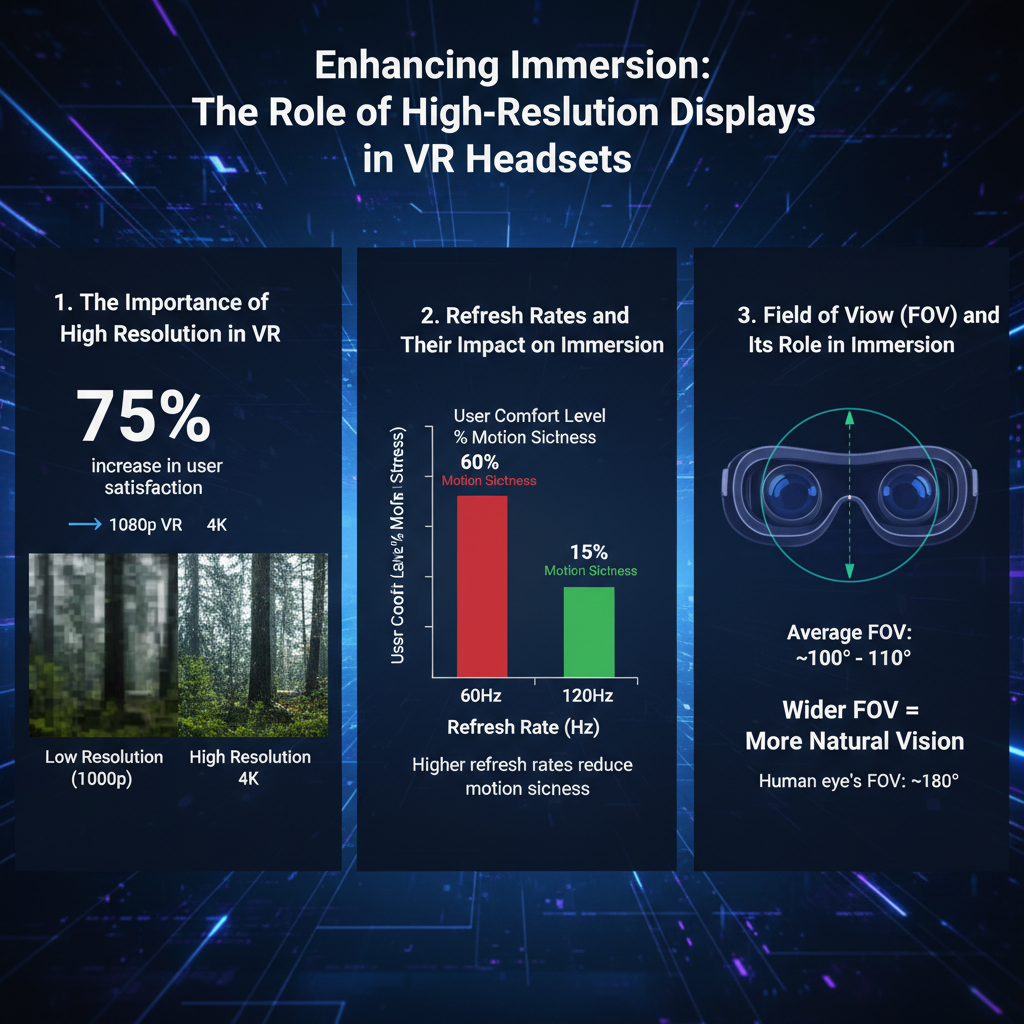
High resolution in VR is pivotal for creating a believable and engaging virtual environment. When VR headsets boast higher pixel density, they produce clearer images that significantly reduce the infamous “screen-door effect,” where users can see the grid of lines between pixels. This effect can be distracting, breaking the sense of immersion. For instance, the latest VR headsets, like the Meta Quest Pro, utilize advanced display technology that offers 1800 x 1920 pixels per eye, resulting in an impressive visual clarity that pulls users deeper into their virtual experiences.
Moreover, enhanced detail in environments elevates the realism of virtual worlds. Imagine exploring a meticulously crafted medieval castle or a vibrant alien planet—high-resolution displays allow users to appreciate intricate textures, colors, and lighting effects that make these worlds feel authentic. The ability to see subtle details, like the grain of wood or the shimmer of water, not only enhances enjoyment but also encourages a more profound emotional connection to the virtual experience.
Refresh Rates and Their Impact on Immersion
Refresh rates play a crucial role in the immersion factor of VR. A higher refresh rate, typically above 90 Hz, results in smoother motion, which is essential for comfortable viewing. When the visuals in a VR headset update rapidly, they create a fluid experience that closely mimics real-life motion. For example, headsets like the Valve Index can reach refresh rates of up to 144 Hz, which helps to minimize motion sickness—an issue that can arise when there’s a disconnect between what the user is seeing and what their body feels.
Additionally, lower latency in frame rendering is vital for improving user responsiveness and overall experience. When users turn their heads or move around, they need to see those changes reflected on-screen almost instantaneously. High refresh rates contribute to this immediacy, making interactions feel more natural and intuitive. As a result, users can engage more freely and confidently with the virtual world, whether they’re battling opponents in a fast-paced game or simply exploring a tranquil environment.
Field of View (FOV) and Its Role in Immersion
Field of view (FOV) is another critical factor that affects how immersive a VR experience is. A wider FOV allows users to have a more natural visual perspective, closely resembling how we see the world around us. Most modern VR headsets offer a FOV of around 100 to 110 degrees, which provides a panoramic view that enhances the sense of presence.
This wider FOV significantly enhances situational awareness and depth perception within virtual spaces. For example, when playing a VR shooting game, players can see more of their surroundings, allowing them to react quickly to threats or opportunities. This aspect is crucial in ensuring that users feel fully immersed, as they can glance around their environment without feeling restricted or confined, ultimately leading to a richer gaming experience.
The Role of Display Technology in VR
The type of display technology used in VR headsets can have a profound impact on the overall experience. Two of the most common display technologies are OLED and LCD. OLED displays often provide superior contrast and color accuracy, which greatly enhances the visual quality of virtual environments. Colors appear more vibrant, and blacks are deeper, allowing for a more striking and immersive experience. The PlayStation VR2, for example, utilizes OLED technology to create stunning visuals that truly pull users into the action.
Moreover, the importance of adaptive refresh rates and variable resolution cannot be understated. These features dynamically adjust the display settings based on the content being viewed or the user’s movements, which helps to maintain a smooth experience while optimizing performance. Headsets that can intelligently scale their resolution and refresh rate, like the HP Reverb G2, ensure that users enjoy a seamless experience without sacrificing image quality or frame rate.
User Experience and Content Design
High-resolution displays enable developers to create richer, more engaging content tailored for virtual reality. Developers are now leveraging these capabilities, incorporating intricate details and realistic textures that heighten the immersion factor. Games like “Half-Life: Alyx” and immersive experiences like “The Walking Dead: Saints & Sinners” showcase how high-resolution displays can enhance storytelling and gameplay, drawing users into their narratives in ways that traditional media cannot.
However, optimizing VR content for different headset specifications is crucial. Not all users will have access to the latest and greatest headsets, so developers must ensure that their content can perform well across a range of devices. This includes considering the balance between graphics quality and performance, ensuring that all users can enjoy a fulfilling experience regardless of their hardware.
Future Trends in VR Display Technology
As we look to the future, emerging technologies like microLED hold great promise for enhancing immersion in VR. MicroLED displays offer incredible brightness, contrast, and color accuracy while maintaining a compact size. This technology could allow for even higher resolutions and refresh rates, further blurring the lines between virtual and reality.
Predictions for advancements in display technology suggest that VR experiences will continue to evolve and improve significantly. As manufacturers refine their approaches to display resolution and refresh rates, users can expect increasingly lifelike environments that respond intuitively to their movements and actions. This continuous improvement will undoubtedly enhance user engagement and enjoyment, paving the way for VR to become an integral part of everyday life.
By understanding how VR headsets leverage high-resolution displays to improve immersion, users can make more informed choices about their VR experiences. As technology continues to evolve, staying updated on these advancements will enhance your enjoyment and engagement with virtual reality. With the right headset and content, the possibilities for immersive experiences are limitless, promising a future where VR is not just a pastime but a transformative way to experience the world.
Frequently Asked Questions
How do high-resolution displays in VR headsets enhance the immersive experience?
High-resolution displays in VR headsets significantly enhance immersion by providing sharper and clearer visuals, which reduces the screen-door effect often seen in lower-resolution models. This clarity allows users to see finer details in the virtual environment, making experiences feel more realistic and engaging. The improved pixel density also enables smoother graphics, contributing to a more seamless interaction with virtual elements.
What are the benefits of using a VR headset with a high-resolution display for gaming?
A VR headset with a high-resolution display offers gamers an unparalleled level of detail, making environments and characters more lifelike. This heightened realism can enhance gameplay by providing improved spatial awareness and depth perception, allowing players to react more intuitively to in-game events. Additionally, high-resolution displays can reduce motion blur and improve frame rates, creating a smoother overall gaming experience.
Why is the resolution of a VR headset important for reducing motion sickness?
The resolution of a VR headset plays a crucial role in minimizing motion sickness by ensuring that the visuals are clear and stable. Higher resolution decreases the likelihood of visual artifacts, which can cause discomfort and disorientation. When users can see a crisp and immersive environment, their brains receive more accurate visual feedback, resulting in a more comfortable experience and less likelihood of nausea during use.
Which VR headsets currently offer the highest resolution displays on the market?
As of October 2023, some of the VR headsets boasting the highest resolution displays include the Valve Index, the HP Reverb G2, and the Meta Quest Pro. These devices feature resolutions that surpass 2000 x 2000 pixels per eye, providing an exceptional level of detail and image clarity. Users seeking the most immersive experiences should consider these headsets for their advanced display technologies and enhanced visual performance.
How does the refresh rate of a VR headset interact with high-resolution displays for a better experience?
The refresh rate of a VR headset, combined with its high-resolution display, is essential for delivering a fluid and immersive experience. A higher refresh rate (e.g., 90Hz or above) paired with high-resolution visuals ensures that the images are updated quickly and smoothly, reducing motion blur and improving responsiveness during movement. This synergy allows for a more realistic feel in virtual environments, making interactions more engaging and enjoyable while also minimizing the risk of motion sickness.
References
- Virtual reality
- https://www.sciencedirect.com/science/article/pii/S1877050919311892
- https://www.wired.com/story/the-future-of-vr-gaming/
- https://www.nytimes.com/2021/09/14/technology/virtual-reality-gaming.html
- https://www.bbc.com/future/article/20200721-how-vr-is-changing-the-way-we-learn
- https://www.nature.com/articles/s41598-020-72392-6
- https://www.techcrunch.com/2022/01/12/virtual-reality-marketing-and-the-future-of-immersive-experiences/