


When considering audio equipment, understanding how wattage in speakers impacts sound quality is key to achieving the best listening experience. Higher wattage typically means louder volumes and can improve sound clarity, but it’s important to remember that wattage is just one piece of the puzzle. This article will explore how wattage interacts with other factors to influence overall audio performance, helping you make informed decisions about your sound system.
Understanding Speaker Wattage
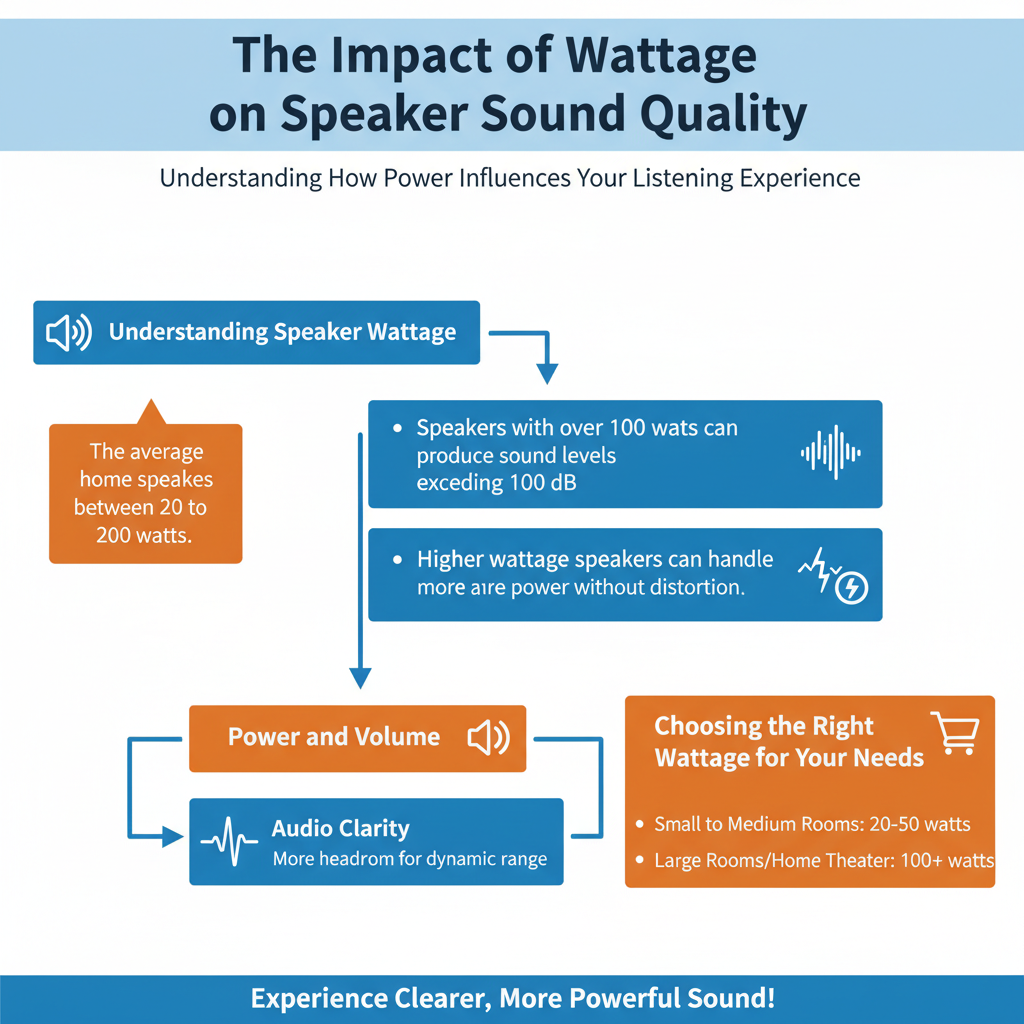
Wattage, in the context of audio systems, refers to the amount of power that a speaker can handle. This power is crucial because it directly influences how much sound a speaker can produce without distortion. In simple terms, wattage indicates the potential output of a speaker: the higher the wattage, the more power it can manage. For instance, a speaker rated at 100 watts can deliver a more powerful sound than a 50-watt speaker. However, it’s essential to recognize that this power output is not the only determinant of sound quality. A well-designed 50-watt speaker can outperform a poorly designed 100-watt speaker in terms of sound clarity and fidelity.
The Relationship Between Wattage and Volume
One of the most noticeable effects of higher wattage is its ability to generate louder sound levels without introducing distortion. When speakers operate at their maximum capacity, they can start to clip, which distorts the sound. However, with a higher wattage rating, speakers can produce the same volume at lower power levels, reducing the likelihood of clipping and maintaining sound integrity.
Moreover, impedance plays a significant role in this relationship. Impedance, measured in ohms, refers to the resistance a speaker provides to the electrical current flowing from an amplifier. A speaker with lower impedance requires more power to produce sound, which is where wattage becomes critical. For example, a 4-ohm speaker may require an amplifier capable of delivering more wattage to achieve the same volume level as an 8-ohm speaker. Understanding the interplay between wattage and impedance is vital for achieving the desired loudness and sound quality.
Impact of Wattage on Sound Clarity
Sufficient wattage is essential not just for volume but also for clarity. When speakers are underpowered, they can distort sound, particularly at higher volumes. This distortion, known as clipping, occurs when the speaker attempts to reproduce sound that exceeds its power handling capacity. With adequate wattage, speakers can produce cleaner, more detailed sound across a broader frequency range.
Moreover, matching the wattage of the amplifier to the speaker’s design is crucial. For instance, high-efficiency speakers are designed to produce more sound with less power, meaning they can perform well with lower wattage. On the other hand, speakers that are built to handle heavier bass might require higher wattage to achieve their full potential. This synergy ensures that the sound remains rich and detailed, providing an enriched listening experience.
Other Factors Influencing Sound Quality
While wattage plays a significant role in sound quality, it’s not the only factor at play. Speaker design, including the materials used and the enclosure type, significantly influences sound performance. For example, speakers made from high-quality materials like Kevlar or treated wood can enhance sound clarity and warmth, regardless of wattage.
Acoustics also play a crucial role. The environment in which you place your speakers can affect how sound travels and is perceived. A room with hard surfaces might cause echoes and reverberations, masking the sound quality. Additionally, the quality of the audio source and the amplification used can dramatically impact the overall sound experience. A high-quality audio file played through a powerful yet mismatched speaker system may yield subpar results. Therefore, considering all components—source, amplification, speaker design, and wattage—is essential to achieve the best sound quality.
Choosing the Right Wattage for Your Needs
Selecting the right wattage depends largely on your listening environment and intended use. For a small room, speakers with lower wattage (around 20-50 watts) may suffice, providing enough volume without overwhelming the space. Conversely, larger rooms or home theater systems may benefit from speakers rated at 100 watts or more to fill the space adequately.
For different use cases, specific recommendations can be made. For home theater systems, look for speakers with higher wattage ratings to ensure immersive sound during action-packed movie scenes. If you’re considering portable speakers for outdoor use, a balance between wattage and battery life becomes essential. Generally, a portable speaker with 20-30 watts can provide a satisfying listening experience without draining the battery too quickly.
Common Misconceptions About Speaker Wattage
There are several myths surrounding speaker wattage that can lead to confusion. One common misconception is that higher wattage always equates to superior sound quality. While higher wattage can contribute to louder volumes and potentially better clarity, it does not automatically mean that a higher wattage speaker will sound better than a lower wattage one. The quality of the components, design, and matching with the amplifier are equally, if not more, important.
Another misunderstanding is the belief that all amplifiers can drive any speaker effectively, regardless of wattage. This is not true; mismatched wattage can lead to suboptimal performance and even damage to the equipment. Understanding the relationship between your amplifier and speakers is crucial for optimizing your sound system.
Final Thoughts on Wattage and Sound Quality
Wattage is an integral part of the sound quality equation, but it is far from the only factor. To achieve the best audio experience, one must consider all components of an audio setup, including speaker design, acoustic environments, and the quality of the audio source. By understanding how wattage interacts with these elements, you can make informed decisions that will enhance your listening experience.
As you embark on upgrading or building your audio system, remember to assess your unique needs and preferences. Whether you’re a casual listener or an audiophile, a well-rounded approach to selecting your equipment will lead to the best possible sound quality. Happy listening!
Frequently Asked Questions
How does speaker wattage affect sound quality?
Speaker wattage significantly impacts sound quality by influencing how much power the speaker can handle. Higher wattage allows the speaker to produce louder sounds without distortion, which is crucial for maintaining clarity at high volumes. However, wattage alone doesn’t determine sound quality; the design and materials of the speaker also play essential roles in audio performance.
What is the ideal wattage for home speakers?
The ideal wattage for home speakers varies based on the size of the room and listening preferences. For smaller rooms, speakers with 50-100 watts per channel are often sufficient, while larger spaces may benefit from 100-200 watts. It’s important to balance wattage with speaker sensitivity, as higher sensitivity speakers require less power to achieve the same volume level, enhancing overall sound quality.
Why do some low-wattage speakers sound better than high-wattage ones?
Some low-wattage speakers may sound better than their high-wattage counterparts due to factors like design quality, driver materials, and tuning. High-quality components and engineering can create a more balanced and pleasing sound, even at lower power levels. Additionally, low-wattage speakers are often optimized for specific listening environments, which can enhance their overall performance.
Which type of music benefits most from higher wattage speakers?
Higher wattage speakers are particularly beneficial for genres that require high dynamic range and volume, such as rock, electronic, and orchestral music. These genres often incorporate intense crescendos and intricate details that can distort if the speakers lack sufficient power. For listeners who enjoy these styles, investing in higher wattage speakers can enhance the audio experience by providing clearer, more powerful sound reproduction.
How can I determine if my speakers have enough wattage for my setup?
To determine if your speakers have enough wattage for your setup, consider both your amplifier’s power output and the speaker’s power handling capacity. Check the specifications of both components; ideally, the amplifier should match or slightly exceed the speaker’s recommended wattage for optimal performance. Additionally, if you experience distortion or a lack of volume during playback, it may indicate that your speakers need more wattage to perform effectively.
References
- Electric power
- https://www.soundonsound.com/techniques/speaker-wattage-what-does-it-mean
- A Blog for Audio, Home Theater, and More | Klipsch
- https://www.audioholics.com/tutorials/understanding-speaker-wattage
- https://www.researchgate.net/publication/292830342_The_impact_of_wattage_on_sound_quality_in_audio_speakers
- https://www.cnet.com/home/audio/what-is-wattage-and-how-does-it-affect-your-speakers/
- https://www.psaudio.com/pauls-posts/the-wattage-myth/
- https://www.loudspeakers101.com/understanding-wattage-and-speaker-efficiency
- https://www.npr.org/sections/itsallpolitics/2017/03/02/517958363/the-surprising-sound-of-wattage-in-speakers


