

AI-powered voice user interfaces (VUIs) are revolutionizing the way we engage with displays, making our interactions more intuitive and efficient. By allowing users to control devices with simple voice commands, these technologies enhance accessibility and streamline our daily tasks. As this technology evolves, understanding its significance and potential can empower both consumers and developers to leverage these advancements effectively.
Understanding AI-Powered Voice UIs

AI voice user interfaces are systems that allow users to interact with devices using spoken language, converting voice commands into actionable responses. These interfaces utilize natural language processing (NLP) and machine learning algorithms to interpret user intent, ensuring that interactions feel fluid and natural. Unlike traditional interfaces, which often require users to navigate through menus and buttons, voice-driven interactions eliminate these barriers, enabling a hands-free experience. Imagine asking your smart TV to play your favorite show or adjusting the volume just by speaking—this is the convenience that AI-powered voice UIs bring to the table.
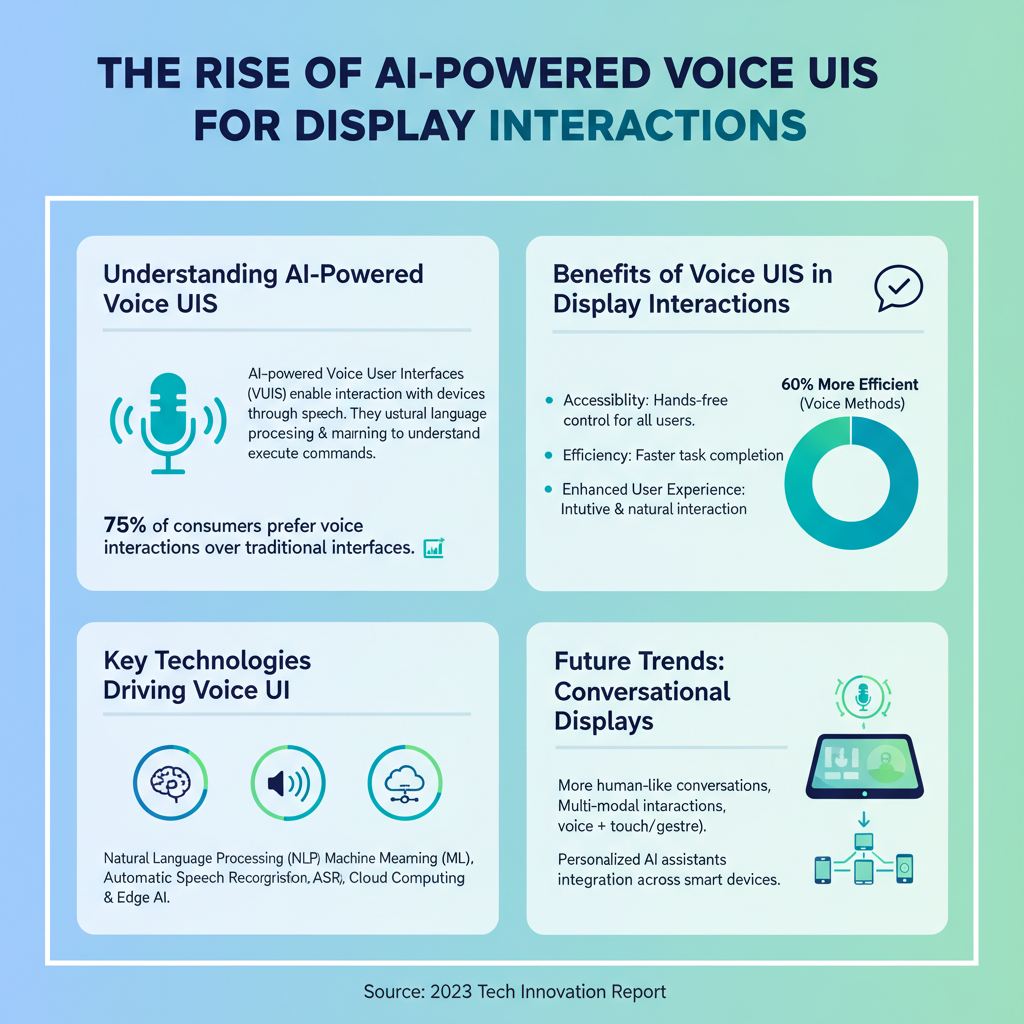
In contrast to traditional interfaces, which are often rigid and limited by the physical design of buttons and screens, voice UIs offer a more dynamic and adaptable way to interact. While a typical remote control requires users to understand its layout and functionality, a voice interface responds to natural speech patterns, creating a more user-friendly experience. This shift not only enhances usability but also caters to a broader audience, including those who may struggle with conventional interfaces.
The Benefits of Voice UIs in Display Interactions

One of the most significant advantages of voice UIs is the enhanced accessibility they provide, particularly for users with disabilities. For instance, individuals with mobility impairments can control devices without needing to physically interact with screens or buttons. Voice technology enables these users to engage with displays in a way that was previously challenging, promoting inclusivity in technology.
Moreover, voice UIs significantly improve the efficiency and speed of user interactions. Instead of navigating through multiple layers of menus, users can simply vocalize their requests, which often leads to faster task completion. For example, instead of scrolling through a long list of apps on a smart TV, a user can simply say, “Play Stranger Things,” and the device will execute the command in seconds. This kind of efficiency not only saves time but also enhances the overall user experience, making technology feel more responsive and aligned with our daily rhythms.
Key Technologies Driving Voice UI Adoption
The rise of AI-powered voice UIs is largely due to advancements in natural language processing (NLP), which enables machines to understand and respond to human language in a meaningful way. NLP algorithms are becoming increasingly sophisticated, allowing systems to interpret various accents, dialects, and even colloquialisms. This capability is crucial for creating a user-friendly experience, as it ensures that a diverse range of users can effectively communicate with their devices.
Machine learning also plays a pivotal role in understanding user intent. By analyzing vast amounts of voice data, machine learning algorithms can identify patterns and improve their predictive capabilities over time. For instance, if you frequently ask your smart assistant about the weather in the morning, it may start to proactively provide you with weather updates without needing to be prompted. This level of personalization enhances the user experience, making interactions feel more intuitive and tailored to individual preferences.
Real-World Applications of Voice UIs
AI-powered voice UIs are already making waves in various sectors, with consumer electronics being one of the most visible examples. Smart TVs and home assistants like Amazon Echo and Google Home are at the forefront of this trend. Users can easily navigate through channels, find content, or even control smart home devices by simply speaking. The convenience of voice commands allows for a seamless integration of technology into everyday life, providing a glimpse into how voice UIs can shape our future.
In addition to the consumer market, voice UIs are finding applications in industries like healthcare and automotive. In healthcare, doctors and nurses can use voice recognition technology to update patient records or access medical information hands-free, allowing them to focus more on patient care. Meanwhile, in the automotive sector, voice UIs are enhancing safety by allowing drivers to control navigation and music without taking their hands off the wheel. These applications demonstrate the versatility of voice UIs and their potential to transform various aspects of our lives.
Challenges in Implementing Voice UIs
Despite their many benefits, the implementation of voice UIs does come with challenges. One common issue is the misinterpretation of commands, which can lead to frustration for users. For instance, if a voice assistant mishears a command due to background noise or unclear pronunciation, it may execute an unintended action, disrupting the user experience. Developers must continue to refine voice recognition systems to minimize these errors and create a more reliable interaction.
Privacy concerns also loom large in discussions about voice technology. With devices constantly listening for commands, users may worry about how their voice data is collected and used. Companies need to address these concerns transparently by implementing robust data protection measures and allowing users to control their privacy settings. Ensuring user trust will be essential for the widespread adoption of voice UIs.
The Future of Voice UIs in Display Technology
Looking ahead, the future of voice UIs in display technology appears promising. Experts predict advancements in voice recognition accuracy, with systems becoming increasingly adept at understanding context and emotional nuances in speech. This evolution could lead to more natural conversations between users and devices, allowing for a richer interactive experience.
Additionally, the potential for multi-modal interactions combining voice and touch is an exciting frontier. Imagine a scenario where a user can verbally command a device while simultaneously using touch to refine their choices on a screen. This synergy between different interaction modalities can create a more engaging and efficient user experience, appealing to various preferences and contexts.
The rise of AI-powered voice UIs is significantly reshaping display interactions, offering numerous benefits while also presenting challenges. As technology continues to advance, staying informed about these trends is vital for leveraging their full potential. Embrace the future of user interaction by exploring and implementing voice technology in your own projects. By doing so, you can enhance accessibility, improve efficiency, and create a more intuitive experience for users, paving the way for a more connected and user-friendly digital landscape.
Frequently Asked Questions
What is an AI-powered voice UI, and how does it enhance display interactions?
An AI-powered voice UI (User Interface) is a technology that allows users to interact with devices or applications using voice commands, leveraging natural language processing and machine learning. This enhances display interactions by providing a more intuitive and hands-free way to navigate content, access information, and control devices, ultimately improving user experience and accessibility for individuals with varying needs.
How can businesses benefit from implementing AI-powered voice UIs in their applications?
Businesses can significantly benefit from AI-powered voice UIs by increasing user engagement, enhancing customer satisfaction, and streamlining operations. By incorporating voice interactions, companies can facilitate quicker access to services and information, reduce the learning curve for users, and create a more personalized experience, leading to higher retention rates and potential revenue growth.
Why is the rise of AI-powered voice UIs important for accessibility in technology?
The rise of AI-powered voice UIs is crucial for accessibility as it provides an alternative interaction method for individuals with disabilities or those who may find traditional interfaces challenging. By enabling voice commands, technology becomes more inclusive, allowing users with visual impairments, motor disabilities, or even cognitive challenges to navigate applications and devices more easily, thereby fostering equal access to digital resources.
What are the best practices for designing an effective AI-powered voice UI for display interactions?
To design an effective AI-powered voice UI, it’s essential to ensure clarity and simplicity in voice commands, provide contextual feedback, and use natural language processing to understand varied speech patterns. Additionally, it’s important to incorporate user testing to refine interactions, maintain a conversational tone, and ensure that the system can handle diverse accents and dialects, ultimately resulting in a user-friendly experience that meets the audience’s needs.
Which industries are most likely to adopt AI-powered voice UIs for display interactions in the near future?
Industries such as healthcare, retail, automotive, and home automation are at the forefront of adopting AI-powered voice UIs for display interactions. In healthcare, voice interfaces can assist professionals in documenting patient information efficiently, while in retail, they can enhance the shopping experience through hands-free navigation. The automotive sector is also integrating voice controls for safer driving experiences, and smart home devices are increasingly reliant on voice UIs for user convenience.
References
- Voice user interface
- https://www.sciencedirect.com/science/article/pii/S235286482100123X
- https://www.bbc.com/news/technology-55209145
- https://www.theguardian.com/technology/2021/dec/14/the-promise-of-voice-technology
- https://www.nytimes.com/2020/10/07/technology/voice-assistants-privacy.html
- https://www.microsoft.com/en-us/research/publication/voice-user-interfaces-in-the-next-decade/
- https://www.itu.int/en/ITU-T/focusgroups/ai/Pages/default.aspx
- https://www.pewresearch.org/internet/2021/12/08/the-future-of-voice-technology/