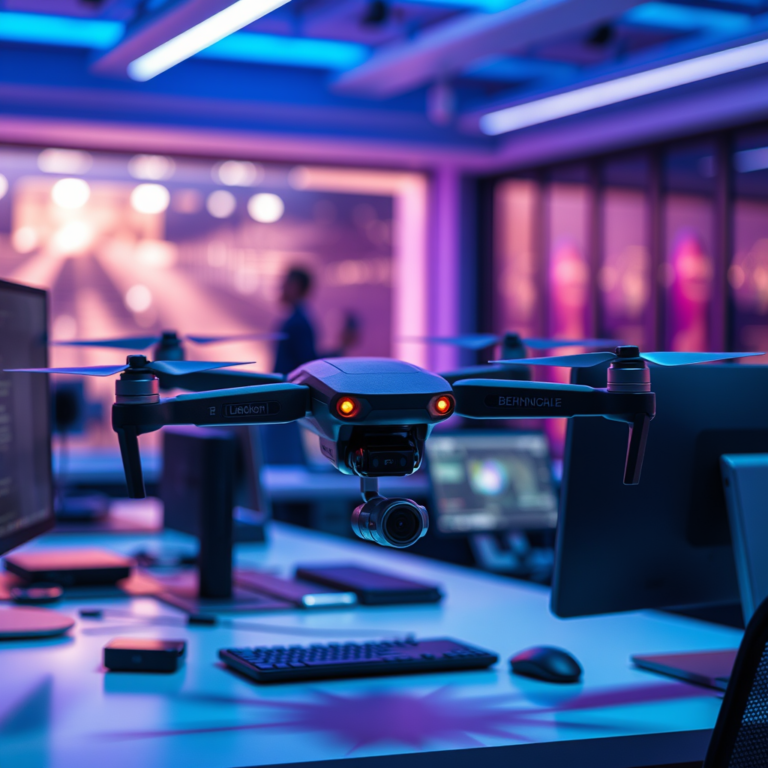
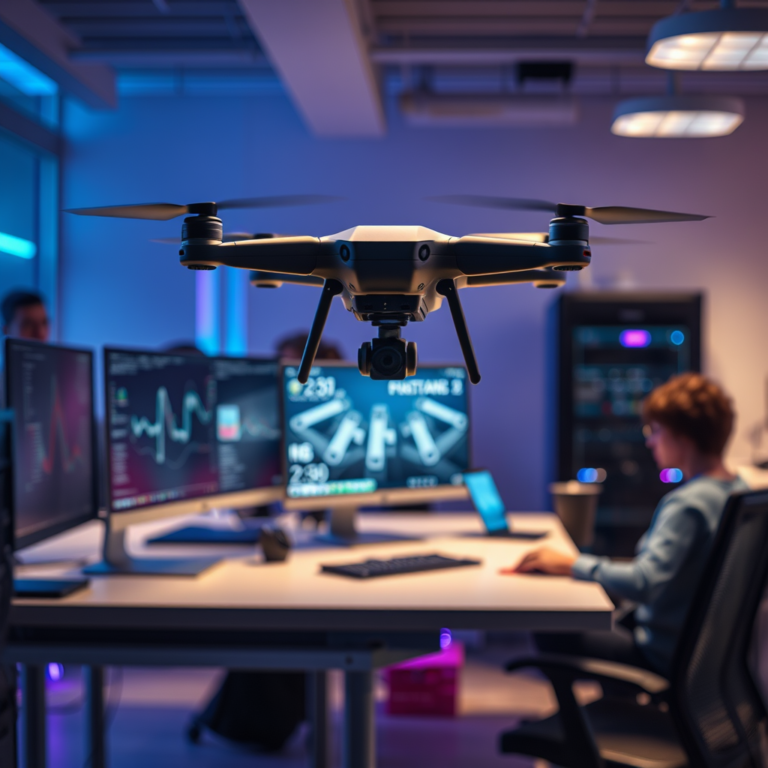
AI plays a crucial role in analyzing drone video footage by automating data extraction, enhancing image quality, and providing actionable insights. This technology enables faster processing, improved accuracy, and the ability to extract meaningful patterns from vast amounts of visual data. In this article, you’ll discover how AI transforms drone footage analysis and its various applications across industries.
Understanding AI and Drone Technology
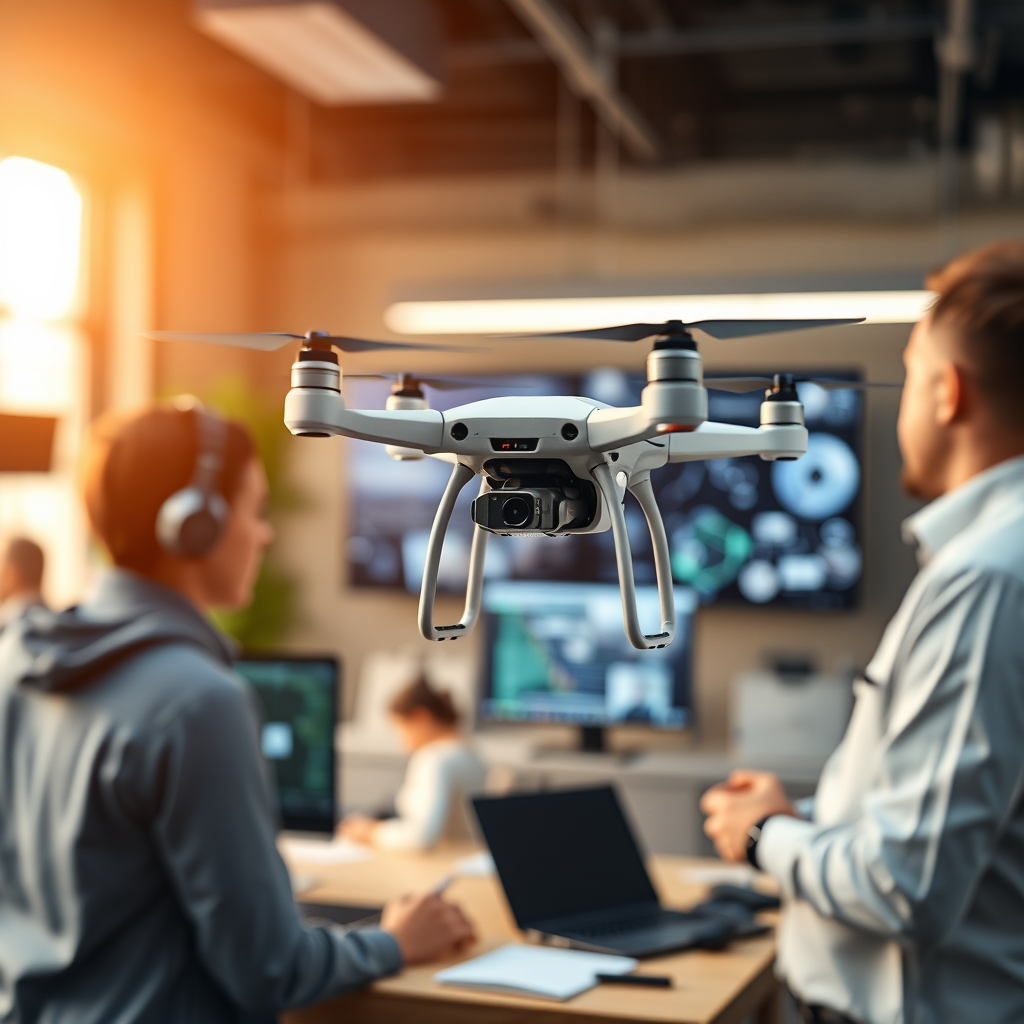
Artificial Intelligence (AI) refers to the simulation of human intelligence in machines programmed to think and learn. In the context of drone technology, AI enhances the capabilities of drones by enabling them to process and analyze video footage autonomously. Drones are equipped with high-resolution cameras that capture stunning visuals from various altitudes, making them ideal for a range of applications, from aerial photography to agricultural monitoring. The combination of AI and drone capabilities allows for real-time analysis of video data, providing insights that would be time-consuming and labor-intensive if done manually.
Modern drones can capture stunning high-definition video footage, offering crystal-clear images that are essential for effective analysis. This footage can be used in various industries, such as agriculture, construction, and emergency response, to monitor conditions, assess damages, or even document events. By integrating AI, drones can enhance these videos further, making them not just tools for capturing data but also for interpreting it in meaningful ways.
Benefits of AI in Video Analysis

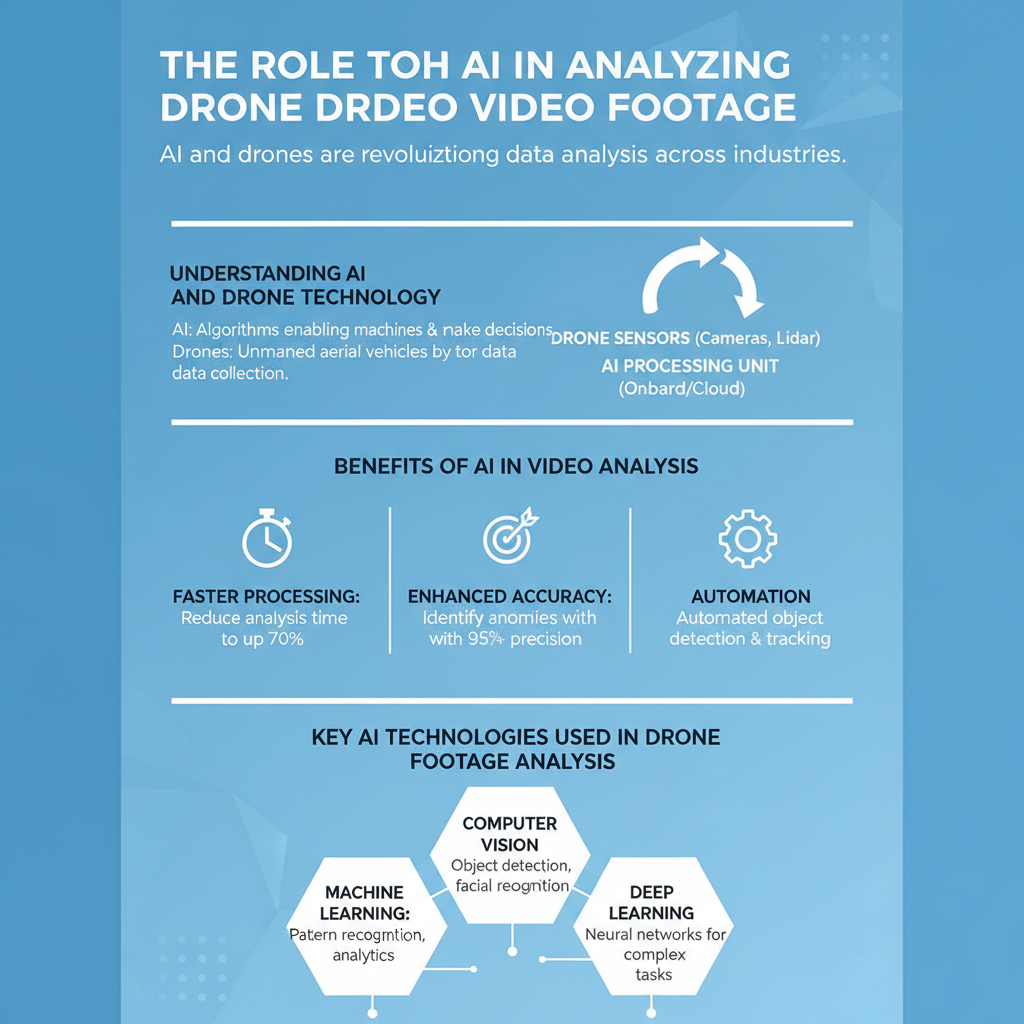
One of the primary benefits of AI in drone video analysis is speed. AI systems can process vast amounts of video data significantly faster than human analysts. This speed is particularly crucial in time-sensitive situations, such as disaster response, where every second counts. For example, AI can quickly analyze footage from a drone surveying a flooded area, identifying locations that require immediate assistance and relaying this information to rescue teams in real-time.
In addition to speed, AI also brings enhanced accuracy to video analysis. Machine learning algorithms are designed to learn from vast datasets, which allows them to reduce human error and provide precise analysis. For instance, in agriculture, AI can analyze drone footage to identify crop diseases or nutrient deficiencies with greater accuracy than a human eye could achieve. This precision not only saves time but also leads to better decision-making based on clear, actionable insights.
Key AI Technologies Used in Drone Footage Analysis
Two key technologies play a pivotal role in the analysis of drone footage: computer vision and deep learning.
Computer vision is a field of AI that enables machines to interpret and make decisions based on visual data. In the context of drone video analysis, computer vision algorithms can automatically identify objects, events, and anomalies in video footage. For example, a drone equipped with computer vision technology can scan an area and detect unauthorized vehicles on a construction site, alerting managers to potential security breaches.
Deep learning, a subset of machine learning, further enhances recognition capabilities through the use of neural networks. These networks are designed to mimic the way the human brain processes information, allowing for improved data understanding. In drone applications, deep learning can refine the analysis of complex visual data, such as identifying specific species of plants in an agricultural field or determining the structural integrity of a building from aerial footage. The nuanced understanding provided by deep learning algorithms leads to more informed decisions based on the data collected.
Applications of AI-Driven Drone Video Analysis
AI-driven drone video analysis has a wide range of applications across various industries.
In agriculture, drones equipped with AI analyze crop health by capturing and processing images that reveal the condition of plants. Farmers can quickly identify areas needing attention, optimize water usage, and apply fertilizers only where necessary, leading to significant resource savings and increased yield. For example, a vineyard owner can use drone footage to monitor grape ripeness, enabling timely harvesting and maximizing quality.
In disaster response, the role of AI becomes even more pronounced. Drones can provide real-time aerial footage of disaster-stricken areas, allowing emergency responders to assess damage and coordinate rescue efforts effectively. AI algorithms can analyze this footage to identify blocked roads, collapsed buildings, and other critical information, making the response process more efficient and saving lives. For instance, after an earthquake, drones can quickly scan the affected areas, sending back analysis that helps first responders prioritize their efforts.
Challenges and Limitations of AI in Drone Video Analysis
Despite its numerous benefits, AI in drone video analysis is not without its challenges and limitations. One of the primary concerns revolves around data privacy. The use of drones equipped with cameras raises questions about surveillance and data collection practices, particularly in urban areas. Striking a balance between utilizing drone technology for beneficial purposes and respecting individual privacy rights remains a significant challenge.
Technical limitations also pose hurdles for effective AI analysis. Variability in video quality, due to factors such as weather conditions and camera settings, can affect AI performance. For instance, footage captured during poor lighting conditions may hinder the ability of AI algorithms to accurately identify objects or assess the environment. Continuous improvement in technology and training datasets is essential to address these limitations and enhance the reliability of AI analyses in diverse scenarios.
Future Trends in AI and Drone Video Analysis
The future of AI and drone video analysis looks promising, with several trends emerging that will shape the landscape. Advancements in AI algorithms are expected to lead to improved analysis capabilities, enabling even more sophisticated interpretations of video data. For instance, the development of more robust neural networks could allow for better object recognition and classification, making drone analyses even more reliable.
Moreover, the integration of AI with other technologies, such as the Internet of Things (IoT), is likely to create smarter data utilization strategies. By connecting drones with IoT devices, real-time data from sensors can be analyzed alongside video footage, providing a holistic view of environments. This synergy will open up new possibilities for applications in smart cities, environmental monitoring, and beyond, making drone technology an even more valuable asset across industries.
As technology continues to evolve, it’s crucial for businesses and individuals to stay updated with these advancements. Exploring AI solutions tailored to specific needs in drone applications can lead to innovative approaches and significant improvements in efficiency and effectiveness.
In summary, AI is revolutionizing the way we analyze drone video footage, providing faster, more accurate, and actionable insights across various industries. From agriculture to disaster response, the applications of AI-driven drone analysis are vast and transformative. However, challenges such as data privacy and technical limitations must be addressed to maximize the potential of this technology. By staying informed about future trends and advancements, we can harness the power of AI to enhance our use of drones and improve outcomes in many fields.
Frequently Asked Questions
What are the benefits of using AI for analyzing drone video footage?
The benefits of using AI for analyzing drone video footage include enhanced accuracy, efficiency, and the ability to process large volumes of data quickly. AI algorithms can identify patterns, detect anomalies, and classify objects within the footage, which is invaluable for industries such as agriculture, construction, and surveillance. This automation reduces the time spent on manual analysis and allows professionals to focus on strategic decision-making based on insights derived from the data.
How does AI improve the accuracy of drone video analysis?
AI improves the accuracy of drone video analysis through machine learning techniques, which allow models to learn from vast datasets and enhance their ability to recognize specific features over time. By utilizing computer vision and deep learning algorithms, AI can distinguish between different objects and assess their characteristics with high precision, minimizing human error. This capability is particularly useful in applications like search and rescue, where accurate identification of targets is crucial.
Why is real-time analysis of drone footage important in various industries?
Real-time analysis of drone footage is important because it enables immediate decision-making and timely responses to critical situations. For example, in agriculture, farmers can receive instant feedback on crop health, allowing them to act quickly to address issues such as pests or irrigation needs. In construction, real-time insights help project managers monitor progress and resources effectively, ultimately leading to better project management and reduced costs.
What are the best AI tools for analyzing drone video footage?
Some of the best AI tools for analyzing drone video footage include Pix4D, DroneDeploy, and Skycatch, each offering unique features tailored to various industries. Pix4D is known for its advanced photogrammetry capabilities, while DroneDeploy excels in mapping and 3D modeling. Skycatch focuses on construction and industrial applications, providing real-time data analysis that enhances workflow efficiency. Choosing the best tool depends on specific business needs and the type of analysis required.
Which industries benefit the most from AI-driven drone video analysis?
Several industries benefit significantly from AI-driven drone video analysis, including agriculture, construction, mining, environmental monitoring, and public safety. In agriculture, AI helps optimize crop management through detailed aerial assessments. The construction industry utilizes AI to monitor project progress and ensure safety compliance. In mining, AI aids in surveying and resource management, while environmental organizations use it for habitat monitoring and conservation efforts. Public safety agencies rely on drone footage for search and rescue operations and disaster response.
References
- https://www.nasa.gov/feature/nasa-s-unmanned-aircraft-systems-integration-in-the-national-airspace-system-project
- https://www.researchgate.net/publication/342123456_Applications_of_Drones_in_Agriculture_Using_Machine_Learning_Techniques
- https://www.sciencedirect.com/science/article/pii/S2352146519301854
- https://www.wired.com/story/using-ai-drones-video-analysis/
- https://www.bbc.com/news/technology-54127040
- https://www.nist.gov/news-events/news/2021/02/researchers-using-ai-drones-analyze-environmental-impact
- https://www.esa.int/Applications/Observing_the_Earth/Copernicus/Sentinel-2/Sentinel-2_and_Drones_for_Earth_Observation
- https://www.mdpi.com/2504-446X/4/1/9
- Characteristics of academic publications, preprints, and registered clinical trials on the COVID-…
- https://www.unm.edu/~drone/AI-Drone-Video-Analysis.pdf