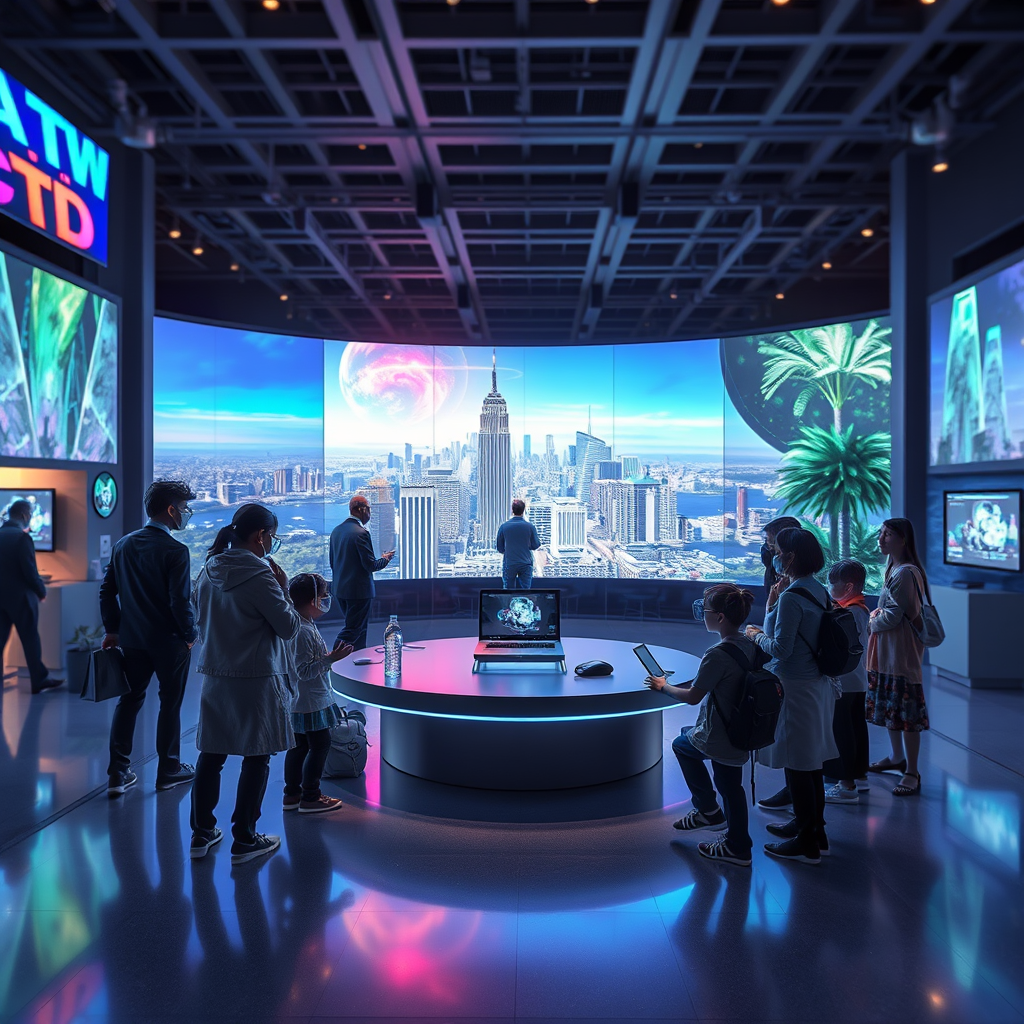

Holographic displays are revolutionizing the way we interact with virtual worlds by offering immersive experiences that traditional screens simply can’t match. By allowing users to engage with digital content in a three-dimensional space, these displays create a sense of realism and dynamism that enhances virtual interactions. In this article, we will delve into how holographic displays function within virtual environments, their diverse applications, and their significant potential impact across various industries.
Understanding Holographic Displays

Holographic displays are captivating because they create three-dimensional images using the interference of light. This technology allows viewers to perceive depth, making the digital content feel lifelike. Unlike traditional 2D screens that present flat images, holographic displays can project images that appear to float in mid-air, enabling users to walk around and view them from different angles. This immersive quality is what makes holographic displays particularly exciting.
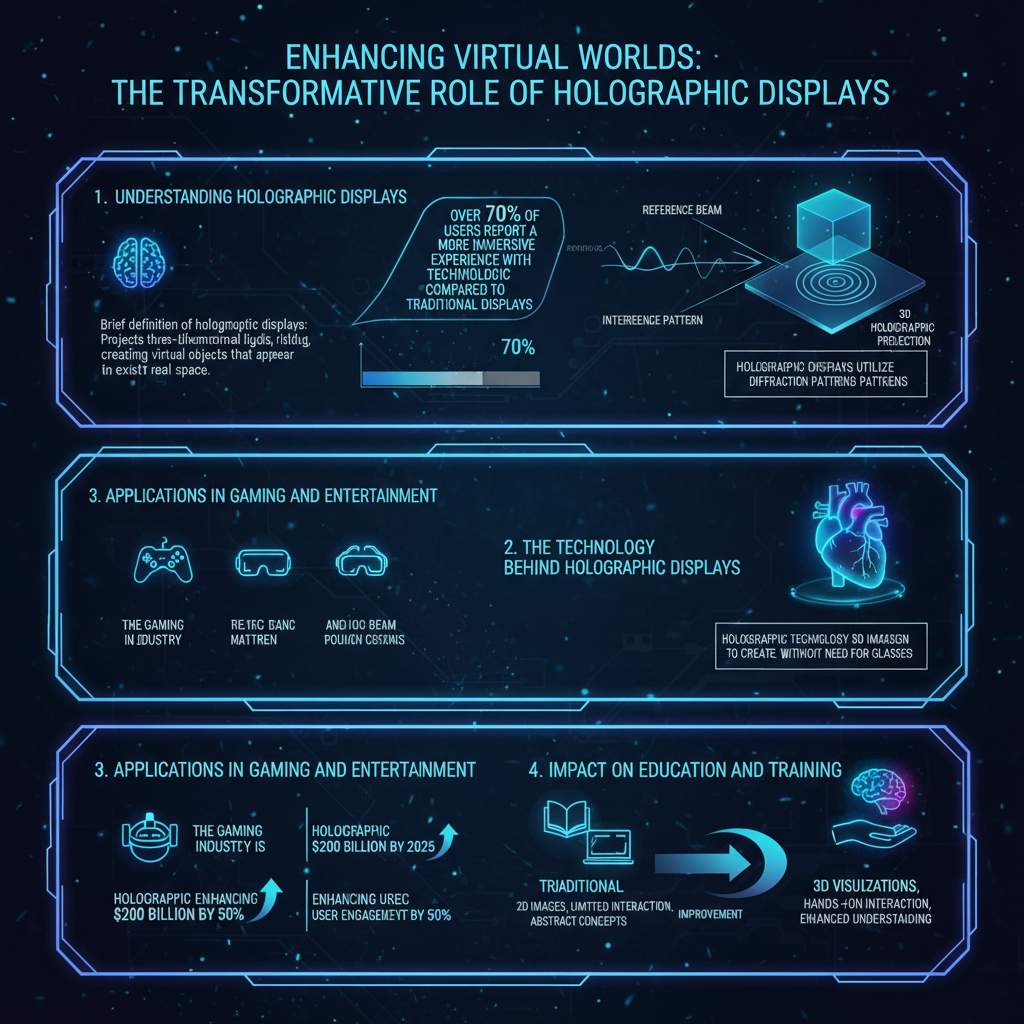
Furthermore, many modern holographic displays are interactive, meaning users can manipulate digital objects as if they were physical entities. Imagine reaching out to grab a virtual object, rotate it, or even move it around in real-time! This interactivity is crucial in making virtual experiences more engaging, whether it’s in gaming, education, or training environments. By breaking the boundaries of flat screens, holographic displays invite users to dive deeper into digital worlds, leading to richer and more meaningful experiences.
The Technology Behind Holographic Displays
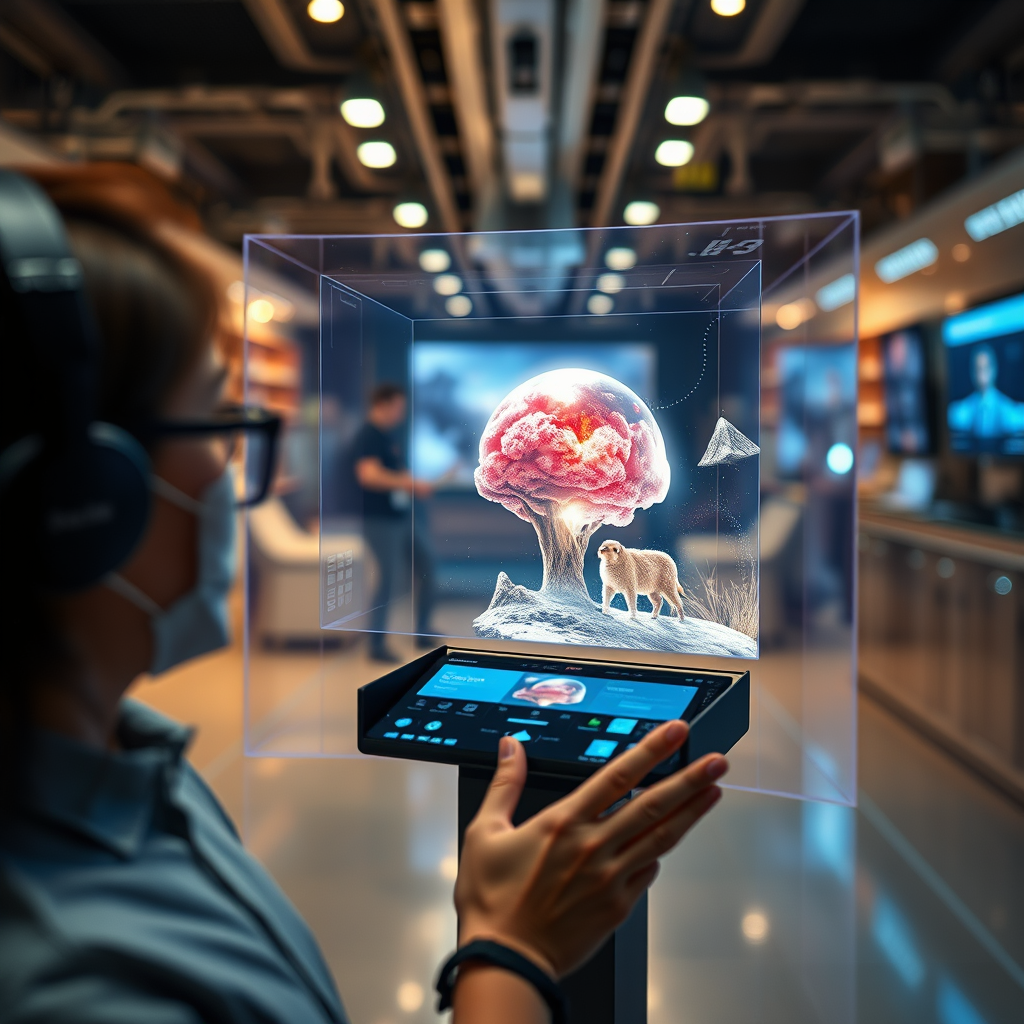
The technology underpinning holographic displays is fascinating and complex. Key advancements include laser-based systems and digital light processing (DLP) technologies that enable high-quality visuals. Lasers can create incredibly precise light patterns that form the basis of holograms, while DLP uses micro-mirrors to project images, allowing for a wide range of colors and details. These technologies work in tandem to produce stunning visual outputs that can captivate users.
Moreover, the rise of augmented reality (AR) and virtual reality (VR) has been a significant driving force behind the development of holographic display technology. AR blends digital elements with the real world, while VR immerses users in entirely digital environments. Both fields rely heavily on holographic displays to enhance user engagement. For instance, companies like Microsoft with their HoloLens are pushing the boundaries of what’s possible, allowing users to interact with holograms in a mixed-reality environment, which is an exciting glimpse into the future of digital interaction.
Applications in Gaming and Entertainment
One of the most exciting areas where holographic displays have made a notable impact is in gaming and entertainment. Gamers are always on the lookout for more immersive experiences, and holographic displays deliver just that. Imagine stepping into a game where the characters and environments leap off the screen and into your living room. Holographic displays can enhance gameplay by providing rich, interactive environments that respond to users’ movements and actions, making the experience feel more like a real-life adventure.
In the realm of entertainment, holographic displays are being utilized in innovative ways, such as live performances and interactive storytelling. Artists can project holograms of themselves or their creations on stage, providing audiences with a unique visual experience that traditional performances can’t replicate. For example, the late rapper Tupac Shakur famously “performed” at Coachella 2012 as a hologram, wowing fans and sparking discussions about the future of live music. This blend of technology and art captivates audiences and opens up new avenues for storytelling, making it an exciting area to watch.
Impact on Education and Training
Holographic displays are also transforming education and training, providing powerful tools for visualizing complex concepts in three dimensions. Traditional teaching methods often rely on flat images and text, which can limit understanding. However, with holographic displays, educators can bring subjects to life. For instance, in a biology class, students can visualize the anatomy of the human body in 3D, allowing them to explore organs and systems interactively. This hands-on learning approach helps to cement knowledge and engage students more effectively.
In training simulations, particularly in fields like healthcare and aviation, holographic displays offer a safe, controlled environment for practice. Medical students can perform virtual surgeries, gaining experience without the pressures of real-life consequences. Similarly, pilots can train in realistic flight simulators that use holographic technology, preparing them for a range of scenarios. The potential for holographic displays to enhance skills and knowledge retention in educational settings is immense, making them a game-changer in the field.
Future Trends in Holographic Displays
As we look to the future, several exciting trends are emerging in the realm of holographic displays. One significant trend is improved portability and integration with wearable technology. Companies are working on compact holographic displays that can be worn as glasses or headsets, making the technology more accessible and convenient for everyday use. Imagine walking down the street and seeing holographic directions projected in front of you, guiding you to your destination!
Moreover, the potential for widespread adoption of holographic displays spans various industries, including healthcare, architecture, and real estate. In healthcare, for instance, surgeons could use holographic displays to visualize patient data and anatomy during operations. In architecture, clients could walk through virtual models of buildings before they are constructed, providing invaluable insights into design and functionality. The versatility of holographic displays promises to reshape how we interact with technology in our daily lives.
Challenges and Limitations
Despite their exciting potential, holographic displays face several challenges and limitations that must be addressed for broader acceptance. One major hurdle is the high cost associated with developing and implementing this technology. Current holographic systems can be prohibitively expensive, which limits their accessibility to consumers and smaller businesses. As technology advances and production costs decrease, we can hope for more affordable options in the future.
User comfort and accessibility are also concerns that need to be addressed. Prolonged use of holographic displays can lead to discomfort or eye strain, which may deter users from fully embracing the technology. Moreover, ensuring that holographic displays are accessible to individuals with disabilities is crucial for wider adoption. Designers and engineers must prioritize user experience to create systems that are comfortable and inclusive for everyone.
In summary, holographic displays are pivotal in enhancing virtual worlds by providing immersive experiences that engage users on multiple levels. As the technology continues to evolve, it will likely find applications across various sectors, transforming how we interact with digital content. By staying informed about the latest advancements in holographic technology, you can better understand its potential benefits for your industry or interests. The future is bright for holographic displays, and it will be exciting to see how they shape our digital interactions in the years to come!
Frequently Asked Questions
What are holographic displays and how do they function in virtual worlds?
Holographic displays are advanced visual technologies that project 3D images into space, allowing viewers to see depth and perspective without the need for 3D glasses. In virtual worlds, these displays function by manipulating light to create realistic representations of digital environments, enhancing user immersion and interaction. This technology relies on principles of holography and optics to render images that can be viewed from multiple angles, making it a powerful tool in gaming, training simulations, and virtual reality applications.
How do holographic displays enhance user experience in virtual environments?
Holographic displays significantly enhance user experience in virtual environments by providing a more immersive and interactive experience. Users can engage with holographic objects in a way that feels natural and intuitive, as they can walk around and interact with 3D models as if they were real. This depth of engagement helps to improve learning outcomes in educational settings and increases emotional connection in gaming, making the experience not only more enjoyable but also more effective.
Why are holographic displays considered the future of virtual reality?
Holographic displays are considered the future of virtual reality because they offer a level of realism and interaction that traditional displays cannot match. By allowing users to perceive and manipulate 3D images as if they were tangible objects, holographic technology opens up new possibilities for applications in fields such as education, medicine, and entertainment. As technology advances and becomes more accessible, it is likely to revolutionize how we interact with digital content, making experiences more engaging and lifelike.
What are the best applications of holographic displays in virtual worlds?
The best applications of holographic displays in virtual worlds include gaming, design visualization, education, and medical training. In gaming, they create more engaging environments and lifelike interactions, while in design visualization, they allow architects and engineers to present their ideas in a 3D format that clients can easily comprehend. In education, holographic displays can bring complex subjects to life, and in medical training, they provide realistic simulations for practice without the risks associated with real-life procedures.
Which companies are leading the development of holographic display technology for virtual worlds?
Several companies are at the forefront of developing holographic display technology for virtual worlds, including Microsoft with its Hololens, Magic Leap, and Looking Glass Factory. Microsoft’s Hololens is particularly notable for its mixed reality capabilities, allowing for seamless integration of digital content into the physical world. Magic Leap focuses on spatial computing, while Looking Glass Factory specializes in holographic displays designed for creators, making these companies pivotal in shaping the future of virtual reality experiences.
References
- Holography
- https://www.sciencedirect.com/science/article/pii/S1369702119302092
- https://www.techrepublic.com/article/holographic-displays-are-the-future-of-virtual-reality/
- https://www.bbc.com/future/article/20200511-the-holograms-that-could-replace-video-calls
- https://www.ncbi.nlm.nih.gov/pmc/articles/PMC7129925/
- https://www.technologyreview.com/2021/04/06/1021453/holograms-virtual-reality-augmented-reality/
- https://www.researchgate.net/publication/341123456_Holographic_displays_for_virtual_reality
- Deep learning for large scale MRI-based morphological phenotyping of osteoarthritis | Scientific …
- https://www.cnbc.com/2022/10/05/facebook-parent-meta-holographic-displays.html
- https://www.itu.int/en/ITU-T/focusgroups/ai4good/Pages/holographic-displays.aspx