

The future of live streaming is set to be transformative, driven by cutting-edge technology and changing audience preferences. As we navigate through advancements in interactivity, content creation, and monetization, it’s clear that both creators and viewers will enjoy a richer experience. In this article, you’ll discover the key trends shaping live streaming, how platforms are adapting, and what it means for content creators and viewers alike.
The Rise of Interactive Streaming

One of the most exciting developments in live streaming is the rise of interactive streaming. This trend enhances audience engagement by allowing real-time participation features such as polls, Q&A sessions, and live chats. Platforms like Twitch and YouTube have already harnessed this potential, enabling viewers to actively engage with streamers and fellow viewers during broadcasts, creating a sense of community and belonging.
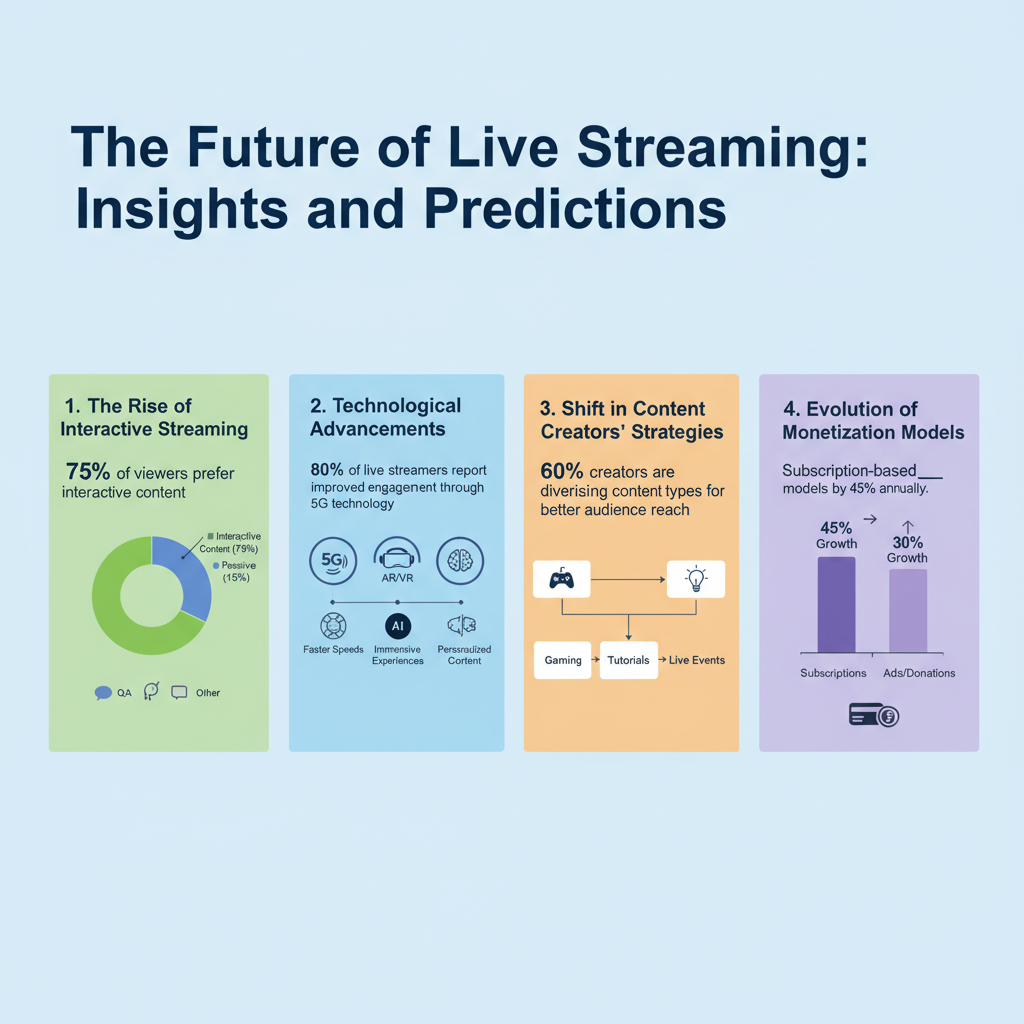
Moreover, the adoption of gaming and live events as interactive experiences has taken things to the next level. For instance, popular gaming events like Fortnite’s virtual concerts invite players to participate in unique ways, blending gaming with live performances. This not only enhances viewer engagement but also redefines the concept of a live event by making it more immersive and interactive. As a result, we can expect to see more platforms exploring interactive formats that enhance viewer involvement, making every streaming event feel like a shared experience.
Technological Advancements

Technological advancements are at the heart of live streaming’s evolution. With the rollout of 5G networks, streaming quality is set to improve dramatically. This next-generation mobile network offers lightning-fast speeds and reduced latency, which means smoother streaming experiences and higher quality video. Edge computing is also playing a pivotal role, allowing data to be processed closer to the user, further enhancing streaming performance.
In addition to connectivity improvements, the integration of AI and machine learning in live streaming is paving the way for personalized content delivery. Platforms can now analyze viewer behavior and preferences to suggest tailored content, ensuring that users are more likely to discover streams that resonate with their interests. For instance, platforms like Facebook Live are starting to employ AI algorithms to enhance user experience by recommending relevant live streams based on past viewing habits. This not only keeps viewers engaged longer but also helps creators reach their target audiences more effectively.
Shift in Content Creators’ Strategies
As live streaming continues to grow, content creators are shifting their strategies to meet the demands of an evolving audience. We are witnessing the emergence of niche content creators who focus on specific communities, offering tailored experiences that traditional media often overlook. For example, channels dedicated to unique hobbies or interests, such as crafting or niche gaming genres, have gained substantial followings. This shift allows creators to build deeper connections with their audiences, fostering loyalty and engagement.
Collaboration between brands and influencers is also becoming increasingly important. Brands are recognizing the value of influencer partnerships to enhance viewer experience and drive engagement. For instance, live shopping events where influencers showcase products in real-time have gained popularity, allowing viewers to interact, ask questions, and make purchases instantly. This innovative approach not only benefits brands seeking to elevate their reach but also empowers creators to monetize their content effectively.
Evolution of Monetization Models
The monetization landscape in live streaming is evolving rapidly, presenting a range of opportunities for creators. Subscription-based and ad-supported models are expanding, allowing viewers to choose how they want to support their favorite creators. Platforms like Patreon and Twitch offer subscription options, enabling fans to contribute directly while receiving exclusive perks, such as access to special content or private streams.
In addition, new revenue streams are emerging, including virtual goods and NFTs (non-fungible tokens). Creators are now able to sell digital merchandise, such as skins, emotes, or even exclusive clips, providing fans with unique ways to show their support. The NFT craze has started to seep into live streaming, with creators offering limited-edition digital collectibles that fans can buy, trade, or showcase. This evolution in monetization not only diversifies income sources for creators but also enriches the viewer experience by providing ownership and investment opportunities.
Changing Viewer Demographics
As live streaming continues to gain traction, we are witnessing a significant shift in viewer demographics. Younger audiences, particularly Gen Z and Millennials, are increasingly favoring live content over traditional media. With platforms like TikTok and Twitch capturing their attention, these viewers are drawn to authentic, unscripted experiences that live streaming uniquely provides.
Moreover, there is an increasing diversity in content preferences across global markets. For instance, while Western audiences may lean towards gaming and entertainment streams, viewers in other regions may seek cultural content or educational streams. This diversity opens up new opportunities for creators to cater to specific audience segments, ensuring that everyone can find content that resonates with them.
Regulatory and Privacy Considerations
With the growth of live streaming comes the responsibility to address regulatory and privacy considerations. As data protection laws evolve, streaming platforms must navigate the complexities of user data management. Compliance with regulations like GDPR and CCPA is crucial, as these laws impose strict guidelines on how user data is collected, stored, and utilized.
While these regulations may pose challenges for streaming platforms, they also present opportunities to build trust with users. By prioritizing user privacy and data protection, platforms can create a safer and more secure environment for viewers. For example, implementing transparent data practices and providing users with control over their information can enhance user confidence and encourage more participation in live streaming.
The Role of Social Media Integration
Social media integration is playing an increasingly vital role in the future of live streaming. Platforms like Instagram, Facebook, and TikTok have made live streaming a staple feature, allowing users to broadcast in real-time to their followers. This integration not only enhances the reach of live streams but also facilitates cross-platform engagement.
For instance, a creator may host a live stream on Instagram and simultaneously promote it on Twitter and Facebook, maximizing visibility and audience reach. This interconnectedness encourages broader participation and helps creators grow their communities. As social media continues to evolve, we can expect even more seamless integration of live streaming features, making it easier for viewers to engage with content across multiple platforms.
As we look ahead, the future of live streaming is bright, characterized by innovation and adaptability. Content creators, platforms, and viewers must stay informed and ready to embrace evolving trends to fully leverage the potential of live streaming. Engage with these insights and consider how you can participate in the future of this dynamic medium. By understanding these trends and embracing the changes, everyone involved can enrich their experiences in this exciting digital landscape.
Frequently Asked Questions
What trends are shaping the future of live streaming?
The future of live streaming is being shaped by several key trends, including the rise of interactive streaming, integration of augmented reality (AR) and virtual reality (VR), and the growth of e-commerce within live broadcasts. As platforms increasingly prioritize audience engagement, features like real-time polls and chat interactions are becoming commonplace. Additionally, the incorporation of AR and VR technologies allows for immersive experiences, while brands are leveraging live streaming to create direct shopping opportunities, thus enhancing user experience and driving sales.
How will technology advancements impact live streaming in the next few years?
Technology advancements, such as 5G networks and improved streaming software, are set to revolutionize live streaming by enhancing video quality and reducing latency. This means viewers can expect smoother streams with higher resolutions, leading to a more engaging experience. Furthermore, AI-driven analytics and enhanced content curation tools will help creators tailor their broadcasts to audience preferences, making live streaming more personalized and effective for both entertainers and businesses.
Why is live streaming becoming more popular among businesses?
Live streaming is gaining traction among businesses due to its ability to foster real-time interaction and build deeper connections with audiences. It offers an authentic platform for brands to showcase products, conduct Q&A sessions, and host events, which can increase customer engagement and trust. Additionally, live streaming is cost-effective compared to traditional advertising methods, allowing businesses to reach larger audiences with minimal investment while driving brand awareness and sales.
What are the best platforms for live streaming in 2024?
The best platforms for live streaming in 2024 include Twitch, YouTube Live, Facebook Live, and Instagram Live, each offering unique features and advantages tailored to different audiences. Twitch excels in gaming and interactive content, while YouTube Live is ideal for educational and entertainment-based broadcasts due to its extensive reach. Facebook Live and Instagram Live are excellent choices for brands looking to engage directly with their communities and leverage social media’s vast user base, making them powerful tools for marketers.
Which industries are most likely to benefit from live streaming in the future?
Several industries are poised to benefit significantly from live streaming in the future, including entertainment, e-commerce, education, and fitness. The entertainment industry can leverage live streaming for concerts and events, while e-commerce brands can utilize it for product launches and shopping events. Education providers can offer interactive learning experiences, and fitness companies can engage clients with live workout sessions, showcasing the versatility and potential of live streaming across various sectors.
References
- Live streaming
- https://www.bbc.com/news/technology-57604304
- https://www.forbes.com/sites/bernardmarr/2021/06/21/the-future-of-live-streaming-what-brands-need-to-know/
- https://www.theguardian.com/media/2021/jan/12/the-future-of-live-streaming-2021-and-beyond
- https://www.techrepublic.com/article/the-future-of-live-streaming-how-to-adapt-and-innovate/
- https://www.pewresearch.org/fact-tank/2021/04/07/the-future-of-video-streaming/
- https://www.nytimes.com/2021/11/29/technology/live-streaming-future.html