
Mesh Wi-Fi can support port forwarding, but the right setup depends on which device controls incoming traffic. If your existing router already handles port forwarding, running your mesh system in access point mode is the better choice than adding a second layer of routing. This guide explains where to configure forwarding rules and whether double NAT or carrier-grade NAT could prevent remote access.
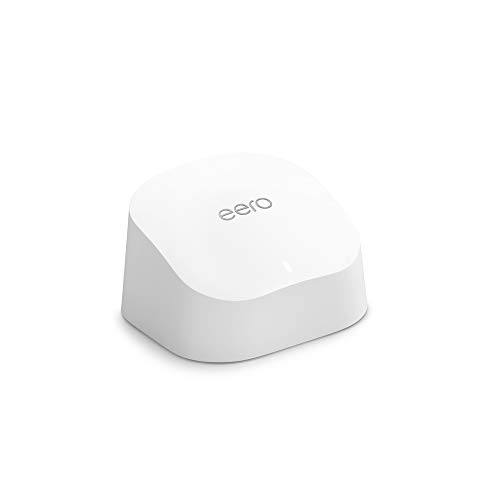



Port forwarding works on mesh Wi-Fi when the mesh router handles your network’s routing and has a reachable public IP address. You usually configure the rule on the primary mesh router—not individual satellite nodes—but an upstream router or carrier-grade NAT can prevent incoming connections. This guide explains where to configure forwarding, how to check your setup, and when a safer alternative makes more sense.
This is for readers who need outside access to a home server, game server, or another service on their network. It generally does not apply to ordinary web browsing or services that already provide their own remote-access connection.
How Mesh Wi-Fi Handles Port Forwarding
The primary mesh router normally handles port forwarding for the entire mesh network. Satellite nodes extend coverage and carry traffic; they do not normally need separate forwarding rules.
Mesh Wi-Fi coverage does not normally create a separate port-forwarding boundary at each satellite node.
In router mode, the primary mesh device typically provides network address translation, or NAT, which maps private network addresses to an internet-facing address. A forwarding rule directs selected incoming traffic to a specific local device, whether that device connects through Ethernet or a satellite.
In bridge or access-point mode, the mesh system generally leaves routing to another device. Configure forwarding on that upstream router instead.
When a mesh system operates in access-point mode, port forwarding belongs on the upstream routing device.
Features vary by model and firmware. Google’s [official port-management documentation](https://support.google.com/googlenest/answer/6274503) illustrates how Google Nest Wifi and Google Wifi handle reservations and forwarding; other systems use different controls.
Check Your Network Before Adding a Rule
Identify the routing device and internet-address arrangement before changing settings. A correct mesh rule cannot overcome an unreachable upstream connection.
An ISP gateway routing ahead of a mesh router can create double NAT, requiring changes at both routing boundaries.
Trace the connection from the internet to the destination device. If an ISP gateway and the mesh both perform NAT, consider placing one in an appropriate bridge or access-point mode. Otherwise, forwarding may be required on both devices.
Compare the internet-facing router’s WAN address with the public IPv4 address reported by an external address-checking service. A mismatch warrants investigation, although it does not alone prove carrier-grade NAT.
According to [IETF RFC 1918](https://www.rfc-editor.org/rfc/rfc1918), IPv4 has three reserved private-address blocks (1996). According to [IETF RFC 6598](https://www.rfc-editor.org/rfc/rfc6598), carrier shared address space spans 100.64.0.0–100.127.255.255 (2012).
Carrier-grade NAT places an ISP-controlled translation layer beyond the customer’s router; local forwarding rules cannot configure that layer.
The following ranges help interpret a WAN address, not merely the server’s local address. Special-use classifications follow the [IANA IPv4 registry](https://www.iana.org/assignments/iana-ipv4-special-registry/iana-ipv4-special-registry.xhtml).
Seven WAN Address Types and Inbound Reachability
| # | Address range | Classification | WAN interpretation | Direct internet reachability |
|---|---|---|---|---|
| 1 | 10.0.0.0/8 | Private IPv4 | Upstream private network | Not directly reachable |
| 2 | 172.16.0.0/12 | Private IPv4 | Upstream private network | Not directly reachable |
| 3 | 192.168.0.0/16 | Private IPv4 | Upstream private network | Not directly reachable |
| 4 | 100.64.0.0/10 | Shared address space | Common CGNAT indicator | Not directly reachable |
| 5 | 169.254.0.0/16 | Link-local IPv4 | Check WAN address assignment | Not directly reachable |
| 6 | 127.0.0.0/8 | Loopback IPv4 | Host-local, not a usable WAN address | Not directly reachable |
| 7 | ISP-assigned public unicast IPv4 | Public address | Potential internet-facing endpoint | Possible; filtering still applies |
Reserve the destination device’s local IP address using DHCP reservation, which keeps its assigned address consistent. Confirm the service’s ports and transport protocol—TCP or UDP—from official documentation.
Set Up the Forwarding Rule
Create the rule on the routing device using the reserved destination address and the service’s documented ports. Forward only the required protocol and port range.
A forwarding rule maps an external port and protocol to a destination device’s internal address and port.
1. Open the router’s app or administration page and locate Port Forwarding, NAT, or Virtual Server.
2. Select the reserved destination address.
3. Enter the external and internal ports, then select TCP or UDP as documented.
4. Save the rule and check any service-specific remote-access setting.
5. Verify that the service runs and its host firewall permits the connection.
According to [Plex’s official remote-access troubleshooting documentation](https://support.plex.tv/articles/200931138-troubleshooting-remote-access/), Plex Media Server uses internal TCP port 32400; consult the current documentation in 2026 before applying the example. A manual mapping can use external TCP 32400 to internal TCP 32400, with Plex’s manually specified public port matching the external value.
An external test must reach the running service through the public address, not merely confirm that the router saved a rule.
Test with Wi-Fi disabled on a cellular device or from another internet connection.
Why a Forwarded Port May Still Be Unreachable
An unreachable port can reflect upstream NAT, filtering, or a service problem. Diagnose each layer rather than repeatedly changing mesh settings.
A closed-port result does not distinguish an incorrect forwarding rule from a stopped service or firewall restriction.
Check these causes in order:
– Double NAT: Forward through both routers or simplify routing.
– CGNAT: Ask the ISP about public IPv4, supported IPv6, or another connectivity option.
– Wrong destination: Confirm the reserved address still belongs to the server.
– Protocol mismatch: TCP and UDP rules are not interchangeable.
– Service or firewall: Confirm the application listens on its network interface, not only localhost.
– ISP filtering: Check the provider’s inbound-port policy.
Testing the public address from home depends on NAT loopback, also called hairpin NAT. Its absence can make a working external service appear unavailable locally.
Failure to connect through a public address from inside the home does not prove external access is broken.
TCP port-checking tools also cannot establish whether a UDP service works.
When Port Forwarding Is—and Isn’t—the Right Choice
Use port forwarding when a service genuinely needs unsolicited inbound connections. For private access by known users, evaluate a supported remote-access VPN or authenticated overlay network first.
Port forwarding exposes the selected service to outside connection attempts; application security remains essential.
- Port forwarding: benefit and downside
- Compatible clients can connect directly, but the exposed application needs updates, strong authentication, and appropriate encryption.
- Private VPN or overlay: benefit and downside
- Access can be restricted to authenticated users and devices, but clients, accounts, permissions, and compatible equipment may be required.
Avoid exposing router administration pages or devices with weak authentication. Some overlay networks traverse CGNAT or use relays; a conventional VPN server hosted at home may itself require inbound reachability.
IPv6 remote access generally requires appropriate firewall permissions rather than an IPv4 NAT-forwarding rule.
As of 2026, suitability still depends on device support, ISP policy, and the service’s security model—not simply whether a mesh app offers forwarding.
Save This Setup Checklist
Use this checklist to document the rule and make troubleshooting repeatable. Keep the record with your network configuration.
A stable destination address prevents forwarding rules from silently pointing to the wrong device after address reassignment.
– Before setup: Confirm the routing device, public-IP situation, destination address reservation, and documented service requirements.
– Before testing: Verify the forwarding rule, running service, and host firewall; use a connection outside the home network.
– After testing: Record the rule’s purpose, remove unused rules, and maintain updates and authentication for the exposed service.
Removing unused forwarding rules reduces unnecessary exposure without affecting ordinary outbound browsing.
Sources to Verify for Your Mesh System
Use official documentation for the exact mesh model, ISP plan, and hosted service. General networking guidance cannot establish a particular firmware’s menus or an ISP account’s inbound-access policy.
Manufacturer documentation establishes supported router features; ISP documentation establishes available internet connectivity.
– Mesh manufacturer: [Google Nest port forwarding and reservations](https://support.google.com/googlenest/answer/6274503).
– Hosted service: [Plex remote-access troubleshooting](https://support.plex.tv/articles/200931138-troubleshooting-remote-access/).
– Address standards: IETF RFC 1918, RFC 6598, and the IANA IPv4 Special-Purpose Address Registry linked above.
Service documentation—not a generic port list—should determine the ports and protocols exposed through a router.
Mesh Wi-Fi does not inherently prevent port forwarding; the deciding factors are which device handles routing and whether incoming traffic can reach it. Start by checking your network topology and the service’s official requirements, then create only the rule you need and test it externally. If the goal is private remote access rather than a publicly reachable service, evaluate a supported VPN-based option before opening a port.
Frequently Asked Questions
How do I set up port forwarding with a mesh Wi-Fi system?
Start by identifying which mesh unit is acting as your router (often the primary gateway). Log into the mesh router’s admin app or web interface and look for “Port Forwarding,” “NAT,” or “Advanced.” Create a rule for the internal device’s local IP address, choose the correct protocol (TCP/UDP), and set the external port mapping to the same or required port on the device. If you have multiple network profiles or guest networks, make sure the device is on the same LAN you are forwarding to.
Why won’t port forwarding work on my mesh Wi-Fi network?
Port forwarding commonly fails when the target device’s IP address changes, the rule was created for the wrong LAN (main vs guest), or the mesh is running in an unexpected mode (e.g., bridge vs router). Double-check that the device you’re forwarding to has a static reservation or DHCP reservation in the mesh settings. Also confirm you’re forwarding to the correct protocol and port, and test using an external port-check tool rather than only local access.
Which mesh Wi‑Fi systems support advanced port forwarding and NAT rules?
Many major mesh Wi‑Fi systems (such as Linksys Velop, ASUS AiMesh, Netgear Orbi, TP-Link Deco, and Google Nest Wi‑Fi, depending on model and firmware) include some form of port forwarding through their admin app or interface. The level of control varies—some support basic TCP/UDP forwarding, while others offer features like DMZ, application rules, or custom NAT settings. Check your specific model’s firmware release notes and admin UI for “Port Forwarding,” “Virtual Server,” or “NAT Forwarding” to ensure it matches what you need.
What’s the best way to expose a server or game on a mesh Wi‑Fi network?
For best results, assign a static IP (DHCP reservation) to the server or gaming device and then create port forwarding rules for the required ports. If your service uses a single port (or a small set), forwarding is usually simpler than alternatives. If you need reliable access from outside your home, also consider using a Dynamic DNS (DDNS) provider so you don’t have to chase changing public IP addresses. After configuring, verify externally that the port is reachable and that any firewall on the host device allows inbound traffic.
How do mesh Wi‑Fi NAT, double NAT, or bridge mode affect port forwarding?
Mesh Wi‑Fi can introduce complications when you have another router between the internet and the mesh, creating double NAT, which can prevent inbound connections even with correct port forwarding. To avoid this, ensure your mesh gateway is the main router handling WAN, or enable bridge mode on the extra router and keep NAT centralized. If you use bridge mode, some mesh systems may change where you configure port forwarding (or limit features), so confirm the gateway still has the public IP and that forwarding is applied on the correct device.
📅 Last Updated: October 16, 2026 | Topic: Mesh Wi-Fi and Port Forwarding | Content verified for accuracy and freshness.
References
- Port forwarding
- Network address translation
- Wireless mesh network
- RFC 4787: Network Address Translation (NAT) Behavioral Requirements for Unicast UDP | RFC Editor
- RFC 6886: NAT Port Mapping Protocol (NAT-PMP) | RFC Editor
- RFC 6887: Port Control Protocol (PCP) | RFC Editor
- RFC 5442: LEMONADE Architecture – Supporting Open Mobile Alliance (OMA) Mobile Email (MEM) Using …
- https://scholar.google.com/scholar?q=mesh+wifi+port+forwarding Google Scholar
- https://scholar.google.com/scholar?q=wireless+mesh+network+NAT+port+mapping Google Scholar
- https://scholar.google.com/scholar?q=UPnP+port+forwarding+mesh+router Google Scholar



