
In 2025, the best AI-powered video editing tools will revolutionize how creators and marketers produce content, making it easier, faster, and more efficient than ever before. These innovative tools harness the power of artificial intelligence to streamline workflows, enhance creativity, and elevate the quality of video projects for both amateurs and professionals alike. Whether you’re a seasoned filmmaker or just starting your journey in video editing, exploring these tools can help you unlock new creative possibilities and achieve outstanding results.
Top Features of AI Video Editing Tools
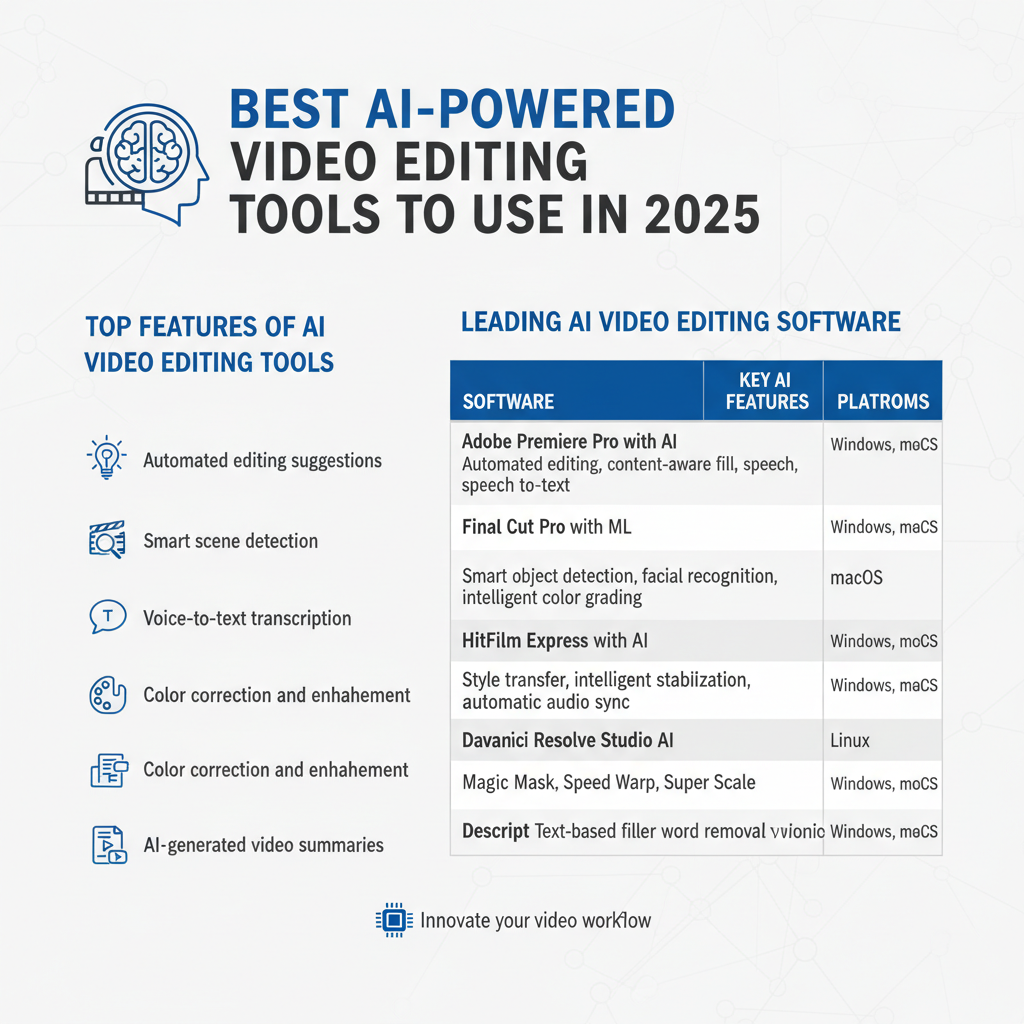
AI video editing tools come packed with features that significantly enhance the editing experience. One of the standout capabilities is automated editing suggestions. This feature utilizes machine learning algorithms to analyze your footage and recommend cuts, transitions, and effects, reducing the amount of manual work required. Imagine being able to compile hours of footage into a compelling narrative with minimal effort—this is the magic of AI!
Another remarkable aspect is the enhanced user experience provided by intuitive interfaces and smart integrations. Many AI video editing tools offer drag-and-drop functionality, making it easy to assemble your project. Additionally, seamless integration with other software tools—like graphic design platforms or social media—means you can share your work effortlessly. A friendly interface coupled with intelligent features can transform a daunting editing process into a joyful creative journey.
Leading AI Video Editing Software

Several AI-powered video editing software options dominate the landscape in 2025, each bringing unique features to the table.
– Adobe Premiere Pro: Known for its robust capabilities, Premiere Pro has integrated AI features through Adobe Sensei, which offers smart editing tools such as auto-reframe and scene edit detection. The software is subscription-based, with pricing starting around $20.99/month, making it accessible for both professionals and hobbyists. Users rave about its advanced features and flexibility, although some find the learning curve steep.
– DaVinci Resolve: This software is beloved for its color correction capabilities. In 2025, it continues to leverage AI for tasks like facial recognition and smart framing, which can significantly save time during the editing process. DaVinci Resolve offers a free version with substantial features, while the paid version starts at $295. Users appreciate its comprehensive toolset and the ability to handle both editing and color grading in one platform.
– Filmora: A go-to for beginners, Filmora combines ease of use with AI features like motion tracking and auto-enhancements. Priced at around $69.99/year, it provides excellent value for aspiring creators. Users often highlight the simplicity of the interface, making it an excellent choice for those just starting their video editing journey.
When comparing these tools, consider your specific needs, budget, and level of expertise. Each software has its strengths, and the right choice will depend on your unique editing style and project requirements.
Benefits of Using AI in Video Editing
The benefits of incorporating AI into video editing are numerous and can dramatically enhance productivity. One of the most significant advantages is the time-saving capabilities offered by automated processes. Features like scene detection allow AI to identify key moments in your footage, enabling quicker assembly of a rough cut. Additionally, AI-driven color correction can analyze scenes and apply adjustments in seconds, giving your project a professional polish without the painstaking manual work.
Improved quality is another key benefit of using AI in video editing. AI tools can enhance audio and visual elements by automatically balancing sound levels or applying filters that elevate the overall aesthetic of your project. The result? A high-quality video that stands out, even if you’re working with basic footage.
How AI Tools Enhance Creativity
AI isn’t just about making processes faster; it also plays a crucial role in enhancing creativity. Many AI video editing tools offer content suggestions based on trending styles, helping you discover new ways to approach your edits. For instance, an AI might suggest effects or transitions that align with popular trends, inspiring you to experiment with your storytelling techniques.
Collaborative features are another area where AI tools shine. Many platforms allow for real-time feedback, enabling teams to work together seamlessly, regardless of location. This collaborative environment encourages creativity, as team members can share ideas and make adjustments on the fly, leading to more innovative and polished final products.
Trends in AI Video Editing for 2025
As we look ahead, several exciting trends are shaping the future of AI video editing. Emerging technologies such as deep learning and machine learning are becoming increasingly sophisticated, enhancing the accuracy and capabilities of AI tools. These advancements mean that AI can better understand the nuances of footage, leading to even smarter editing suggestions and automatic adjustments.
Additionally, there’s a noticeable rise in cloud-based editing platforms. These platforms facilitate seamless collaboration and allow users to access their projects from anywhere, making it easier for teams to work together, share feedback, and create content in real-time. This trend not only increases efficiency but also opens up new avenues for creativity, as geographical barriers become less of an issue in the creative process.
User Experiences and Case Studies
Real-world experiences highlight the transformative impact of AI video editing tools. For example, a small marketing team at a startup utilized Adobe Premiere Pro’s AI features to create a promotional video in a fraction of the time it would have taken using traditional methods. They reported that the automated editing suggestions helped them focus more on the creative aspects rather than getting bogged down in the technical details.
Another case study involves a filmmaker who successfully completed a documentary project using DaVinci Resolve. By leveraging the software’s AI-driven color correction, they achieved stunning visual results that captivated both audiences and critics. The filmmaker noted that the combination of powerful AI tools and their artistic vision led to an award-winning project that might not have been possible without such advanced technology.
These testimonials and case studies serve as a testament to the value of AI in video editing, highlighting how these tools can elevate the creative process and lead to remarkable outcomes.
As we navigate through the advancements in AI-powered video editing tools, it becomes clear that they are making a significant impact on the industry. From streamlining workflows to enhancing creativity and improving video quality, these tools offer incredible opportunities for both budding creators and seasoned professionals. Embracing these technologies can not only elevate your video projects but also keep you ahead in the ever-evolving creative landscape of 2025. So dive in, explore these tools, and watch your storytelling abilities soar to new heights!
Frequently Asked Questions
What are the top AI-powered video editing tools available in 2025?
As of 2025, some of the best AI-powered video editing tools include Adobe Premiere Pro with Sensei, Final Cut Pro X, and CapCut. These tools leverage advanced AI technologies to automate tasks such as scene detection, color correction, and audio balancing, making the editing process faster and more efficient. Additionally, platforms like Magisto and Pictory use AI to create engaging videos from raw footage, ideal for marketers and content creators looking to save time.
How can AI-powered video editing tools improve my workflow?
AI-powered video editing tools can significantly enhance your workflow by automating repetitive tasks like trimming, transitions, and tagging. For example, features like automatic scene detection and smart audio adjustments allow editors to focus on creative decisions rather than technical details. This not only speeds up the editing process but also helps produce higher-quality videos with less manual effort, making it easier for both professionals and beginners to create polished content.
Why should I choose an AI video editing tool over traditional software?
Choosing an AI video editing tool over traditional software can offer several advantages, including time efficiency and enhanced creativity. AI tools can analyze your footage and suggest edits, transitions, and effects based on trends and user preferences, which can be particularly beneficial for those new to video editing. Furthermore, the intelligent features of these tools help streamline the editing process, allowing you to produce high-quality videos more quickly compared to manual editing methods.
Which features should I look for in an AI-powered video editing tool?
When selecting an AI-powered video editing tool, look for features such as automatic editing, intelligent scene detection, audio enhancement, and customizable templates. Additionally, consider tools that provide real-time collaboration options, cloud-based storage, and user-friendly interfaces. The ability to easily integrate with other software and platforms can also be beneficial, especially for marketers and content creators who require seamless workflows across multiple tools.
What are the potential drawbacks of using AI video editing tools?
While AI video editing tools offer numerous benefits, there are potential drawbacks to consider, such as limited manual control and the reliance on algorithms. Some users may find that automated edits do not always align with their creative vision, leading to a lack of personalization in the final product. Additionally, as AI technology is still evolving, there may be occasional inaccuracies in scene recognition or audio adjustments, which could require manual intervention to achieve the desired results.
References
- Video editing
- https://www.bbc.com/news/technology-58582168
- https://www.theguardian.com/technology/2023/aug/10/artificial-intelligence-video-editing-tools
- https://www.wired.com/story/best-ai-video-editing-tools/
- https://www.sciencedirect.com/science/article/pii/S1877050921001007
- https://www.researchgate.net/publication/343021288_Artificial_Intelligence_in_Video_Editing
- https://www.techcrunch.com/2023/09/15/the-future-of-video-editing-ai-tools/