
The use of 10-bit color depth significantly improves video quality by allowing for a greater range of colors and smoother gradients. With this technology, viewers can immerse themselves in more realistic and vibrant images, particularly in scenes where subtle color variations occur. This article will delve into how 10-bit color depth works, its advantages over lower bit depths, and why it matters for videographers and consumers alike.



![Snowkids 8K HDMI Cable 10ft, Certified 2.1 UHD [4K & Ethernet Support] | 48Gbps Ultra High Speed,Non-Slip,eARC 4K120 144Hz HDR10 HDCP 2.2&2.3,Braide 8K@60Hz Compatible for TV/PS-5/X-box/Sound System](https://m.media-amazon.com/images/I/410dwFcEWOL._SL500_.jpg)
Understanding Color Depth

Color depth is a crucial aspect of digital imaging, referring to the number of bits used to represent the color of a single pixel in a video or image. Essentially, it determines how many different colors can be displayed, impacting the overall quality of the visual experience. In the realm of video, color depth is commonly expressed in bits per channel, with 8-bit color depth being the standard for most traditional media. This means that each color channel (red, green, and blue) has 256 possible values, leading to a total of 16.7 million possible colors.
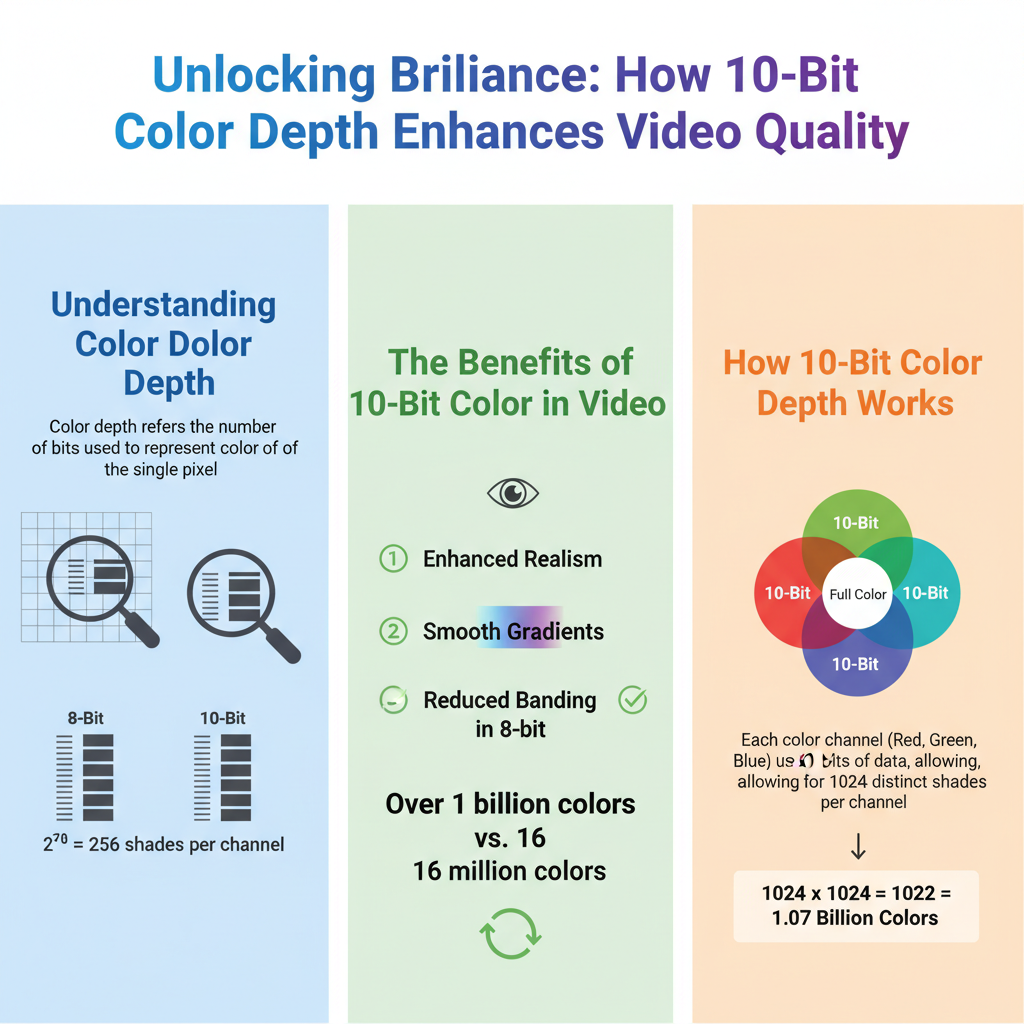
In contrast, 10-bit color depth allows for 1,024 values per channel, resulting in over a billion color variations. This expanded range enables more nuanced color representation, which is especially noticeable during scenes with rich gradients or subtle shifts in tone. For instance, in a sunset scene, the smooth transition from bright orange to deep purple can be captured more effectively with 10-bit color depth, making it visually stunning and lifelike.
The Benefits of 10-Bit Color in Video

One of the most significant benefits of 10-bit color depth is improved color accuracy. This heightened precision leads to visuals that are not only vivid but also more true to life, enhancing the viewer’s experience. Imagine watching a nature documentary where the colors of plants, animals, and landscapes appear more vibrant and authentic; that’s the power of 10-bit color depth in action.
Moreover, 10-bit color depth shines in its ability to preserve detail in shadows and highlights. In traditional 8-bit videos, bright areas can wash out, and dark areas can lose detail, resulting in images that often appear flat or lack depth. With 10-bit color, the extra information allows for subtle gradations, reducing the banding effect that can occur when transitioning between colors. This is especially crucial for filmmakers and content creators who aim for high-quality visuals that engage their audiences.
How 10-Bit Color Depth Works
At its core, 10-bit color depth utilizes additional bits to represent colors, allowing for finer gradations between shades. This means that when colors transition from one to another, the change appears more fluid and less abrupt. The technology is particularly beneficial in high dynamic range (HDR) content, where the contrast between light and dark is more pronounced.
HDR video is designed to display a wider range of brightness levels, making the darks darker and the lights lighter. In this context, 10-bit color depth becomes essential, as it can convey the extensive range of colors and brightness levels that HDR content offers. For example, in a scene featuring both bright sunlight and deep shadows, 10-bit color depth ensures that all the details in both extremes are captured, resulting in a more immersive viewing experience.
Comparison: 8-Bit vs. 10-Bit Color Depth
When comparing 8-bit and 10-bit color depth, the differences become starkly apparent. In an 8-bit video, color transitions can often appear harsh, leading to visible banding, especially in gradients or areas where subtle color changes are critical, such as skies or skin tones. For instance, consider a sunset transitioning from orange to purple; in an 8-bit video, you might see distinct bands of color rather than a smooth gradient.
Conversely, 10-bit color depth minimizes these issues by providing smoother transitions and blending. This results in a more immersive viewing experience where colors flow seamlessly into one another. As viewers, we become more engaged when the visuals reflect the natural world more accurately, and this is precisely what 10-bit color enables.
Applications in Film and Gaming
The applications of 10-bit color depth are vast and impactful, especially in film and gaming. Filmmakers leverage 10-bit color depth to achieve cinematic visuals that reflect true-to-life colors and intricate details. For example, blockbuster movies often utilize this technology to enhance their visual storytelling, allowing audiences to experience emotions more profoundly through color.
In the gaming industry, 10-bit color enhances graphics quality, elevating the overall experience for players, particularly in visually rich environments. Imagine exploring a lush forest in a video game, where every shade of green is accurately represented, and the sunlight filtering through the leaves creates a dynamic interplay of light and shadow. This not only enhances the realism but also immerses players deeper into the game world, making their experience more enthralling.
Choosing the Right Equipment for 10-Bit Color
To fully appreciate the benefits of 10-bit color depth, it’s essential to ensure that your display supports this capability. Many modern TVs and monitors now come equipped with 10-bit color support, but it’s always good to double-check specifications before making a purchase. Look for terms like “HDR10” or “10-bit panel” when shopping for displays.
Additionally, when it comes to video editing, using software that can handle 10-bit color depth is crucial for maximizing your production quality. Popular editing programs like Adobe Premiere Pro and DaVinci Resolve offer support for 10-bit workflows, allowing you to edit and export videos that maintain the enhanced color fidelity that comes with this technology. Investing in the right tools not only enhances your work but also ensures your audience experiences your content as you intended.
The integration of 10-bit color depth into video production and consumption is transforming how we experience visual media. By enabling a broader spectrum of colors and finer detail, this technology offers significant enhancements in video quality. As you explore your video options, consider investing in 10-bit compatible equipment for the best results. Embracing this technology not only elevates your viewing experience but also allows you to create stunning visuals that captivate and engage your audience.
Frequently Asked Questions
What is 10-bit color depth, and how does it differ from 8-bit color depth?
10-bit color depth refers to the ability of a video system to display 1,073,741,824 colors, compared to the 16.7 million colors available in 8-bit color depth. This increased color palette allows for smoother gradients, more accurate skin tones, and reduced banding in images, significantly enhancing overall video quality. The deeper color depth is especially beneficial for professional video editing and high-quality streaming.
How does 10-bit color depth improve video quality in HDR content?
High Dynamic Range (HDR) content benefits greatly from 10-bit color depth as it can produce more vibrant and realistic colors. With 10-bit color depth, HDR can display a wider range of brightness levels and subtle color variations, allowing for a more immersive viewing experience. This means viewers can see details in shadows and highlights that would be lost in lower bit depths.
Why is 10-bit color depth important for video editing and post-production?
For video editing and post-production, 10-bit color depth is crucial as it provides greater flexibility in color grading and correction. Editors can manipulate colors more effectively without introducing artifacts or banding, which often occurs in 8-bit formats. This high color fidelity is essential for professional results, making it a preferred choice in the film and television industry.
Which devices support 10-bit color depth, and how can I check if my display is compatible?
Many modern devices, including 4K TVs, monitors, and graphics cards, support 10-bit color depth, particularly those designed for gaming and professional use. To check if your display is compatible, look at the specifications or settings menu of your device; it often indicates supported color depths under display settings. Additionally, using a high-quality HDMI or DisplayPort cable is essential to ensure that the full capabilities of 10-bit color are utilized.
What are some common misconceptions about 10-bit color depth and its impact on viewing experience?
A common misconception is that 10-bit color depth is only beneficial for high-end displays, while in reality, even mid-range devices can display improved color quality with 10-bit content. Another myth is that 10-bit color depth is only relevant for content creators, whereas regular viewers can also appreciate the enhanced color accuracy and detail in their favorite films and shows. Understanding these aspects can help consumers make informed decisions when purchasing display devices or streaming content.
References
- Color depth
- https://www.sciencedirect.com/science/article/pii/S0360132317305297
- https://www.techopedia.com/definition/28737/color-depth
- https://www.hdmi.org/manufacturer/hdmi_2_1/
- https://www.cnet.com/tech/home-entertainment/what-is-10-bit-color/
- https://www.digitaltrends.com/home-theater/what-is-10-bit-color/
- https://www.nature.com/articles/s41598-018-22689-4
- https://www.wired.com/story/what-is-10-bit-color/



One thought on “How 10-Bit Color Depth Enhances Video Quality”