

Touchscreen displays operate through two primary technologies: capacitive and resistive. Capacitive touchscreens detect touch through the electrical properties of the human body, while resistive touchscreens respond to pressure on the screen. Understanding these differences is essential for selecting the right technology for personal devices or business applications, ensuring you get the best performance and user experience tailored to your needs.
Overview of Touchscreen Technology

Touchscreens are incredible interfaces that combine hardware and software, allowing users to interact with devices through simple touch. This technology has transformed the way we engage with smartphones, tablets, kiosks, and various control systems, making them more intuitive and user-friendly. The fundamental principle behind touchscreens is their ability to detect user input and translate it into actions that the device can process, bridging the gap between the user and digital content.
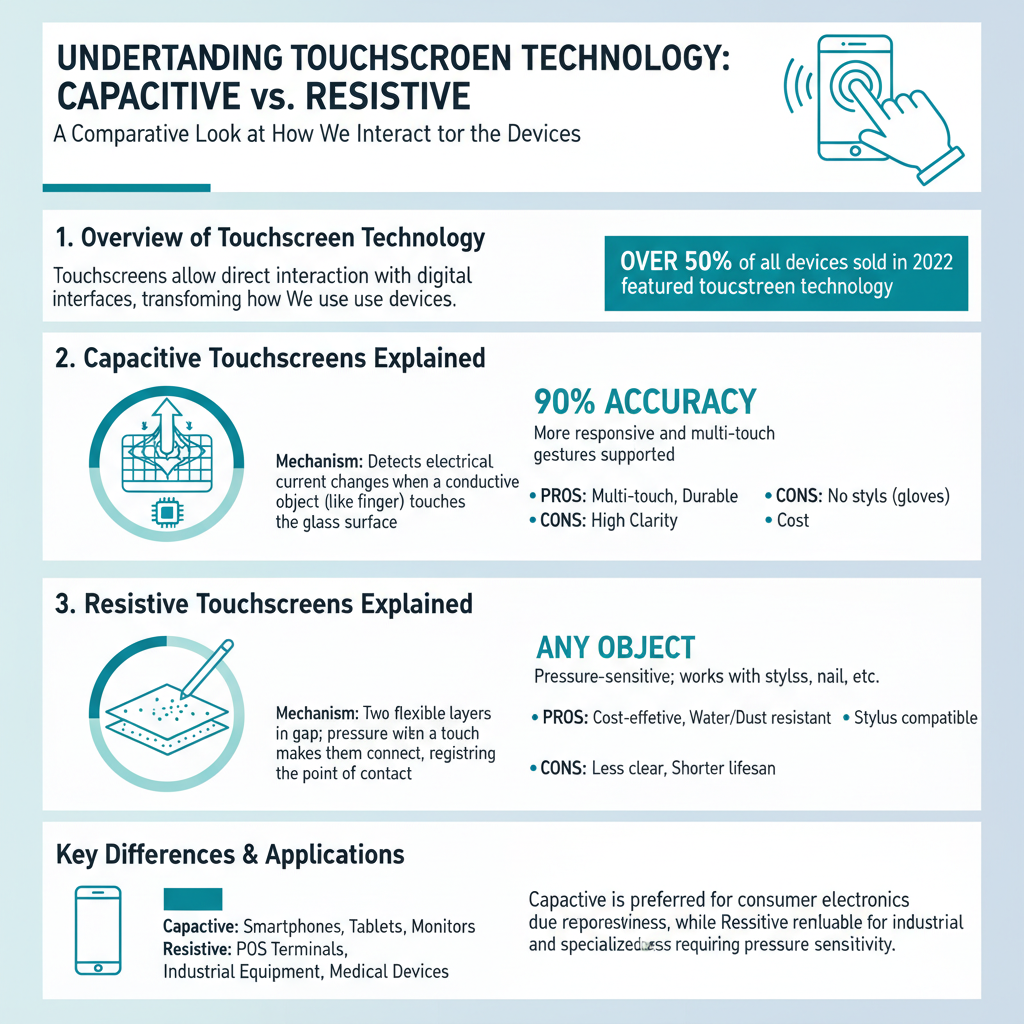
As technology advances, touchscreens have become more sophisticated, featuring higher resolutions, improved touch sensitivity, and enhanced durability. The two main types of touchscreen technology—capacitive and resistive—serve different needs and preferences, making it crucial to understand their distinct characteristics to choose the right option for your specific application, whether for personal use, retail environments, or industrial settings.

Capacitive Touchscreens Explained

Capacitive touchscreens utilize the conductive properties of the human finger to detect touch. When a finger approaches the screen, it disrupts the electrical field created by a series of conductive layers, allowing the device to register the input accurately. This technology offers several advantages, including high sensitivity, excellent multi-touch capabilities, and superior clarity compared to resistive screens.
For instance, modern smartphones like the iPhone and flagship Android devices employ capacitive screens, providing users with a smooth and responsive touch experience. The ability to recognize multiple touch points simultaneously enables gestures such as pinch-to-zoom and swipe, enhancing the overall interactivity of applications. Additionally, capacitive touchscreens tend to have better visibility and brightness, making them ideal for devices used in various lighting conditions.
However, one notable drawback is that capacitive screens can be less responsive when used with gloves or non-conductive objects, limiting their usability in certain environments. Nonetheless, their increasing adoption in consumer electronics showcases their effectiveness in delivering an engaging user experience.
Resistive Touchscreens Explained
Resistive touchscreens are composed of two flexible layers separated by a small gap. When pressure is applied to the top layer, it makes contact with the bottom layer, completing an electrical circuit that registers the touch. This technology is generally more affordable than capacitive touchscreens and is compatible with various input methods, including styluses and even gloved hands, making it a versatile choice for different applications.
You’ll often find resistive touchscreens in industrial settings, point-of-sale systems, and medical devices, where durability and the ability to use various objects for input are paramount. While they offer lower sensitivity and precision compared to capacitive screens, resistive touchscreens can be effectively used in situations where users need to wear gloves or when the device might be subjected to harsh environmental conditions.
However, resistive screens do have limitations, particularly in terms of multi-touch capabilities and display clarity. They tend to have lower resolution and brightness, which can affect the overall visual experience. Nonetheless, their cost-effectiveness and adaptability make them a popular choice in many practical applications.
Key Differences Between Capacitive and Resistive
When comparing capacitive and resistive touchscreens, several key differences emerge that can significantly influence your decision. Capacitive screens are known for their responsiveness and ability to support multi-touch gestures, making them ideal for smartphones and tablets where user interaction is nuanced and fluid. In contrast, resistive screens are less sensitive but offer greater versatility in input methods, allowing users to interact with the screen using various objects.
Durability is another critical factor. Capacitive screens, while often more visually appealing, can be more prone to scratches and damage. On the other hand, resistive screens are typically more robust and can withstand wear and tear, making them suitable for environments where the device might be subjected to heavy use. Outdoor visibility can also differ, as capacitive screens can struggle in direct sunlight, while resistive screens maintain their functionality even in bright conditions.
Ultimately, the choice between capacitive and resistive technology hinges on your specific needs. If you require high sensitivity and a sleek user experience, capacitive is the way to go. However, for applications that demand durability and flexibility in input, resistive technology may be the better option.
Applications and Use Cases
Capacitive touchscreens shine in consumer electronics, particularly smartphones and tablets. Their high responsiveness and clarity make them the preferred choice for devices designed for casual use and entertainment. For example, gaming applications and interactive educational tools benefit greatly from the multi-touch capabilities of capacitive screens, allowing for immersive experiences that engage users in unique ways.
On the other hand, resistive touchscreens are often found in industrial applications, such as factory control panels, medical devices, and outdoor kiosks. In these scenarios, durability and the ability to use gloves or styluses are essential features. For instance, healthcare professionals often rely on resistive screens in medical equipment, where they need to interact with devices while wearing gloves, ensuring hygiene and functionality remain uncompromised.
Additionally, resistive touchscreens are widely utilized in retail and point-of-sale systems, where they provide a reliable and cost-effective solution for everyday transactions. The flexibility of resistive technology allows for easy integration into various environments, ensuring robust performance across different applications.
Future Trends in Touchscreen Technology
The future of touchscreen technology is promising, with innovations leading to hybrid systems that combine the advantages of both capacitive and resistive technologies. This means we may soon see touchscreens that offer the responsiveness of capacitive screens while retaining the versatility of resistive inputs, catering to a broader range of applications and user preferences.
Moreover, developments in flexible displays and haptic feedback technology are revolutionizing how users interact with touchscreens. Imagine a device that not only responds to your touch but also provides tactile feedback, enhancing your sense of connection with the digital world. As manufacturers continue to explore these advancements, the user experience will become even more intuitive and immersive.
Additionally, the rise of augmented and virtual reality applications is pushing the boundaries of touchscreen capabilities. Future touchscreens may integrate advanced gesture recognition and 3D interactions, paving the way for even more engaging and interactive user experiences.
As touchscreen technology evolves, it will undoubtedly continue to shape how we interact with devices, offering endless possibilities for both personal and professional use.
The evolution of touchscreen technology continues to shape how we interact with devices. By understanding the differences between capacitive and resistive screens, you can make informed choices for both personal and professional use. Whether you’re upgrading your device or considering touchscreen technology for a new project, knowing these fundamentals will guide your decision-making process effectively. As technology advances, staying informed will empower you to select the best touchscreen solution tailored to your needs.
Frequently Asked Questions
What is the difference between capacitive and resistive touchscreen displays?
Capacitive touchscreen displays use a layer of conductive material to detect touch through the electrical properties of the human body, allowing for multi-touch capabilities and better sensitivity. In contrast, resistive touchscreen displays consist of two flexible layers separated by a small gap; when pressed, the layers make contact, registering the touch. This fundamental difference makes capacitive screens more responsive and suited for modern applications, while resistive screens may still be preferred in environments where durability and stylus use are important.
How do capacitive touchscreen displays work?
Capacitive touchscreen displays work by utilizing the electrical charge that the human body carries. When a finger touches the screen, it disrupts the electrostatic field created by an array of sensors embedded beneath the surface. The device then detects the location of the touch and processes it, enabling gestures like swiping and pinching, which enhances user interaction. Capacitive screens are known for their clarity and responsiveness, making them popular in smartphones and tablets.
Why are resistive touchscreen displays still used in certain devices?
Resistive touchscreen displays are still favored in certain applications due to their durability and versatility. They can be operated with any object, including a stylus or gloved hand, making them ideal for industrial environments, medical devices, and kiosks where users may not be bare-handed. Additionally, resistive screens are generally less expensive to produce and can perform well in harsh conditions, which is why they remain relevant despite the prevalence of capacitive technology.
Which touchscreen technology is better for outdoor use?
For outdoor use, resistive touchscreen technology is often the better choice due to its ability to function effectively in direct sunlight and under adverse weather conditions. Resistive displays are less affected by ambient light and can be operated with gloves or other objects, making them reliable for outdoor kiosks or industrial equipment. However, some higher-end capacitive displays are designed with anti-glare and sunlight-readable features, so it’s essential to evaluate the specific product based on the intended outdoor application.
What are the best applications for capacitive and resistive touchscreen displays?
Capacitive touchscreen displays are ideal for smartphones, tablets, and interactive displays due to their high sensitivity, multi-touch capabilities, and sleek design. They excel in applications where user experience is paramount, such as gaming or interactive media. On the other hand, resistive touchscreen displays are best suited for environments requiring durability, such as in medical equipment, industrial controls, and point-of-sale systems, where they can be used with gloves and resist damage from spills. Understanding these applications can help users choose the right technology for their needs.
References
- Touchscreen
- https://www.sciencedirect.com/science/article/pii/S2351978919310787
- https://www.hindawi.com/journals/js/2016/3531045/
- https://www.nature.com/articles/s41598-018-27907-6
- https://www.researchgate.net/publication/311230933_Capacitive_vs_Resistive_Touch_Screens
- Electrical Relay and Solid State Relays for Switching
- https://www.bbc.com/future/article/20201217-how-the-touchscreen-changed-the-world
- https://www.technologyreview.com/2020/05/15/1001565/touchscreens-capacitive-resistive-difference/
