
Organic electronics are set to revolutionize future displays through their flexibility, lightweight properties, and potential for lower production costs. These innovations promise not only enhanced visual experiences but also greater sustainability in the tech industry. As we delve into the world of organic electronics, we will explore their fundamentals, key technologies, applications, environmental impact, challenges, and the exciting future that lies ahead.




The Basics of Organic Electronics

Organic electronics involve the use of carbon-based materials in electronic devices, distinguishing them from traditional silicon-based technologies. These materials, such as conductive polymers and organic semiconductors, enable a new realm of possibilities in electronic design and functionality. One of the most significant advantages of organic electronics is their lightweight and flexible nature, allowing for the creation of bendable screens that can be integrated into various surfaces. Additionally, their potential for biodegradability positions them as a more environmentally friendly option compared to conventional electronics, which often contribute significantly to electronic waste.
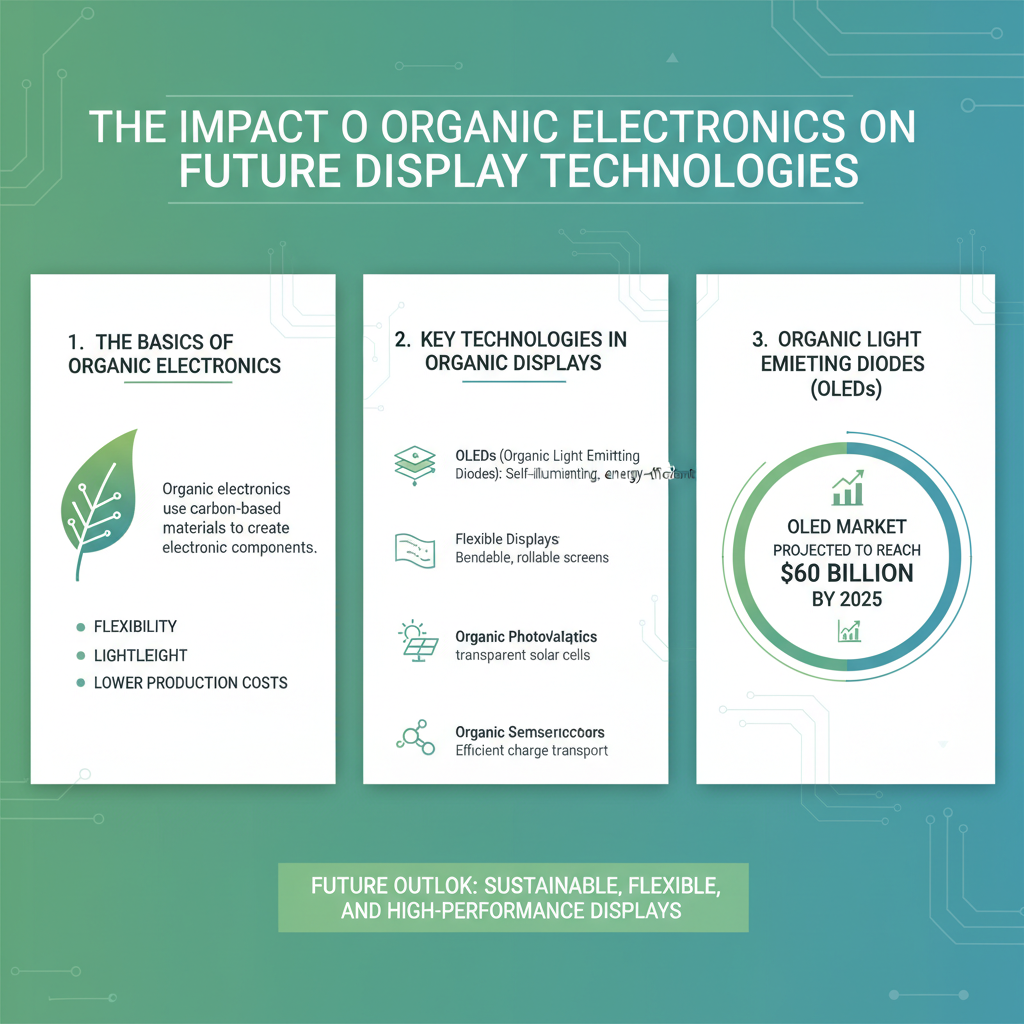
The shift towards organic materials can lead to a more sustainable future, where products not only perform well but also have minimal negative impacts on the environment. As these technologies evolve, they are likely to become a staple in the electronics market, especially as consumer demand for innovative and eco-friendly products grows.
Key Technologies in Organic Displays

When we think of organic displays, two key technologies stand out: Organic Light Emitting Diodes (OLEDs) and Organic Photodetectors.
Organic Light Emitting Diodes (OLEDs)
OLED displays are renowned for their superior color accuracy, contrast ratios, and energy efficiency. Unlike traditional LCD screens, which require backlighting, OLEDs emit their light, resulting in deeper blacks and vibrant colors. This characteristic not only enhances the viewing experience but also contributes to energy savings, as pixels can be turned off entirely when displaying black. Furthermore, OLED technology allows for ultra-thin and flexible displays, paving the way for innovative designs in smartphones, televisions, and wearable devices.
Organic Photodetectors
Organic photodetectors are another exciting technology that enhances display interactivity and responsiveness. These devices enable touch-sensitive screens that can detect the slightest pressure or gestures, making user interactions more intuitive. As the demand for interactive displays continues to rise, organic photodetectors will play a crucial role in developing advanced technologies, such as augmented reality (AR) and virtual reality (VR) applications, where accurate sensing is paramount.
Applications in Consumer Electronics
The versatility of organic electronics opens up numerous applications across consumer electronics, significantly impacting the way we interact with our devices.
Smartphones and Tablets
In the realm of smartphones and tablets, organic displays have enabled manufacturers to create thinner, lighter, and more aesthetically pleasing devices without sacrificing performance. The improved battery life associated with OLED screens is a game-changer, allowing users to enjoy longer usage times without frequent recharging. In addition, the flexibility of organic materials means that manufacturers can develop foldable or curved devices that cater to diverse consumer preferences.
Wearables
The rise of wearables is another exciting area where organic electronics shine. Devices like smartwatches and fitness trackers benefit from the lightweight and flexible nature of organic displays, enabling designs that are not only comfortable to wear but also visually appealing. As technology advances, we can expect to see more innovative applications, such as smart clothing that integrates organic electronics, allowing for real-time health monitoring and interactivity.
Environmental Impact of Organic Electronics
As sustainability becomes an increasingly pressing concern, organic electronics offer promising solutions that align with eco-friendly practices.
Sustainability
One of the major benefits of organic materials is their potential for reduced environmental impact during production. Traditional semiconductor manufacturing is energy-intensive and generates considerable waste. In contrast, organic electronics can be produced using simpler processes that require less energy, ultimately leading to lower carbon footprints. Moreover, the use of renewable materials in organic electronics can help reduce reliance on finite resources.
Biodegradability
Another significant advantage is the potential for organic electronics to decompose more naturally than their traditional counterparts. This biodegradability aspect supports a circular economy, where products are designed to be reused, recycled, or broken down without harming the environment. As consumers become more environmentally conscious, the shift towards biodegradable options in electronics will likely gain momentum.
Challenges Facing Organic Electronics
Despite the promising benefits, organic electronics face certain challenges that must be addressed for widespread adoption.
Stability and Longevity
Organic materials often struggle with stability and longevity when compared to traditional silicon-based electronics. Environmental factors, such as moisture and oxygen, can degrade organic components over time, leading to shorter lifespans for devices. Researchers are actively working on improving the durability of organic electronics, focusing on encapsulation technologies and the development of more stable organic materials to enhance their performance.
Manufacturing Scalability
Another hurdle is the manufacturing scalability of organic electronics. While small-scale production has shown great potential, developing cost-effective methods for mass production remains a challenge. The industry needs to invest in new manufacturing techniques and technologies that can lower costs while maintaining high-quality standards. As advancements continue, we may see more efficient production processes that enable organic electronics to compete with traditional technologies on a larger scale.
The Future of Organic Display Technologies
The future of organic display technologies is bright, with numerous innovations on the horizon.
Innovations on the Horizon
Ongoing research is paving the way for improved performance and new applications in various fields. For instance, advancements in material science may lead to better organic semiconductors that enhance brightness, efficiency, and stability. Additionally, the integration of organic electronics with emerging technologies, such as artificial intelligence and the Internet of Things (IoT), could unlock new functionalities and user experiences.
Market Trends
As demand for flexible and efficient displays grows, organic electronics are likely to play a crucial role in shaping the future of consumer electronics. Major tech companies are investing heavily in organic display technology, indicating a strong market trend towards its adoption. As products featuring organic electronics become more mainstream, consumers can expect to see enhanced features, better energy efficiency, and a commitment to sustainability in their devices.
The advancements in organic electronics are poised to transform future display technologies, making them more efficient, sustainable, and user-friendly. As the industry progresses, staying informed about these changes will be essential for consumers and professionals alike. Explore more about this captivating topic and consider how it may impact your next tech purchase or investment. Embracing organic electronics may not just enhance our devices but also contribute to a greener, more sustainable future for technology.
Frequently Asked Questions
What are organic electronics and how do they impact future display technologies?
Organic electronics refer to a class of materials that use carbon-based compounds to create electronic components like transistors and diodes. These materials enable the development of flexible, lightweight, and potentially more energy-efficient displays, such as OLED and organic LED screens. As a result, future display technologies can offer improved image quality, richer colors, and broader viewing angles while also being adaptable to various surfaces, paving the way for innovative applications in consumer electronics and beyond.
How do organic displays compare to traditional LCD and LED displays?
Organic displays, particularly OLEDs, offer several advantages over traditional LCD and LED displays, including better color accuracy, faster response times, and higher contrast ratios due to their ability to achieve true blacks. Unlike LCDs that require backlighting, organic displays emit their own light, allowing for thinner and more flexible panels. However, they may also face challenges like shorter lifespans and susceptibility to burn-in, which consumers should consider when evaluating display options.
Why are organic electronics considered environmentally friendly for display production?
Organic electronics are often viewed as more environmentally friendly because the materials used can be derived from renewable resources, reducing reliance on rare and toxic substances found in traditional electronics. Additionally, the manufacturing processes for organic displays generally consume less energy and produce fewer hazardous waste products. As sustainability becomes increasingly important, these eco-friendly aspects of organic electronics could significantly influence the future of display technology.
What are the best applications for organic electronics in display technology?
The best applications for organic electronics in display technology include smartphones, televisions, wearables, and even large-scale digital signage. Their flexibility allows for innovative designs, such as curved displays or screens integrated directly into clothing. Furthermore, as organic electronics continue to evolve, they could enable new functionalities like energy-harvesting displays that power themselves through ambient light.
Which companies are leading the development of organic electronics for displays?
Several companies are at the forefront of developing organic electronics for display technologies, including industry giants like Samsung, LG, and Sony, which have invested heavily in OLED technology. Emerging startups and research institutions are also making significant strides in organic electronics, focusing on new materials and manufacturing techniques to enhance performance and scalability. Keeping an eye on these innovators can provide insights into the future trends and advancements in organic display technology.
References
- Organic electronics
- https://www.sciencedirect.com/science/article/pii/S136970211730210X
- https://www.nature.com/articles/s41598-017-07164-7
- https://www.osa-opn.org/home/articles/volume_31/december_2020/features/the_promise_of_organic_displays/
- https://www.researchgate.net/publication/327569537_The_Impact_of_Organic_Electronics_on_the_Future_of_Display_Technology
- https://www.energy.gov/articles/future-displays-organic-electronics
- https://www.sciencedaily.com/releases/2021/08/210825102740.htm