
The evolution of phone cameras from VGA to 200MP has completely transformed how we capture moments, making stunning photography accessible to everyone. Over the years, technological advancements have allowed phone cameras to improve in quality and functionality, turning our smartphones into essential photography tools for both enthusiasts and casual users. This article delves into the fascinating journey of phone cameras, highlighting key milestones and innovations that have shaped the way we take and share photographs today.
The Birth of Phone Cameras: VGA Era
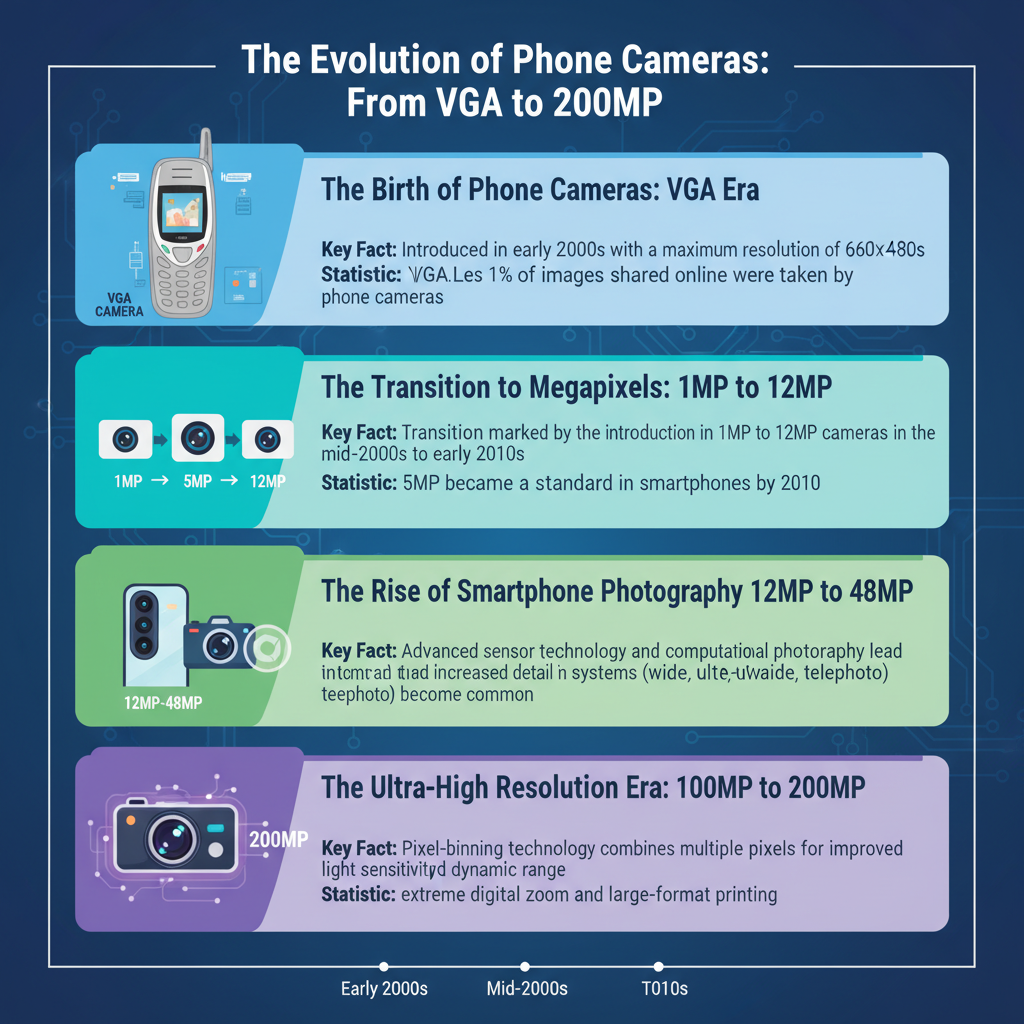
The journey of phone cameras began in the early 2000s with the introduction of VGA (Video Graphics Array) cameras in mobile phones. These early cameras had a maximum resolution of 640×480 pixels, which limited the quality of images significantly. While they allowed users to capture basic snapshots, the photos often lacked clarity and detail. The VGA camera was primarily used for simple tasks like sending picture messages or taking quick candid shots, but the technology was far from ideal for serious photography.
Despite their limitations, these early cameras laid the groundwork for future innovations. The concept of having a camera integrated into a phone was revolutionary at the time, as it opened the door to a new way of capturing and sharing memories. It was a convenient solution for those who wanted to document their lives without carrying a separate camera. However, it would take years of technological advancements for phone cameras to evolve into the powerful tools we use today.
The Transition to Megapixels: 1MP to 12MP
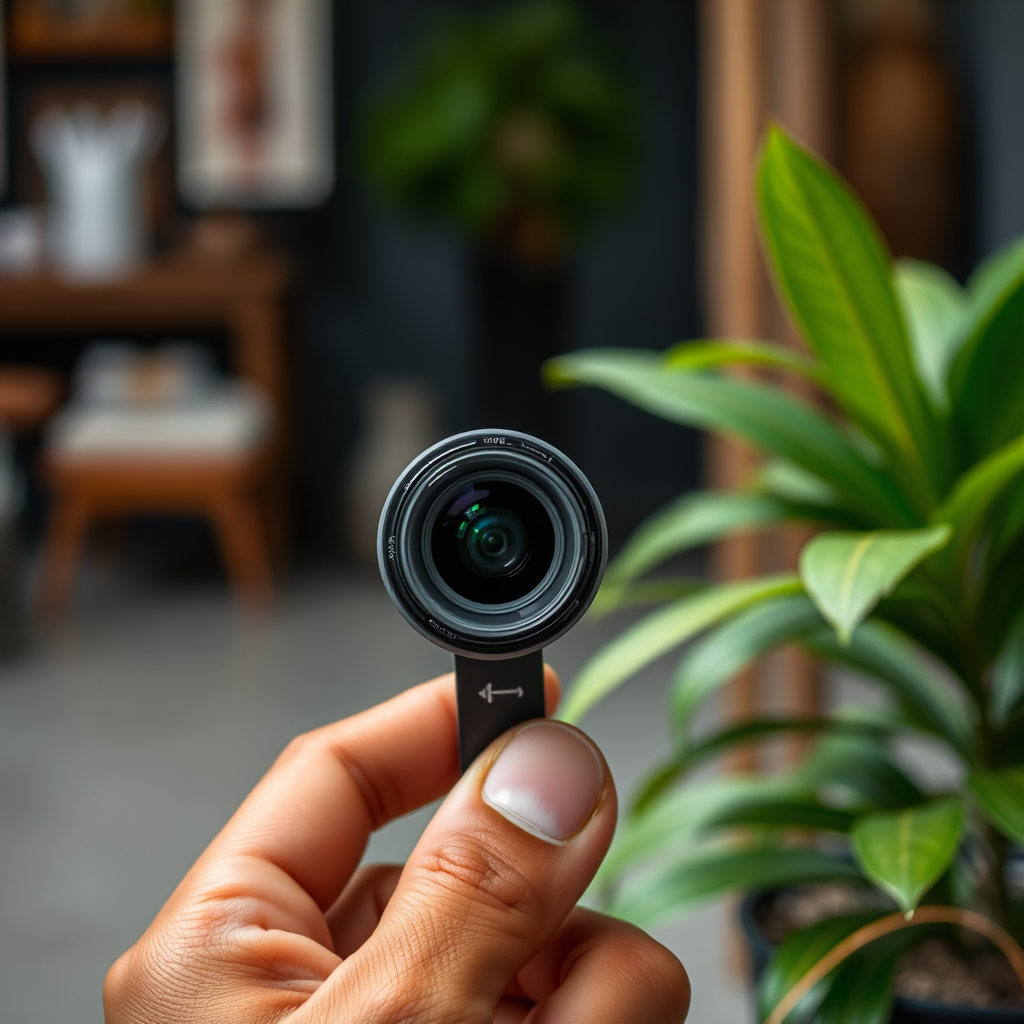
As technology progressed, the shift from VGA to 1MP cameras marked a significant turning point in mobile photography. The first 1MP camera phones appeared in the early 2000s, allowing users to capture images with much greater clarity and detail. This increase in resolution led to a burgeoning interest in mobile photography, as manufacturers began to prioritize camera technology in their designs.
By the time the 12MP cameras emerged, mobile photography had become a serious contender against traditional cameras. Features like autofocus and flash began to be integrated, enhancing the overall shooting experience. Consumers, now more aware of the potential for high-quality images, started to expect better camera performance from their devices. This shift not only encouraged manufacturers to innovate further but also inspired a new wave of mobile photography enthusiasts who began to explore the creative possibilities offered by their smartphones.
The Rise of Smartphone Photography: 12MP to 48MP
The introduction of 12MP cameras paved the way for a new era in smartphone photography, characterized by the rise of multiple camera systems. Brands like Apple, Samsung, and Google began to focus heavily on enhancing camera capabilities, incorporating features like optical zoom, wide-angle lenses, and night mode. This evolution was not just about increasing megapixels; it was about enhancing the overall photography experience.
Social media platforms like Instagram and Snapchat played a crucial role in this transformation, driving demand for higher-quality images. Users wanted to capture and share their lives in stunning detail, which led to a surge in mobile photography culture. The ability to edit and share photos instantly on social media made smartphones the preferred choice for many budding photographers. As a result, manufacturers invested heavily in camera technology, developing algorithms and software to improve image processing and overall performance.
The Advent of Advanced Technology: 48MP to 108MP
The leap from 48MP to 108MP cameras was propelled by advancements in computational photography and artificial intelligence (AI). This era saw brands like Huawei and Samsung pushing the limits of what was possible in mobile photography. With features like enhanced image stabilization, advanced HDR, and AI-driven scene recognition, these smartphones could produce professional-grade images with ease.
Computational photography allowed for the merging of multiple images to create one high-quality photo, even in challenging lighting conditions. For instance, the Huawei P40 Pro and Samsung Galaxy S21 Ultra showcased how innovative technology could optimize image quality, making it easier for users to capture stunning shots without requiring extensive photography skills. This evolution not only improved the user experience but also helped bridge the gap between amateur and professional photographers.
The 200MP Breakthrough: What It Means for Users
The introduction of 200MP sensors marks a remarkable milestone in mobile photography, offering capabilities that were once reserved for high-end professional cameras. With this breakthrough, users can capture images with incredible detail and clarity, making it possible to crop photos extensively without losing quality. This is particularly beneficial for photographers who want to focus on specific subjects or create large prints without compromising on resolution.
Additionally, 200MP cameras enhance low-light performance, allowing users to take stunning photos in challenging lighting conditions. This means that whether you’re capturing a sunset or a dimly lit restaurant scene, the images will still look vibrant and detailed. The practicality of such advanced technology extends to everyday users as well, as even casual smartphone photographers can benefit from improved image quality, making their social media posts more visually appealing.
Future Trends in Phone Camera Technology
As we look towards the future, several exciting innovations are on the horizon for phone camera technology. Predictions suggest that we may see further advancements in AI-driven features, allowing for even smarter image processing and enhanced user experience. Additionally, the integration of augmented reality (AR) and virtual reality (VR) could change how we interact with photography altogether, providing new ways to capture and share our experiences.
Furthermore, the development of better sensors and lenses may lead to more versatile shooting options, including improved macro photography and advanced stabilization technologies for video. With companies constantly pushing technological boundaries, the future of phone cameras promises to be as thrilling as its past.
The Impact of Phone Cameras on Photography Culture
The evolution of phone cameras has had a profound impact on photography culture, democratizing the art of photography in a way that was previously unimaginable. With high-quality cameras now available in the pockets of millions, anyone can explore their creative side without the need for expensive equipment. This accessibility has led to a surge of influencers and content creators who utilize smartphone cameras as their primary tools for storytelling.
Social media platforms have further amplified this trend, allowing users to share their work with a global audience. The rise of mobile photography has created a new community of enthusiasts who engage with each other, share tips, and inspire one another. As a result, photography has become a more inclusive and vibrant medium, encouraging people from all walks of life to express themselves through images.
The journey of phone cameras from simple VGA sensors to advanced 200MP systems illustrates a significant leap in technology and user experience. As innovations continue to emerge, it’s clear that phone cameras will keep evolving, shaping how we capture and share our world. Explore the latest models and consider how these advancements can enhance your photography skills today!
Frequently Asked Questions
What are the key milestones in the evolution of phone cameras from VGA to 200MP?
The evolution of phone cameras has seen several significant milestones that have transformed mobile photography. Starting with the VGA (Video Graphics Array) camera in the early 2000s, which offered low resolution and basic functionality, the transition to 5MP cameras around 2005 marked a turning point for clearer images. The introduction of 12MP sensors in flagship smartphones like the iPhone 4 in 2010, followed by advancements in technology that led to 48MP and 108MP sensors in the late 2010s, set the stage for the latest 200MP cameras, such as those found in the Samsung Galaxy S23 Ultra. Each advancement improved image quality, low-light performance, and added features like optical zoom and advanced computational photography.
How do modern phone cameras compare to traditional digital cameras?
Modern phone cameras have significantly closed the gap with traditional digital cameras, offering convenience without sacrificing quality. Many flagship smartphones now include multiple lenses, advanced image processing algorithms, and AI enhancements that allow for impressive low-light performance and high dynamic range. While traditional digital cameras often excel in sensor size and interchangeable lenses, modern phones provide features like portability, instant sharing, and user-friendly interfaces that make photography accessible to everyone.
Why do some smartphones offer 200MP cameras, and what benefits do they provide?
Smartphones with 200MP cameras, like the Samsung Galaxy S23 Ultra, are designed to meet the growing demand for high-resolution photography and videography. The benefits of a 200MP camera include the ability to capture intricate details, allowing for stunning prints and cropping without losing quality. Additionally, these high-resolution sensors can enhance low-light performance through pixel binning, where multiple pixels combine to improve image quality in dim conditions. This makes 200MP cameras appealing for both casual users and professional photographers seeking versatility in their mobile devices.
Which features should I look for in a smartphone camera besides megapixels?
While megapixels are important, other features significantly influence smartphone camera performance. Look for optical image stabilization (OIS) to reduce blurriness from hand movement, a wide aperture for better low-light performance, and multiple lenses to offer versatility (such as ultra-wide, telephoto, and macro). Additionally, consider the camera’s software capabilities, including night mode, portrait mode, and HDR (High Dynamic Range) for enhanced image processing, as these can profoundly impact the final image quality.
What impact has computational photography had on the evolution of phone cameras?
Computational photography has revolutionized phone cameras by leveraging software algorithms to enhance image quality beyond the capabilities of hardware alone. Features such as Night Mode, Portrait Mode, and Smart HDR allow smartphones to capture stunning photos in challenging conditions, such as low light or high contrast scenes. This technology enables users to achieve professional-looking results without requiring extensive photography skills, making it an essential aspect of modern smartphone cameras and significantly contributing to the evolution from basic VGA sensors to advanced 200MP systems.
References
- Camera phone
- https://www.bbc.com/news/technology-62241082
- https://www.nytimes.com/2021/09/08/technology/apple-camera-iphone.html
- https://www.sciencedirect.com/science/article/pii/S2352914821000210
- https://www.theguardian.com/technology/2021/sep/14/iphone-13-camera-features-apple
- https://www.wired.com/story/evolution-smartphone-camera-technology/
- https://www.techradar.com/news/the-history-of-smartphone-cameras
- https://www.nature.com/articles/s41598-019-43122-0
- https://www.cnbc.com/2022/01/27/the-evolution-of-smartphone-cameras.html