

Artificial Intelligence (AI) is revolutionizing the way we experience old, low-quality footage by employing advanced algorithms to restore clarity and detail. Through intricate analysis of visual elements, AI can breathe new life into vintage videos, making them more enjoyable for today’s audiences. This article will explore the fascinating mechanics behind AI-driven video enhancement, highlighting the techniques used, the challenges faced, and the future of this exciting technology.
Understanding AI in Video Enhancement
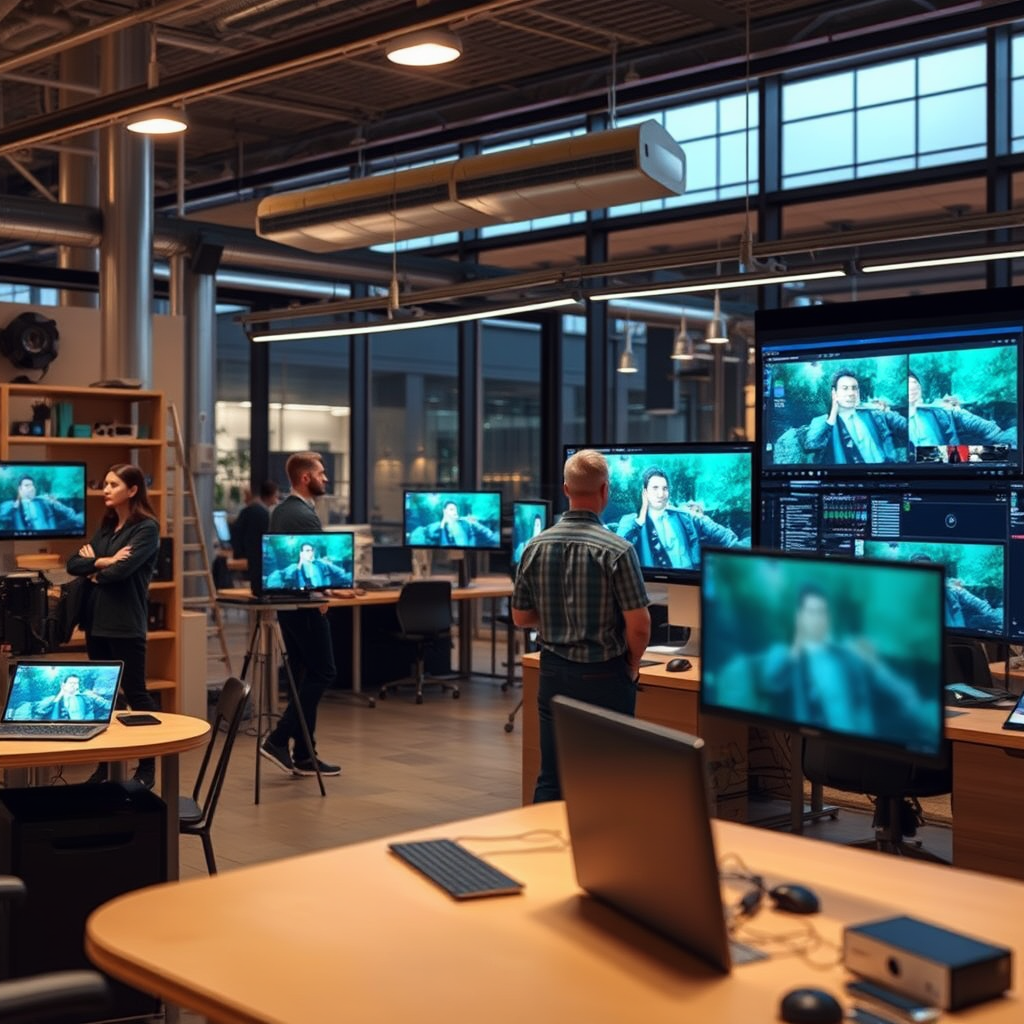
At the heart of AI video enhancement is machine learning, a subset of AI that uses algorithms to analyze vast amounts of video data and identify patterns. This technology allows AI systems to detect common issues in old footage, such as grainy textures, distortions, and other artifacts that detract from the viewing experience. By recognizing these patterns, AI can effectively differentiate between what constitutes a high-quality image and what falls short, enabling it to apply targeted enhancement techniques.
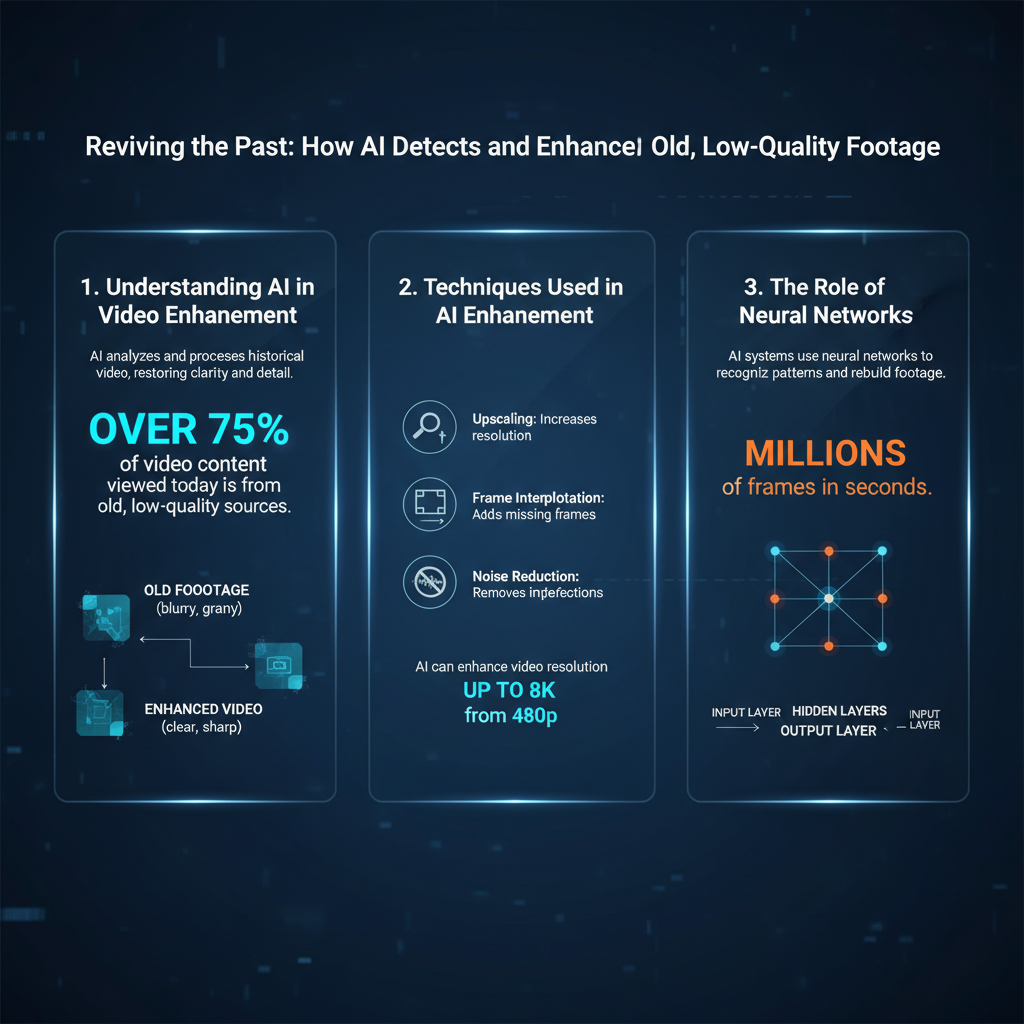
For instance, consider a classic film that has been stored poorly over the decades. The AI scans each frame, noting the inconsistencies and flaws, such as color fading and pixelation. By understanding these visual cues, it can apply corrections that would take a human editor much longer to accomplish. This ability to process and analyze video data rapidly is one of the key benefits of AI technology in the realm of video restoration.
Techniques Used in AI Enhancement
AI employs several innovative techniques to enhance the quality of old footage, with two of the most notable being upscaling resolution and color correction.
Upscaling resolution involves using deep learning models to increase the pixel count of a video, allowing for sharper and clearer images. Techniques like Super Resolution utilize neural networks to predict what high-resolution details should look like based on the low-resolution input. This means that even if an original video is only available in a low resolution, AI can create a higher-quality version that maintains the original’s integrity while significantly improving its appearance.
Color correction and restoration is another crucial technique. Many vintage videos suffer from color degradation over time, often appearing washed out or overly muted. AI can analyze the color spectrum of the footage and apply restoration techniques to bring back the vibrancy of the original colors. This process involves adjusting hues, saturation, and contrast to create a more dynamic and visually appealing image. For example, a faded home movie from the 1960s can be transformed into a vivid portrayal of family memories that feel fresh and engaging to current viewers.
The Role of Neural Networks
Neural networks, particularly Convolutional Neural Networks (CNNs), play a pivotal role in the process of video enhancement. These advanced networks are designed to recognize and extract features from images, making them incredibly effective for tasks like reducing blurriness and improving sharpness.
CNNs work by processing video frames in layers, gradually extracting more complex features as they go. For instance, the first layer might identify simple patterns like edges and textures, while deeper layers might recognize more intricate details, such as facial features in a video. This multi-layered approach allows AI to make nuanced adjustments that greatly improve the overall quality of the footage. By leveraging these networks, filmmakers and restorers can achieve results that were once thought impossible, creating a seamless visual experience from what was previously low-quality content.
Challenges in Restoring Old Footage
Despite the impressive capabilities of AI in enhancing video, several challenges remain in the restoration process. One significant obstacle is the difficulty in predicting and reconstructing missing data from damaged frames. Old footage can suffer from various forms of degradation, including scratches, tears, or complete loss of data in certain segments. AI must infer what the missing information might have looked like, which can lead to inaccuracies if the model’s training data does not adequately represent the original content.
Additionally, the variability in quality across different sources and formats poses a challenge. For example, a film reel may have been stored in varying environmental conditions, leading to different levels of wear and tear. AI systems must be adaptable and robust enough to handle these inconsistencies while still delivering high-quality enhancements. This ongoing challenge highlights the need for continuous improvement in AI training methodologies and a better understanding of historical video preservation techniques.
Applications of Enhanced Footage
The applications of AI-enhanced footage are vast and varied. In the film industry, AI is increasingly being used in restoration projects, helping to preserve classic cinema for future generations. Restoration houses have begun to adopt these technologies to revive beloved films, ensuring that they can be enjoyed in their best possible form by contemporary audiences.
Moreover, enhanced footage is finding its way into modern media platforms, such as streaming services and social media. As viewers’ expectations for quality rise, content creators are turning to AI to provide upscale versions of their videos, making the viewing experience more enjoyable. Whether it’s reviving old family videos to share with loved ones or polishing archival footage for educational purposes, the integration of AI technology is enhancing the way we engage with media.
Future of AI in Video Restoration
Looking ahead, the future of AI in video restoration is bright, with continuous improvements in algorithms promising even better results. As technology evolves, we can expect enhanced capabilities, such as real-time enhancement and live video applications. Imagine attending a live event where the video feed is automatically enhanced in real time, providing viewers with an optimal experience regardless of the original footage quality.
Moreover, as AI becomes more sophisticated, the potential for automating the restoration process increases. This could lead to a democratization of video enhancement, allowing hobbyists and content creators to access state-of-the-art tools without requiring extensive technical knowledge. The combination of accessibility and advanced technology will likely result in a surge of creativity and innovation in the realm of video production and preservation.
The impact of AI on enhancing old, low-quality footage is substantial, providing a bridge between past and present visual experiences. By understanding how these technologies work, you can appreciate the art and science behind video restoration and consider how you might utilize these advancements in your projects or hobbies. As we move forward, the marriage of AI and video enhancement will continue to transform how we experience and cherish the visual stories of our past.
Frequently Asked Questions
How does AI detect low-quality footage in old videos?
AI detects low-quality footage by employing machine learning algorithms that analyze various aspects of video content, such as resolution, color saturation, and noise levels. These algorithms can identify artifacts like blurriness, pixelation, or graininess that indicate poor quality. By comparing the footage to high-quality standards, AI can classify and flag segments that require enhancement.
What techniques does AI use to enhance old video quality?
AI enhances old video quality through several techniques, including upscaling, denoising, and frame interpolation. Upscaling involves increasing the resolution of the video to make it appear sharper, while denoising removes unwanted visual noise. Frame interpolation creates additional frames, smoothing out motion and rendering the video smoother, which is particularly beneficial for older footage with lower frame rates.
Why is AI preferred for enhancing old footage over traditional methods?
AI is preferred for enhancing old footage because it can analyze and process large volumes of data more efficiently than traditional methods. Unlike manual editing, which can be time-consuming and subjective, AI utilizes deep learning models that continually improve as they are trained on diverse datasets. This results in consistent, high-quality enhancements that can restore the original intent of the footage while saving time and reducing costs.
Which AI tools are best for restoring low-quality videos?
Some of the best AI tools for restoring low-quality videos include Topaz Video Enhance AI, Adobe Premiere Pro with AI features, and DaVinci Resolve’s neural engine. These tools leverage advanced AI algorithms to upscale resolution, reduce noise, and improve color grading, making them ideal for filmmakers and content creators looking to revitalize old footage with minimal effort and maximum quality.
How can I ensure that AI-enhanced videos maintain their authenticity?
To ensure that AI-enhanced videos maintain their authenticity, it is important to use tools that allow for customizable settings, enabling you to control the level of enhancement applied. Additionally, you should preserve the original footage alongside the enhanced version for reference. Finally, applying enhancements subtly and avoiding over-processing can help retain the original character and emotion of the video, ensuring it remains true to its source.
References
- https://en.wikipedia.org/wiki/Video_upscaling
- https://www.sciencedirect.com/science/article/pii/S1877050919317947
- https://www.researchgate.net/publication/339147893_Artificial_Intelligence_in_Image_Processing
- https://www.nature.com/articles/s41598-021-87293-0
- https://www.bbc.com/future/article/20200325-how-ai-is-repairing-old-photos
- https://www.theguardian.com/technology/2021/jun/07/ai-video-enhancement
- https://www.technologyreview.com/2020/05/21/1001782/how-ai-is-repairing-old-videos-and-images/