

Quantum computing is revolutionizing holographic video processing by providing unprecedented computational power and speed. This innovation enables real-time rendering and manipulation of holographic images, significantly enhancing visual experiences across various fields such as entertainment, education, and medical imaging. In this article, we’ll explore how quantum computing is shaping the future of holographic video technology and why it matters to you.
Understanding Holographic Video Processing
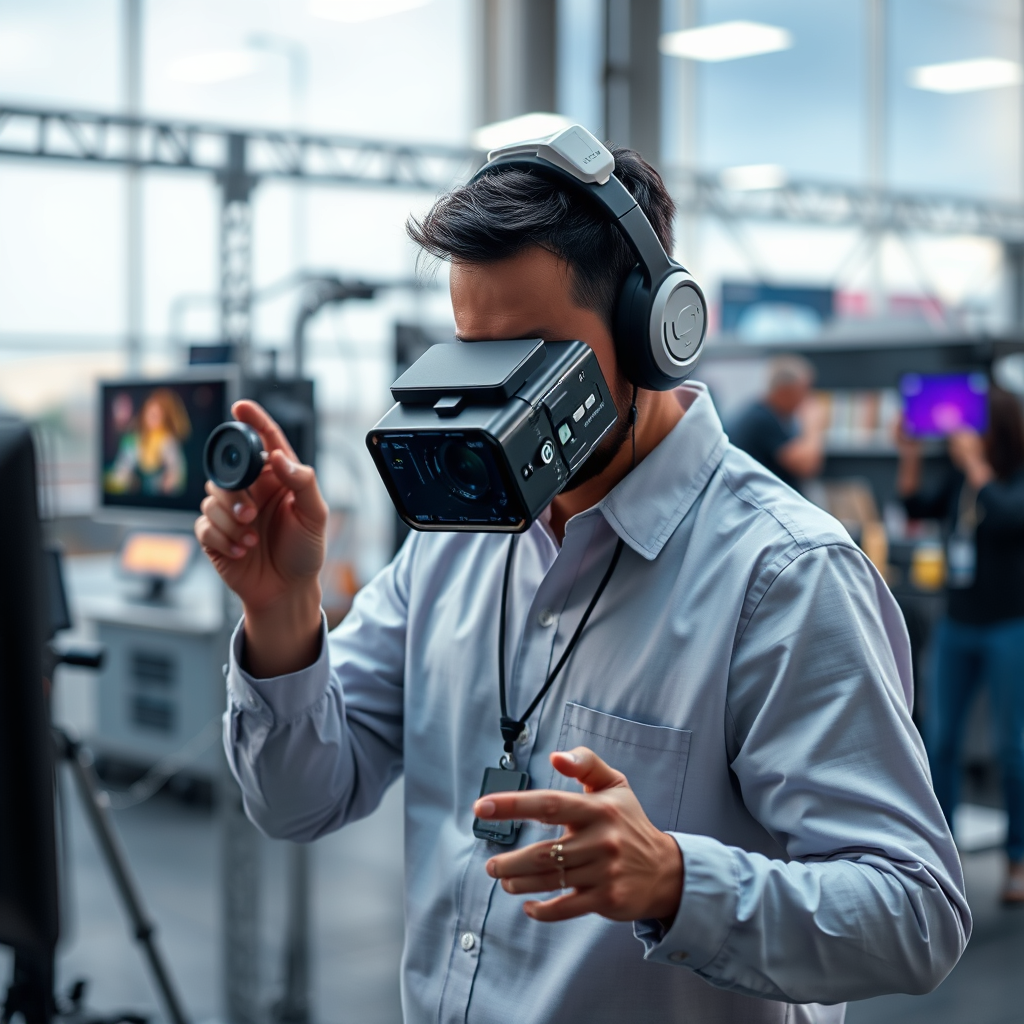
Holographic video refers to a type of visual technology that captures and presents images in three dimensions, allowing viewers to experience depth and realism like never before. Unlike traditional video, which displays flat, two-dimensional imagery, holographic video creates the illusion of three-dimensional objects floating in space, offering a more immersive experience. This technology holds significant promise for applications ranging from virtual reality gaming to educational tools, where interactive learning can be enhanced by realistic visual representations.
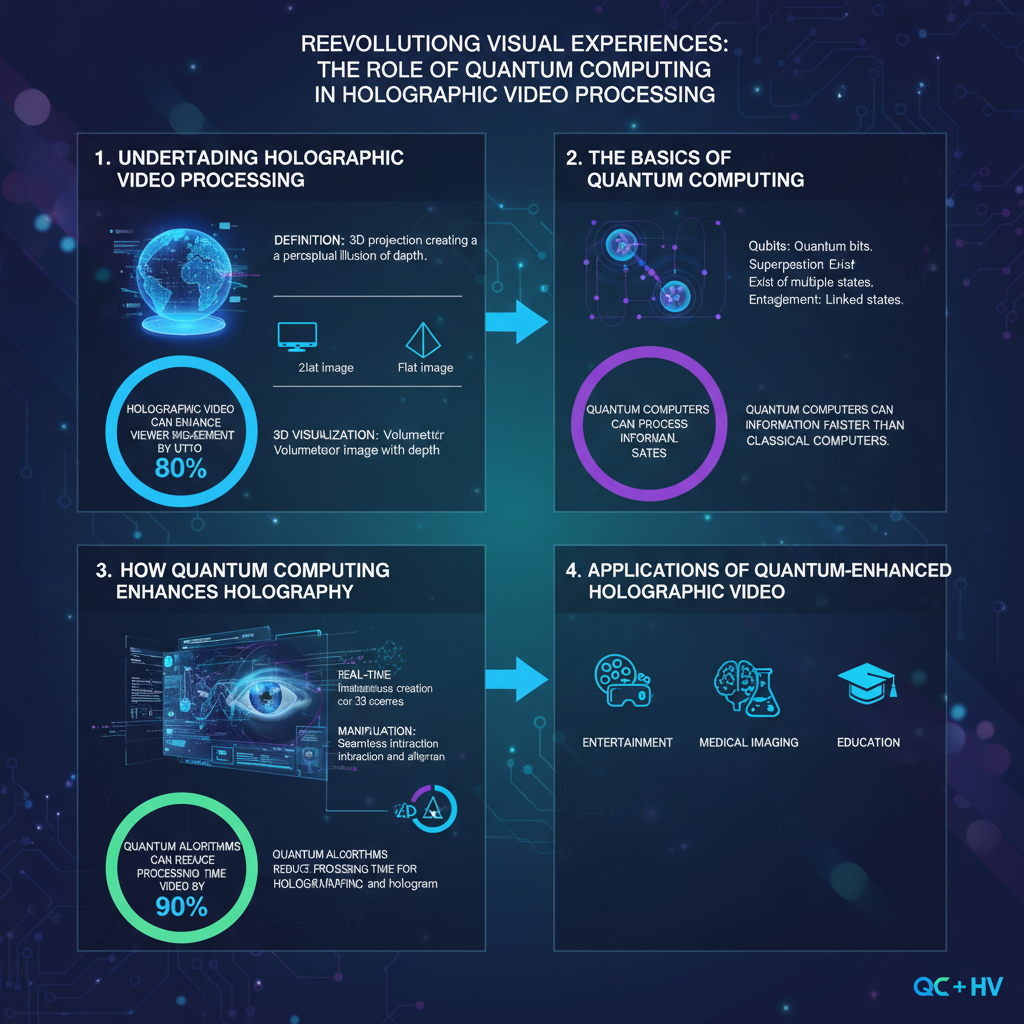
However, traditional video processing technologies face several challenges, including limitations in rendering speed and the complexity of processing large amounts of data. As video resolutions increase and the demand for high-quality content grows, these challenges become more pronounced. Issues such as latency, processing power limitations, and the inability to render complex holograms in real time can hinder the full potential of holographic video technology. This is where quantum computing steps in, offering solutions that could transform the landscape of holographic video processing.
The Basics of Quantum Computing
At its core, quantum computing leverages the principles of quantum mechanics to process information in fundamentally different ways than classical computing. The basic unit of quantum information is the quantum bit, or qubit. Unlike classical bits, which can exist in one of two states (0 or 1), qubits can represent both states simultaneously due to a phenomenon known as superposition. This ability allows quantum computers to perform multiple calculations at once, greatly enhancing computational power.
In addition to superposition, qubits can also exhibit entanglement, where the state of one qubit is directly related to the state of another, regardless of the distance separating them. This characteristic enables quantum algorithms to solve complex problems more efficiently than classical algorithms. For holographic video processing, quantum algorithms such as Grover’s search algorithm and Shor’s algorithm can significantly speed up tasks, like searching through large datasets or factoring large numbers, which are essential for rendering detailed holographic images.
How Quantum Computing Enhances Holography
One of the most significant advantages of quantum computing in holographic video processing is its ability to increase processing speed for real-time holographic rendering. Traditional rendering techniques can be incredibly time-consuming, requiring significant computational resources to produce even basic holographic images. Quantum computing, with its parallel processing capabilities, can dramatically reduce rendering times, enabling real-time interaction and manipulation of holographic content.
Moreover, quantum computing offers improved algorithms for complex image processing tasks. For instance, when trying to create a holographic representation of a detailed object, existing classical algorithms can struggle with the amount of data involved. Quantum algorithms can optimize these processing tasks, reducing the time it takes to generate high-quality, complex holograms. In a practical setting, this means that filmmakers could create immersive experiences without lengthy post-production processes and medical professionals could visualize intricate models of anatomical structures in real time, enhancing diagnostic capabilities.
Applications of Quantum-Enhanced Holographic Video
The applications of quantum-enhanced holographic video are vast and exciting. In the entertainment industry, this technology can revolutionize virtual reality (VR) and augmented reality (AR) experiences. Imagine stepping into a VR game where every element is rendered in stunning detail, responding instantly to your movements and interactions. With quantum computing, game developers could create immersive worlds that feel incredibly lifelike, deepening player engagement and satisfaction.
In the realm of medical imaging, quantum-enhanced holographic video could lead to breakthroughs in diagnostics and treatment planning. Surgeons could use holographic displays to visualize complex surgeries before they occur, allowing for better precision and improved outcomes. Additionally, educational institutions could leverage this technology to create interactive learning experiences, where students can explore three-dimensional models of biology, physics, or art history, facilitating a deeper understanding of complex concepts.
Challenges and Limitations
Despite the promising potential of quantum computing in holographic video processing, several challenges and limitations must be addressed. One significant hurdle is the current state of quantum hardware. While advancements are being made, quantum computers remain relatively inaccessible and expensive, limiting their widespread adoption. Additionally, the technology is still in its infancy, meaning that many systems are unstable and prone to errors, making real-world applications difficult.
Moreover, there are ethical and security concerns surrounding the use of holographic applications powered by quantum computing. For instance, the potential for misuse in creating hyper-realistic fake videos raises concerns about misinformation and privacy violations. As this technology continues to develop, it will be crucial to establish ethical guidelines and security measures to protect individuals and society as a whole.
The Future of Quantum Computing in Holography
Looking ahead, the future of quantum computing in holography is filled with exciting possibilities. Predictions suggest that as quantum technology matures, we can expect significant advancements in processing power and algorithm efficiency. This evolution will open doors to new applications and industries, from advanced simulations in scientific research to enhanced customer experiences in retail.
As industries increasingly adopt quantum computing, the landscape of holographic applications will expand. We may see improvements in telecommunication systems, where holographic video calls become the norm, allowing for more engaging and immersive conversations. Additionally, as educational institutions adopt these technologies, the way we learn and interact with information could drastically change, making learning more engaging and effective.
The integration of quantum computing into holographic video processing is set to transform how we create and interact with visual content. As we advance, it is crucial to stay informed about these developments and consider how they might impact our personal and professional lives. Explore further into this exciting field and keep an eye on future innovations!
Frequently Asked Questions
What is the significance of quantum computing in holographic video processing?
Quantum computing plays a crucial role in holographic video processing by offering unparalleled computational power and efficiency. Traditional computing struggles with the complex calculations required for rendering high-resolution holograms in real-time, while quantum computers can perform multiple calculations simultaneously. This capability allows for enhanced image quality, faster processing times, and innovative applications in virtual and augmented reality.
How does quantum computing improve the efficiency of holographic video rendering?
Quantum computing improves the efficiency of holographic video rendering through quantum parallelism, which enables the processing of vast datasets simultaneously. This means that tasks such as light field calculations and wavefront modulation, which are essential for creating realistic holograms, can be completed much faster than with classical computers. As a result, users can experience smoother playback and higher fidelity in holographic video applications.
Why is holographic video processing challenging for traditional computers?
Holographic video processing is challenging for traditional computers due to the immense computational requirements associated with simulating and rendering three-dimensional images. Holography involves complex algorithms that must process vast amounts of data on light interference patterns, which can be computationally intensive. Traditional processors may take too long to render these images, leading to latency issues and lower quality output, which quantum computing can effectively alleviate.
What are the best applications of quantum computing in holographic video technology?
The best applications of quantum computing in holographic video technology include virtual reality environments, medical imaging, and advanced telecommunications. In virtual reality, quantum computing can facilitate real-time rendering of immersive environments that adapt dynamically to user interactions. In medical imaging, it can enhance the quality of holographic representations of anatomical structures, improving diagnostic capabilities. Additionally, it can optimize data transmission for holographic telecommunication, allowing for more efficient bandwidth usage.
Which challenges must be overcome for quantum computing to fully integrate with holographic video processing?
Several challenges must be addressed for quantum computing to fully integrate with holographic video processing, including the development of stable quantum algorithms specifically designed for holography and the need for error correction in quantum systems. Additionally, the current hardware limitations of quantum computers, such as qubit coherence time and scalability, must be improved to handle the demands of real-time video processing. Overcoming these obstacles will unlock the full potential of quantum computing in revolutionizing holographic video technologies.
References
- Quantum computing
- https://www.nature.com/articles/s41534-019-0174-0
- https://www.sciencedirect.com/science/article/pii/S1350462519300879
- https://www.bbc.com/news/technology-58290149
- https://www.forbes.com/sites/bernardmarr/2021/01/11/how-quantum-computing-will-change-the-future-of-video-processing/?sh=4b5f3c5a44c7
- https://www.nist.gov/news-events/news/2021/04/quantum-computing-and-holography-are-closer-than-you-think
- https://www.technologyreview.com/2021/06/15/1026123/quantum-computing-holography-3d-video/
- https://www.energy.gov/articles/quantum-computing-and-holography-what-you-need-know
- News | American Association for the Advancement of Science (AAAS)