The future of AI in video-based criminal investigations is set to revolutionize how law enforcement agencies analyze video evidence, providing faster, more accurate, and efficient processes. As technology continues to evolve, AI is becoming an invaluable partner for investigators, enabling them to sift through vast amounts of footage and extract critical information that may otherwise go unnoticed. This transformation is not just about speed; it’s about enhancing the accuracy of investigations, providing law enforcement with powerful tools to address crime effectively. Let’s dive into how AI is reshaping this landscape.



The Role of AI in Analyzing Video Evidence

AI algorithms are designed to process video footage at lightning speed, allowing investigators to quickly sift through hours, even days, of recordings to pinpoint relevant clips. Traditional methods of manual review can be time-consuming and error-prone, but with AI, this process becomes dramatically streamlined. For instance, AI can flag significant events or anomalies in the footage, such as sudden movements or unusual gatherings, which might indicate criminal activity.
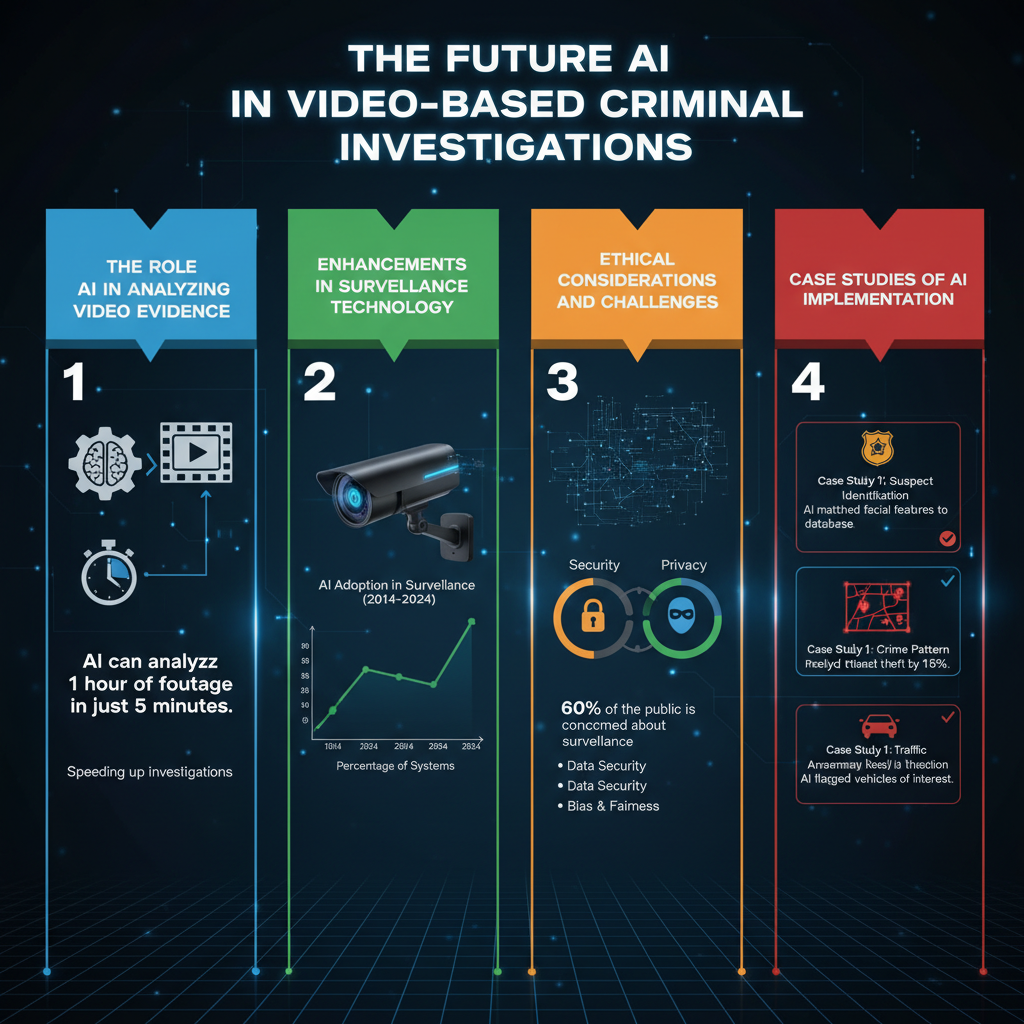
Moreover, machine learning plays a pivotal role in enhancing the accuracy of recognizing faces, objects, and suspicious behaviors. Technologies like facial recognition systems can identify individuals in a matter of seconds, providing leads that investigators can act upon immediately. An excellent example of this is the use of AI by the Chicago Police Department, which has utilized facial recognition software to solve several cases, significantly reducing the time it takes to identify suspects.
Enhancements in Surveillance Technology

The integration of AI with existing surveillance systems marks a significant leap in law enforcement capabilities. Modern surveillance cameras equipped with AI can perform real-time monitoring, analyzing footage as it is captured. This allows for immediate alerts to law enforcement when suspicious activities are detected, effectively enabling proactive crime prevention.
For instance, cities like London have begun implementing AI-driven surveillance systems that analyze foot traffic patterns and crowd behavior, identifying potential hotspots for criminal activity before incidents occur. By predicting where crimes are likely to happen, law enforcement can allocate resources more effectively and prevent incidents from escalating.
Ethical Considerations and Challenges
While the potential of AI in criminal investigations is immense, it also raises essential ethical considerations. Privacy concerns are at the forefront of this debate, as the widespread use of surveillance technologies can infringe on citizens’ rights. Moreover, there are growing worries about biases in AI algorithms, which can lead to unfair targeting of specific demographics or communities.
Transparency in AI algorithms is crucial for building public trust. Law enforcement agencies must be open about how these technologies work and the data used to train them. Engaging with the community and providing clear guidelines on the ethical use of AI can help alleviate fears and ensure fairness in investigations. For instance, the city of San Francisco has implemented strict regulations on facial recognition technology, requiring transparency and accountability in its use.
Case Studies of AI Implementation
Looking at successful examples of AI in action offers valuable insights into its potential. One notable case is the 2016 investigation into a series of shootings in the U.S. where law enforcement agencies utilized AI-enabled video analysis to review surveillance footage from multiple locations. The AI system helped identify patterns and connections between the incidents, leading to a swift arrest of the suspect.
These implementations also provide lessons for future adopters. For example, the New York Police Department’s use of AI tools for predictive policing has led to a notable decrease in crime in specific areas. The key takeaway is the importance of collaboration between law enforcement and technology developers to refine these systems continuously and ensure they meet the evolving needs of criminal investigations.
Training Law Enforcement on New Technologies
As AI tools become integral to criminal investigations, training law enforcement personnel is paramount. Officers need to understand how to use these technologies effectively and ethically. Comprehensive training programs should be developed to equip officers with the skills necessary to leverage AI in their day-to-day operations.
Collaborating with tech companies can provide ongoing education and support, ensuring that law enforcement agencies stay updated with the latest advancements. For instance, partnerships with organizations specializing in AI technology can lead to workshops and training sessions that empower officers to utilize these tools confidently and responsibly.
Future Trends in AI and Criminal Investigations
The future of AI in criminal investigations is bright, with several exciting trends on the horizon. One prediction is the continued advancement of deep learning techniques, which will enhance AI’s ability to analyze video footage and recognize complex patterns. As these technologies become more sophisticated, we can expect even greater accuracy in identifying suspicious behaviors and predicting criminal activities.
Moreover, the integration of AI with other emerging technologies such as drones and IoT devices will create a more interconnected surveillance ecosystem. For example, drones equipped with AI could monitor large public events, providing real-time data to law enforcement and enabling them to respond swiftly to any incidents. This multi-faceted approach to surveillance and investigation will undoubtedly enhance public safety.
The advancements in AI for video-based criminal investigations promise to significantly enhance the efficiency and effectiveness of law enforcement. As technology evolves, it is crucial for agencies to remain informed, ethically responsible, and prepared to adapt to these changes. Engaging with local law enforcement can provide insights into how AI is being implemented in your community, fostering a collaborative relationship that prioritizes safety while respecting individual rights.
Frequently Asked Questions
What are the key benefits of using AI in video-based criminal investigations?
The integration of AI in video-based criminal investigations offers several key benefits, including enhanced speed and accuracy in evidence analysis. AI can sift through vast amounts of footage quickly, identifying relevant incidents or individuals, which significantly reduces the time required for investigators to review video evidence manually. Additionally, AI technologies, such as facial recognition and object detection, can improve the precision of identifying suspects or important details, thereby increasing the likelihood of successful case resolutions.
How can AI improve the reliability of evidence gathered from video footage?
AI can enhance the reliability of evidence from video footage by employing advanced algorithms that minimize human error in the analysis process. Techniques such as motion tracking, scene reconstruction, and anomaly detection help to ensure that the footage is interpreted accurately. Furthermore, AI can validate the authenticity of video clips by analyzing metadata and detecting any signs of tampering, which is crucial for maintaining the integrity of evidence presented in court.
Why is AI considered essential for modern criminal investigations involving video evidence?
AI is considered essential for modern criminal investigations due to the exponential growth of video data generated by surveillance cameras, smartphones, and social media. As these sources proliferate, traditional methods of analyzing video evidence become impractical and inefficient. AI technologies enable law enforcement agencies to leverage this vast amount of data effectively, transforming video footage into actionable intelligence that can lead to quicker and more effective investigations.
Which AI technologies are most effective for analyzing video evidence in criminal cases?
Some of the most effective AI technologies for analyzing video evidence in criminal cases include facial recognition systems, automatic license plate recognition (ALPR), and machine learning algorithms for pattern recognition. These technologies can quickly identify individuals or vehicles of interest and detect unusual behavior patterns, which are vital in solving crimes. Additionally, natural language processing (NLP) can be employed to analyze transcriptions of audio from video footage, further enhancing the investigative process.
What challenges do law enforcement agencies face when implementing AI in video-based investigations?
Law enforcement agencies face several challenges when implementing AI in video-based investigations, including concerns over privacy and ethical implications of surveillance technology. There is also the challenge of ensuring the accuracy of AI systems, as biases in algorithms can lead to wrongful identifications. Furthermore, the integration of AI into existing workflows requires substantial training and resources, which can be a barrier for agencies with limited budgets or technological infrastructure.
References
- https://en.wikipedia.org/wiki/Artificial_intelligence_in_criminal_investigations
- https://www.bbc.com/news/technology-59056230
- https://www.ncbi.nlm.nih.gov/pmc/articles/PMC6923162/
- https://www.ojp.gov/pdffiles1/nij/250389.pdf
- Putting Professional Learning to Work: What Principals Do with Their Executive Development Progra…
- https://www.sciencedirect.com/science/article/pii/S0004370221000808
- https://www.theguardian.com/technology/2021/jul/05/facial-recognition-technology-police-privacy
- https://www.nist.gov/news-events/news/2021/05/nist-releases-new-guidelines-facial-recognition-systems
- https://www.ijcaonline.org/archives/volume181/number15/31859-2020901200
- https://www.wired.com/story/future-policing-ai-video-evidence/