Neural rendering is changing the landscape of video production by enhancing visual quality, cutting costs, and streamlining workflows. This innovative technology is not just a passing trend; it represents a fundamental shift in how content creators approach their craft. By leveraging machine learning and deep learning techniques, neural rendering allows for more realistic graphics and faster production times, making it a game-changer for filmmakers and animators alike.




Understanding Neural Rendering

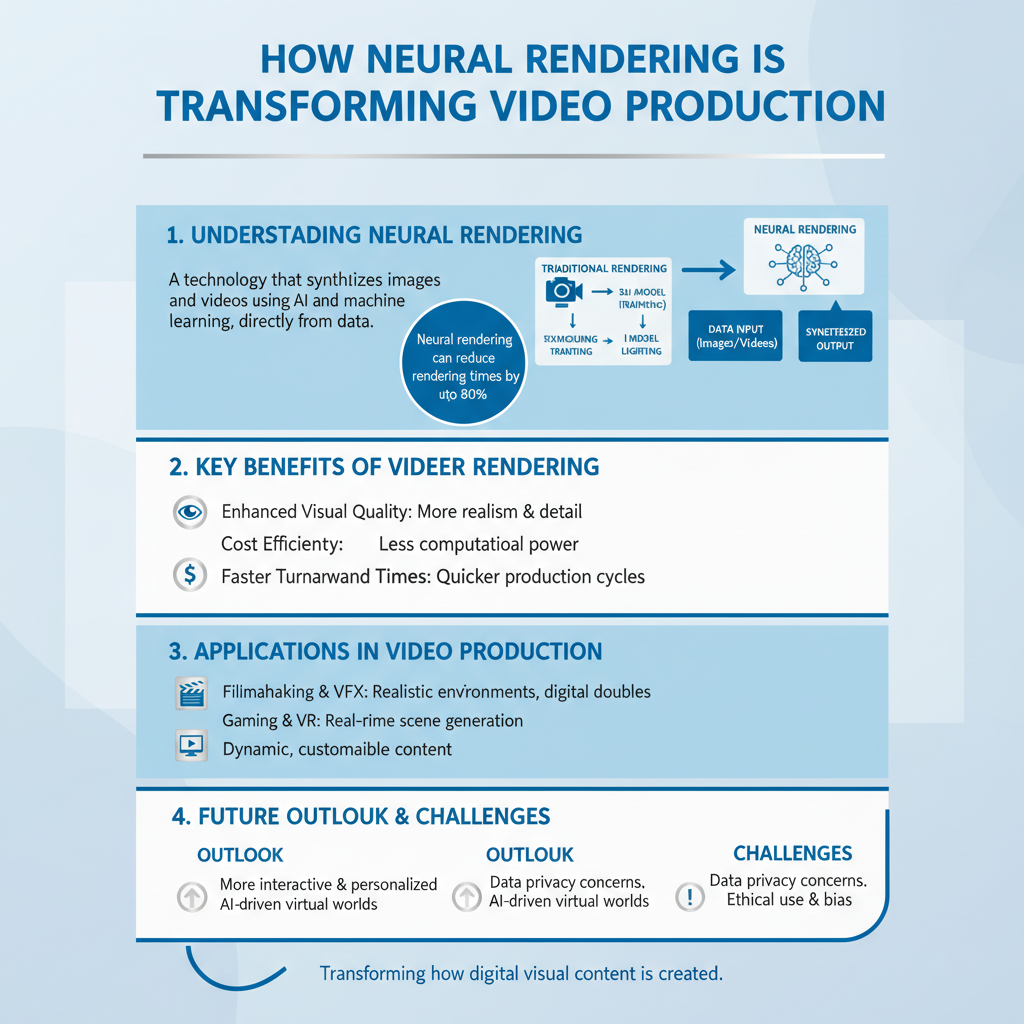
Neural rendering is a cutting-edge technology that combines traditional rendering methods with artificial intelligence, specifically deep learning algorithms, to create images and animations that are remarkably lifelike. Unlike traditional rendering techniques, which rely heavily on complex mathematical models to simulate light and texture, neural rendering uses neural networks to learn from vast amounts of visual data. This enables it to generate images that not only look realistic but also adapt to various styles and artistic directions.
The origins of neural rendering can be traced back to advancements in computer graphics and artificial intelligence in the early 21st century. Researchers began experimenting with neural networks to approximate complex rendering processes, leading to the development of tools that could produce high-quality visuals quickly and efficiently. As computing power and data availability have grown, so too has the sophistication of these techniques, paving the way for their application in mainstream video production.
Key Benefits of Neural Rendering in Video Production

One of the most significant advantages of neural rendering is its ability to achieve significantly improved visual fidelity. This technology can produce more realistic animations and scenes by analyzing and mimicking the intricacies of real-world visual data. For instance, neural rendering can simulate how light interacts with surfaces, resulting in richer textures and more dynamic lighting effects. This level of detail enhances the overall viewer experience, making animated films and video content more immersive.
Moreover, neural rendering can lead to lower production costs. By minimizing the need for extensive physical sets and live-action shoots, producers can save on resources and time. For example, a production team can create a detailed digital environment using neural rendering, reducing the necessity to build elaborate sets. This not only cuts costs but also allows for greater creative freedom, as teams can experiment with various designs without the constraints of physical space.
Applications of Neural Rendering in Film and Animation
Several films and animations have successfully utilized neural rendering to create stunning visuals. Take, for example, the animated feature “Spider-Man: Into the Spider-Verse.” The film’s unique visual style was achieved through a combination of traditional animation techniques and neural rendering, resulting in a vibrant, comic book-like aesthetic that captivated audiences. The blending of these techniques illustrates the versatility of neural rendering in achieving artistic goals.
In the realm of virtual reality (VR) and augmented reality (AR), neural rendering is making waves as well. Companies like NVIDIA have developed neural rendering tools that allow developers to create immersive virtual environments more efficiently. For instance, VR games can utilize neural rendering to generate realistic landscapes that respond dynamically to player interactions, enhancing the overall gaming experience. Similarly, AR applications benefit from the technology by overlaying lifelike graphics onto the real world, creating a seamless blend of digital and physical elements.
Impact on Workflow and Collaboration
Neural rendering tools are revolutionizing the way creative teams collaborate on projects. By providing intuitive interfaces and automated processes, these tools facilitate smoother communication and idea-sharing among team members. For example, artists can easily share their neural-rendered assets with others, streamlining the feedback loop and allowing for faster iterations.
Additionally, the integration of neural rendering into production workflows enables quicker project completion. Teams can generate high-quality visuals in a matter of hours instead of weeks, allowing them to focus on refining storytelling and character development. This efficiency not only saves time but also empowers creators to experiment and innovate, fostering a culture of creativity that can lead to groundbreaking content.
Challenges and Limitations of Neural Rendering
Despite its many benefits, neural rendering is not without its challenges. One major limitation is the current technological constraints that still exist. While neural rendering can produce high-quality images, it often requires significant computational resources and may not yet be feasible for all production environments, especially smaller studios with limited budgets.
Moreover, ethical considerations arise with the use of neural rendering in content creation. The ability to create hyper-realistic images can blur the lines between reality and fiction, raising concerns about the potential for misuse, such as deepfakes or misleading representations. As producers harness this technology, it is essential to remain mindful of these ethical implications and strive for responsible usage.
The Future of Neural Rendering in Video Production
Looking ahead, the future of neural rendering in video production is bright and full of possibilities. As technology continues to advance, we can expect even greater integration of AI and machine learning into the rendering process. Predictive algorithms may soon allow for real-time rendering, enabling creators to visualize changes on the fly without lengthy rendering times.
Furthermore, as the costs of computational power decrease and algorithms become more refined, neural rendering will likely become more accessible to a broader range of creators. This democratization of technology could lead to an explosion of creative content, with independent filmmakers and animators utilizing neural rendering to bring their visions to life without breaking the bank.
In conclusion, the integration of neural rendering in video production marks a significant shift in how content is created and consumed. With its ability to enhance quality while reducing costs, this technology is set to redefine industry standards. As video producers embrace these innovations, staying informed about developments in neural rendering will be crucial for maintaining a competitive edge. Explore neural rendering tools and consider how they can benefit your next project!
Frequently Asked Questions
What is neural rendering and how does it differ from traditional rendering in video production?
Neural rendering is a cutting-edge technology that leverages artificial intelligence and deep learning algorithms to generate or enhance visual content. Unlike traditional rendering, which relies on physical simulations and complex algorithms to create images, neural rendering uses trained models to produce high-quality visuals faster and with less computational power. This innovation allows video producers to achieve stunning results and reduce production time significantly.
How is neural rendering improving efficiency in video production workflows?
Neural rendering enhances efficiency in video production by automating various processes, such as scene generation, character animation, and visual effects creation. This technology enables artists and filmmakers to quickly iterate on ideas, making it easier to visualize concepts without the need for extensive manual adjustments. As a result, teams can focus on creative aspects while reducing the time spent on labor-intensive tasks, ultimately streamlining the overall workflow.
Why are filmmakers increasingly adopting neural rendering techniques in their projects?
Filmmakers are increasingly adopting neural rendering techniques due to the combination of cost-effectiveness, speed, and creative flexibility it offers. By reducing the need for extensive physical sets and on-location shoots, neural rendering allows filmmakers to explore more ambitious visual storytelling without the constraints of traditional methods. Additionally, the ability to quickly generate realistic environments and characters can significantly enhance the storytelling process, making it an attractive option for modern video production.
What are the best use cases for neural rendering in video production?
The best use cases for neural rendering in video production include virtual reality experiences, animated films, video games, and visual effects for live-action movies. In virtual reality, neural rendering can create immersive environments that respond dynamically to user interactions. For animated films and video games, it allows for rapid character design and realistic animation. In live-action films, it can enhance visual effects, enabling seamless integration of computer-generated elements with filmed footage.
Which companies are leading the way in neural rendering technology for video production?
Several companies are at the forefront of developing neural rendering technology for video production, including NVIDIA with its Omniverse platform, Adobe with its Sensei AI, and Epic Games with Unreal Engine. These leaders are innovating tools that incorporate neural rendering capabilities, enabling filmmakers and content creators to produce high-quality visuals more efficiently. As competition grows, we can expect even more advancements in this exciting field, making it an essential area for video producers to explore.
References
- https://en.wikipedia.org/wiki/Neural_rendering
- https://www.sciencedirect.com/science/article/pii/S0031320321001922
- https://www.nature.com/articles/s41598-021-02867-5
- https://www.theverge.com/2021/12/16/22841920/neural-rendering-video-production-artificial-intelligence
- https://www.bbc.com/future/article/20211214-how-ai-is-revolutionising-video-production
- https://www.techrepublic.com/article/neural-rendering-how-ai-is-changing-video-production/
- https://www.cnbc.com/2022/02/11/how-vfx-studios-are-using-ai-to-revolutionize-film-production.html
- https://www.wired.com/story/neural-rendering-ai-video-production/
- https://researchgate.net/publication/353042328_Neural_Rendering_in_Visual_Effects_and_Animation