
AI predicts user behavior by analyzing large sets of data, allowing businesses to create optimized display layouts that significantly enhance user experience and engagement. By identifying patterns and preferences, AI tailors interfaces that resonate with individual users, leading to increased conversion rates and overall satisfaction. In this article, we will delve into how AI analyzes user behavior, the role of predictive analytics, techniques for layout optimization, and the future of these technologies.
Understanding User Behavior through Data Analysis

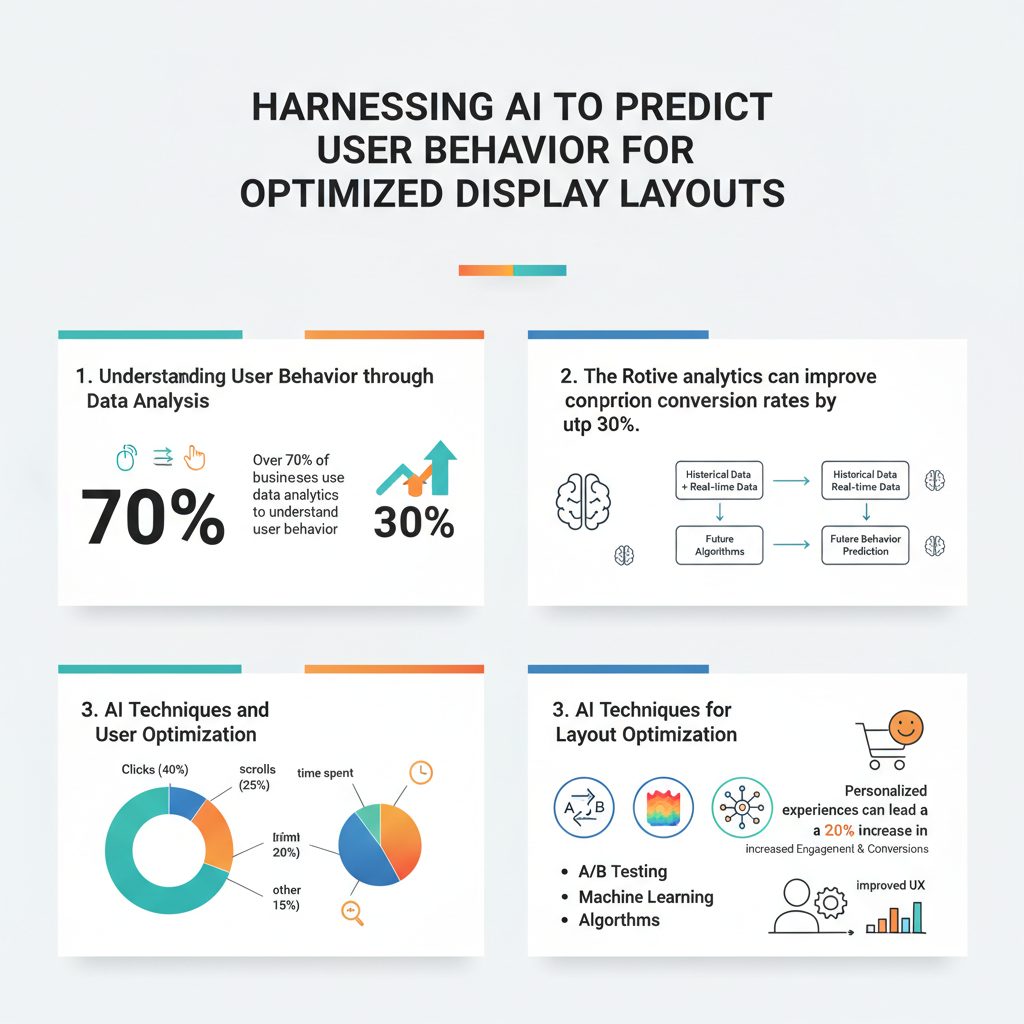
Understanding user behavior is at the heart of creating effective display layouts. AI leverages vast amounts of user data gathered from various interactions across platforms, including clicks, scrolls, time spent on pages, and even the paths users take through a website. This data is transformed into actionable insights through the power of machine learning algorithms, which sift through the noise to identify trends and patterns in user behavior.
For instance, consider an e-commerce website that notices users frequently abandon their shopping carts at a specific point in the checkout process. By analyzing the data, AI can pinpoint potential friction areas, such as unexpected shipping fees or complicated forms. As a result, businesses can make informed decisions to streamline the checkout experience, thereby reducing cart abandonment rates and improving overall user satisfaction.
The Role of Predictive Analytics

Predictive analytics plays a crucial role in forecasting future user actions based on historical data. This forward-looking approach empowers businesses to design layouts that not only react to current behaviors but also anticipate user needs and preferences.
For example, a news website can use predictive analytics to determine what type of content a user is likely to be interested in based on their reading history. By placing relevant articles in prominent positions on the homepage, the site can lead users down a path that keeps them engaged longer, ultimately resulting in higher page views and ad revenue.
Moreover, businesses can segment their audience based on predicted behaviors, allowing for targeted marketing efforts. For instance, users who frequently browse travel deals may receive personalized offers that cater to their interests, making them more likely to engage with the content.
AI Techniques for Layout Optimization
There are several AI techniques that facilitate layout optimization. A/B testing is one of the most prevalent methods, where two or more variations of a layout are tested against each other to determine which version performs better. AI can automate this process by analyzing user engagement metrics in real-time and suggesting improvements based on user interactions.
Dynamic content adjustment is another powerful technique. For instance, a streaming service can alter its display layout based on the time of day or the user’s viewing history to recommend shows or movies that they are more likely to watch at that particular moment. This real-time optimization not only enhances user experience but also encourages users to spend more time on the platform.
By leveraging these AI-driven techniques, businesses can continuously refine their display layouts, ensuring they meet user needs effectively and efficiently.
Personalization and User Experience
One of the most significant advantages of AI is the ability to personalize display layouts for different user segments. Personalization increases relevance, making the user experience feel tailored and engaging. For example, an online clothing retailer can use AI to analyze a user’s past purchases and browsing behavior, allowing them to showcase items that align with the user’s style preferences directly on their homepage.
Personalized layouts can lead to improved retention and user satisfaction. When users feel that a platform understands their needs, they are more likely to return. Additionally, personalized recommendations can significantly boost conversion rates. According to research, personalized product recommendations can lead to a 10-30% increase in sales, illustrating the power of AI-driven personalization.
Challenges in Implementing AI for Layouts
While the benefits of AI in optimizing display layouts are substantial, there are also challenges to consider. Data privacy concerns are paramount when collecting user data. Businesses must ensure they comply with regulations, such as GDPR, and implement robust security measures to protect user information. Transparency with users about how their data is used can help build trust and encourage engagement.
Integrating AI systems with existing infrastructure can also be complex and costly. Businesses often face hurdles in aligning new AI-driven technologies with traditional systems. However, investing in the right tools and partnerships can ease this transition and lead to long-term benefits.
Future Trends in AI and User Behavior Prediction
The evolution of AI technologies promises even more sophisticated prediction capabilities in the near future. As algorithms become more advanced, we can expect greater automation in the analysis of user behavior, making it easier for businesses to adapt their layouts quickly and efficiently.
Anticipated developments include enhanced personalization techniques that go beyond simple recommendations. For example, future AI systems might analyze emotional responses to content, allowing for even more tailored user experiences. Imagine an interface that adapts not just to what you’ve liked in the past, but also to your current mood or the time of day.
Additionally, as AI technology continues to improve, it will likely become more accessible to smaller businesses, leveling the playing field and allowing them to compete with larger companies in creating engaging user experiences.
By harnessing AI to predict user behavior, businesses can create more effective and engaging display layouts that directly impact user satisfaction and conversion rates. Embracing these technologies is essential for staying ahead in optimizing user experience and meeting the ever-evolving demands of consumers. As AI continues to advance, the future of user behavior prediction will be shaped by innovation, creativity, and a keen understanding of what users truly want.
Frequently Asked Questions
How does AI predict user behavior to optimize display layouts?
AI predicts user behavior by analyzing vast amounts of data, including user interactions, demographics, and browsing patterns. Machine learning algorithms identify trends and preferences that help determine the most effective display layouts. This predictive analysis allows businesses to create personalized experiences, enhancing engagement and conversion rates.
What are the benefits of using AI for optimizing display layouts?
The benefits of using AI for optimizing display layouts include improved user engagement, increased conversion rates, and enhanced user satisfaction. By personalizing content and layouts based on user behavior, businesses can effectively target their audience, reducing bounce rates and fostering long-term customer loyalty. Furthermore, AI can continuously learn and adapt layouts over time, ensuring ongoing optimization.
Why is user behavior analysis important for display layout optimization?
User behavior analysis is crucial for display layout optimization as it provides insights into how users interact with content and what elements capture their attention. Understanding these behaviors allows businesses to design layouts that align with user preferences, ultimately leading to a more intuitive and enjoyable browsing experience. This targeted approach can significantly enhance marketing strategies and overall website performance.
Which AI tools are best for predicting user behavior in display layouts?
Some of the best AI tools for predicting user behavior and optimizing display layouts include Google Analytics, Adobe Analytics, and Hotjar. These platforms offer advanced analytics features that track user interactions and provide insights into behavior patterns. Additionally, tools like Optimizely and VWO leverage AI algorithms to run A/B tests and suggest layout changes based on user data, enabling continuous improvement.
How can businesses effectively implement AI for display layout optimization?
Businesses can effectively implement AI for display layout optimization by first gathering and analyzing user data through analytics platforms. Next, they should select appropriate AI tools that align with their objectives and test different layout variations. Finally, it’s essential to monitor performance metrics and iterate on designs based on AI-generated insights to ensure layouts remain optimized for user engagement and conversion.
References
- https://en.wikipedia.org/wiki/User_behavior
- https://www.sciencedirect.com/science/article/pii/S1877050919310661
- https://www.nature.com/articles/s41586-019-1000-1
- https://www.forbes.com/sites/bernardmarr/2020/01/27/how-ai-is-changing-the-way-we-design-websites/?sh=6f8db4c13be6
- https://www.bbc.com/future/article/20200417-the-ai-that-learns-user-behaviour
- https://www.ijcai.org/Proceedings/2018/0453.pdf
- https://www.nist.gov/news-events/news/2020/09/how-ai-can-help-understand-human-behavior
- https://www.acm.org/publications/proceedings-template
- Theory-Based Causal Transfer:Integrating Instance-Level Induction and Abstract-Level Structure Le…